 Save
Sleeping on your right side is not automatically bad for your health. For many people, it is simply a comfortable way to fall asleep. The main place where right-side sleeping may matter is nighttime reflux: research in people with gastroesophageal reflux has found shorter acid exposure when they lie on the left side compared with the right side or back. For breathing, snoring, and body comfort, the bigger pattern is often side sleeping versus back sleeping, not right versus left. The practical answer is to match your sleep position to your symptoms, comfort, and clinician guidance.
Why sleep position gets so much attention
Sleep position feels personal because it is. Most people do not hold one posture from lights-out to morning; they shift, curl, straighten, and change sides without remembering it. Still, position can change how gravity acts on the throat, stomach, chest, shoulder, hip, and neck. That is why the same position can feel restful for one person and uncomfortable for another.
Good sleep is about more than position. MedlinePlus notes that sleep supports energy restoration, learning, memory, and overall functioning, and that adults generally need about 7 to 9 hours each night. Sleep quality also matters: frequent interruptions can leave a person tired even after enough time in bed, and ongoing sleep trouble may deserve a conversation with a health care provider. MedlinePlus

The reflux question is the strongest right-versus-left issue
The best-supported concern about right-side sleeping is reflux during the night. GERD happens when stomach contents move back into the esophagus, often because the muscle at the bottom of the esophagus relaxes when it should stay closed. MedlinePlus lists heartburn, acid taste, dry cough, hoarse voice, and trouble swallowing among possible symptoms, and it notes that symptoms can be affected by lying down after eating. MedlinePlus
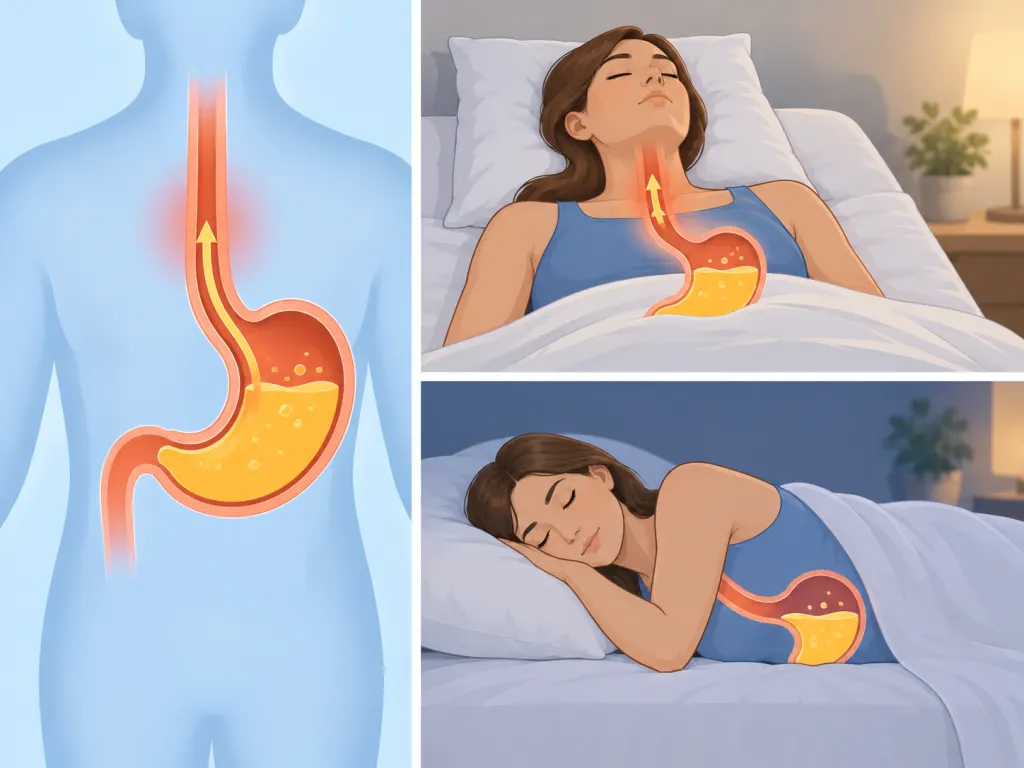
Position matters because the stomach and esophagus do not sit symmetrically in the body. In a 2022 study using sleep-position monitoring with esophageal pH and impedance testing, people had shorter acid exposure and faster acid clearance while lying on the left side than while lying on the right side or on the back. This does not mean everyone who sleeps on the right side will have reflux, but it does give a reasonable explanation for why people with nighttime reflux are often advised to try the left side. PubMed
Right-side sleeping does not affect everyone the same way
If you do not have nighttime reflux symptoms, right-side sleeping may not be a problem at all. A useful way to think about the evidence is: right-side sleeping may be relevant when symptoms already point toward reflux, especially after evening meals, reclining soon after eating, or waking with burning, sour taste, cough, or throat irritation.
For people with reflux symptoms, position is only one piece of the picture. NIDDK says clinicians may suggest elevating the head during sleep, changing eating habits, and avoiding lying down too soon after meals as part of GERD management. Its nutrition guidance also notes that eating at least 3 hours before lying down may improve symptoms for some people with nighttime GERD. NIDDK NIDDK
What about throat reflux and waking with hoarseness?
Some reflux reaches higher into the throat, where it may show up as hoarseness, throat clearing, chronic cough, or a sensation of something stuck in the throat. Cleveland Clinic describes laryngopharyngeal reflux as stomach juices rising beyond the esophagus into the throat area, sometimes without classic heartburn. Its lifestyle suggestions include not reclining for three hours after eating and sleeping on the left side, because that position may place the lower esophageal sphincter above stomach contents during sleep. Cleveland Clinic
The cautious takeaway is not that right-side sleeping causes throat symptoms by itself. It is that people who already notice nighttime reflux, morning throat irritation, or sour taste may have a low-risk experiment available: try the left side for a few nights, keep dinner earlier, and observe whether sleep feels less interrupted. Persistent or worsening symptoms should not be handled by sleep position alone.
Breathing and snoring are more about side versus back
For snoring and sleep-related breathing problems, the evidence usually compares side sleeping with back sleeping. MedlinePlus explains that snoring can happen when airflow is partly blocked during sleep, and its home-care suggestions include trying side sleeping instead of sleeping flat on the back. It also says to talk with a provider if there are pauses in breathing, gasping, morning headaches, daytime sleepiness, or snoring that does not improve with self-care. MedlinePlus
NHLBI similarly notes that a provider may recommend sleeping on the side rather than on the back for people with sleep apnea because side sleeping can help keep the airway open during sleep. That guidance is about side sleeping generally; it does not mean the right side is uniquely better or worse than the left for every person. NHLBI
Comfort can be a real health clue, too
A position that repeatedly causes neck, shoulder, hip, or low-back discomfort can fragment sleep even if it has no special effect on reflux. Cleveland Clinic advises side sleepers to use enough pillow support to keep the head and neck from drooping, and it notes that alternating sides may help avoid imbalance from always sleeping on one side. Cleveland Clinic
Right-side sleepers can make the position gentler by supporting the top knee with a pillow, keeping the neck in a neutral line, and avoiding a pillow stack that bends the head sharply upward. A mattress that is too soft may let the torso sink and twist; one that is too firm may create pressure at the shoulder and hip. The goal is not a perfect textbook pose, but a position that lets breathing, comfort, and sleep continuity work together.

A practical way to test your own pattern
If you wonder whether right-side sleeping affects you, use a simple observation period rather than forcing a dramatic change. For one week, note your usual side, dinner timing, reflux symptoms, snoring reports, morning throat comfort, and any shoulder or hip soreness. Then try left-side sleeping for several nights, especially if nighttime reflux is the concern. Compare patterns, not one unusual night.
Small changes that may help you learn what matters include:
- Leave at least two to three hours between dinner and lying down if reflux is a pattern.
- Try left-side sleeping when heartburn, sour taste, or throat irritation appears at night.
- Use a pillow that keeps your neck level rather than tilted sharply up or down.
- Place a pillow between the knees if side sleeping strains the hips or lower back.
- Ask a bed partner whether snoring, gasping, or pauses seem worse on the back.
- Track symptoms for several nights before deciding whether a position helps.
When position is not enough
Sleep position is a comfort and symptom-management tool, not a complete explanation for ongoing sleep problems. Chest discomfort with shortness of breath, pain spreading to the jaw or arm, trouble swallowing, repeated choking or gasping during sleep, heavy daytime sleepiness, or reflux symptoms that keep returning should be discussed with a qualified clinician. MedlinePlus specifically warns that chest pain with shortness of breath or jaw or arm pain can be a sign of a heart problem and needs urgent medical help. MedlinePlus
Wrap-Up
Right-side sleeping is not automatically unhealthy. The clearest reason to reconsider it is nighttime reflux, where left-side sleeping has better support for reducing acid exposure in people with GERD. For snoring and sleep apnea, side sleeping in general may be more useful than back sleeping. For comfort, pillow height, mattress support, and alternating sides can matter as much as choosing right or left. If symptoms are frequent, severe, or worrying, use sleep position as information to share with a qualified clinician rather than as a stand-alone answer.
Frequently Asked Questions
- → Is sleeping on the right side bad for everyone?
No. For many people, right-side sleeping is simply comfortable. It becomes more relevant if you notice nighttime reflux, sour taste, throat irritation, snoring, breathing pauses, or repeated body discomfort in that position.
- → Why is the left side often suggested for reflux?
Studies in people with reflux have found shorter acid exposure and faster acid clearance on the left side compared with the right side or back. The likely reason is anatomy: left-side lying can place the stomach and lower esophageal area in a position that makes reflux less likely during sleep.
- → Can right-side sleeping affect snoring?
Snoring guidance usually focuses on side sleeping versus back sleeping. Side sleeping may reduce snoring for some people because it can help keep the airway more open than lying flat on the back. Evidence does not show that the right side is always worse than the left for snoring.
- → What if I always roll back onto my right side?
That is common. You can try a supportive body pillow, a pillow behind the back, or starting the night on the left side when reflux is the concern. If you sleep well and have no symptoms, there may be no reason to force a change.
- → When should I ask a clinician about sleep position symptoms?
Ask for medical guidance if reflux keeps interrupting sleep, if swallowing is difficult, if you wake gasping or choking, if a partner notices pauses in breathing, or if daytime sleepiness is heavy. Seek urgent care for chest pain with shortness of breath or pain spreading to the jaw or arm.
References
This content was developed and refined using reliable sources.
- https://medlineplus.gov/healthysleep.html
- https://www.medlineplus.gov/gerd.html
- https://pubmed.ncbi.nlm.nih.gov/34928874
- https://www.niddk.nih.gov/health-information/digestive-diseases/acid-reflux-ger-gerd-adults/treatment
- https://www.niddk.nih.gov/health-information/digestive-diseases/acid-reflux-ger-gerd-adults/eating-diet-nutrition
- https://my.clevelandclinic.org/health/diseases/15024-laryngopharyngeal-reflux-lpr
- https://www.medlineplus.gov/ency/patientinstructions/000720.htm
- https://www.nhlbi.nih.gov/health/sleep-apnea/treatment
- https://health.clevelandclinic.org/best-sleeping-positions-for-pain