 Save
The psoas may play a role in a protruding-looking lower belly and a stiff lower back when it contributes to anterior pelvic tilt, limited hip extension, or extra demand on the lumbar spine. It is not a hidden single cause, and it does not explain every belly shape or every back symptom. A better way to think about it is this: the psoas is one important connector between the lower spine, pelvis, and thigh, so when hip and core mechanics are off, it can be part of the pattern.
What the psoas actually is
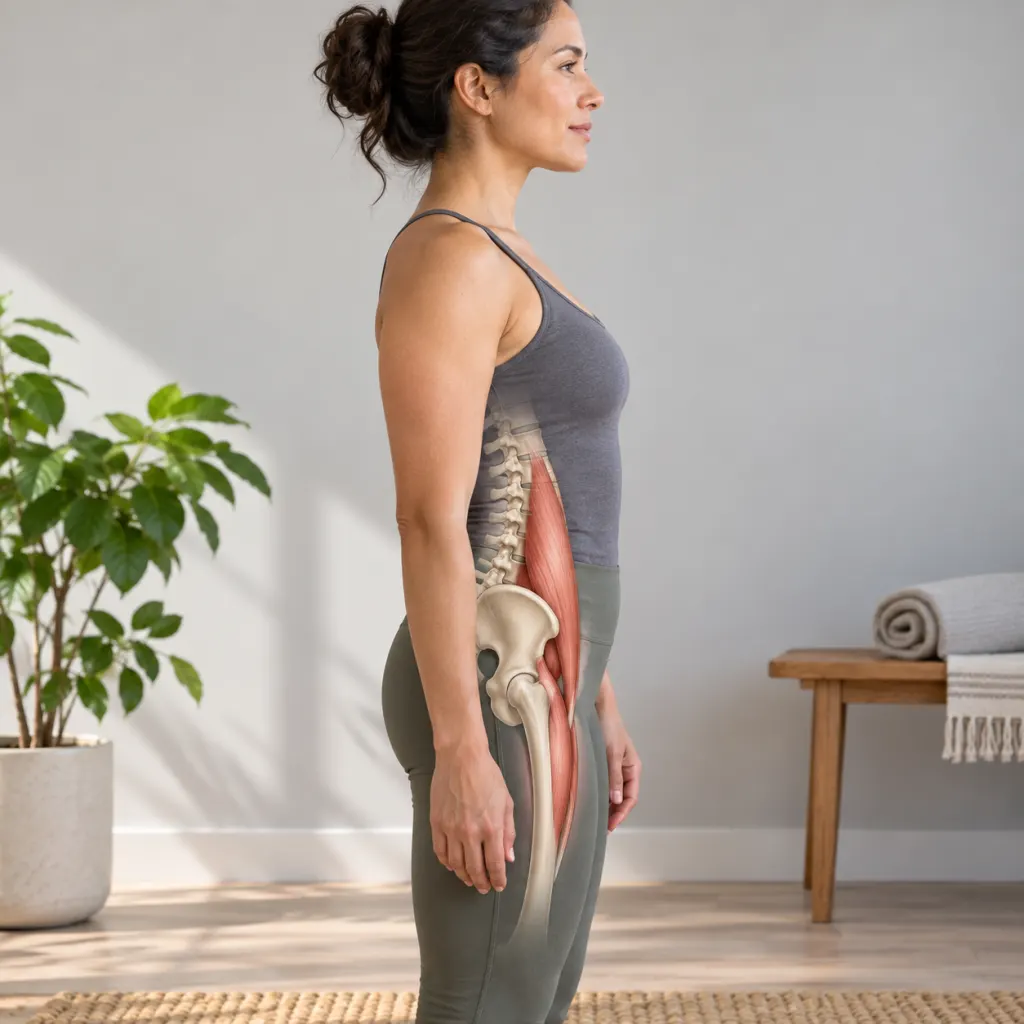
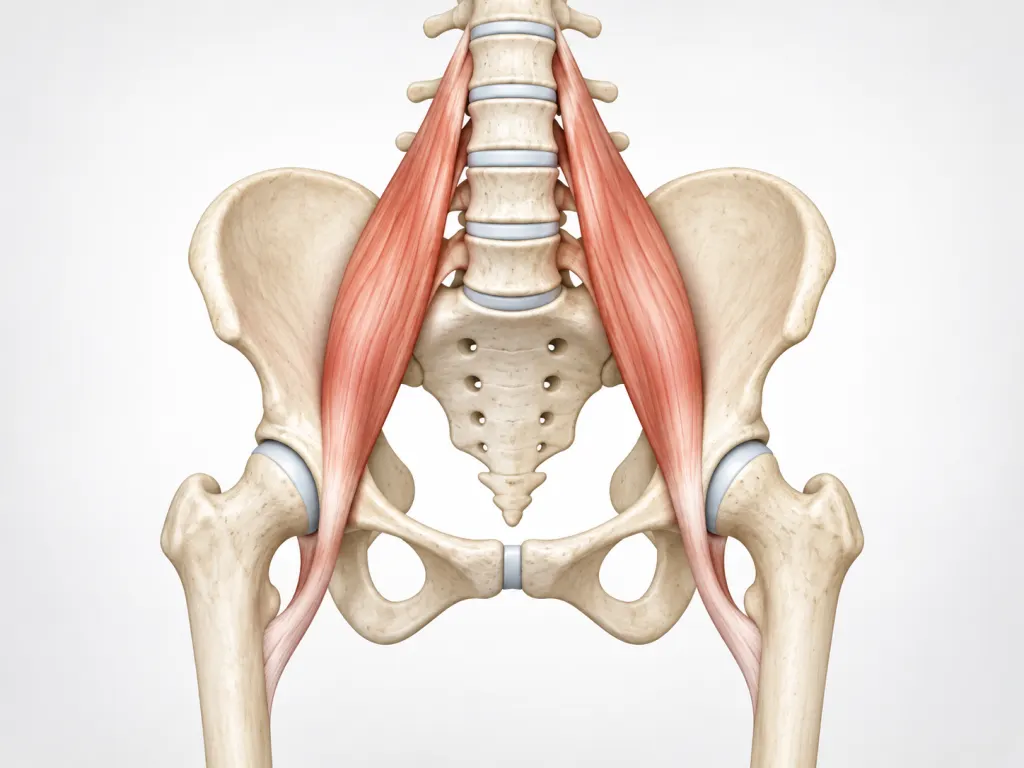
The psoas major is a deep muscle on each side of the spine. It begins around the lower thoracic and lumbar vertebrae, travels through the pelvis, joins with the iliacus, and attaches near the top of the femur. Anatomy references from the National Library of Medicine describe it as part of the iliopsoas group, a major contributor to hip flexion and a muscle involved in lumbar spine stabilization during sitting and movement https://ncbi.nlm.nih.gov/books/NBK535418/. In plain language, it helps lift your thigh toward your trunk, helps you move from lying down to sitting up, and helps coordinate the relationship between your hips and lower back.
That location is why the psoas gets attention in posture discussions. A calf muscle cannot directly tug on your lumbar spine, but the psoas has attachments near the lumbar area and crosses the front of the hip. If hip flexors stay shortened or overactive, or if other muscles are not sharing the work well, the pelvis and lower back may adapt. The result can be a posture that looks like the lower belly is pushing forward even when the main issue is not the abdominal wall itself.
Why the lower belly can look more forward
A protruding belly appearance can come from many things: normal body composition, bloating, abdominal wall strength, posture, clothing fit, breathing mechanics, or the way a person naturally stands. The psoas enters the conversation because the pelvis is the platform for both the spine and the abdominal wall. If the pelvis tips forward, the lower back often appears more arched, the front of the hips look more open, and the lower abdomen may angle outward. This is a posture pattern, not a diagnosis.
The National Library of Medicine source notes that the psoas can act on the pelvis and lumbar spine in an upright position and may influence lumbar lordosis, which is the natural inward curve of the lower back https://ncbi.nlm.nih.gov/books/NBK535418/. When that curve is exaggerated for a person, the abdominal area may look more prominent from the side. This does not mean the belly is the problem; it may mean the spine, pelvis, hips, and trunk are not sharing load in an easy way.
The stiff-back pattern is usually bigger than one muscle
Low back stiffness is common and often has more than one contributor. Mayo Clinic lists factors such as weak back and abdominal muscles, improper lifting, lack of activity, excess stress on the back, and body mechanics as common parts of the back-pain picture https://www.mayoclinic.org/diseases-conditions/back-pain/symptoms-causes/syc-20369906. Johns Hopkins Medicine also notes that the exact cause of low back pain can be hard to determine and that many people do not need lab testing or imaging for ordinary back discomfort https://www.hopkinsmedicine.org/health/conditions-and-diseases/back-pain/low-back-pain.
That matters because the psoas is sometimes blamed too quickly. A stiff lower back after hours of sitting may involve the psoas, but it may also involve spinal joints, the quadratus lumborum, glute muscles, hamstrings, abdominal control, workload, sleep, stress, or a recent change in activity. The psoas is a useful lens, not the whole story.
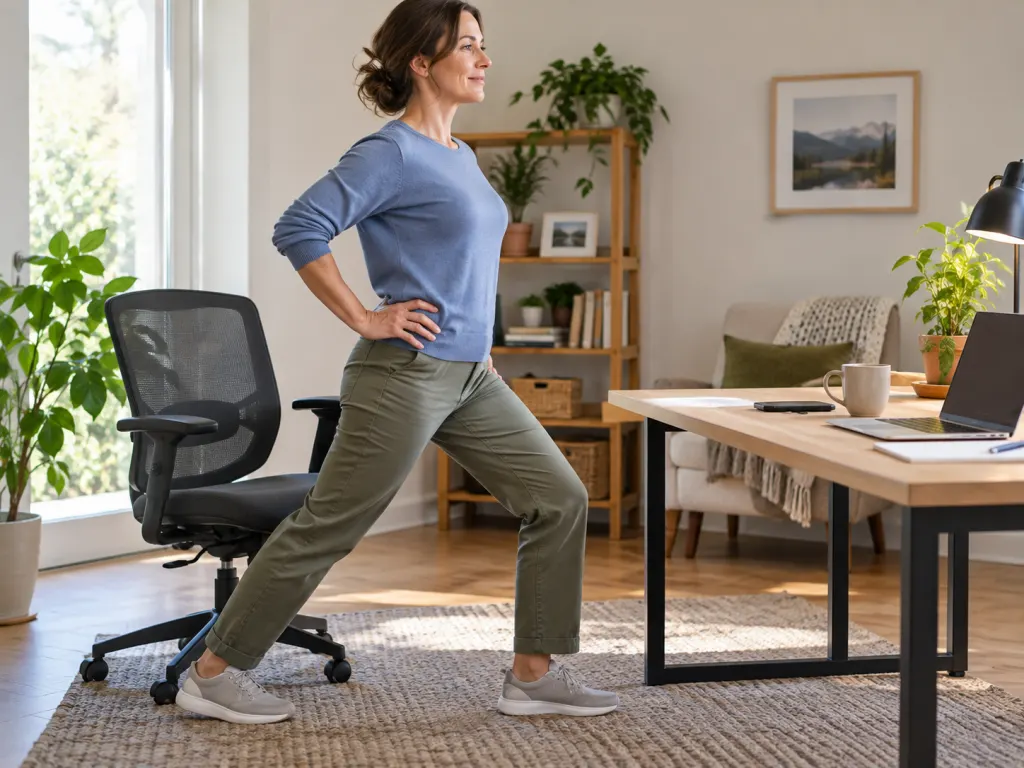
Clues that the psoas and hip flexors may be involved
No self-check can prove that the psoas is the source of a stiff back. Still, certain patterns can make hip flexors worth considering. You might notice that standing tall feels easier after a walk than after a long sit, that your stride feels short, that your lower back arches when you try to stretch the front of the hip, or that lying flat with both legs straight feels like it pulls at the front of the hip. These clues are not proof; they are signals that hip mobility and trunk control deserve attention.
Useful observations include:
- Sitting history: stiffness that is strongest after long sitting may involve hip flexor position and reduced movement variety.
- Standing shape: an arched lower back with the front ribs lifted and pelvis tipped forward may make the lower belly look more prominent.
- Hip extension: if the leg does not travel comfortably behind the body while walking, the lower back may compensate.
- Core timing: if the abdomen braces too late during lifting, the lower back may take extra load.
- Side-to-side difference: one hip feeling tighter than the other can change how the pelvis rests and moves.
Why sitting can make the pattern more noticeable
Sitting places the hips in flexion. That is not harmful by itself; sitting is a normal human position. The issue is time and variety. If most of the day is spent with the hips flexed and the trunk quiet, the body may feel less ready for standing, walking, or lifting afterward. The psoas and nearby hip flexors may feel short, while the glutes and abdominal muscles may be slower to help. The first few steps after rising from a chair can reveal that transition.
Cleveland Clinic describes posture as the alignment of the spine and body, and it suggests short posture check-ins, gentle core activation, and movement resets rather than constant worry about perfect position https://my.clevelandclinic.org/health/articles/posture. That is a helpful frame here: the goal is not to hold yourself rigidly upright all day. It is to give the hips, spine, and trunk enough movement options that one position does not dominate.
What a balanced reset can include
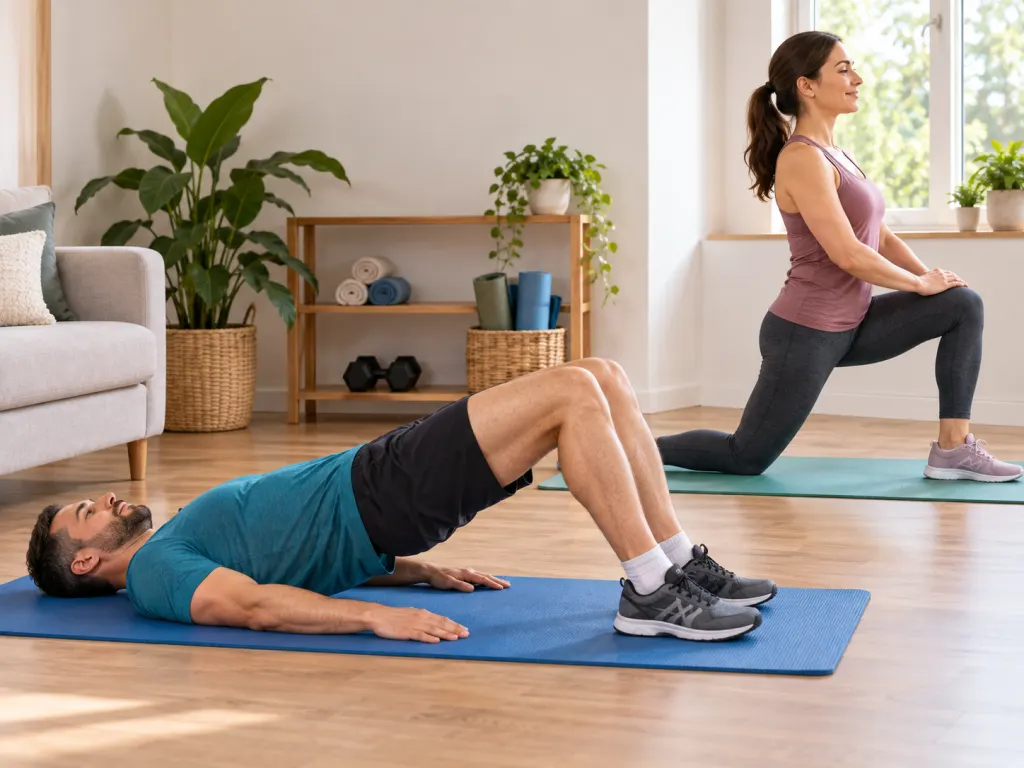
A practical approach usually combines gentle hip extension, trunk strength, glute strength, walking, and better breaks from sitting. For many people, a few minutes spread through the day is more realistic than one dramatic stretching session. Try standing up every 30 to 60 minutes, taking a short walk, or doing slow hip extension movements without forcing the lower back to arch. If a stretch causes sharp symptoms, numbness, or a feeling that something is wrong, stop and get individualized guidance.
Core work should not mean endless sit-ups. The core includes the abdomen, lower back, pelvis, and hips. Mayo Clinic notes that abdominal and back muscles work together to support the back, and that building strength and flexibility can help the back function better https://www.mayoclinic.org/diseases-conditions/back-pain/symptoms-causes/syc-20369906. Good choices are often simple: controlled breathing with light abdominal engagement, bridges, dead-bug variations, side planks, gentle lunges, and walking. The right version depends on your body and current symptoms.
How to avoid overcorrecting your posture
One common mistake is trying to flatten the lower back all day. The lumbar spine is supposed to have a natural inward curve. Another mistake is constantly pulling the belly in, which can make breathing shallow and create more tension. Better posture is usually dynamic. You should be able to stand tall, breathe, shift weight, walk, hinge at the hips, and sit comfortably without gripping your abdomen or squeezing your glutes nonstop.
Instead of chasing a perfect silhouette, notice function. Can you take a relaxed full breath? Can your ribs settle over your pelvis without strain? Can your hips move behind you during a step? Can you bend to pick something up while using your legs and hips rather than only your lower back? These questions are more useful than judging a side-view photo.
When the psoas is probably not the main explanation
The psoas is less likely to be the central issue when the belly shape changes suddenly, the abdomen feels unusually swollen, symptoms are tied strongly to meals, or the back symptoms include spreading leg symptoms, weakness, numbness, fever, injury, or bowel or bladder changes. Back symptoms can have many causes. Mayo Clinic advises prompt care for back pain with new bowel or bladder problems, fever, a fall or other injury, weakness, numbness, tingling, unexplained weight loss, or pain that spreads below the knee https://www.mayoclinic.org/diseases-conditions/back-pain/symptoms-causes/syc-20369906.
Johns Hopkins Medicine also emphasizes that symptoms can look like other health problems and that a healthcare provider can evaluate the history, location, intensity, timing, and movement triggers https://www.hopkinsmedicine.org/health/conditions-and-diseases/back-pain/low-back-pain. That is especially important when symptoms are new, severe, worsening, or interfering with daily activity.
A calmer way to think about the psoas
The psoas is not mysterious or magical. It is a deep hip flexor with meaningful connections to the lower spine, pelvis, and thigh. When it is part of a stiff-back and forward-belly posture pattern, the answer is usually not to attack the muscle. The better goal is to restore options: hips that extend, a trunk that supports movement, glutes that share the work, and daily habits that break up long static positions.
If you are trying to make sense of a protruding lower belly and stiff lower back, start with curiosity rather than blame. Look at how you sit, stand, walk, breathe, lift, and rest. Notice whether gentle movement helps. Build strength gradually. And if symptoms are persistent, unusual, or concerning, use professional guidance so you are not guessing about a problem that deserves a closer look.
Wrap-Up
The psoas can influence how the pelvis and lower back behave because it links the lumbar spine to the upper thigh through the front of the hip. In some people, limited hip motion, long sitting, weak trunk support, and an exaggerated lower-back curve can make the lower belly appear more forward and the back feel stiff. But the psoas is only one possible contributor. A useful plan looks at hip mobility, core and glute strength, posture variety, safe lifting, walking, and warning signs that need professional evaluation.
Frequently Asked Questions
- → Can a tight psoas make my belly look bigger?
It can contribute to a posture that makes the lower belly look more forward, especially if the pelvis tips forward and the lower back arches more than usual. It does not create body fat, and it is not the only possible reason for belly shape.
- → Is lower back stiffness always a psoas problem?
No. Back stiffness can involve joints, muscles, lifting habits, sitting time, stress, sleep, activity changes, or other health factors. The psoas is worth considering because of its location, but it should not be blamed without looking at the whole movement pattern.
- → Should I stretch the psoas every day?
Gentle hip flexor mobility may help some people, but forcing a deep stretch is not always the best answer. Many people do better with a mix of walking, light mobility, glute strengthening, and core control. Stop any movement that creates sharp or unusual symptoms.
- → What is a simple first step if I sit all day?
Break up long sitting with short movement resets. Stand, walk for a minute or two, gently extend the hips, and change positions often. Consistency matters more than one intense session at the end of the day.
- → When should I get professional help for a stiff lower back?
Seek care promptly if symptoms follow an injury, spread down the leg, include numbness or weakness, come with fever, unexplained weight loss, or new bowel or bladder changes, or if the stiffness is severe, worsening, or limiting daily life.