 Save
The main takeaway is simple: odor changes in older women are often caused by moisture, fabric, skin folds, menopause-related sweating, bladder leakage, scented products, or vaginal irritation rather than poor hygiene. Sweat can smell when it mixes with bacteria on the skin, and menopause can bring hot flashes, night sweats, vaginal dryness, and bladder changes that make small routines matter more. The goal is not to scrub harder or cover everything with perfume. A better approach is to identify where moisture or irritation is being trapped, simplify cleansing, keep close-contact clothing fresh, and know when a new odor deserves a health care conversation.
Why Odor Can Change With Age
Body odor begins with normal biology. Sweat is part of the body’s cooling system, and MedlinePlus notes that sweat can cause a smell when it mixes with bacteria on the skin: https://medlineplus.gov/sweat.html. Cleveland Clinic gives the same broad explanation and adds that body odor can change with hormones, foods, infections, medicines, and some underlying conditions: https://my.clevelandclinic.org/health/symptoms/17865-body-odor. That matters because an older woman may notice odor even when she is bathing as often as before. The change may come from heat trapped under clothing, sweat sitting longer in a fold of skin, a bra worn one extra day, bladder leakage that dries into fabric, or scented cleansing products irritating delicate tissue. The most useful question is not, “Am I clean enough?” It is, “Where is moisture, friction, or irritation being allowed to linger?”

Habit 1: Letting Moisture Sit In Skin Folds
Skin folds are one of the easiest places for odor to build quietly. Under the breasts, in the groin, between belly folds, along the inner thighs, and under the arms, skin can stay warm and damp after bathing, exercise, hot flashes, or a long day in fitted clothing. MedlinePlus describes intertrigo as inflammation in warm, moist skin folds, sometimes involving bacteria or fungus and, in more severe cases, odor: https://medlineplus.gov/ency/article/003223.htm. National Institute on Aging guidance for older skin also emphasizes gentle washing, moisturizing, drying between folds, and checking for rashes when helping an older adult with bathing: https://www.nia.nih.gov/health/skin-care/skin-care-and-aging. A practical reset is to pat folds dry after bathing, change out of damp clothing promptly, and choose clothing that does not press damp fabric tightly against the same area all day.
Habit 2: Rewearing Close-Fitting Clothing Too Long
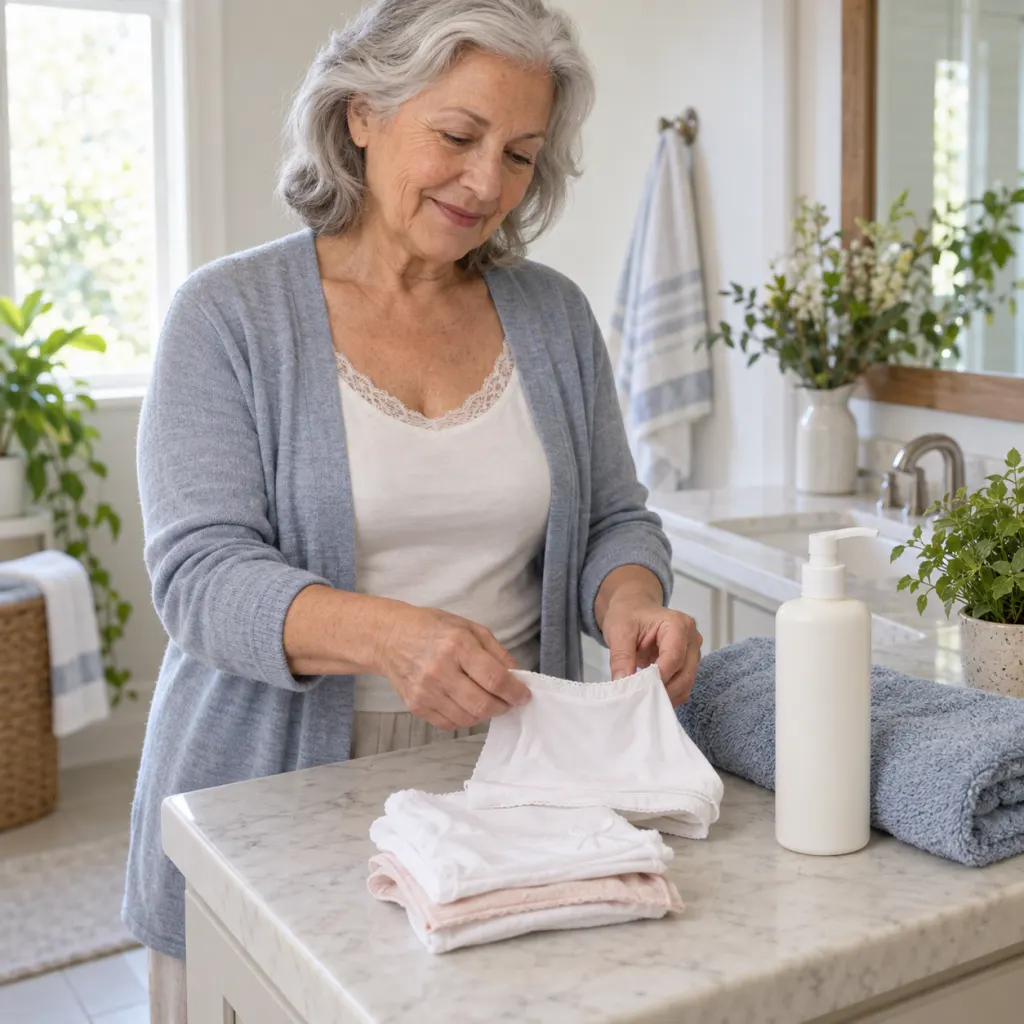
Bras, shapewear, camisoles, leggings, sleepwear, and close-fitting underwear collect sweat, skin oils, deodorant residue, and detergent fragrance. They may not look dirty, but odor can develop slowly when fabric repeatedly warms against the body. Cleveland Clinic’s body odor guidance recommends washing clothing regularly and choosing clean, loose-fitting cotton or moisture-wicking clothing for areas worn close to the skin: https://my.clevelandclinic.org/health/symptoms/17865-body-odor. The hidden habit is often not “never washing.” It is stretching a bra, support garment, or pajama top across several wears because it still looks fine. For many readers, a realistic system works better than a strict rule: keep enough everyday bras to rotate, air garments fully between wears, wash items that touch sweaty areas more often, and avoid putting lightly worn clothes back into a crowded drawer while still warm or damp.
A Quick Laundry And Fabric Check
When odor seems to return soon after dressing, look at the fabric routine before blaming the body. Useful checks include:
- Rotate bras and underwear so elastic areas can dry completely between wears.
- Wash workout clothes, shapewear, and sleepwear after sweaty or hot-flash nights.
- Use enough detergent for the load, but avoid overloading the washer so water can move through the fabric.
- Dry clothes fully before storing them, especially thick waistbands and bra bands.
- Choose breathable cotton or moisture-wicking fabrics for long days, travel, and warm weather.
Synthetic fabrics are not automatically bad, and cotton is not automatically perfect. The key is whether the garment traps heat, holds moisture against skin, or keeps old product residue in the areas where odor begins.

Habit 3: Using Scented Products Where Gentle Care Works Better
Heavy fragrance can make odor feel more complicated. Perfume, scented body wash, deodorizing sprays, scented wipes, and strongly fragranced laundry products can mix with sweat or irritate sensitive skin. The American Academy of Dermatology says older skin is often drier, thinner, and more easily irritated, and recommends gentle, fragrance-free cleansing for skin in the 60s and 70s: https://www.aad.org/public/everyday-care/skin-care-basics/care/skin-care-in-your-60s-and-70s. For the vulva and vagina, this matters even more. MedlinePlus notes that vaginitis can cause odor, itching, pain, and discharge, and that douches, vaginal sprays, soaps, detergents, fabric softeners, sensitivities, and menopause-related hormonal changes can be involved: https://medlineplus.gov/vaginitis.html. A calmer routine is usually plain warm water for the vulva, no douching, fragrance-free products near sensitive skin, and medical evaluation for persistent or unusual odor rather than repeated masking.
Habit 4: Treating Bladder Leaks As Only A Laundry Problem
Small urine leaks can be easy to minimize, especially when they happen during coughing, laughing, rushing to the bathroom, or overnight. But even a small amount of urine can leave odor in underwear, pads, bedding, chair cushions, or fitted pants. The National Institute on Aging explains that urinary incontinence is more common in older people, especially women, and that it can often be stopped or controlled: https://www.nia.nih.gov/health/bladder-health-and-incontinence/urinary-incontinence-older-adults. MedlinePlus also lists bladder issues, urinary incontinence, and urinary tract infections among possible menopause symptoms and related changes: https://medlineplus.gov/menopause.html. The habit to change is waiting until clothing is visibly wet. Change pads or protective underwear promptly, rinse reusable items before laundering when possible, protect bedding if nighttime leaks happen, and bring leakage up with a clinician. It is a common health issue, not a character flaw.

Habit 5: Relying On Whole-Body Deodorant Instead Of Finding The Source
Deodorant can be useful, but it works best when it is targeted. The American Academy of Dermatology explains that whole-body deodorants do not reduce sweat unless they contain antiperspirant ingredients, and dermatologists advise applying them only where odor starts rather than over the entire body: https://www.aad.org/public/everyday-care/skin-care-secrets/routine/whole-body-deodorant. That distinction matters because odor under the breast, in the groin, or around underwear may have a different cause than underarm odor. A product that helps the underarms may irritate skin folds or sensitive genital skin. If a deodorant stings, burns, causes redness, or seems to make odor more noticeable by mixing with sweat, stop using it in that area and simplify the routine. Clean, dry skin and breathable fabric usually come before stronger fragrance.
Habit 6: Overlooking Towels, Shoes, Bedding, And Night Sweats
Odor routines often focus on daytime clothing, but overnight and household textiles matter too. Menopause-related hot flashes and night sweats can leave sleepwear, sheets, pillowcases, and towels damp. MedlinePlus describes hot flashes and night sweats as common menopause symptoms: https://medlineplus.gov/menopause.html. A towel that never fully dries, slippers worn without socks, shoes kept in a closed closet while damp, or sheets used through several sweaty nights can hold odor and transfer it back to clean skin. The reset is practical: hang towels open, wash sleepwear after sweaty nights, rotate shoes, let insoles dry, and keep a light extra nightgown or top nearby if night sweats are frequent. These steps are not about perfection. They simply reduce the time that sweat and fabric spend together.
When Odor Deserves A Health Care Conversation
Most odor changes are manageable with routine changes, but some deserve prompt attention. Cleveland Clinic advises contacting a health care provider for sudden body odor changes, increased sweating, frequent skin infections in sweaty areas, fruity odor, bleach-like odor, or sweating that interferes with daily life: https://my.clevelandclinic.org/health/symptoms/17865-body-odor. MedlinePlus advises that vaginitis may involve odor, discharge, itching, burning, soreness, or pain, and that a health care provider may need to evaluate the cause: https://medlineplus.gov/vaginitis.html. Also seek care for a spreading rash, broken skin, fever, new pelvic pain, blood in urine, burning urination, or leakage that is new or worsening. These signs do not mean something terrible is happening, but they are better handled with qualified medical guidance than with stronger soap or repeated deodorizing.
A Gentle One-Week Reset
For a low-pressure reset, choose one week and observe patterns without shame. Use a gentle fragrance-free cleanser on skin, rinse well, and pat dry. Give extra drying time to under-breast, groin, belly-fold, and inner-thigh areas. Change underwear daily and close-fitting garments after sweating. Rotate bras. Wash sleepwear and bedding more often if night sweats occur. Avoid douching, scented vaginal products, and strong fragrance on irritated skin. Keep a short note of when odor appears: morning, after walking, after a hot flash, after certain clothing, after leakage, or with discharge or irritation. Patterns make the next step clearer. Sometimes the answer is laundry and fabric; sometimes it is skin-fold moisture; sometimes it is bladder support; and sometimes it is a clinician’s evaluation. Either way, the issue is common, practical, and worth addressing kindly.
Wrap-Up
Body odor in older women is usually a practical clue, not a personal failure. Sweat, bacteria, menopause-related sweating, skin folds, clothing, bladder leakage, vaginal irritation, fragrance, and laundry routines can all contribute. Start with gentle cleansing, thorough drying, fresh close-contact clothing, breathable fabrics, and less fragrance. If odor is sudden, persistent, strong, or paired with rash, discharge, burning, pain, fever, new leakage, or unusual sweating, bring it to a qualified health professional.
Frequently Asked Questions
- → Is stronger body odor always a sign of poor hygiene?
No. Sweat can develop odor when it mixes with bacteria on the skin, and odor may also be affected by hormones, fabrics, trapped moisture, bladder leakage, foods, or some health conditions. If normal bathing no longer helps, look for patterns instead of scrubbing harder.
- → Can menopause change body odor?
Menopause can bring hot flashes, night sweats, vaginal dryness, and bladder changes. Those changes can leave more moisture in clothing, bedding, skin folds, or underwear, which may make odor more noticeable.
- → Should older women douche or use vaginal deodorant for odor?
No. Douching and scented vaginal products can disturb or irritate sensitive tissue. Plain warm water for the vulva and medical guidance for persistent, strong, or unusual odor is a safer approach.
- → How often should bras or shapewear be washed if odor is a concern?
There is no single rule for everyone, but garments worn tightly against sweaty areas should be washed more often and fully dried between wears. If odor returns soon after dressing, rotate bras, wash close-contact garments after sweaty days, and avoid storing damp fabric.
- → When should odor be checked by a health professional?
Seek care if odor is sudden, persistent, very strong, or comes with rash, broken skin, discharge, burning, pelvic pain, fever, new bladder leakage, fruity odor, bleach-like odor, or sweating that interferes with daily life.
References
This content was developed and refined using reliable sources.
- https://medlineplus.gov/sweat.html
- https://my.clevelandclinic.org/health/symptoms/17865-body-odor
- https://medlineplus.gov/ency/article/003223.htm
- https://www.nia.nih.gov/health/skin-care/skin-care-and-aging
- https://www.aad.org/public/everyday-care/skin-care-basics/care/skin-care-in-your-60s-and-70s
- https://medlineplus.gov/vaginitis.html
- https://www.nia.nih.gov/health/bladder-health-and-incontinence/urinary-incontinence-older-adults
- https://medlineplus.gov/menopause.html
- https://www.aad.org/public/everyday-care/skin-care-secrets/routine/whole-body-deodorant