 Save
If you eat three dates a day, the most likely change is simple: you add a sweet, chewy fruit snack that supplies quick carbohydrate energy, fiber, and minerals, while also adding a meaningful number of calories. Dates are whole fruit, not added sugar, but dried dates are concentrated. That makes them useful in small portions and easy to overeat if you snack straight from the bag. The better question is not whether three dates are automatically good or bad. It is whether that portion fits the rest of your day, your appetite, your preferences, and any nutrition advice you personally follow.
The Short Answer
Three dates a day can fit into a balanced eating pattern for many people. They are especially appealing because they taste like dessert while still coming from a whole fruit. According to USDA FoodData Central data for Medjool dates, dates are mostly carbohydrate by weight and also contain dietary fiber and minerals such as potassium: USDA FoodData Central. That combination explains the everyday experience many people notice: dates give quick sweetness, have a more substantial chew than candy, and can make a small snack feel more satisfying than the same sweetness from syrup or a soft drink.
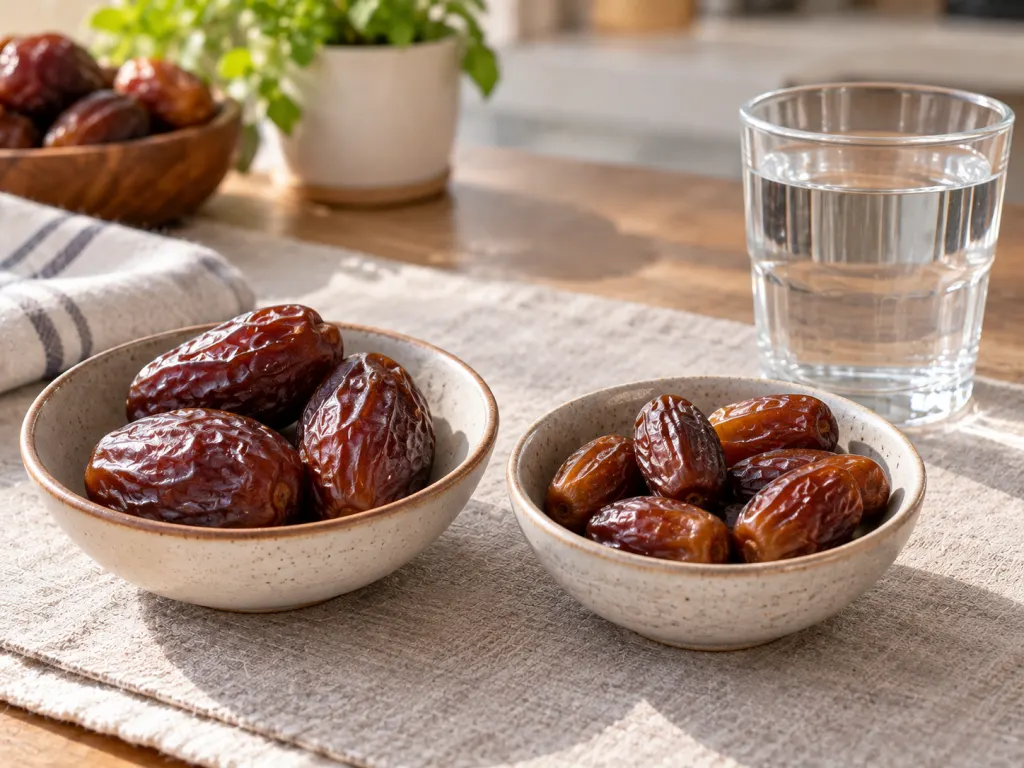
Still, the phrase “three dates” needs a little context. Date varieties and sizes differ. A large Medjool date can weigh about 24 grams, while smaller Deglet Noor dates are often lighter. So three large dates may be closer to a compact snack, while three small dates may be a modest sweet bite. The practical takeaway is to look at the date in your hand, not just the count. If the dates are large and soft, three can contribute a noticeable share of a snack’s calories and carbohydrates. If they are small, the impact is lower.
What Three Dates Contribute
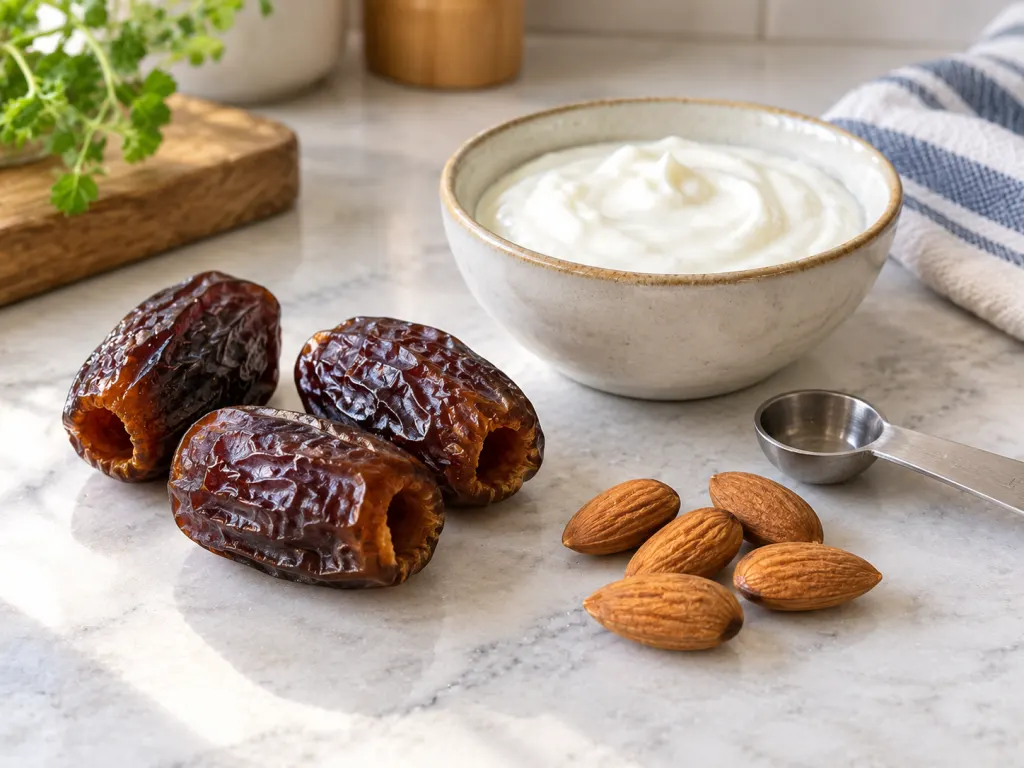
Using Medjool dates as a common example, three pitted dates are roughly 72 grams. Scaled from USDA’s per-100-gram figures, that portion is about 200 calories, about 54 grams of carbohydrate, and nearly 5 grams of fiber. The exact number will vary by size, brand, moisture level, and variety, but the pattern is consistent: dates are compact, naturally sweet fruit with very little fat and modest protein.
- Energy: three large dates can be enough to count as a real snack, not just a garnish.
- Carbohydrates: most of the calories come from naturally occurring sugars and other carbohydrates.
- Fiber: dates contribute dietary fiber, which is one reason they feel more substantial than many sweets.
- Minerals: dates contain potassium and smaller amounts of minerals such as magnesium and copper, though they should not be treated as a complete mineral source.
Natural Sugar Is Still Part of the Day
The FDA distinguishes between total sugars and added sugars: total sugars include sugars naturally present in fruit, while added sugars are put into foods during processing or preparation: FDA. Dates contain naturally occurring sugar, so eating whole dates is not the same as spooning added sugar into a drink. But naturally occurring sugar still contributes calories and carbohydrates. That is why dates work best when you treat them as part of the day’s food pattern rather than a free extra.
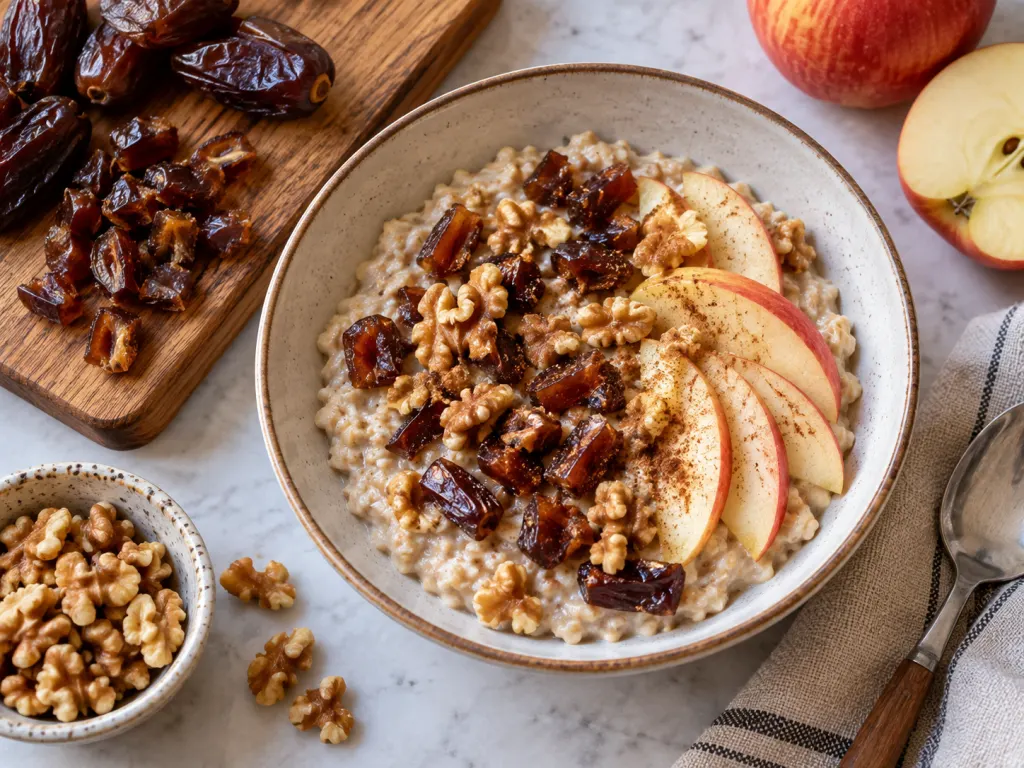
This matters most when dates are used as a “healthy sweetener.” Date paste, chopped dates, and date syrup can make recipes taste rich and caramel-like, but they do not make unlimited sweetness nutritionally invisible. Whole chopped dates usually bring more texture and fiber than syrup, but the portion still counts. In a breakfast bowl, for example, one or two chopped dates may be enough if the bowl already has banana, honey, sweetened yogurt, or granola. In a savory salad, the same dates may replace a sweet dressing or candied topping. The swap matters more than the halo.
Fiber Changes How the Snack Feels
MedlinePlus describes dietary fiber as the kind of carbohydrate found in plant foods and notes that fiber adds bulk to the diet and can help people feel full faster: MedlinePlus. Dates are not the highest-fiber food you can choose, but three large dates provide a meaningful amount for such a small portion. That fiber is one reason dates feel different from a spoonful of sugar or a handful of hard candy. The chew, the plant structure, and the fiber all slow the eating experience down.
If you rarely eat much fiber, adding several dates every day may be noticeable at first. Some people feel pleasantly satisfied; others may feel bloated if they add dates on top of other fiber-rich changes all at once. A gentle approach is to pair dates with water and with foods that bring protein or fat, such as plain yogurt, nuts, or a meal that already contains beans, eggs, cheese, or whole grains. Pairing does not turn dates into a different food, but it can make the snack feel more balanced and less like a stand-alone sweet.
Dates Are Whole Food, but They Are Concentrated
The current Dietary Guidelines for Americans emphasize whole, nutrient-dense foods and recommend limiting highly processed foods with added sugars and refined carbohydrates: ODPHP. Dates fit naturally into the “whole fruit” side of that idea, especially when they replace candy, cookies, or sweetened snack bars. At the same time, dried fruit is compact. Water has been reduced, flavor is intense, and it is easy to eat quickly.
That concentration is both the benefit and the caution. If you need a portable snack for a long workday, a few dates are tidy, shelf-stable, and easy to pack. If you tend to graze while cooking or watching television, the same convenience can work against you. A small bowl helps. So does deciding whether the dates are the snack itself or an ingredient in something larger. Three dates stuffed with nut butter, for example, are more substantial than three plain dates because the filling adds more calories and changes the snack from a fruit portion into a richer mini-dessert.
What Research Can and Cannot Say
Date palm fruit has been studied for its nutrient and phytochemical composition. A 2026 critical review indexed in PubMed describes dates as rich in carbohydrates, dietary fiber, essential minerals, and phytochemicals such as phenolic acids, flavonoids, carotenoids, and phytosterols, while also stressing that human evidence for many specific outcomes remains limited: PubMed. That distinction is important. It is fair to say dates contain interesting plant compounds. It is not fair to turn that into a promise that three dates a day will produce a specific medical result.
In everyday kitchen terms, the research supports a modest conclusion: dates can be a useful whole-fruit sweetener or snack, and their composition is more complex than plain sugar. But the larger eating pattern still matters. A person who eats dates with a varied diet rich in vegetables, beans, whole grains, proteins, and unsweetened drinks is in a different situation from someone adding dates on top of a day already heavy in sweet foods. No single fruit carries the whole job.
How to Use Three Dates Without Overdoing It
The easiest way to make dates work is to give them a job. Instead of eating them because they sound virtuous, use them where their sweetness and texture are genuinely helpful. Chop one into oatmeal instead of adding brown sugar. Slice two into a salad with bitter greens and lemony dressing. Blend one into a smoothie only if the rest of the smoothie is not already sweet. Or eat three plain dates with a protein-containing snack when you want something sweet but still want the snack to feel complete.
Here are practical ways to think about the portion: if three dates replace a candy bar, they may be a helpful swap. If three dates are added after dessert, they are still extra energy. If they help you enjoy plain yogurt, they may make a simple breakfast easier to stick with. If they trigger more grazing because they taste like caramel, portion them before you sit down. Dates are not a test of willpower; they are just concentrated fruit, and concentrated foods are easier to manage when you serve them intentionally.
Who Should Be More Deliberate
Some readers should be more careful with daily dates, not because dates are unusual, but because their carbohydrate density may matter. If you follow a carbohydrate plan, have been given individualized nutrition targets, or are adjusting meals for a health condition, dates should be counted as part of that plan. The NIH Office of Dietary Supplements notes that potassium needs and cautions can vary by personal health situation, especially when kidney function or certain medicines are involved: NIH Office of Dietary Supplements. That does not make dates unsafe for everyone; it means personal context matters.
For children, three large Medjool dates may be a bigger snack than adults realize. For older adults with dental work or chewing difficulty, sticky dates may be easier when chopped finely into oatmeal or softened in warm water. For anyone with a sensitive stomach, a sudden jump in dried fruit may feel uncomfortable. Small adjustments usually solve the kitchen problem: choose smaller dates, eat one or two instead of three, pair them with a meal, or rotate them with fresh fruit that has more water volume.
Bottom Line
Eating three dates a day usually means adding a small but concentrated whole-fruit snack: sweet, chewy, portable, and rich in carbohydrates, with useful fiber and minerals. It may help satisfy a sweet craving in a more food-like way than many processed sweets, especially when portioned and paired thoughtfully. The habit becomes less helpful if it quietly adds extra calories to an already sweet day or if it conflicts with personal nutrition guidance. Think of three dates as a portion to place, not a promise to chase.
Wrap-Up
Three dates a day can be a reasonable habit when they replace less satisfying sweets or serve a clear purpose in a meal. Large Medjool dates make the portion more substantial than many people expect, with roughly 200 calories in three dates. They provide carbohydrate energy, fiber, and minerals, but they are not a shortcut to a specific health outcome. The most practical approach is to portion them, pair them when needed, and count them honestly within the rest of the day.
Frequently Asked Questions
- → Is three dates a day a lot?
It depends on the size of the dates and the rest of your meals. Three large Medjool dates can be a real snack, roughly around 200 calories, while three smaller dates may be much lighter. Portion size matters more than the number alone.
- → Are dates better than candy?
Dates are whole fruit and provide fiber and minerals that candy usually does not. They are still sweet and calorie-dense, so the best comparison is practical: dates can be a useful swap when they replace candy, but they are still part of your total daily intake.
- → Should I eat dates in the morning or at night?
Timing is mostly personal. Morning works well if dates help sweeten oatmeal or yogurt. Later in the day works well if they replace a less satisfying dessert. The portion and the overall meal pattern matter more than the clock.
- → Can I eat dates every day?
Many people can include dates regularly as part of a varied eating pattern. If you track carbohydrates, have individualized nutrition advice, or have a medical condition that affects food choices, count dates within that plan and ask a qualified professional for personal guidance.
- → What is the best way to eat three dates?
Try them portioned on a small plate, chopped into oatmeal, sliced into a salad, or paired with plain yogurt or nuts. Avoid eating directly from a large container if you find it hard to stop, because dates are compact and easy to snack on quickly.
References
This content was developed and refined using reliable sources.
- https://api.nal.usda.gov/fdc/v1/food/168191?api_key=DEMO_KEY
- https://medlineplus.gov/dietaryfiber.html
- https://www.medlineplus.gov/carbohydrates.html
- https://www.fda.gov/food/nutrition-facts-label/added-sugars-nutrition-facts-label
- https://odphp.health.gov/our-work/nutrition-physical-activity/dietary-guidelines/current-dietary-guidelines
- https://pubmed.ncbi.nlm.nih.gov/42052280
- https://ods.od.nih.gov/factsheets/Potassium-Consumer