 Save
Some older adults seem to decline after entering a nursing home because the move combines two difficult things at once: a real change in health or independence, and the stress of adapting to an unfamiliar place. The nursing home may be necessary and still feel disorienting. A careful response looks beyond blame. It asks what changed, what may be reversible, what support the resident is missing, and whether the care plan still matches the person’s goals and preferences.
Decline can mean several different things
Families often use the word decline to describe very different changes. One person may stop walking as far. Another may sleep more, eat less, talk less, become confused, lose interest in activities, or seem emotionally flat. Those changes deserve attention, but they do not all point to the same cause. A sudden change over hours or days is different from a slow adjustment over weeks. A resident who is grieving the loss of home needs a different response than a resident with new confusion, dehydration, infection, unmanaged pain, or a medicine side effect.
It also helps to remember timing. Many people enter nursing homes after hospitalization, a fall, surgery, worsening memory problems, or a stretch of caregiving that became too hard to manage at home. Medicare explains that nursing home care plans begin with a health assessment and are updated when a resident’s status changes, with the resident and approved family members able to take part in planning care: https://www.medicare.gov/providers-services/original-medicare/nursing-homes/care-plan. That care-plan process is where vague worry can become practical questions.
The move often follows a crisis, so the decline may have started earlier
A nursing home admission is rarely a neutral life event. It often comes after months of shrinking independence or after an acute episode that changes what the person can safely do. The family may notice the decline only once daily care is being documented by new staff, but the roots may include frailty, recent hospitalization, reduced mobility, memory loss, poor sleep, or difficulty managing daily activities before admission. That does not make the change unimportant. It simply means the first question should be, “What baseline are we comparing this to?”
A useful baseline includes how the person walked, transferred, ate, communicated, slept, and made decisions before the illness or event that led to placement. If the resident was walking to the mailbox in June, hospitalized in July, and admitted in August, a September comparison should not skip over the July event. Families can ask staff to compare current function with hospital discharge notes, therapy assessments, and the first nursing home assessment rather than relying only on memory or emotion.
Loss of control can drain motivation
Even when staff are kind, institutional life can remove small choices that once helped a person feel like themselves. Wake time, bathing schedule, mealtimes, visitors, noise, room temperature, clothing, and activity choices may become partly dependent on staffing patterns and facility routines. The Administration for Community Living notes that residents in Medicare- or Medicaid-participating nursing homes have rights that include making independent choices, participating in care, receiving visitors, joining activities, and complaining without fear of retaliation: https://acl.gov/programs/long-term-care-ombudsman/long-term-care-ombudsman-program-protecting-rights-residents.
Choice is not a decorative issue. For many older adults, familiar routines are part of orientation and dignity. A resident who always bathed at night, drank coffee before conversation, prayed before breakfast, watched a favorite program, or took an afternoon walk may feel unsettled when those anchors disappear. Families can help by naming routines clearly during admission and care-plan meetings. Staff cannot honor every preference every day, but they cannot try to honor preferences they never learned.

Less movement can quickly affect strength
Physical decline can happen when a resident moves less than they did at home, even if the new setting feels safer. In a nursing home, meals may arrive in one place, laundry may be handled by staff, and walking may require assistance. Safety matters, but too much passive care can reduce practice with the very skills the person wants to keep. CDC guidance for adults 65 and older emphasizes a mix of aerobic activity, muscle-strengthening activity, and balance work, with the practical reminder that people should be active as their abilities and conditions allow: https://www.cdc.gov/physical-activity-basics/guidelines/older-adults.html.
Families do not need to design an exercise program. They can ask concrete questions: Is the resident walking to meals or being wheeled by default? Is therapy still involved? What level of assistance is safe? Are there chair-based activities, supervised hallway walks, balance practice, or strength work built into the week? For related background on maintaining function with age, readers may also find How to Protect Muscle After 50 and How to Recognize Common Causes of Weak Legs in Seniors useful.
Practical questions for a care-plan meeting include:
- What could the resident do on admission, and what can they do now?
- Has walking, transferring, eating, toileting, or communication changed?
- What goals are realistic for the next 30 days?
- Which activities should staff encourage, and which require supervision?
- Are hearing aids, glasses, dentures, shoes, walkers, or adaptive utensils available and actually being used?
- Who should the family contact if a change appears sudden?
Loneliness can happen even in a busy building
A nursing home is full of people, but a resident can still feel lonely. Social isolation means lacking relationships, contact, or support; loneliness is the feeling of being disconnected. CDC describes both as risks for serious mental and physical health concerns, and notes that older adults are among the groups at higher risk: https://www.cdc.gov/social-connectedness/risk-factors/index.html. WHO likewise describes social isolation and loneliness as important social determinants of health for older people and points to face-to-face and digital connection, community groups, befriending, and age-friendly environments as part of the response: https://www.who.int/health-topics/ageing/reducing-social-isolation-and-loneliness-among-older-people.
The painful part is that loneliness may not look like loneliness. It may look like refusing activities, snapping at staff, staying in bed, saying “I’m fine,” or asking repeatedly to go home. Some residents need time; others need a better match between the activity calendar and their identity. A former gardener may not care for bingo but may brighten while watering plants. A retired mechanic may prefer sorting tools, talking cars, or watching repairs. A private person may need one familiar visitor more than a large group event.

Mood changes should not be dismissed as normal aging
Sadness, grief, and homesickness are understandable after leaving home, but persistent low mood, loss of interest, sleep disruption, slowed speech, fatigue, or withdrawal should not be waved away. The National Institute on Aging explains that depression is common among older adults but is not a normal part of aging, and that sadness may not be the main sign for every person: https://www.nia.nih.gov/health/mental-and-emotional-health/depression-and-older-adults. Families can help by describing observable changes instead of debating whether the person is “just adjusting.”
For example, “She no longer calls her sister, she leaves half her meals, and she stopped attending the music group she liked” is more useful than “She seems depressed.” The first statement gives staff something to track. It can also help staff separate mood, pain, sleep, hearing, vision, dental problems, grief, and medical causes that may overlap. If the resident has dementia, the picture can be even less obvious because distress may show up as agitation, resistance to care, pacing, calling out, or sudden quietness.
Sudden confusion is a medical warning sign, not just adjustment
Abrupt confusion after a move should be taken seriously. MedlinePlus describes delirium as a sudden confused state that can begin quickly and may be linked with factors such as dehydration, infections, hospitalization, serious illness, severe pain, sleep deprivation, surgery, or medicines; older age, dementia, nursing home residence, and serious illness can increase risk: https://medlineplus.gov/delirium.html. Delirium can look like sleepiness, agitation, disorientation, disrupted sleep, memory problems, or trouble focusing.
The key distinction is speed. Dementia usually changes gradually. Delirium tends to appear over hours or days and may fluctuate. Families should tell staff immediately when a resident is suddenly “not themselves,” especially if the change includes new drowsiness, agitation, hallucinations, a fall, poor intake, fever, breathing trouble, severe pain, or inability to stay awake. The goal is not to diagnose the cause at the bedside; it is to make sure the change is assessed promptly.
Food, hydration, sleep, hearing, and vision can quietly shape adaptation
Small practical barriers can snowball. A resident may eat less because dentures are misplaced, meals arrive when they are not hungry, food texture feels wrong, or they need help opening containers. They may withdraw because hearing aids are dead, glasses are missing, or background noise makes conversation exhausting. They may sleep poorly because of hallway light, roommate noise, overnight checks, pain, anxiety, or unfamiliar routines. None of these issues fully explains every decline, but each can make a hard transition harder.
Families can bring these details into the care plan without accusing anyone. Ask whether weight, fluid intake, sleep, bowel patterns, dental comfort, hearing, and vision have changed since admission. Ask whether the resident has access to familiar objects, properly fitting shoes, labeled glasses, working hearing aids, and preferred snacks or beverages if allowed by the care plan. A practical focus often works better than a general complaint that “they are going downhill.”
A better response starts with observation, not blame
Some nursing homes provide attentive, person-centered care; others struggle with staffing, communication, or consistency. Both realities can exist. Medicare advises families choosing a nursing home to compare health inspections, staffing, and quality measures, to visit facilities when possible, and to ask about therapy, doctors, and resident life: https://www.medicare.gov/providers-services/original-medicare/nursing-homes/choosing. After admission, the same careful mindset applies. Families can look for patterns, ask for explanations, and document changes without assuming one simple cause.
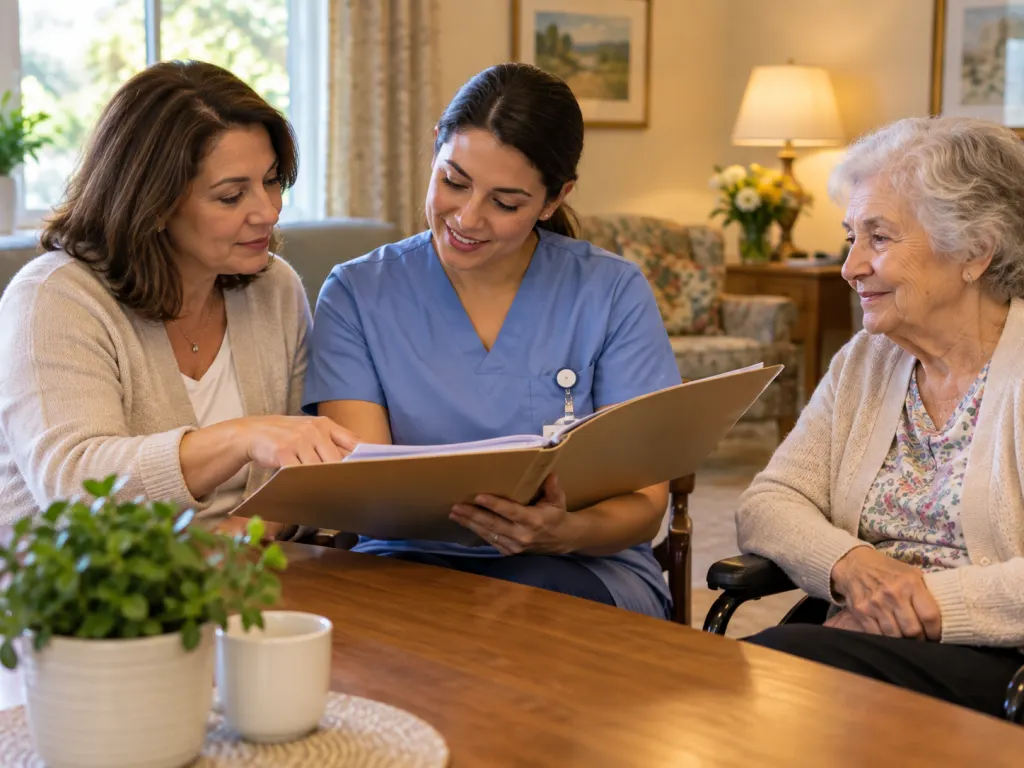
A clear family log can be surprisingly useful. Record the date, what changed, how long it lasted, what staff said, and whether it improved. Bring photos or examples of the resident’s previous function if they clarify the baseline. Ask for a care-plan meeting when several changes cluster together. If the resident can participate, include them. If they cannot, keep their known preferences at the center of the conversation.
What families can ask for in the first weeks
The first weeks after admission are a time to stabilize routines and spot problems early. Families can ask for the resident’s main goals to be written in plain language: walk to the dining room with help, attend one preferred activity twice a week, call family after dinner, use hearing aids daily, sit near a window, or return to the community if that is realistic. Medicare’s care-plan guidance says the plan may include needed services, staff roles, equipment, food preferences, and how the plan will help the resident reach goals, which makes goal-setting a legitimate part of the discussion.
It is also fair to ask who owns each part of the plan. Nursing staff, therapy, activities, dietary services, social work, and the medical provider may all see different pieces of the person. When decline is multidimensional, the response should be coordinated. A resident who is eating less, walking less, and talking less may need more than one adjustment.
When to escalate a concern
Families should escalate quickly when change is sudden, severe, or unexplained. Ask the nurse or medical provider for same-day assessment if the resident has abrupt confusion, repeated falls, new inability to walk or transfer, severe pain, breathing trouble, fever, signs of dehydration, major sleepiness, new agitation, or a major change in eating or drinking. If staff concerns are not addressed, ask for the director of nursing, administrator, social worker, care-plan meeting, or the local Long-Term Care Ombudsman program. ACL notes that ombudsman programs help residents and families understand rights and work through problems affecting health, safety, welfare, and rights.
Decline after a nursing home move is not one story. Sometimes it reflects the illness that made the move necessary. Sometimes it reflects grief, lost routines, loneliness, reduced movement, communication barriers, or a care plan that needs revision. Often it is a mixture. The most helpful family role is to stay observant, specific, and persistent: name the change, ask what is being measured, connect the resident’s preferences to daily care, and keep the person’s dignity visible in every conversation.
Wrap-Up
A nursing home move can protect an older adult and still trigger or reveal decline. The safest interpretation is usually multifactorial: recent illness, reduced activity, emotional distress, loneliness, sleep disruption, sensory barriers, and care-plan gaps can all contribute. Families can help most by documenting changes, participating in care planning, supporting meaningful routines, and asking for prompt assessment when changes are sudden or severe.
Frequently Asked Questions
- → Is decline after moving to a nursing home always the facility’s fault?
No. The move often follows a serious change in health, function, memory, or caregiving needs. That said, the facility still has a responsibility to assess changes, update the care plan, protect resident rights, and communicate clearly with the resident and family.
- → How long does adjustment usually take?
There is no single timeline. Some residents settle within days, while others need weeks or longer, especially after hospitalization, bereavement, memory changes, or a reluctant move. Sudden confusion, rapid weakness, repeated falls, or major changes in eating or drinking should be raised promptly rather than treated as ordinary adjustment.
- → What should families bring to a care-plan meeting?
Bring a short baseline: usual walking ability, communication style, sleep pattern, food preferences, hearing or vision needs, meaningful routines, social preferences, and recent changes. Specific examples help staff connect the resident’s history to daily care.
- → Can social isolation happen when a resident is surrounded by people?
Yes. A person can be around others and still feel disconnected if the relationships, activities, language, hearing environment, or routines do not feel meaningful. One familiar visitor, a preferred activity, or a small purposeful role may matter more than a crowded calendar.
- → What changes should be reported right away?
Report abrupt confusion, severe sleepiness, agitation that is new, repeated falls, new trouble walking or transferring, severe pain, fever, breathing trouble, signs of dehydration, or a major change in eating or drinking. Ask who will assess the change and when the family will receive an update.
References
This content was developed and refined using reliable sources.
- https://www.medicare.gov/providers-services/original-medicare/nursing-homes/care-plan
- https://acl.gov/programs/long-term-care-ombudsman/long-term-care-ombudsman-program-protecting-rights-residents
- https://www.cdc.gov/physical-activity-basics/guidelines/older-adults.html
- https://www.cdc.gov/social-connectedness/risk-factors/index.html
- https://www.who.int/health-topics/ageing/reducing-social-isolation-and-loneliness-among-older-people
- https://www.nia.nih.gov/health/mental-and-emotional-health/depression-and-older-adults
- https://medlineplus.gov/delirium.html
- https://www.medicare.gov/providers-services/original-medicare/nursing-homes/choosing