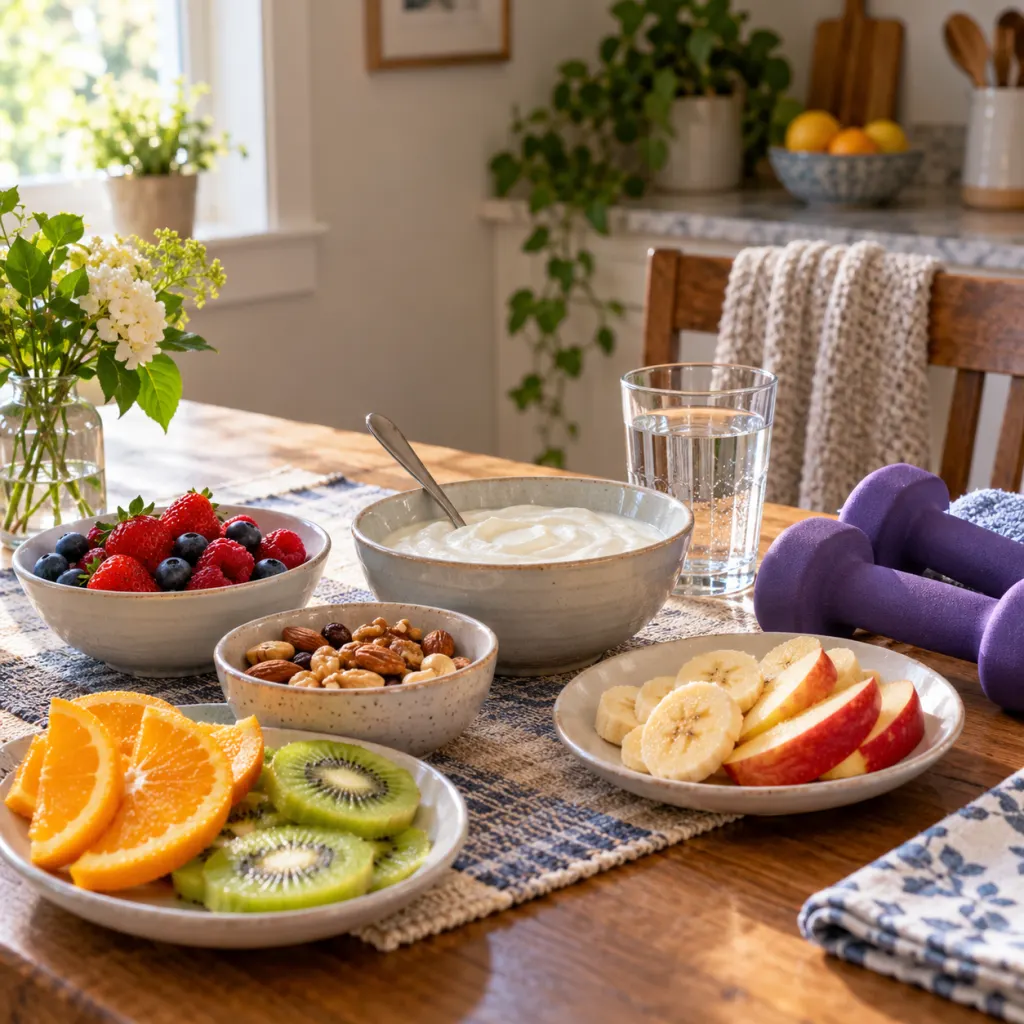
 Save
If a woman ate eggs at every meal for five months and then had an ordinary routine checkup, the most responsible takeaway would be modest: one person's results cannot prove that an egg-heavy routine is right for everyone. Eggs are a useful protein food, and modern guidance is less simplistic than the old advice to avoid them completely. But the larger meal pattern matters. The American Heart Association notes that healthy individuals can include up to one whole egg or equivalent daily while emphasizing overall eating patterns rather than a single food https://professional.heart.org/en/science-news/dietary-cholesterol-and-cardiovascular-risk/top-things-to-know. So the real question is not whether eggs are secretly perfect or dangerous. It is what else was on the plate, how the eggs were cooked, what the person's usual needs were, and what a qualified clinician saw in the full context.
Why the checkup story needs context
Viral food stories often work because they turn a private experiment into a simple lesson. Someone eats one food every day, waits for a checkup, and the result sounds surprising. That format is easy to remember, but it is weak evidence. A routine checkup is a snapshot. It may reflect genetics, body size, activity, sleep, other meals, alcohol intake, stress, age, and many factors that are not visible in the story. It also matters what the person ate before the five months began. If eggs replaced pastries, processed meats, or buttery takeout, the change would mean something different than if eggs displaced beans, fish, vegetables, and whole grains.
The useful way to read the story is as a prompt for better questions. How many eggs were eaten in a typical day? Were they boiled, poached, scrambled with butter, fried in bacon fat, or baked into rich dishes? Were meals built with vegetables and whole grains, or were they mostly eggs and refined sides? Did the person already have a known health condition or a personal target set by a clinician? Without those details, the checkup result is not a rule. It is only one person's experience, and it should not become a universal recommendation.
What eggs contribute nutritionally
Eggs are dense, convenient, and versatile. They count among protein foods in U.S. dietary guidance, along with seafood, poultry, lean meats, beans, lentils, nuts, seeds, soy foods, and other options https://www.medlineplus.gov/ency/article/002093.htm. They also contain choline, a nutrient involved in cell membranes and normal nervous system function. The National Institutes of Health Office of Dietary Supplements lists one large hard-boiled egg as providing about 147 mg of choline, while noting that choline comes from many foods, not eggs alone https://ods.od.nih.gov/factsheets/Choline-HealthProfessional/.
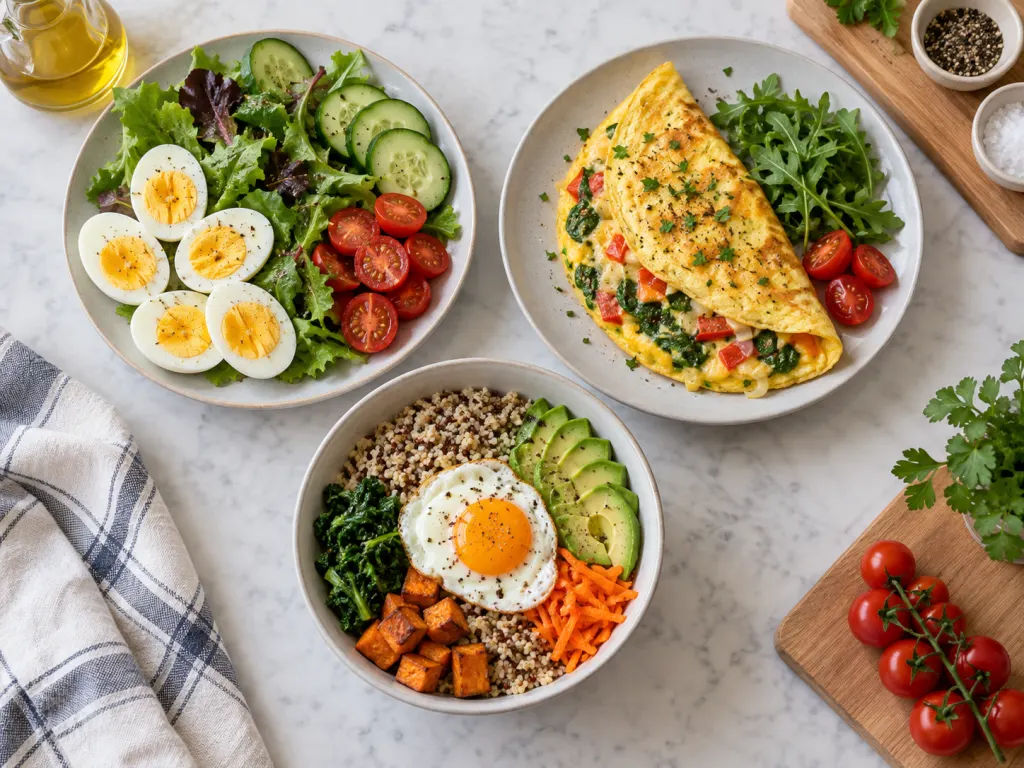
That nutrient profile explains why eggs can be part of many ordinary breakfasts, lunches, and dinners. It does not mean every meal should revolve around them. A good eating pattern has repetition where it helps, but enough variety to cover different nutrients, textures, and food groups. When eggs appear often, the supporting foods become especially important:
- Use vegetables to add volume, color, and different micronutrients.
- Pair eggs with whole grains, potatoes, beans, lentils, or fruit instead of making the meal only protein and fat.
- Choose cooking fats thoughtfully, such as liquid vegetable oils used in modest amounts.
- Rotate in other protein foods so the routine does not crowd out fish, legumes, yogurt, tofu, poultry, nuts, or seeds.
- Keep egg dishes safe by refrigerating eggs and cooking them thoroughly.
The issue is the whole plate, not only the yolk
Older advice often focused heavily on dietary cholesterol, which made eggs a convenient symbol. Current nutrition guidance is more pattern-based. The American Heart Association's science advisory emphasizes that dietary cholesterol is difficult to separate from the rest of the diet because many high-cholesterol foods also come with saturated fat. It also highlights dietary patterns rich in fruits, vegetables, whole grains, low-fat or fat-free dairy, lean protein sources, nuts, seeds, and liquid non-tropical vegetable oils https://professional.heart.org/en/science-news/dietary-cholesterol-and-cardiovascular-risk/top-things-to-know.
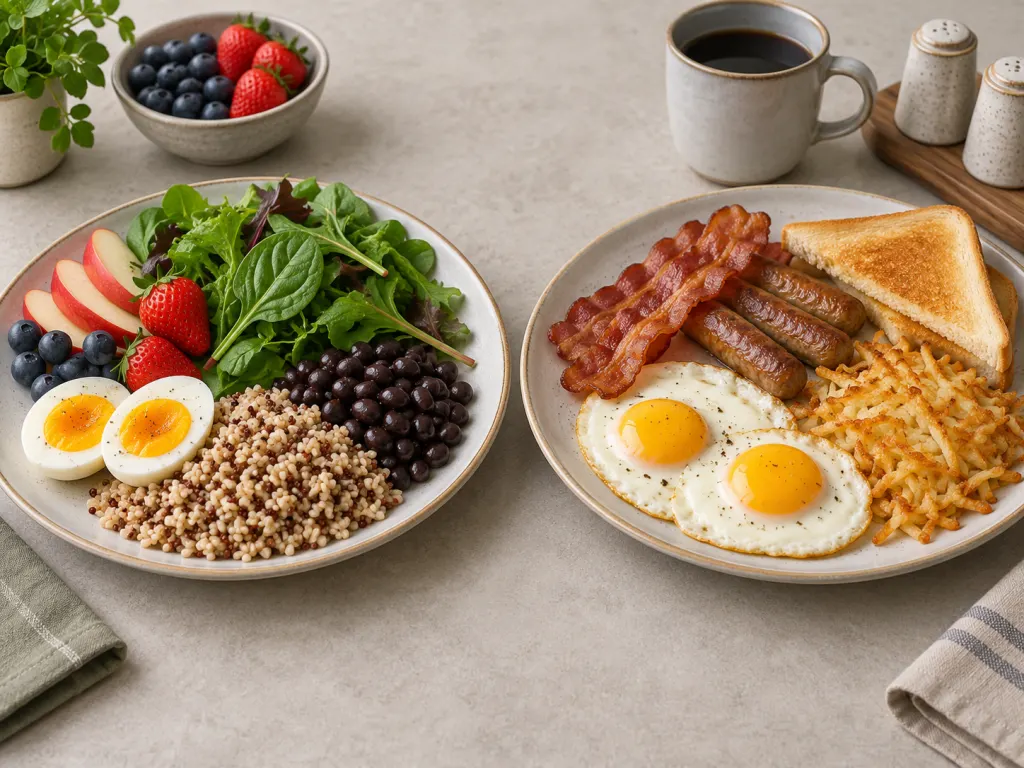
This is why two people can eat the same number of eggs and still have very different overall routines. One person might eat a vegetable omelet with oats and fruit, a lunch salad with a boiled egg and beans, and a simple dinner with eggs, greens, and potatoes. Another might eat eggs with sausage at breakfast, mayonnaise-heavy egg salad at lunch, and a butter-rich quiche at dinner. The word "eggs" appears in both routines, but the meal pattern is not the same. The side dishes, cooking fats, processed meats, portions, and fiber-rich foods change the nutritional picture.
What a five-month self-experiment cannot tell you
A five-month food routine can be personally interesting, but it is not the same as a clinical trial. There is no control group, no blinding, no measured comparison diet, and usually no record of every ingredient. Even if a checkup looks reassuring, that does not show that the routine would be wise for someone else. If a result looks concerning, it also does not prove eggs alone were responsible. The evidence has to be interpreted with the person's full diet, history, and clinician's judgment.
The American Heart Association notes that evidence on dietary cholesterol and cardiovascular risk can be hard to interpret because studies differ and because other dietary components can affect results https://professional.heart.org/en/science-news/dietary-cholesterol-and-cardiovascular-risk/top-things-to-know. MedlinePlus also explains that the type of fat in the diet matters, and that saturated and trans fats are the kinds people are generally advised to limit or replace with oils such as canola, olive, safflower, sesame, or sunflower https://www.medlineplus.gov/dietaryfats.html. In plain kitchen terms, an egg cooked in a small amount of olive oil is not the same meal as eggs served daily with large portions of butter, cream, and processed meat.

How to make an egg-heavy routine less one-note
If someone genuinely enjoys eggs often, the most practical move is to improve the surrounding meals rather than turn every breakfast into a moral debate. Boiled, poached, or gently scrambled eggs can be paired with tomatoes, greens, mushrooms, peppers, beans, whole-grain toast, brown rice, roasted vegetables, or fruit. Egg-based dinners can be lighter and more varied when they look like a vegetable frittata, shakshuka-style skillet, grain bowl topper, or soup garnish instead of a rich pie every night. The goal is not to make eggs disappear; it is to keep them from pushing everything else off the plate.
Variety also helps with appetite and sustainability. Eating the same core food at every meal can become boring, and boredom sometimes leads people to add more salt, rich sauces, or highly processed sides just to make the meal feel different. Rotating cooking styles, vegetables, grains, legumes, and other proteins gives the routine more range. It also makes the story less about a single food and more about a pattern a real person could live with.
Do not forget egg safety
Nutrition is only half the egg conversation. Safe handling matters because raw shell eggs can contain Salmonella even when the shells look clean. The FDA advises buying refrigerated eggs, storing them in a refrigerator at 40 degrees F or below, cooking eggs until both yolks and whites are firm, and cooking dishes that contain eggs thoroughly https://www.fda.gov/food/buy-store-serve-safe-food/what-you-need-know-about-egg-safety. For a person eating eggs often, those habits are not small details. They are part of making the routine sensible.
This also means being careful with homemade dressings, sauces, desserts, or drinks that use raw or lightly cooked eggs. If a recipe depends on that texture, pasteurized eggs or pasteurized egg products are the safer route. Leftover egg dishes should be chilled promptly and reheated thoroughly. A daily habit should be easy enough to repeat safely, not so casual that basic food handling gets skipped.
What to ask at a checkup instead
If an egg-heavy routine is already part of daily life, the better checkup question is not, "Did I pass?" It is, "Does this eating pattern fit my situation?" A clinician or registered dietitian can consider the person's full health picture, typical meals, preferences, and goals. The same plate will not be interpreted the same way for every person. Someone with a medically advised nutrition plan may need more individualized guidance than a generally healthy person who occasionally adds eggs to balanced meals.
It can help to bring a short, honest food log rather than a vague statement such as "I eat a lot of eggs." Include the number of eggs, cooking method, sides, beverages, snacks, and weekend patterns. That gives the professional something useful to evaluate. It also reduces the chance of blaming or crediting one food when the larger routine is doing most of the work.
The calm takeaway
The strongest conclusion is also the least dramatic: eggs can fit into many healthy eating patterns, but eating them at every meal for months is not automatically a smart experiment, and one routine checkup cannot settle the question for everyone. What matters is the total pattern: variety, cooking fats, fiber-rich foods, vegetables, fruits, whole grains, other proteins, food safety, and individualized guidance when health decisions are personal. The viral version asks whether eggs were vindicated. The better kitchen question is whether the whole routine is balanced, safe, and appropriate for the person eating it.
Wrap-Up
A reported five-month egg-heavy routine is best understood as an anecdote, not a rule. Eggs provide protein and choline and may fit into balanced meals, but the rest of the plate matters just as much: vegetables, whole grains, legumes, fruit, cooking fats, and variety all change the picture. Safe handling matters too, especially for anyone eating eggs frequently. If a person is using checkup results to judge a major eating pattern, that conversation belongs with a qualified health professional who can interpret the whole situation.
Frequently Asked Questions
- → Does one person's checkup prove that eating eggs at every meal is safe for everyone?
No. One person's checkup is an anecdote, not proof for everyone. Results can be shaped by genetics, activity, overall meals, cooking fats, body size, age, and medical history. Personal decisions should be discussed with a qualified health professional.
- → Are eggs considered a protein food?
Yes. U.S. dietary guidance includes eggs among protein foods, along with seafood, poultry, lean meats, beans, lentils, nuts, seeds, and soy foods. The practical goal is variety across the week rather than relying on one protein source at every meal.
- → What matters most if someone eats eggs often?
The surrounding pattern matters: vegetables, fruits, whole grains, legumes, cooking fats, processed meats, portions, and food safety. Eggs served with fiber-rich sides and vegetables create a different routine than eggs paired daily with large amounts of butter, cream, or processed meats.
- → What is the safest way to handle eggs at home?
Buy refrigerated eggs, keep them cold, avoid cracked shells, wash hands and surfaces after contact with raw egg, and cook eggs until the yolk and white are firm. Egg dishes should be cooked thoroughly and leftovers should be chilled promptly.
- → Should someone change their egg intake before a routine checkup?
Do not make major food changes just to create a better-looking appointment. A more useful approach is to be honest about the routine and bring a brief food log. A doctor or qualified health professional can interpret the pattern in context.
References
This content was developed and refined using reliable sources.
- https://professional.heart.org/en/science-news/dietary-cholesterol-and-cardiovascular-risk/top-things-to-know
- https://www.medlineplus.gov/ency/article/002093.htm
- https://ods.od.nih.gov/factsheets/Choline-HealthProfessional
- https://www.medlineplus.gov/dietaryfats.html
- https://www.fda.gov/food/buy-store-serve-safe-food/what-you-need-know-about-egg-safety