 Save
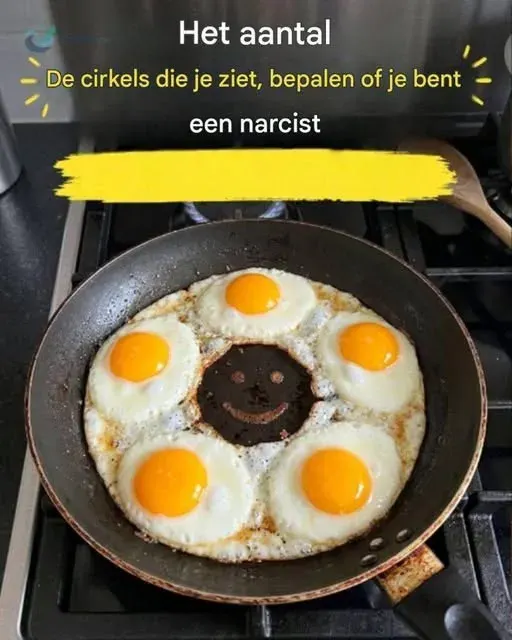
The answer to the eggs-left riddle is 4 eggs. The wording says, “I have 6 eggs. I cracked 2. I fried 2. I ate 2.” The neat solution is that the same two eggs were cracked, then fried, then eaten. They are not three separate pairs unless the riddle clearly says “another two” each time. So 6 eggs minus the 2 eaten eggs leaves 4 eggs. The riddle works because it invites a fast arithmetic answer before the reader has tracked which objects the verbs are acting on. That makes it less a food question than a compact lesson in reading, assumptions, and logical bookkeeping.
The Short Answer
Start with the six eggs as six separate objects. Label them, mentally, A, B, C, D, E, and F. If eggs A and B are cracked, those are still the same two eggs. If eggs A and B are then fried, they have changed form, but they have not become new eggs. If eggs A and B are eaten, those two are gone from the set you still have. Eggs C, D, E, and F remain. That is why the most reasonable answer is 4 eggs left.
The tempting answer is often 0, because a reader may add the three actions as though each action used a new pair: 2 cracked, plus 2 fried, plus 2 eaten. That interpretation quietly inserts words that are not in the riddle. The line does not say “I cracked 2, fried another 2, and ate another 2.” It only repeats the number 2. In ordinary kitchen sequence, cracking comes before frying, and eating comes after frying. The riddle’s trick is that the same pair can satisfy all three statements.
Why a Simple Riddle Feels Trickier Than It Is
This puzzle belongs to a family of short questions that feel easy because their surface arithmetic is familiar. A similar effect appears in cognitive-reflection problems: a question suggests an immediate answer, but careful checking shows that the immediate answer may not fit the wording. A Yale School of Management discussion of the famous bat-and-ball problem describes how an answer can feel obvious while failing to match the conditions in the prompt https://insights.som.yale.edu/insights/can-reflection-dislodge-faulty-intuition.
The eggs riddle is gentler than the bat-and-ball problem because the arithmetic is not difficult. Its challenge is reference: What does each “2” refer to? Once you decide that every verb is acting on a separate pair, the zero answer follows quickly. Once you notice that cooking normally transforms the same ingredient across stages, the four answer becomes natural. The puzzle is a reminder that small word problems often test interpretation before calculation.
Track the Objects, Not Just the Numbers
A good way to solve this riddle is to stop counting verbs and start tracking objects. Numbers tell you how many items are involved, but the verbs tell you what happens to those items. “Cracked,” “fried,” and “ate” are not independent piles. They can describe a sequence applied to the same two eggs. Try the riddle with a small table in your head:
- Beginning: 6 whole eggs are available.
- Cracked: 2 eggs are opened for cooking, leaving 4 untouched eggs plus 2 cracked eggs.
- Fried: those same 2 cracked eggs are cooked.
- Eaten: those same 2 cooked eggs are consumed.
- End: the 4 untouched eggs are left.
Where the Zero Answer Comes From
The zero answer is not random; it comes from treating the riddle as a subtraction list. The reader sees three phrases with the number 2 and combines them into 2 + 2 + 2. Since 6 minus 6 equals 0, that answer feels tidy. But tidy arithmetic can still be tied to the wrong model of the sentence. The question is not “How many egg-actions happened?” It is “How many eggs do I have left?” Those are different tasks.
In research on the Cognitive Reflection Test, published in Behavior Research Methods, the authors describe these kinds of items as problems that reliably suggest an intuitive but incorrect response, requiring the solver to reflect and question that response https://pubmed.ncbi.nlm.nih.gov/25740762/. The eggs riddle is not a formal assessment, but it uses the same everyday pattern: an answer appears before the reader has checked whether it fits every word.
A More Formal Way to Read the Wording
If we write the riddle as a tiny sequence, the common answer becomes even clearer. Let the original set be six eggs. Choose a subset of two eggs for breakfast. Crack that subset. Fry that subset. Eat that subset. The final possession set contains the original six minus the two that were eaten, so the remaining count is four. Nothing in the sentence requires choosing a fresh subset of two eggs for each action.
This is the key difference between an action count and an object count. There are three action phrases, but only two eggs have to be involved. If you washed a shirt, dried the shirt, and wore the shirt, you would not say three shirts were used. You would understand one shirt moved through three states. The eggs riddle hides that same logic behind repeated numbers.
Why Wording Changes the Answer
The answer would change if the riddle added clarifying words. “I cracked 2, fried another 2, and ate another 2” would point to three different pairs, so the answer would be 0. “I cracked 2 but fried 2 different eggs” would also alter the count. “I had 6 eggs, 2 were cracked by accident, then I fried 2 whole eggs and ate 2 different fried eggs” would create another interpretation. The classic version does not do that. It leaves the actions close enough together that the same two eggs are the cleanest reading.
This is why arguing over the riddle can feel oddly intense. People are not only choosing a number; they are choosing an implied story. One story says the speaker prepared and ate two eggs. The other story says the speaker used up all six eggs through separate actions. The first story needs fewer hidden assumptions, so it is the stronger solution.
How to Check Your Answer Before You Share It
For riddles like this, the safest habit is to replay the sentence slowly and ask whether you added any missing words. Did you insert “another”? Did you assume each sentence begins with a fresh batch? Did you answer the number pattern instead of the final question? These checks are useful because many short puzzles are built to reward careful reading rather than speed.
The same habit applies beyond riddles. Word problems, forms, signs, and instructions often depend on reference words such as “same,” “another,” “left,” “remaining,” “before,” and “after.” A fast calculation can be correct only if the underlying interpretation is correct. The National Library of Medicine summary of research on cognitive reflection notes that reflection involves questioning the first response that comes to mind https://pubmed.ncbi.nlm.nih.gov/25740762/. In plain terms: first answers are candidates, not verdicts.
What the Riddle Does Not Prove
The riddle is fun, but it should not be used to label people as clever or careless. A wrong answer may come from reading quickly, seeing a different implied scenario, or encountering a version that was worded differently. It also does not prove that a certain percentage of people fail it. Unless a claim is backed by a documented survey with a clear sample and method, it is safer to treat big viral percentages as entertainment framing, not evidence.
Studies of cognitive-reflection items show that prior exposure and problem structure can affect how people answer. An open-access Springer article on the Cognitive Reflection Test explains that such problems are designed to cue intuitive answers and that repeated exposure can raise accuracy, even while the test may remain informative in research settings https://link.springer.com/article/10.3758/s13428-017-0963-x. For a casual egg riddle, the practical takeaway is modest: pause long enough to check what each word is doing.
A Clean Version to Tell Someone Else
If you want to share the riddle fairly, keep the wording short and do not over-explain it before the other person answers: “I have 6 eggs. I cracked 2. I fried 2. I ate 2. How many eggs do I have left?” After they answer, ask them which eggs were fried and eaten. That follow-up usually reveals the whole trick. If they say 0, they counted three separate pairs. If they say 4, they tracked one pair through three actions.
The best explanation is not “you forgot the trick.” It is “the same two eggs can be cracked, fried, and eaten.” That keeps the solution friendly and precise. The riddle is more satisfying when it becomes a small demonstration of careful reading rather than a contest about who answered fastest.
Wrap-Up
The eggs-left riddle is solved by tracking the eggs through the actions. Two eggs are cracked, those same two are fried, and those same two are eaten. Since only two of the original six are used up, four eggs remain. The common zero answer comes from adding the repeated 2s as if each action involved a new pair, but that adds an assumption the wording does not require.
Frequently Asked Questions
- → What is the answer to the 6 eggs riddle?
The usual answer is 4 eggs. You begin with 6 eggs and use 2 of them. Those same 2 eggs are cracked, fried, and eaten, leaving the other 4 eggs.
- → Why do some people answer 0?
They read the riddle as three separate uses of eggs: 2 cracked, 2 fried, and 2 eaten. That reading inserts the idea of “another two” into the sentence. The classic wording does not say that.
- → Could the answer ever be 0?
Yes, but only with different wording. If the riddle said, “I cracked 2, fried another 2, and ate another 2,” then all 6 eggs would be accounted for separately. In the standard version, 4 is the cleaner answer.
- → Is this a math riddle or a reading riddle?
It is both, but the reading part matters more. The arithmetic is simple once you decide whether the repeated number refers to the same eggs or different eggs.
- → What is the easiest way to avoid the trap?
Ask what each action applies to. If the sentence does not say the next action uses new eggs, assume the same two eggs can move through the sequence from cracked to fried to eaten.