 Save
The honest answer is: you can only solve “How many circles can you see?” after deciding what counts as a circle. In the common fried-egg-in-a-pan version, most people first notice the yellow yolks, the round pan, and the circular arrangement of eggs. A stricter count includes only complete, clearly bounded circles. A looser count may include rings, rims, outlines, repeated round forms, and near-circles. That is why the same image can produce several defensible answers. The useful lesson is not that one count reveals your personality; it is that attention, grouping, and expectations shape what you notice.
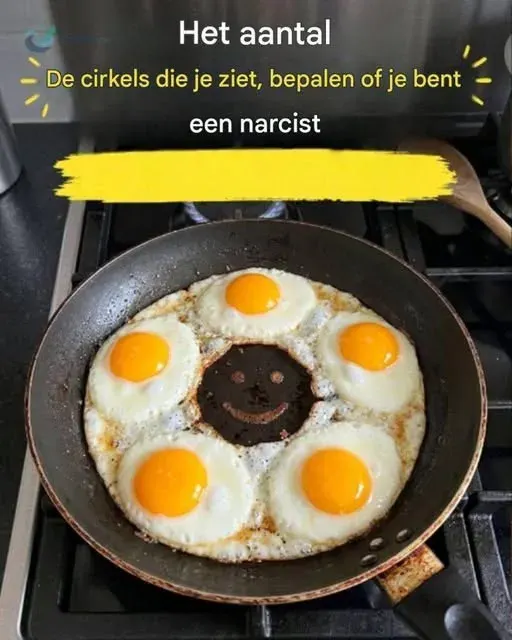
Counting the pictured fried-egg design
Start with the five yellow yolks. Count the pan as another round shape. If you also count the two small eyes in the smiley face, that gives eight obvious round features under that rule. Counting the pan’s inner and outer rims separately, or treating irregular egg whites as circles, produces another total. State your rule rather than treating a disputed count as a diagnosis. The image’s narcissism claim has no valid diagnostic basis.
Start With A Counting Rule
Before comparing answers, choose a rule. A visual puzzle can ask “How many circles?” in several different ways: visible complete circles only, all circular objects, all circular outlines, or every circle implied by the arrangement. If the puzzle does not state the rule, there may be no official count. That is not a failure on your part. It is part of the format. Many viral image puzzles are designed to reward second looks, encourage comment threads, and make people argue over the boundary between “circle,” “oval,” “ring,” “arc,” and “round object.”
A practical first pass is to count the most visible circles: yolks, the outside edge of the pan, the inside cooking surface if it is clearly bounded, and any complete rings made by the egg whites. Then make a second pass for hidden or debatable shapes. Are the whites actually circles, or are they irregular blobs? Does a pan rim count as one circle or two concentric circles? Are partial curves allowed? Are shadows or highlights forming circular outlines? Each yes-or-no choice changes the total.
Why Different People See Different Totals
People do not inspect an image like a measuring machine. Vision organizes details into meaningful wholes. A major review of Gestalt psychology in visual perception describes classic grouping principles such as proximity, similarity, common fate, continuity, closure, symmetry, and figure-ground organization as central to how people perceive forms, not just as classroom curiosities https://pmc.ncbi.nlm.nih.gov/articles/PMC3482144/. In a circle puzzle, similar yellow yolks may jump out as one category, while a pale ring of egg white may fade into the background until someone points it out.
That grouping effect is why two people can look at the same skillet image and answer differently without either one being careless. One viewer may group the eggs as individual objects. Another may notice the larger circular pattern created by the arrangement. A third may separate foreground from background and count pan edges. The University of California, San Diego’s Gestalt principles page gives a useful plain-language summary: nearby things tend to be seen together, and similar things tend to be grouped together https://pages.ucsd.edu/~jalevin/gp/gestalt-principles.html. Those tendencies matter in exactly this kind of puzzle.
A Step-By-Step Way To Count The Circles
If you want the cleanest possible answer, work from the most certain shapes to the least certain ones. Do not jump straight to the total. Make categories, then add them. This makes your answer easier to explain and easier to compare with someone else’s answer.
- Count obvious filled circles: yolks, dots, buttons, coins, or any clear round centers.
- Count object boundaries: pan rims, plates, lids, bowls, or any clearly circular outer edge.
- Count inner rings: double rims, circular grooves, and circular borders that are separate visible shapes.
- Decide on near-circles: irregular egg whites, ovals, highlights, and shadows should only count if your rule allows them.
- Look for implied circles: repeated objects arranged in a ring may create a larger circle, but that is a different kind of count.
- State your rule with your answer: “I count 12 complete circles” is more useful than “The answer is 12.”
What Counts As A Circle In A Visual Puzzle?
In geometry, a circle is a precise set of points at the same distance from a center. In casual puzzles, the word is used more loosely. A yolk may not be a perfect geometric circle, but viewers usually accept it because it is visibly round. A pan rim may be a circle in perspective, even if it appears elliptical in a photograph. A ring can count as one circular outline, two circular boundaries, or one object, depending on the rule. That is why the fairest puzzle answer often comes with a short explanation.
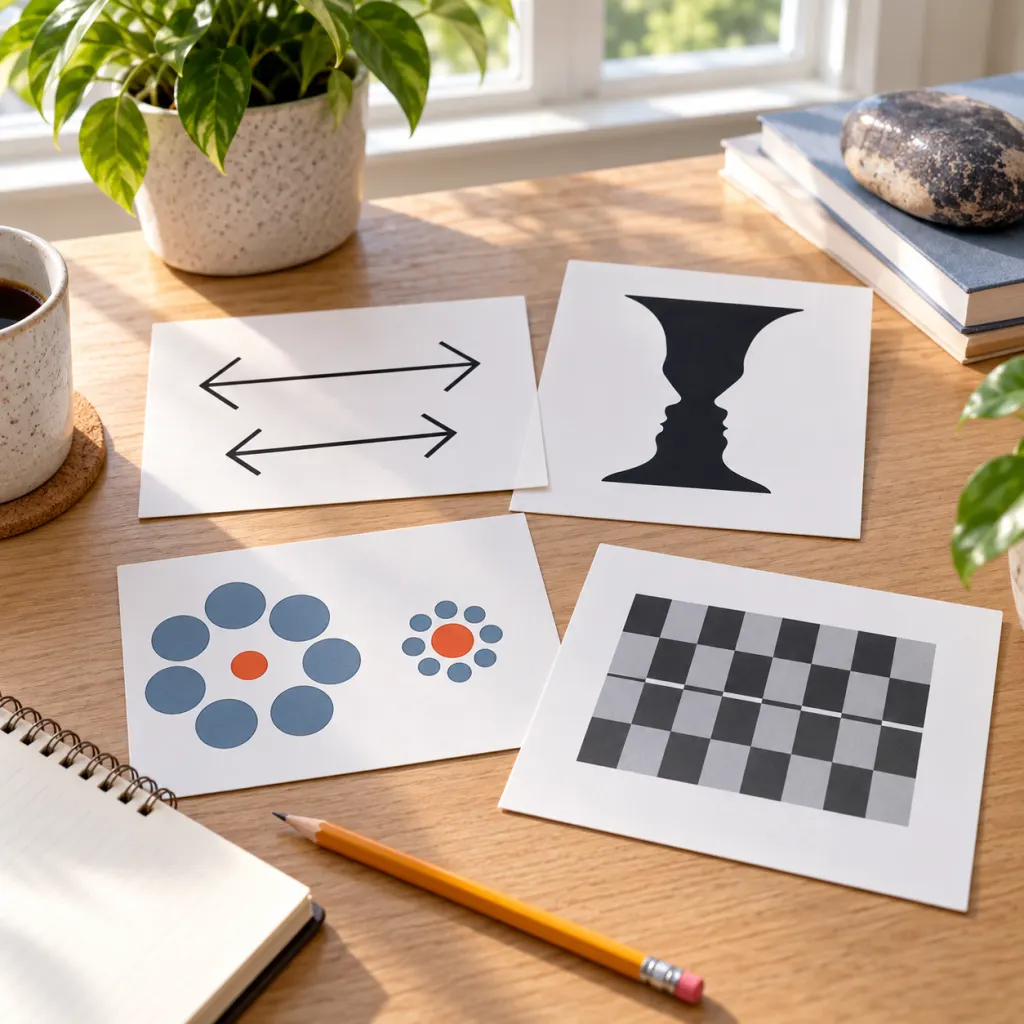
When a puzzle image is photographed at an angle, perspective complicates the count. A circular pan may appear as an oval. A yolk near the edge may look stretched. A shadow may suggest a curved edge that is not an actual object boundary. The American Psychological Association’s dictionary defines a visual illusion as a misperception of visual stimuli caused by interpretation of those stimuli, including geometric illusions https://dictionary.apa.org/visual-illusion. A circle-counting puzzle is usually gentler than a formal illusion, but it uses the same basic vulnerability: what looks obvious can depend on interpretation.
The Personality Claim Is The Weak Part
Some versions of this puzzle attach a dramatic personality claim to the number of circles you see. Treat that as engagement bait. A single image puzzle does not collect enough information to measure personality, motive, empathy, honesty, or character. At most, it shows how you approached one ambiguous image at one moment. That moment may be influenced by screen size, lighting, eyesight, fatigue, whether someone gave you a hint, and what counting rule you assumed.
Formal psychological assessment is not a one-question game. The American Psychological Association explains that psychological testing and assessment can include standardized tools, interviews, records, observation, and professional interpretation, with psychologists choosing the information based on the question being asked https://www.apa.org/topics/psychological-testing-assessment. The National Institute of Mental Health also describes personality-related patterns as enduring and tied to functioning across situations, not as something shown by one puzzle response https://www.nimh.nih.gov/health/statistics/personality-disorders.
Why The Puzzle Still Feels Persuasive
The puzzle feels persuasive because it gives you a number, and numbers feel objective. But a count can look precise while resting on fuzzy definitions. If one person counts each yolk and another counts yolks plus pan rims plus implied rings, both may be using internally consistent rules. The disagreement is not really about eyesight. It is about categories. Viral captions often skip that step because certainty spreads faster than nuance.
Attention also narrows what people notice. An APA article on perception and attention explains that people can look at the same image or event and come away with different interpretations, partly because attention selects some information and misses other information https://www.apa.org/monitor/2026/07-08/sensory-processing-systems. In a circle puzzle, the instruction itself guides attention. If someone asks about circles, you search for roundness. If someone asks about eggs, you may notice food details instead. If someone asks what the result says about you, you may focus on the social meaning rather than the image.
A Better Way To Share Your Answer
Instead of posting only a number, post the count with your rule. For example: “I counted the yolks and the pan rim, but not partial shadows.” Or: “I included complete circles and circular rings, but not ovals made by perspective.” This changes the conversation from a contest into a clearer comparison. It also prevents the common trap where people argue while silently using different definitions.
For classroom, family, or social-media use, this puzzle works best as a media literacy exercise. Ask three questions: What exactly is being counted? What assumption did I make first? What claim is the caption trying to attach to my answer? Those questions help readers enjoy the puzzle without giving the caption more authority than it deserves.
How To Estimate The Answer In The Fried-Egg Version
If the image shows a frying pan filled with eggs, start with the yolks because they are the highest-confidence circles. Next, check the pan: the outer rim may count as one circle, and a visible inner rim may count as another. Then inspect the egg whites. Some may form circular borders around yolks, but many fried egg whites are irregular and should not automatically count as circles under a strict rule. Finally, look at the whole arrangement. A ring of eggs can imply a larger circle, but that is an implied pattern, not the same as a drawn circular outline.
This method may not produce the largest possible total, but it produces a defensible total. The stricter your rule, the lower and more repeatable the number tends to be. The looser your rule, the higher and more debatable the number becomes. That is why the best answer to the puzzle is often a range: one count for clear complete circles, and a second count if you include implied or borderline circular forms.
What This Puzzle Teaches About Online Images
The puzzle is small, but the habit it builds is useful. Online images often arrive with a caption that tells viewers what to see, how to feel, or what the answer supposedly means. A careful viewer separates the image from the caption. First, inspect what is actually visible. Second, identify assumptions. Third, check whether the caption makes a claim that would require stronger evidence. A circle count needs only a clear rule. A claim about a person needs far more than a puzzle.
That distinction matters because many viral posts borrow the style of quizzes, tests, or “psychology facts” without using the methods that make real assessments meaningful. The visual part can still be fun. The unsupported interpretation is the part to hold lightly.
Bottom Line
There is no reliable universal answer unless the puzzle provides the exact image and the counting rule. For the fried-egg circle puzzle, count obvious complete circles first, then decide whether to include rims, rings, irregular egg whites, perspective ovals, and implied circular arrangements. If someone’s answer differs from yours, ask what they counted. And if the caption claims the number reveals personality, treat that claim as entertainment rather than evidence.
Wrap-Up
“How many circles can you see?” is best solved by defining the rule before defending the number. Count clear circles, separate borderline shapes, and explain whether you included rings, rims, or implied patterns. The puzzle is a useful demonstration of attention and perception, but it is not a meaningful personality test.
Frequently Asked Questions
- → Is there one correct answer to “How many circles can you see?”
Only if the puzzle gives the exact image and a counting rule. Without that rule, different totals may be reasonable because one person may count only complete circles while another includes rings, rims, or implied circular patterns.
- → Should egg yolks count as circles?
In a casual visual puzzle, yes, most people count clearly round yolks as circles. In a strict geometry sense, they may not be perfect circles, so it helps to say whether your answer uses a casual or strict rule.
- → Does seeing more circles mean anything about personality?
No reliable conclusion follows from a single puzzle count. The number mostly reflects attention, assumptions, and the counting rule used. Personality assessment requires much more information and qualified interpretation.
- → Why did I miss some circles at first?
That is common. Attention usually goes first to bright, repeated, or central shapes. After a hint, your brain may reorganize the image and notice rims, outlines, or patterns that were easy to overlook.
- → What is the best way to compare answers with someone else?
Compare rules before comparing totals. Ask whether they counted only complete circles, whether pan rims were included, and whether partial or implied circles were allowed. That usually explains most differences.
References
This content was developed and refined using reliable sources.
- https://pmc.ncbi.nlm.nih.gov/articles/PMC3482144
- https://pages.ucsd.edu/~jalevin/gp/gestalt-principles.html
- https://dictionary.apa.org/visual-illusion
- https://www.apa.org/topics/psychological-testing-assessment
- https://www.nimh.nih.gov/health/statistics/personality-disorders
- https://www.apa.org/monitor/2026/07-08/sensory-processing-systems
- https://www.ncbi.nlm.nih.gov/books/NBK556058