 Save
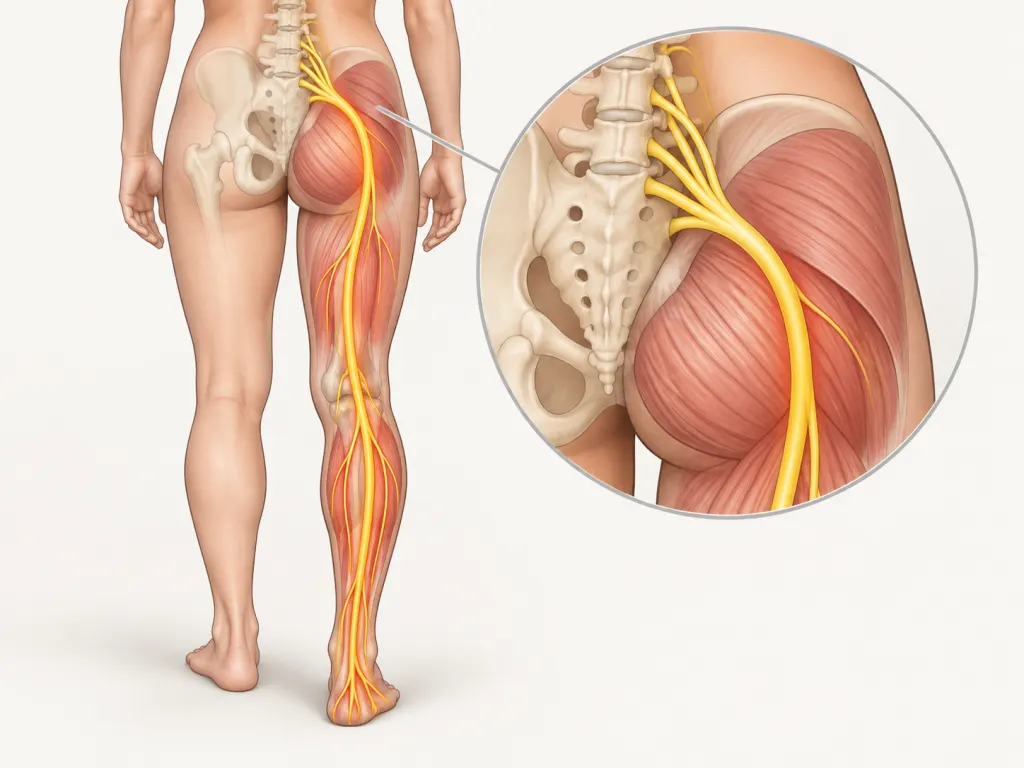
For many people with sciatica, the best starting point is gentle movement rather than long bed rest. Short walks, easy mobility work, and light stretches for the lower back, hips, buttocks, and hamstrings may ease stiffness and help you return to normal activity gradually. Sciatica is not a single disease; it is a pattern of pain, tingling, numbness, or weakness related to irritation or pressure on the sciatic nerve or nearby nerve roots, often felt from the low back or buttock into one leg. MedlinePlus describes sciatica as a symptom of an underlying medical problem, not a stand-alone diagnosis: https://www.medlineplus.gov/ency/article/000686.htm. This guide explains practical exercises to discuss with a clinician or physical therapist, how to keep them gentle, and when symptoms should not be handled as a home exercise issue.
Why Movement Often Helps More Than Staying Still
When sciatic pain flares, it is understandable to want to freeze every movement. A brief period of easier activity may be reasonable, but staying in bed or avoiding movement for a long time can make stiffness and fear of movement worse. The NHS advises people with sciatica to carry on with normal activities as much as possible, begin gentle exercise as soon as they can, and avoid sitting or lying down for long periods: https://www.nhs.uk/conditions/sciatica/. The goal is not to push through severe pain. The goal is to keep the spine, hips, and legs moving within a tolerable range so the nervous system has fewer reasons to stay guarded.
Sciatica symptoms usually follow a recognizable path: low back, buttock, back of the thigh, calf, and sometimes the foot or toes. Cleveland Clinic notes that irritation or compression of the sciatic nerve can cause pain along with numbness or tingling, and that many mild cases improve with time, stretching, or physical therapy: https://my.clevelandclinic.org/health/diseases/12792-sciatica. Because the same symptom pattern can come from different causes, exercises should be treated as a careful starting point, not a diagnosis. A stretch that feels soothing for one person may feel wrong for another, especially if spinal stenosis, disc irritation, hip problems, or another condition is involved.
Before You Try Any Stretch
Use a simple rule: gentle tension is acceptable, but sharp, electric, spreading, or worsening pain is a stop signal. NHS exercise safety guidance says its exercise videos are general and that people should get professional advice before trying them if they are unsure whether the movements suit their fitness level, have a health problem or injury, feel unwell, or have other concerns: https://www.nhs.uk/live-well/exercise/exercises-sciatica-problems/. Begin on a firm surface, move slowly, breathe normally, and avoid bouncing. If one side is clearly more sensitive, start with smaller ranges of motion on that side instead of trying to match the other leg.
It also helps to track symptoms during and after movement. A useful exercise often makes the body feel a little looser or no worse after a few minutes. A poor fit may increase leg pain, send symptoms farther down the leg, create new numbness, or leave you more limited later in the day. That feedback matters. Mayo Clinic lists urgent warning signs such as sudden numbness or muscle weakness in a leg, pain after a violent injury, or trouble controlling bowels or bladder: https://www.mayoclinic.org/diseases-conditions/sciatica/symptoms-causes/syc-20377435. If those signs appear, skip the exercise routine and seek medical help promptly.

A Gentle Starter Menu
The safest routine is usually modest and repeatable. Choose two or three movements, try them once daily for a few days, and notice whether they help. Keep holds short at first, often about 5 to 20 seconds, and repeat only a few times. The following options are common in sciatica education because they address areas that often become stiff when people guard their back or leg:
- Short walks: Walk at an easy pace on level ground for a few minutes. Stop before limping or bracing becomes the main pattern.
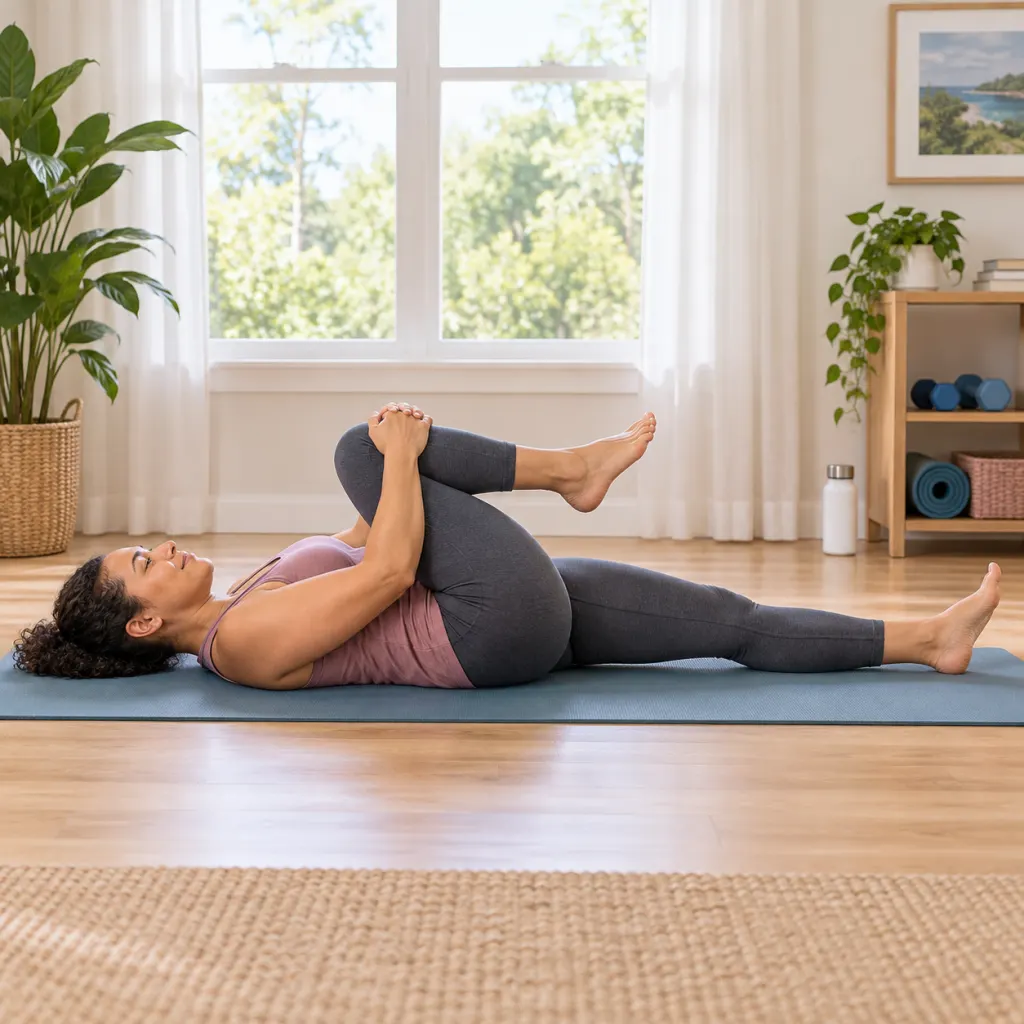
- Knee-to-chest stretch: Lie on your back with knees bent. Bring one knee toward the chest only as far as comfortable, then release slowly.
- Figure-four glute stretch: Lie on your back, cross one ankle over the opposite thigh, and draw the legs slightly toward you until you feel a mild buttock stretch.
- Seated or lying hamstring stretch: Keep the back relaxed and straighten the knee only enough to feel light tension behind the thigh.
- Pelvic tilt: Lie with knees bent and gently flatten the low back toward the floor, then relax.
- Cat-cow mobility: On hands and knees, slowly round and soften the back within a comfortable range.
Harvard Health describes gentle stretches such as knee-to-chest, knee cradle, cat-cow, and lower-back press as options that may help some people with sciatica-related pain and mobility limits: https://www.health.harvard.edu/pain/sciatica-gentle-stretches-to-help-relieve-pain-and-improve-mobility. Think of these movements as a menu, not a checklist. You do not need to do every stretch. In fact, the most useful routine is often the shortest one you can do calmly and consistently without making leg symptoms more intense.
How To Adjust the Exercises to Your Symptoms
If lying on your back feels best, begin there. Supine positions often reduce the demand on the spine and make it easier to control the range of movement. If sitting worsens symptoms, avoid long seated hamstring stretches and try a lying version instead. If bending forward sends pain farther down the leg, keep the spine more neutral and favor walking, pelvic tilts, or very small cat-cow motions. If standing still is the main problem, short walks with frequent rests may feel better than static stretches. These adjustments are practical, but they are not a substitute for an individualized assessment when symptoms are strong, unusual, or persistent.

What a Reasonable Routine Looks Like
A reasonable first week might include a five-minute easy walk, one or two gentle floor stretches, and a brief check-in afterward. Rate pain before and after on a simple 0 to 10 scale, but pay attention to location too. Many clinicians care whether symptoms move farther down the leg, stay the same, or become more centralized toward the back. Avoid turning the routine into a test of toughness. The body usually responds better to frequent, comfortable movement than to one aggressive session that leaves you guarded for the rest of the day.
NIAMS explains that back pain can involve muscles, discs, nerves, joints, and other structures, and that weak back and abdominal muscles may fail to support the spine well: https://www.niams.nih.gov/health-topics/back-pain. That is why a long-term plan often includes more than stretching. Once the acute sensitivity settles, a clinician or physical therapist may help you add core strengthening, hip strengthening, balance work, and lifting practice. For a home reader, the practical takeaway is simple: stretches may help the day feel easier, while gradual strengthening and better movement habits may support more durable function.
Common Mistakes That Make Sciatica Exercises Less Useful
The most common mistake is forcing a stretch because it looks easy in a photo or video. Sciatic symptoms are nerve-related, and nerves often dislike aggressive tension. Another mistake is chasing instant relief by repeating a movement far beyond the point of comfort. A third is stretching only the painful leg while ignoring the rest of daily life: long sitting, rushed lifting, poor sleep, stress, and low overall activity can all shape how sensitive the back and leg feel. MedlinePlus notes that strong back and abdominal muscles are important for avoiding sciatica episodes and that prolonged sitting or pressure on the buttocks can be relevant for some people: https://www.medlineplus.gov/ency/article/000686.htm.
Good form is quieter than people expect. Keep the jaw relaxed, breathe normally, and stop short of strain. When standing up from the floor, roll to one side and use your arms to help instead of jackknifing straight up. During walking, shorten the stride if longer steps tug the back of the leg. During sitting, try changing position every 20 to 30 minutes rather than hunting for one perfect posture. These small choices reduce the amount of time the irritated area spends under the same load.
When To Ask for Professional Guidance
Ask a qualified health professional for guidance if pain is worsening, keeps you from normal activities, lasts more than a few weeks, or comes with weakness, numbness, or symptoms that feel different from previous back pain. The NHS advises seeking GP help when sciatica has not improved after home measures for a few weeks, is getting worse, or is stopping normal activity: https://www.nhs.uk/conditions/sciatica/. A physical therapist can often match exercises to the likely driver of symptoms, teach safer progressions, and modify movements around work demands, age, fitness level, and other health issues.
Get urgent medical help if symptoms involve both sides, severe or worsening weakness or numbness in both legs, numbness around the genitals or buttocks, new trouble starting urination, loss of bladder or bowel control, fever with back pain, major trauma, or severe pain that cannot be made comfortable. These signs are uncommon, but they matter because they can point to conditions that need prompt evaluation. Exercise is not the right first step when those warning signs are present.
The Bottom Line
Exercises for sciatica pain work best when they are gentle, specific, and responsive to symptoms. Start with easy walking and one or two comfortable stretches, avoid forcing positions, and watch whether symptoms calm down or spread. If a movement makes leg pain sharper, stronger, or farther-reaching, stop and choose a smaller range or a different exercise. If symptoms are severe, unusual, persistent, or linked with weakness, numbness, bladder or bowel changes, fever, or injury, make medical guidance the priority. The useful routine is not the most impressive one; it is the one your body can tolerate today while you build back confidence and mobility.
Wrap-Up
Sciatica exercises are best approached as gentle symptom-guided movement. Short walks, knee-to-chest stretches, figure-four glute stretches, hamstring stretches, pelvic tilts, and cat-cow mobility may help some people reduce stiffness and move more comfortably. Stop any exercise that worsens leg symptoms, and seek medical guidance for persistent, worsening, severe, or neurologic symptoms.
Frequently Asked Questions
- → Which exercise is best to start with for sciatica pain?
For many people, the easiest starting point is a short, slow walk or a gentle lying position such as a knee-to-chest stretch. The best choice is the one that does not increase leg pain, numbness, tingling, or weakness. If symptoms worsen, stop and ask a qualified health professional for individualized guidance.
- → Should I stretch through sciatic nerve pain?
No. Mild muscle tension can be acceptable, but sharp, electric, spreading, or worsening pain is a sign to stop. Sciatic symptoms can involve irritated nerve tissue, so aggressive stretching may be too much for some people. Use smaller movements and stay below the point where symptoms intensify.
- → How often should I do gentle sciatica exercises?
A modest daily routine may suit some people, especially if it includes easy walking and one or two comfortable stretches. Start small and judge by response later the same day. More repetitions are not automatically better if they leave you more guarded or make leg symptoms stronger.
- → When should sciatica symptoms be checked by a doctor?
Seek medical advice if symptoms are getting worse, interfere with normal activities, last more than a few weeks, or include weakness or numbness. Get urgent help for bladder or bowel changes, numbness around the genitals or buttocks, severe or worsening weakness in both legs, fever with back pain, major injury, or severe pain that cannot be made comfortable.
- → Can strengthening help, or is stretching enough?
Stretching may ease stiffness for some people, but long-term movement plans often include gradual strengthening for the core, hips, and back. A physical therapist can help match strengthening exercises to your symptoms, especially if sciatica returns, limits work, or makes everyday movement difficult.
References
This content was developed and refined using reliable sources.
- https://www.medlineplus.gov/ency/article/000686.htm
- https://www.nhs.uk/conditions/sciatica
- https://www.nhs.uk/live-well/exercise/exercises-sciatica-problems
- https://my.clevelandclinic.org/health/diseases/12792-sciatica
- https://www.mayoclinic.org/diseases-conditions/sciatica/symptoms-causes/syc-20377435
- https://www.niams.nih.gov/health-topics/back-pain
- https://www.health.harvard.edu/pain/sciatica-gentle-stretches-to-help-relieve-pain-and-improve-mobility