 Save
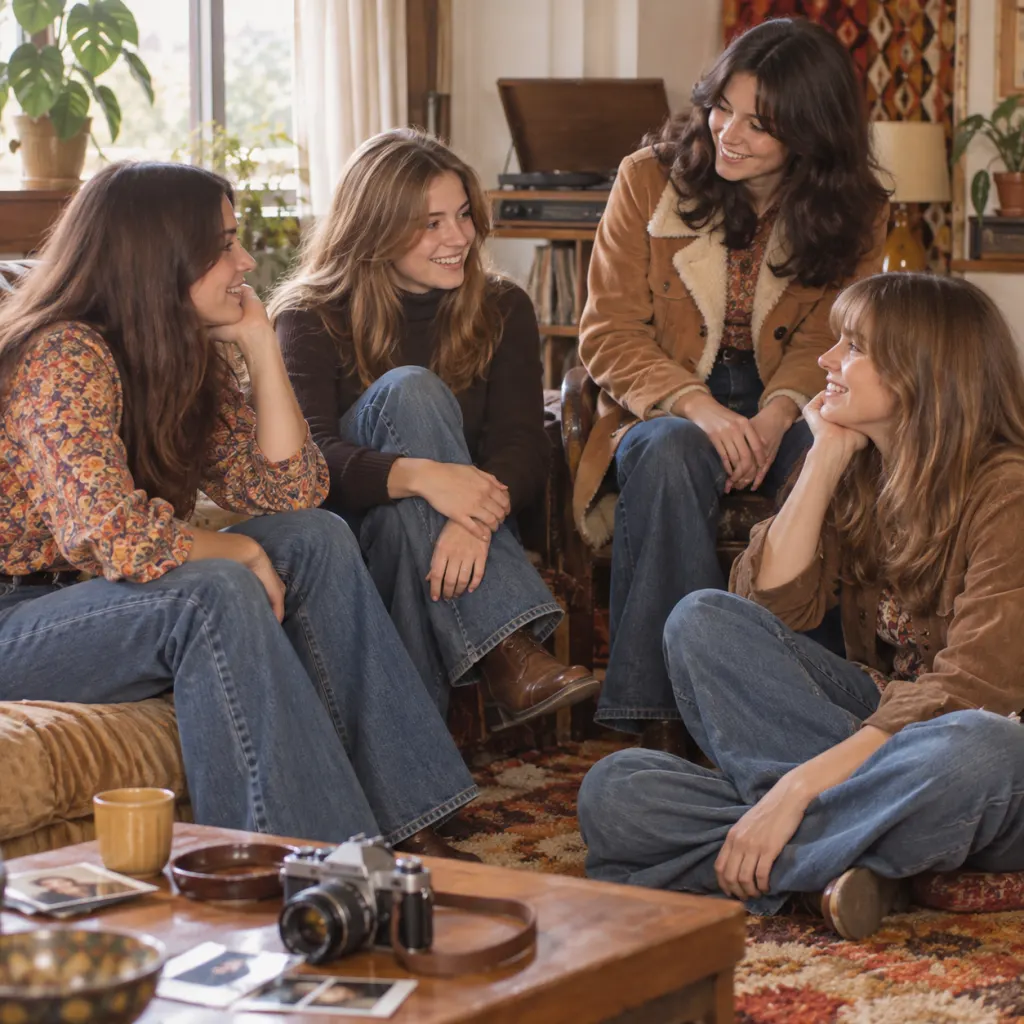
The detail that usually catches the modern eye is the absence of handheld screens. In many casual 1970s photos of young women, attention seems to sit in the room itself: faces turned toward friends, clothes chosen for the day, a camera present only as an occasional guest. That contrast is real enough to notice, but it is not the whole story. A photograph is a primary source, and the National Archives recommends beginning with what you can actually see - people, objects, and activities - before moving to interpretation https://www.archives.gov/education/lessons/worksheets/analyze-a-photograph-intermediate.
Start With What Is Visible, Not What The Caption Suggests
Viral captions often ask a question like, what detail catches your eye? That can be a fun invitation, but it can also steer the viewer toward a prewritten answer. With a 1970s image, the caption may want you to notice that no one is holding a phone, wearing earbuds, checking a notification, or posing for a selfie. Those absences matter because they reveal the distance between everyday social habits then and now. Still, absence is tricky evidence. A photo can show that an object is not visible in one frame; it cannot prove that no one nearby used a landline later, listened to records at home, watched television that night, or felt fully present in every conversation.
A stronger reading begins with the visible clues. Are the young women indoors or outside? Are they posed or candid? Are they dressed similarly, suggesting a school, club, workplace, or neighborhood group? Is the camera close enough to imply a friend took the picture? Are there cars, furniture, signs, bags, books, or hairstyles that help date the scene? The National Archives worksheet for photographs asks viewers to identify the type of photo, list people and objects, consider the caption, and then ask what other evidence would help explain the moment https://www.archives.gov/education/lessons/worksheets/analyze-a-photograph-intermediate. That order protects the viewer from rushing into nostalgia before doing the slower work of looking.
- Observation: The group is dressed in clothes associated with the 1970s, such as denim, fitted tops, long coats, or flared silhouettes.
- Inference: These choices may reflect mainstream youth fashion, local taste, thrift, school rules, or what happened to be clean that day.
- Question: Who took the photo, where was it taken, and was it meant for a family album, a yearbook, a newspaper, or a personal keepsake?
- Caution: One image cannot represent every girl or young woman in the decade.

Why The Clothing Reads So Quickly As 1970s
Clothes are often the first reliable clue because they sit directly in the image. Denim, flared legs, patchwork, high waists, fitted knits, and practical coats all read as period markers, though none of them belonged only to one year or one kind of person. The Museum at the Fashion Institute of Technology notes that by the early 1970s, denim had moved from countercultural association into mainstream fashion, with designers and youth styles both shaping its spread https://exhibitions.fitnyc.edu/denim-fashions-frontier/. That helps explain why jeans in a 1970s photo feel so instantly recognizable today.
But fashion clues are never neutral. A viewer today may see flared jeans and think freedom, simplicity, or authenticity. A person in the photo may have experienced the same outfit as ordinary school clothing, a borrowed pair of pants, a hand-me-down, or an attempt to look stylish on a small budget. The detail that catches your eye may say as much about the present as it does about the past. Modern viewers have been trained by movies, costume design, vintage shops, and social media filters to recognize a compressed version of the 1970s. Real life was messier: trends overlapped, older garments stayed in circulation, and local communities adopted styles unevenly.
The Missing Screen Is A Cultural Clue, Not A Moral Lesson
The easiest modern contrast is technological. In many 1970s group photos, nobody appears to be looking down at a personal device. The scene may feel less mediated because there are no visible feeds, front-facing cameras, group chats, or headphones. That difference is historically meaningful, but it should not be inflated into a simple claim that people were more connected in every way. People could still be distracted, lonely, shy, excluded, bored, or self-conscious. They simply lived with a different set of tools.
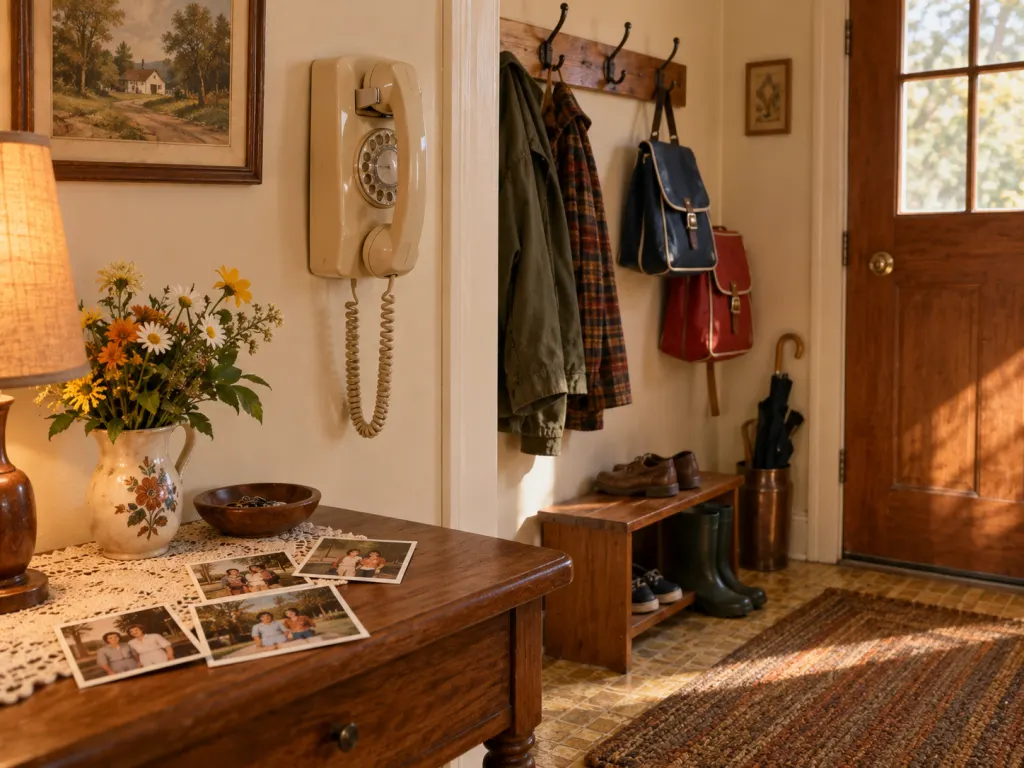
The U.S. Census Bureau's historical housing tables show that telephone access was already common by 1980, when the share of homes without a phone had fallen to 7 percent, after being much higher in 1960 https://www.census.gov/data/tables/time-series/dec/coh-phone.html. That matters because the 1970s were not a world without communication technology. They were a world where communication was more often tied to places: the home phone, the school office, the pay phone, the kitchen wall, the family living room. A person could not usually carry a private social portal in a pocket, so the public appearance of social life looked different.
Photography Itself Was Different Too
Another detail worth noticing is the act of being photographed. Today, casual photos are abundant and easy to delete. In the 1970s, many snapshots still involved film, developing, prints, albums, and waiting. Instant photography existed and had become a major cultural presence, but it was still a distinct object and experience. Harvard Business School's Baker Library timeline notes that Polaroid introduced instant photography commercially in 1948 and that by 1977 more than 15 billion Polaroid prints had been produced since that launch https://www.library.hbs.edu/special-collections-and-archives/exhibits/polaroid-from-concept-to-product/a-polaroid-timeline-1932-1977. So the decade was not photo-poor, but photographs still had more friction than a modern camera roll.
That friction shaped behavior. If a roll of film had a limited number of exposures, the photographer might wait for a group to gather, ask people to stand closer, or save the shot for a moment that felt worth keeping. The subjects might not see the result until later. They could not instantly retake the image until every face looked polished. That helps explain why some old photos feel relaxed even when they are posed. The people in them were not necessarily less image-conscious; they were working within a slower feedback loop.
What The Photo Can Tell Us About Social Space
A group image of young women can reveal how social space was arranged. Notice distances: are friends touching shoulders, leaning on a car, standing in a line, sitting on steps, or clustering around a table? Those details may tell us more than the caption does. In a pre-smartphone scene, the shared object might be a record player, a car, a school hallway, a camera, a soda bottle, a purse, or simply the place itself. The social center of the image is often physical and local.
That does not mean social life was automatically easier. The 1970s included strict dress codes in some settings, changing expectations for women and girls, economic pressure, racial and class differences, and uneven access to youth culture. A photo of smiling friends can be sincere and incomplete at the same time. The viewer should resist turning an appealing image into a full biography. We can admire the warmth of the scene while admitting that we do not know what happened before or after the shutter clicked.
How To Read The Details Without Romanticizing Them
The best answer to the caption is layered: first, yes, the missing modern screen stands out. Second, the clothes, hair, posture, and camera style tell us just as much. Third, the photo is a small piece of evidence, not a verdict on an entire decade. A careful viewer can enjoy the nostalgia without letting it flatten the people in the image into symbols.
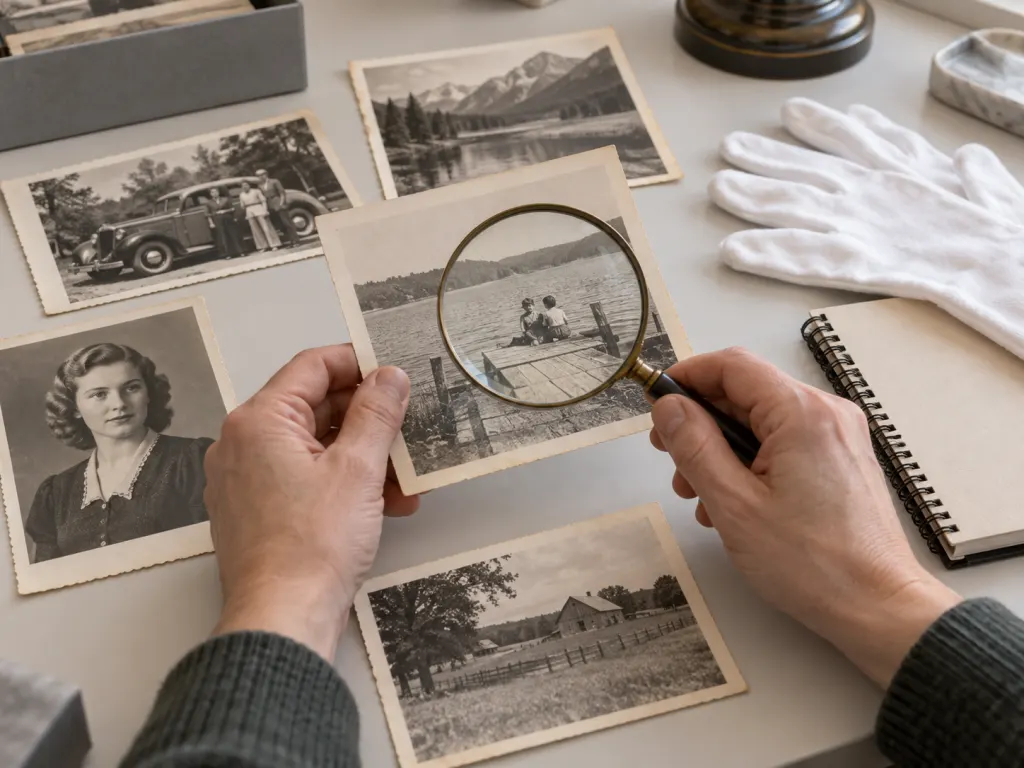
One practical approach is to separate three questions. What do I see? What do I think it means? What would I need to know before saying that confidently? The first question might produce details such as flared jeans, a center part, a patterned shirt, a coat, a hallway, a car, or a lack of visible electronics. The second might suggest friendship, school life, casual fashion, or a slower pace of documentation. The third reminds us to look for source information: date, place, photographer, original caption, archive record, or comparison photos from the same setting.
Why The Question Keeps Working Online
Posts built around old photos work because they invite quick participation. The viewer does not need specialized knowledge to answer what catches your eye. Everyone can notice something: the shoes, the hair, the absence of screens, the confidence of the pose, the wallpaper, the coats, the cars, or the fact that the group seems unaware of later decades looking back at them. That accessibility is part of the appeal.
It is also why the format deserves caution. A prompt can make the past feel simple: then people talked, now people scroll; then photos were real, now life is staged; then style was natural, now everything is artificial. Those comparisons are emotionally satisfying, but they are too neat. People in the 1970s posed, performed, copied trends, worried about appearance, and used the media of their time. People today also gather, laugh, dress creatively, and make meaningful memories. The difference is not human nature. It is the surrounding technology, economy, and media environment.
The Better Answer: A Whole Way Of Looking
If one detail must be chosen, choose attention. In many 1970s photos, attention appears attached to the people and the place rather than to a visible personal device. That is the detail modern viewers notice because it contrasts with current habits. But the richer answer is that several clues are working together: denim's mainstream rise, film photography's slower rhythm, place-based communication, and the social confidence of a group captured in one ordinary frame.
Seen this way, the image becomes more than a nostalgia test. It becomes a lesson in visual literacy. The young women in the photo are not props for a complaint about modern life. They are people from a specific moment, dressed in the styles available to them, photographed through the technology of their time, and now interpreted through ours. The most respectful reading is curious, specific, and humble.
Wrap-Up
The detail that catches the eye in a 1970s photo of young women is often what is missing: no small screens, no visible scrolling, no instant selfie routine. But the stronger reading also notices what is present: denim and flared silhouettes, slower photography, local gathering places, and the limits of a single frame. The photo can invite nostalgia, but it is most useful when treated as evidence to examine rather than proof of a simpler past.
Frequently Asked Questions
- → What detail usually catches people first in a 1970s group photo?
Many modern viewers first notice the absence of handheld screens. That is a valid observation, but it should be paired with visible details such as clothing, setting, posture, and the kind of photograph being taken.
- → Do flared jeans prove a photo is from the 1970s?
No. Flared jeans are a useful clue, especially when combined with other clothing and setting details, but they are not proof by themselves. Styles overlap across years, and older clothes can remain in use long after a trend begins.
- → Why do 1970s photos often feel more relaxed than modern photos?
Film and instant prints created a slower feedback loop than modern phone cameras. People could not always review, edit, and retake every image immediately, so casual photos may preserve more imperfect and unplanned expressions.
- → Is it fair to say people were more social in the 1970s?
A single photo cannot prove that. It can show a moment of face-to-face gathering, but it cannot reveal every feeling, relationship, or social pressure in the scene. The better conclusion is that the tools and settings of social life looked different.
- → How should I analyze an old photo before sharing it online?
Start with what is visible, then separate observation from interpretation. Look for source details such as date, place, photographer, and original caption. If those are missing, describe the image cautiously instead of making broad claims.
References
This content was developed and refined using reliable sources.
- https://www.archives.gov/education/lessons/worksheets/analyze-a-photograph-intermediate
- https://exhibitions.fitnyc.edu/denim-fashions-frontier
- https://www.census.gov/data/tables/time-series/dec/coh-phone.html
- https://www.library.hbs.edu/special-collections-and-archives/exhibits/polaroid-from-concept-to-product/a-polaroid-timeline-1932-1977