 Save
Shania Twain's blonde awards-show look became a flash point because it combined three things the internet loves to overanalyze: a famous performer, a visible style change, and a public event. The useful takeaway is not that one hairstyle proves anything about Twain. It is that awards-show fashion now travels through clips, captions, reposts, and comment threads, where a small set of loud reactions can look larger than it is. Twain is best understood as a country-pop artist with a long record of stage reinvention, not as a still photograph waiting for public approval.
Why This Look Became a Story
The subject here is a blonde awards-show look attributed to Shania Twain and the online criticism that followed. A cautious article should not pretend that every negative comment represents a broad public verdict. Online reaction is often selective: one post highlights disapproval, another highlights praise, and both may be edited for maximum engagement. That is especially true for celebrity style, where a single red-carpet image can be separated from lighting, movement, performance context, and the full sequence of outfits.
What can be verified from approved background sources is Twain's wider cultural position. The Library of Congress lists her among country-music biographies and describes her as a Canadian country-pop singer-songwriter whose second album brought major fame and awards https://www.loc.gov/nls/new-materials/book-lists/country-music/. That matters because a style debate around Twain is not about a newcomer trying to introduce herself. It is about a long-recognized performer whose image has always sat between country tradition, pop spectacle, and theatrical stagecraft.
Shania Twain's Image Has Always Included Reinvention
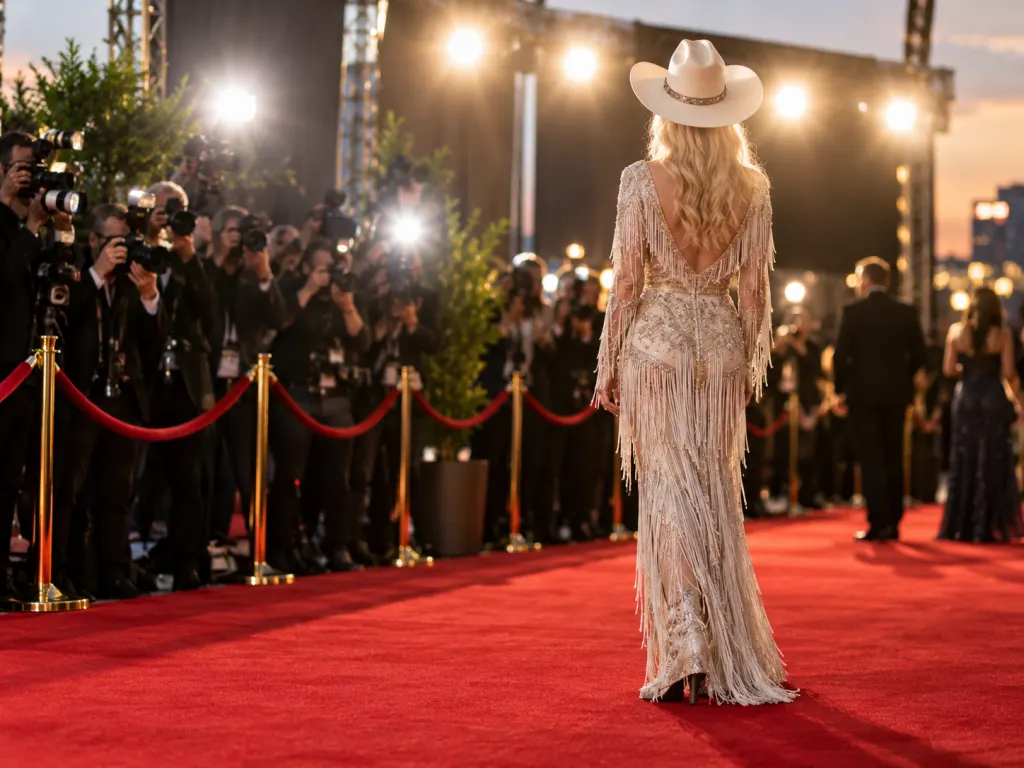
Twain's public style has rarely been plain background decoration. From high-shine performance looks to Western references, she has often used fashion as part of the performance itself. That does not mean every outfit lands with every viewer. It does mean that a blonde look at an awards show belongs to a career in which image, humor, confidence, and genre-crossing presentation have long been part of the package.
Country music also has a long relationship with visual identity. The Library of Congress notes that country music's history is more complex than a simple stereotype and includes strands such as Nashville sound, bluegrass, honky-tonk, rockabilly, and Western swing https://www.loc.gov/nls/new-materials/book-lists/country-music/. In that setting, hats, fringe, gowns, boots, sparkle, and hair color are not random extras. They are part of how performers place themselves inside, beside, or against country tradition.
The Difference Between Style Critique and Personal Pile-On
There is a fair way to talk about awards fashion. Viewers can say a color choice felt too stark, a wig looked theatrical, a silhouette worked better in motion than in still photos, or an outfit fit the theme more clearly than another. Those are observations about styling. A pile-on is different. It turns a temporary look into a character judgment, treats age as a flaw, or assumes a performer owes the public visual sameness forever.
A useful reader standard is to ask what is actually being evaluated. Is the comment about the styling, the event, the lighting, or the person's worth? Is it based on one cropped image, a full performance clip, or a sequence of appearances? Is the post trying to understand the look, or simply inviting people to mock it? These distinctions matter because celebrity culture can make harshness feel casual, especially when the target is famous enough to seem distant.
How Social Media Turns a Hairstyle Into a Debate
Research on celebrity interaction helps explain why small moments can become large online conversations. A University of Rhode Island faculty publication summarizes research finding that celebrity interactions on social media can strengthen one-sided audience bonds and influence how followers respond to celebrity-related content https://digitalcommons.uri.edu/cba_facpubs/402/. In plain terms, audiences often feel personally invested in performers they have followed for years. A style shift can feel, irrationally but powerfully, like a change in someone familiar.
Another study hosted by the University of Northern Iowa found that attempts to engage with celebrities online were linked to parasocial relationships and social cache https://scholarworks.uni.edu/ijc/vol48/iss1/7/. That helps explain why comment threads around celebrities can become performative. People are not only reacting to the look; they are also reacting in front of one another, signaling taste, loyalty, disappointment, humor, or insider status.
A Practical Way to Read Viral Celebrity Backlash
Before accepting a caption that says a celebrity was widely criticized, readers can slow down and check the shape of the evidence. The Federal Trade Commission warns that social media can make misleading or deceptive content easier to spread because accounts, ads, and messages may not be what they appear to be https://consumer.ftc.gov/consumer-alerts/2020/10/scams-start-social-media. Although a celebrity style post is not automatically a scam, the same basic habit applies: do not let a dramatic caption do all the thinking.
For entertainment stories, a useful checklist is:
- Look for the original event context before judging a single screenshot.
- Separate verified facts from anonymous comments.
- Notice whether the post profits from outrage, teasing, or ridicule.
- Check whether praise and neutral reactions are being left out.
- Be careful with reposted images, especially when color, lighting, or editing could change what you see.
The FTC's endorsement guidance also gives readers a helpful principle for weighing online opinion: relationships and incentives can affect how people evaluate recommendations or claims, so relevant connections should be clear https://www.ftc.gov/business-guidance/resources/ftcs-endorsement-guides-what-people-are-asking. In celebrity culture, that does not mean every fashion post is sponsored. It means readers should stay aware that accounts may chase engagement, affiliate clicks, followers, or ad revenue by framing ordinary style choices as controversy.
Why Blonde Hair Carries So Much Symbolic Weight
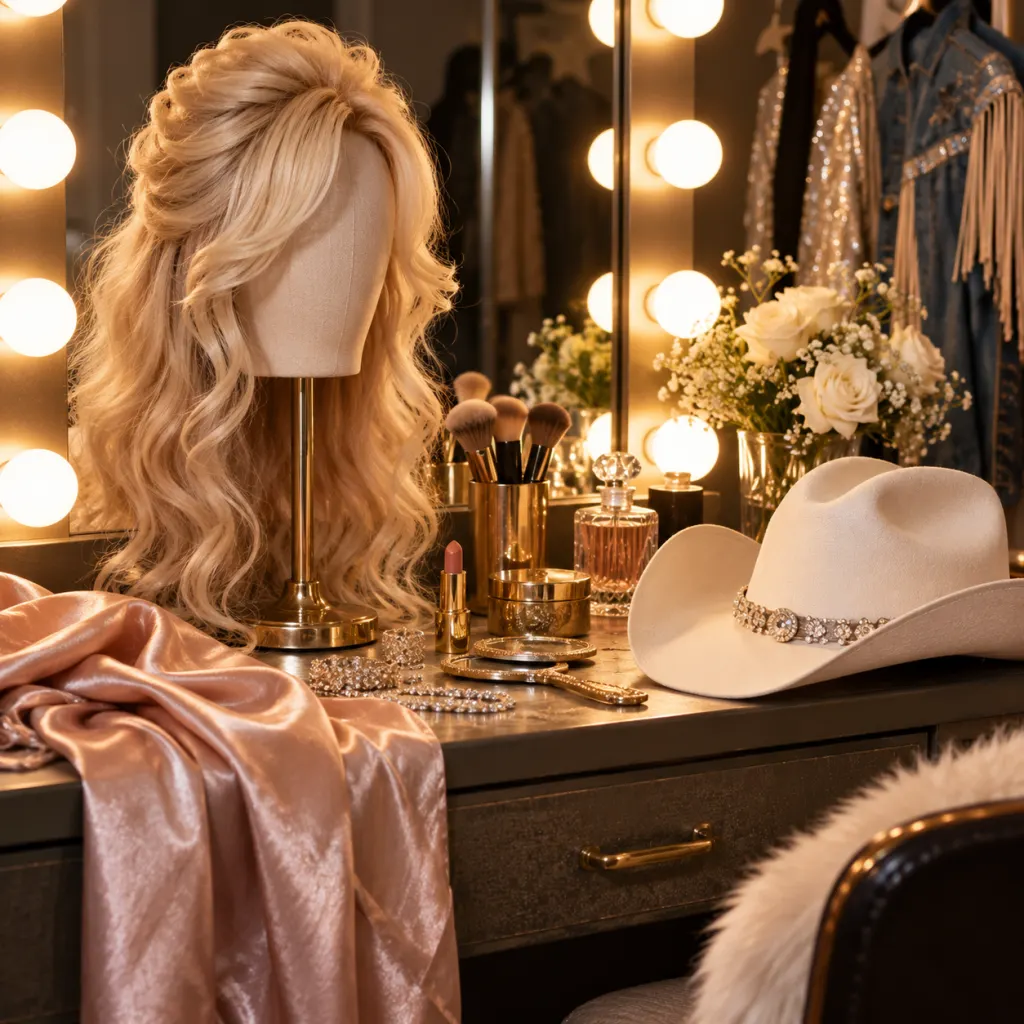
Hair color is one of the quickest visual signals in pop culture. Blonde styling can read glamorous, retro, playful, rebellious, country, pop, or deliberately artificial depending on the outfit and the setting. On an awards stage, it can also help a performer stand out under bright lights. The mistake is treating that signal as a confession of identity. A hairstyle may be a wig, a temporary color, an extension, a lighting effect, or simply a creative decision for one night.
For Twain, a blonde awards look also intersects with expectations about continuity. Fans often carry a mental picture of an artist from a favorite era. When the artist appears with a different color, cut, or styling mood, some viewers read it as a break from the version they remember. That reaction says as much about audience memory as it does about the look itself. Public performers age, experiment, revisit old motifs, and try new ones. The public may comment, but it does not own the archive.
The Awards-Show Setting Changes the Rules
Awards shows are not everyday life. They are staged, lit, timed, photographed, and designed for memorable images. A look that seems dramatic in a close crop may make more sense from the balcony, on television, or beside other outfits from the same event. Country awards shows also tend to reward theatrical polish: fringe, shine, hats, gowns, bold hair, and Western-coded details all have a place in the visual language.
That is why a calmer reading of Twain's blonde look is more useful than a verdict. The question is not whether every viewer liked it. The better question is what the styling was trying to do. Did it create contrast onstage? Did it connect with a country-pop persona? Did it give the host or performer a fresh silhouette for photographs? Those questions lead to actual critique. A comment thread that stops at insult does not.

How to Talk About Celebrity Style Without Flattening the Person
There is room for taste. People can dislike a wig, prefer a brunette look, or think a gown worked better than a suit. But a public conversation becomes more useful when it stays specific. Instead of saying a performer looks wrong, say the styling felt disconnected from the outfit. Instead of treating a new look as evidence of insecurity, say the color choice changed the mood. Specific critique is clearer, kinder, and more interesting.
This matters because women in entertainment are often judged through a narrow lens: look current but not too different, glamorous but not trying too hard, familiar but not repetitive. Twain's career complicates that trap. Her success came partly from refusing to stay inside one expected lane. Country-pop crossover, theatrical styling, and self-aware confidence are not side notes to her public image. They are part of why people still discuss her appearances at all.
A Balanced Take on the Backlash
The blonde awards look does not need to be defended as flawless to be treated fairly. It can be read as bold, polarizing, fun, too stylized, camera-dependent, or perfectly suited to a high-production event. What it should not be read as is proof that Twain has lost her place, abandoned her identity, or invited personal cruelty. A style choice can be temporary. A career is longer than one night's lighting.
The broader lesson is media literacy with a little generosity. Viral entertainment posts often compress a complex public appearance into a single emotional instruction: admire this, mock this, be shocked by this. Readers do not have to obey that instruction. They can enjoy the spectacle, compare the styling, and still remember that online heat is not the same thing as cultural truth.
Wrap-Up
Shania Twain's blonde awards-show look became a debate because celebrity fashion now moves through social platforms built for instant judgment. The more useful view is to see the look in context: Twain is a long-established country-pop performer with a history of theatrical presentation, and awards shows are designed for bold visuals. Some viewers may prefer another style, but a fair critique should stay focused on the styling rather than turning a temporary look into a personal verdict.
Frequently Asked Questions
- → Did Shania Twain's blonde awards-show look really divide viewers?
The look became a talking point because some online posts highlighted criticism, while others focused on admiration or simple surprise. A few visible comments should not be treated as a full public survey.
- → Why do people react so strongly when a celebrity changes hair color?
Fans often carry a familiar image of a performer from a favorite era. A new color can feel larger than it is because it disrupts that memory, especially when the image is seen through cropped photos and fast-moving social posts.
- → Is it fair to critique an awards-show outfit?
Yes, if the critique stays specific. Discussing color, styling, fit, theme, or stage impact is different from judging the person's worth or using the look as an excuse for personal insults.
- → How should readers judge viral posts about celebrity backlash?
Look for original context, avoid relying on one screenshot, and notice whether the post is using outrage to attract engagement. Anonymous comments can illustrate a reaction, but they do not prove a broad consensus.
- → What category does this story fit?
This is best read as a news-and-culture piece: it is about celebrity image, entertainment conversation, public reaction, and the way social media frames awards-show style.
References
This content was developed and refined using reliable sources.
- https://www.loc.gov/nls/new-materials/book-lists/country-music
- https://consumer.ftc.gov/consumer-alerts/2020/10/scams-start-social-media
- https://www.ftc.gov/business-guidance/resources/ftcs-endorsement-guides-what-people-are-asking
- https://digitalcommons.uri.edu/cba_facpubs/402
- https://scholarworks.uni.edu/ijc/vol48/iss1/7
- https://www.nist.gov/publications/reducing-risks-posed-synthetic-content-overview-technical-approaches-digital-content