 Save
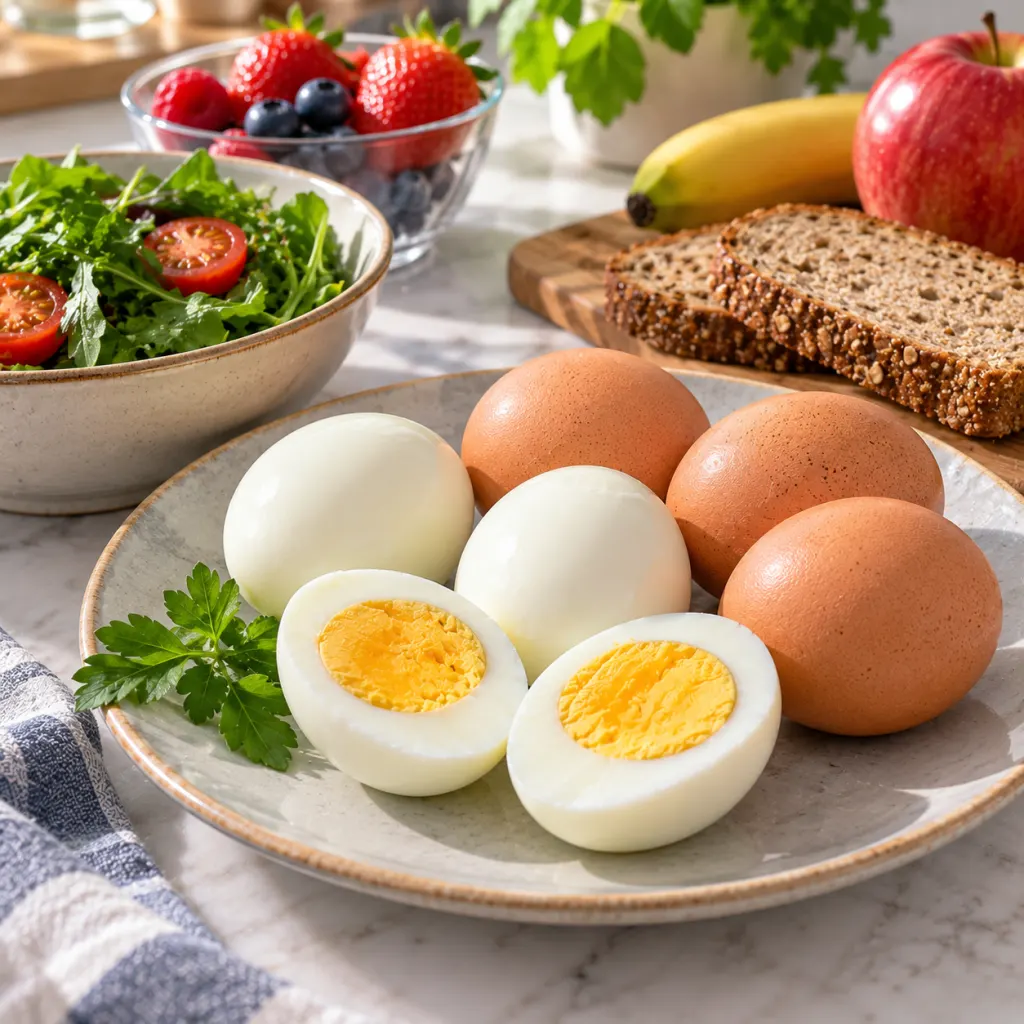
Hard-boiled eggs are useful because they deliver protein and several nutrients in a small, ready-to-eat package, but the sensible takeaway is modest: they are a convenient food, not a cure-all. One large hard-cooked egg listed by MedlinePlus provides about 70 calories and 6 grams of protein, along with fat, dietary cholesterol, vitamin D, iron, and potassium. The biggest practical questions are how often eggs fit your own meals, what you eat with them, and whether they have been cooked, cooled, and stored safely.
What One Hard-Boiled Egg Contributes
A hard-boiled egg is nutritionally dense for its size because most of its edible weight is egg white and yolk rather than water-heavy bulk. In the MedlinePlus hard-cooked egg entry, one 50-gram egg is listed with 70 calories, 6 grams of protein, 5 grams of total fat, 1.5 grams of saturated fat, 185 milligrams of dietary cholesterol, 70 milligrams of sodium, 1 microgram of vitamin D, 1 milligram of iron, and 69 milligrams of potassium according to MedlinePlus. Those numbers can vary a little by egg size and database, but they give a useful everyday reference point.
It helps to read those figures as part of a whole day instead of as a verdict on one food. The FDA explains that Daily Values are reference amounts used on Nutrition Facts labels, and that the percent Daily Value shows how much one serving contributes to a daily pattern in its Daily Value guide. For eggs, the most useful label-reading habit is simple: notice the serving size first, then look at the nutrients you want more of and the nutrients you personally need to keep in perspective.
- Protein: about 6 grams in one large hard-cooked egg, useful for making a snack or meal feel more substantial.
- Fat: about 5 grams total, mostly located in the yolk.
- Carbohydrate and fiber: very little carbohydrate and no fiber, which is why eggs pair well with plants and whole grains.
- Micronutrients: small but meaningful amounts of vitamin D, iron, potassium, and other nutrients vary by source and egg size.
- Dietary cholesterol: concentrated in the yolk, so personal guidance matters for readers with clinician-set limits.
The Yolk Is Where Much Of The Detail Lives
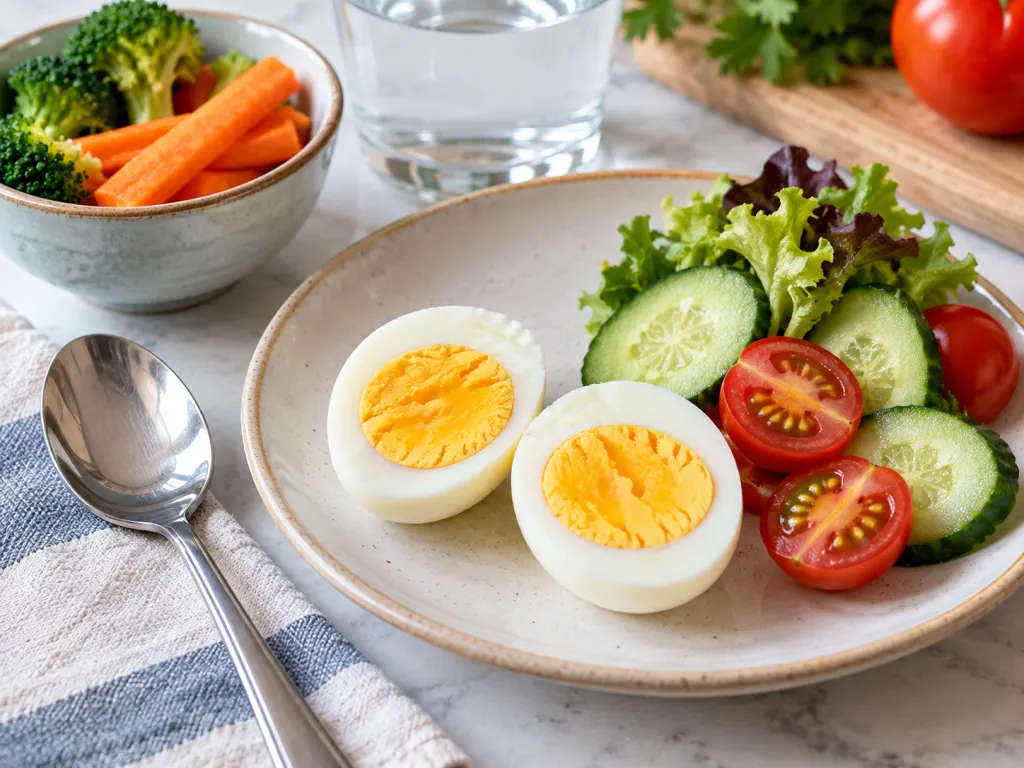
The white and yolk do different jobs in the egg. The white is mostly water and protein, while the yolk carries much of the fat and many of the egg’s micronutrients. Harvard’s Nutrition Source lists eggs as a source of protein, choline, biotin, vitamin A, and the pigments lutein and zeaxanthin in its egg overview. That does not mean the yolk is automatically right for every person in every amount; it means the yolk is the part to notice when you are weighing the nutrient trade-offs.
Choline is one reason eggs often come up in nutrition discussions. The NIH Office of Dietary Supplements describes choline as a nutrient found in many foods and explains that it is used in cell membranes and normal nervous system functions. Its consumer fact sheet lists meat, eggs, poultry, fish, dairy products, some vegetables, beans, nuts, seeds, and whole grains among choline-containing foods in the NIH choline fact sheet. In everyday kitchen terms, eggs are one accessible choline source, but they are not the only one.
Why The Whole Meal Matters More Than The Egg Alone
A hard-boiled egg by itself is not a complete meal for most people. It has protein and fat, but it brings no fiber and very little carbohydrate. That is why the surrounding plate changes the experience so much. An egg with fruit and oatmeal is a different meal from an egg beside salty processed meat and fried potatoes. The egg may be the same, but the meal’s total pattern of fiber, sodium, saturated fat, and produce changes dramatically.
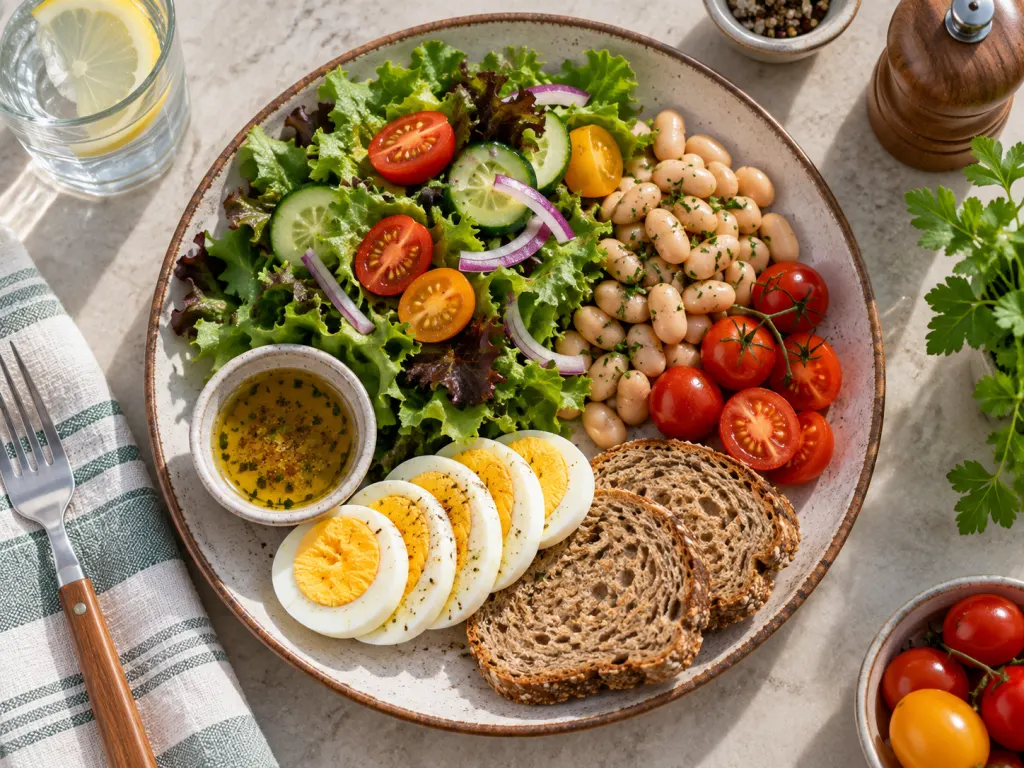
For a practical plate, think of the egg as the anchor and the rest of the meal as the balance. Add whole-grain toast, beans, lentils, salad greens, roasted vegetables, fruit, or a vegetable soup. Use herbs, pepper, salsa, mustard, yogurt-based dressings, avocado, hummus, or olive oil in measured amounts for flavor. This approach is not about making eggs into a medical food; it is about making a simple ingredient work harder in a meal that has color, texture, and enough variety to be satisfying.
Food Safety Is Part Of The Story
Eggs need ordinary but consistent food-safety habits. The FDA says fresh eggs, even with clean and uncracked shells, may contain Salmonella, and it advises buying refrigerated eggs, avoiding cracked shells, keeping eggs refrigerated at 40 degrees Fahrenheit or below, and cooking eggs until both yolk and white are firm in its egg safety guidance. For hard-boiled eggs, that means cooking them fully, cooling them promptly, and not treating the shell as a perfect safety shield after cooking.
Time matters after cooking. The FDA says hard-cooked eggs, whether in the shell or peeled, should be used within one week after cooking. MedlinePlus gives a more conservative note for peeled eggs, advising refrigeration within two hours of cooking and use of peeled eggs within two days, or storage in the shell for up to a week in its hard-cooked egg directions. A simple label on the container with the cooking date removes guesswork later in the week.
How To Cook And Cool Them Without Overthinking It
The basic method is straightforward: place eggs in a single layer, cover with water, bring to a boil, take the pan off heat, cover, and let the eggs stand until set. MedlinePlus lists timing of about 9 minutes for medium eggs, 12 minutes for large eggs, and 15 minutes for extra-large eggs, followed by prompt cooling under cold running water or in ice water. That immediate cooling makes handling easier and helps move the eggs out of the warm range where bacteria can multiply.
A gray-green ring around the yolk is usually a quality issue from overcooking or slow cooling, not a sign that the egg has gained special properties. To avoid it, do not keep eggs boiling hard for a long time, and cool them as soon as the standing time is done. If peeling is the goal, slightly older refrigerated eggs are often easier to peel than very fresh eggs. Crack the shell gently all over, start at the wider end, and peel under running water if the membrane clings.
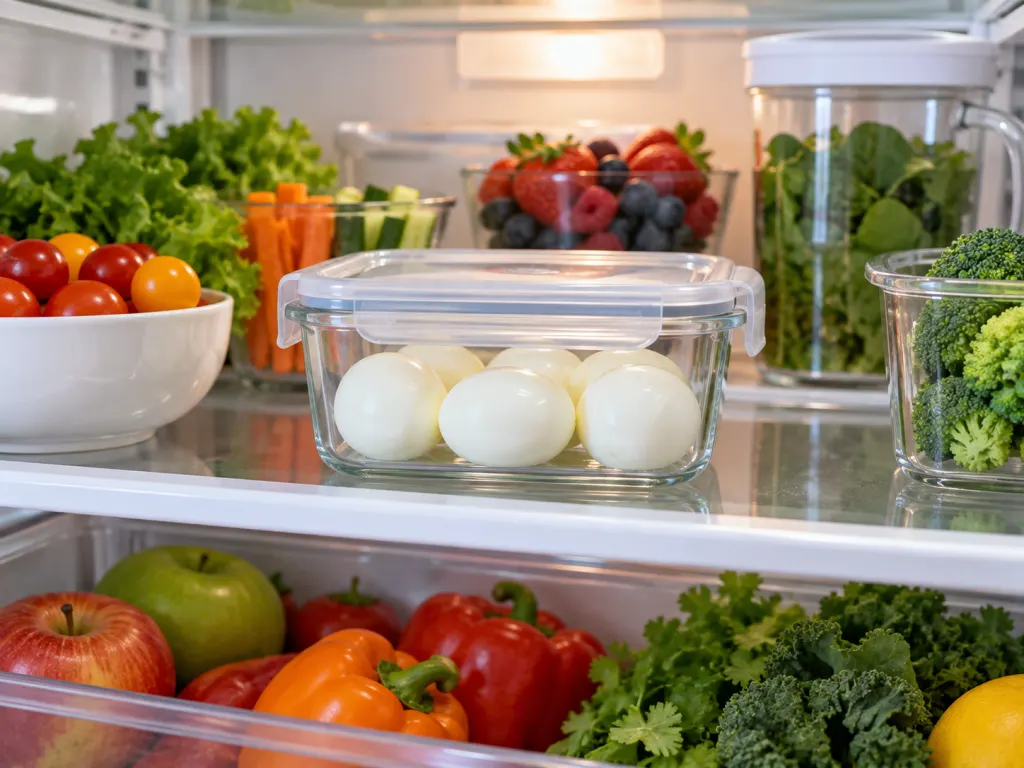
White, Brown, Cage-Free, Pasture-Raised: What Labels Can And Cannot Tell You
Egg labels can be useful, but they can also invite assumptions. Harvard’s Nutrition Source notes that brown eggs are not more nutritious than white eggs; shell color is determined by the breed of hen. It also explains that terms such as cage-free, free-range, pasture-raised, omega-3 enriched, pasteurized, natural, and farm-fresh describe different production or marketing details, not a single universal nutrition promise in its label discussion. If a label matters to you for animal welfare, safety, or sourcing reasons, read the carton carefully rather than relying on the front-of-package feeling.
Pasteurized eggs deserve special mention because they are heat-treated to reduce food-safety risk while remaining in the shell or being processed as egg products. They are most relevant when a dish would otherwise use raw or lightly cooked egg. For ordinary hard-boiled eggs, the key actions remain buying clean, uncracked refrigerated eggs, cooking until set, cooling promptly, and storing cold. Fancy carton language does not replace those steps.
A Sensible Way To Decide How Often To Eat Them
There is no single egg schedule that fits every reader. A person who eats mostly plant foods, whole grains, and vegetables may use hard-boiled eggs differently from someone whose meals already include many rich animal foods. A person with clinician-set nutrition targets may need different guidance than someone with no specific limits. The most useful question is not whether eggs are good or bad in isolation, but what they are replacing, what they are paired with, and whether the overall routine still has enough variety.
If hard-boiled eggs help you assemble a quick lunch instead of skipping a meal or grabbing something less planned, they can be genuinely practical. If they crowd out beans, fish, tofu, nuts, seeds, vegetables, fruit, or whole grains every day, the pattern may become narrow. Keep the rotation broad: eggs some days, other protein foods on other days, and plenty of plant foods across the week. That keeps the focus where it belongs, on the whole kitchen pattern.
Bottom Line For Home Cooks
Hard-boiled eggs are best understood as a convenient ingredient with useful nutrients, simple preparation, and real storage rules. They offer protein in a compact serving, the yolk carries much of the nutritional detail, and the safest habit is to refrigerate them promptly and use them within the recommended window. Build meals around them with vegetables, fruit, beans, or whole grains, and treat big promises about eggs with caution. The quiet, useful truth is enough: they are easy, affordable for many households, and versatile when handled well.
Wrap-Up
Hard-boiled eggs can be a practical part of breakfast, snacks, and salads because they are compact, protein-containing, and easy to prepare ahead. The strongest evidence-based advice is also the simplest: read the serving size, pair eggs with fiber-rich foods, refrigerate cooked eggs promptly, and use them within the recommended time. For personal nutrition limits or medical questions, use qualified professional guidance rather than viral claims.
Frequently Asked Questions
- → Are hard-boiled eggs different from fried eggs nutritionally?
The egg itself is similar, but cooking style changes the meal. Hard-boiling adds no cooking fat, while frying may add oil, butter, or other ingredients. The side foods matter too, so compare the full plate rather than only the egg.
- → How long can hard-boiled eggs stay in the refrigerator?
The FDA advises using hard-cooked eggs within one week after cooking. MedlinePlus advises using peeled eggs within two days or keeping eggs in the shell for up to a week. Refrigerate them within two hours of cooking.
- → Is the yolk necessary?
The yolk contains much of the egg’s fat and several nutrients, including choline. Egg whites provide protein with less fat. Which choice fits best depends on your meal pattern and any personal guidance you have received from a qualified health professional.
- → What should I eat with a hard-boiled egg?
Pair it with foods the egg does not supply much of: vegetables, fruit, beans, lentils, or whole grains. A salad, vegetable soup, oatmeal with fruit, or whole-grain toast can make the egg part of a more rounded meal.
- → Are brown eggs better than white eggs?
No clear nutrition advantage comes from shell color alone. Harvard’s Nutrition Source explains that shell color is mainly determined by the breed of hen. Size, handling, freshness, and how the eggs are used matter more in the kitchen.
References
This content was developed and refined using reliable sources.
- https://medlineplus.gov/recipes/perfect-hard-cooked-eggs
- https://www.fda.gov/food/buy-store-serve-safe-food/what-you-need-know-about-egg-safety
- https://ods.od.nih.gov/factsheets/Choline-Consumer
- https://www.fda.gov/food/nutrition-facts-label/daily-value-nutrition-and-supplement-facts-labels
- https://nutritionsource.hsph.harvard.edu/food-features/eggs