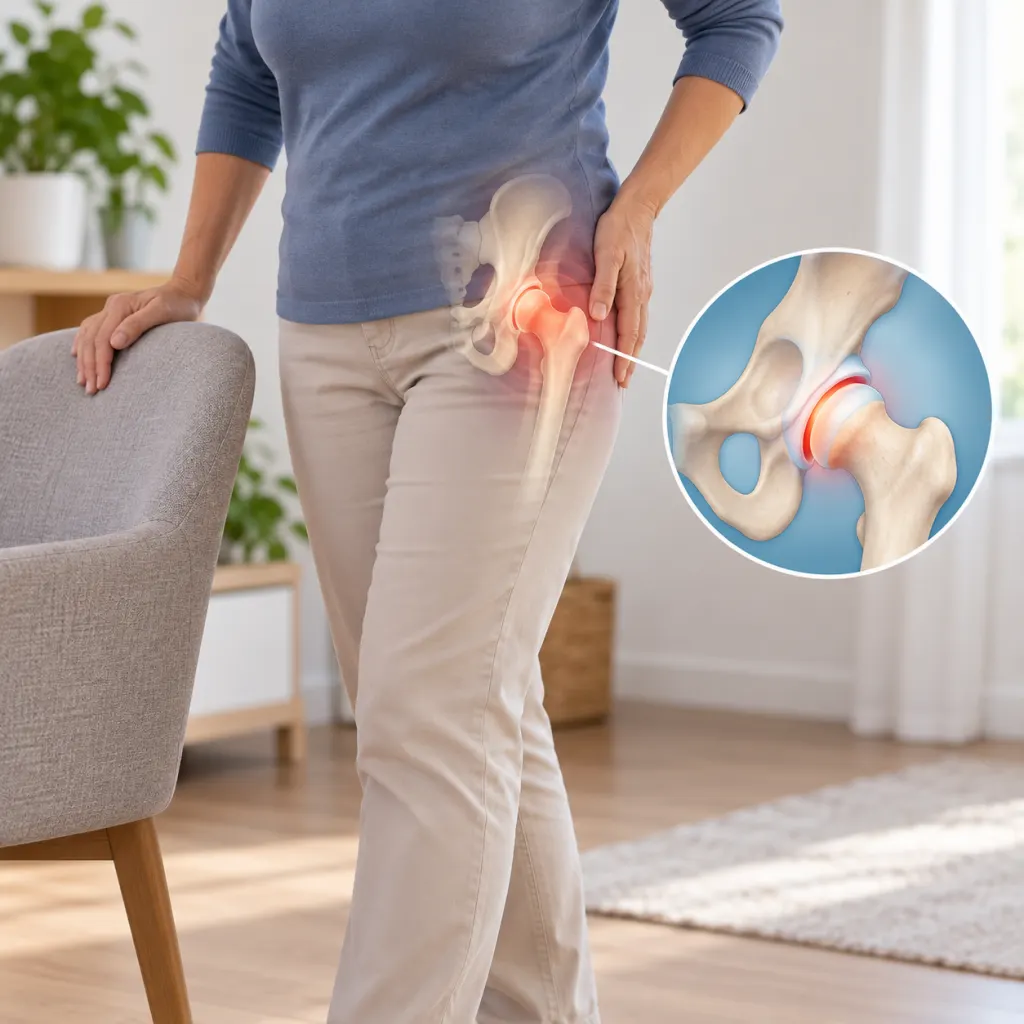
 Save
If you want one clear answer, start with your left side, but do not treat it as a universal rule. Left-side sleeping has the best support when the issue is nighttime reflux, while either side can be helpful for people who snore or feel more comfortable off their back. The best side is the one that improves your actual night: steadier breathing, less reflux, fewer morning aches, and sleep that feels more refreshing. A sleep position is a tool, not a diagnosis. If a position makes you feel worse, or if sleep problems keep showing up, the next step is a conversation with a qualified health professional.
The Short Answer: Left Side First, Comfort Always
For a general sleeper with no special medical instructions, left-side sleeping is a sensible first experiment. It is easy to try, does not require equipment, and has specific evidence behind it for people with nighttime reflux. Mayo Clinic advises people with GERD to start on the left side when going to bed as part of reflux-related lifestyle measures, and a 2023 systematic review indexed by PubMed found that left lateral sleeping was associated with shorter nighttime acid exposure and faster acid clearance in people with GERD. Those sources do not mean every person must stay on the left side all night. They mean the left side is a reasonable place to begin when reflux is the problem. Read more in the Mayo Clinic GERD guidance and the PubMed systematic review.
For snoring or possible obstructive sleep apnea, the useful distinction is often side versus back, not left versus right. MedlinePlus explains that sleeping on the back can contribute to airway narrowing in obstructive sleep apnea and lists avoiding back sleeping among lifestyle steps that may help some people with mild sleep apnea symptoms. Cleveland Clinic sleep-position guidance makes a similar practical point: side sleeping can be preferable for people who snore or have sleep apnea concerns because gravity affects the jaw, tongue, and throat differently on the back. If you want a deeper related read, this site also has a companion guide on sleeping on your right side.
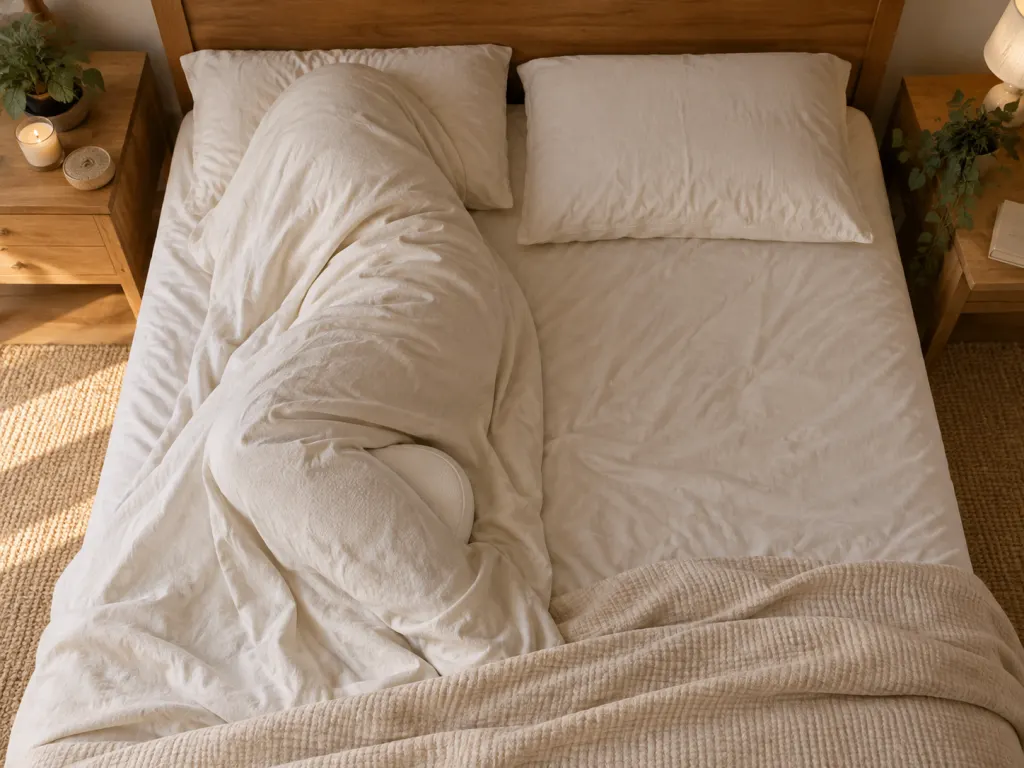
Left Side vs. Right Side: What Actually Changes
The left and right sides are not mirror images for every body system. The stomach and esophagus sit in a way that can make the left side more favorable for some people with reflux. That is why left-side sleeping appears in clinical advice about nighttime reflux and why studies compare left, right, and back positions. In everyday terms, people who notice burning, sour taste, coughing after lying down, or repeated waking after late meals may find the left side worth testing first. That does not make the right side dangerous for everyone. If you sleep soundly on your right side, wake rested, and do not have reflux symptoms, there may be no practical reason to force a change.
The most useful approach is to match the side to the problem. If reflux is the issue, try beginning the night on the left side, avoid large meals close to bedtime, and consider the broader sleep-habit advice from the National Heart, Lung, and Blood Institute, which includes keeping a regular schedule and avoiding heavy meals within a few hours of bed. If snoring is the issue, either side may help you stay off your back, but snoring with gasping, pauses in breathing, or strong daytime sleepiness deserves medical evaluation. If shoulder or hip discomfort is the issue, alternating sides may matter more than choosing a single winner. For a food-related angle on reflux positioning, see Best Sleeping Position for Digestion.

When Back Sleeping Is Better and When It Is Not
Back sleeping is often unfairly treated as automatically bad. It can be comfortable for some people, and with the right pillow support it may help keep the head, neck, and spine in a more neutral line. Cleveland Clinic low back guidance suggests sleeping in a position that maintains the natural curve of the back, such as on the back with support or on the side with knees slightly bent, and advises against stomach sleeping for many people with low back concerns. The key is support: a pillow under the knees may reduce strain for some back sleepers, while a pillow that pushes the head too far forward can create neck tension.
Back sleeping becomes less ideal when it worsens snoring, airway obstruction, or reflux. MedlinePlus notes that sleeping on the back can cause the airway to become blocked or narrowed in obstructive sleep apnea. Mayo Clinic also recommends left-side sleeping and head-of-bed elevation for people who regularly experience reflux at night. So the back position is not a moral failure or a health badge. It is a position that either fits your situation or it does not. If you wake with dry mouth, morning headaches, witnessed breathing pauses, or heavy daytime sleepiness, do not assume a pillow arrangement is enough; bring those details to a clinician.
- Choose the left side first if reflux is your main nighttime complaint.
- Choose either side if your goal is mainly to stay off your back because of snoring.
- Choose back sleeping with support if it feels best for your spine and does not worsen breathing or reflux.
- Avoid forcing stomach sleeping if it twists your neck or strains your lower back.
- Switch sides if one shoulder, hip, or arm feels overloaded by morning.

Why Stomach Sleeping Often Causes Trouble
Stomach sleeping can feel cozy at first because it spreads body weight across the front of the body, but it often asks the neck to stay turned for a long stretch. It can also make pillow height tricky: too much pillow bends the neck backward and sideways, while too little support may feel uncomfortable in the shoulders. Cleveland Clinic posture guidance advises against stomach sleeping and suggests a pillow between the legs for side sleepers or under the knees for back sleepers. If stomach sleeping is the only way you fall asleep, the goal does not have to be perfection overnight. Try shifting gradually: start on your side with a pillow hugged against the chest, place another pillow behind your back, or begin on your stomach and move to your side after your body relaxes.
There is also a difference between a position that helps you fall asleep and a position that serves you for the whole night. Some people begin on the stomach, roll to the side naturally, and wake feeling fine. Others stay twisted for hours and wake stiff. Instead of judging the position by how it feels for the first five minutes, judge it by the morning result. Did you wake with neck tension? Did one arm go numb? Did reflux interrupt the night? Did your sleep partner notice louder snoring on your back? These observations are more useful than any one-size-fits-all rule.
How to Set Up Side Sleeping So It Works
Side sleeping works best when the body is supported from head to hips. Your pillow should fill the space between the mattress and the side of your head so your neck is not dipping down or pushed up. Your knees can bend slightly, and a pillow between them may reduce pulling through the hips and lower back. Try keeping the chin in a neutral position rather than curled sharply toward the chest. If the lower shoulder gets compressed, avoid tucking the arm under the pillow; bring the arm slightly forward or hug a pillow so the shoulder is not pinned beneath your torso.
The mattress also matters. A surface that is too soft can let the hips sink far below the shoulders, while a surface that is too firm can pressure the shoulder and hip. You do not need to buy a new mattress to experiment. First, adjust the pillow height, try a knee pillow, use a body pillow, or fold a towel for small support. Then give the change several nights unless it clearly makes things worse. Sleep is affected by schedule, light, caffeine, meal timing, stress, room temperature, and noise, not only posture. NHLBI’s healthy sleep guidance emphasizes consistent sleep and wake times, quiet wind-down time, limiting heavy meals near bedtime, and a bedroom that is quiet, cool, and dark.
A Simple Decision Guide for Tonight
If you are trying to decide what to do tonight, keep it practical. Start on your left side if reflux is part of the problem. Start on either side if snoring gets worse on your back. Use back sleeping with knee support if side sleeping irritates your shoulder and you do not have breathing or reflux issues in that position. Avoid making stomach sleeping your default if you repeatedly wake with neck or lower back discomfort. If you are already reading several articles on side sleeping, you may also want the site’s related explainer on how sleeping on your right side may affect health, which looks more closely at that specific position.
Then track the outcome, not the theory. For one week, note your starting position, whether you woke during the night, whether reflux or snoring was noticed, and how your neck, back, shoulder, and hips felt in the morning. You may discover that left side is best after dinner but right side is better for shoulder comfort, or that alternating sides prevents pressure from building. Many people change positions naturally during sleep, and that is not a failure. The goal is not to hold one pose like a statue; it is to create a starting position that makes good sleep more likely.
When Position Is Not Enough
Sleep position can improve comfort, but it cannot answer every sleep problem. If you regularly wake gasping, have witnessed pauses in breathing, feel very sleepy during the day, or snore heavily despite side sleeping, talk with a doctor or qualified sleep professional. MedlinePlus notes that a sleep study is used to confirm obstructive sleep apnea, and professional evaluation matters because the right next step depends on the person. Likewise, frequent reflux, ongoing pain, or repeated sleep disruption should not be handled only by experimenting with pillows. Position is a useful lever, but it is only one part of sleep health.
Wrap-Up
Left-side sleeping is the best first choice when nighttime reflux is the main concern, and side sleeping in general may be preferable to back sleeping for people who snore or have possible airway-related sleep problems. Right-side sleeping is not automatically bad, and back sleeping can be comfortable when it is well supported and does not worsen breathing or reflux. The most practical plan is to start on the side that matches your main issue, support your neck and hips with pillows, and judge the result by how you sleep and feel in the morning. If symptoms are persistent, severe, or worrying, bring them to a qualified health professional rather than trying to solve them with position changes alone.
Frequently Asked Questions
- → Is the left side always better than the right side?
No. The left side has stronger support for people with nighttime reflux, but the right side may be perfectly comfortable for someone without reflux symptoms. If your right side lets you sleep well and wake without new discomfort, it is not automatically a problem.
- → What side should I sleep on if I snore?
Many people who snore do better starting on either side instead of flat on the back. If snoring is loud, paired with gasping, or noticed with pauses in breathing, discuss it with a doctor or qualified sleep professional.
- → Is sleeping on my back bad?
Not for everyone. Back sleeping can work well when the head, neck, and knees are supported. It may be less suitable if it worsens reflux, snoring, or airway obstruction, so judge it by your own sleep pattern and morning symptoms.
- → How can I stay on my side longer?
Use a supportive pillow under your head, place a pillow between your knees, and try hugging a pillow in front of your chest. Some people also place a pillow behind the back as a gentle reminder not to roll flat.
- → Should I force myself to stop stomach sleeping?
You do not have to change everything in one night. If stomach sleeping leaves your neck or lower back sore, try gradually shifting toward side sleeping with a body pillow or a pillow hugged against the chest.
References
This content was developed and refined using reliable sources.
- https://www.nhlbi.nih.gov/health/sleep-deprivation/healthy-sleep-habits
- https://medlineplus.gov/ency/article/000811.htm
- https://www.mayoclinic.org/diseases-conditions/gerd/diagnosis-treatment/drc-20361959?p=1
- https://my.clevelandclinic.org/health/articles/4290-low-back-pain-coping
- https://pubmed.ncbi.nlm.nih.gov/37969463
- https://my.clevelandclinic.org/podcasts/health-essentials/sleeping-positions-tips-to-wake-up-pain-free-with-andrew-bang-dc