 Save
Maternal gut health may be connected to autism research through the microbiome, immune signaling, and early neurodevelopment, but the evidence does not show a simple cause-and-effect story. Autism spectrum disorder is a developmental disability with multiple contributing factors, and CDC notes that some causes are known, such as certain genetic differences, while many are still being studied https://www.cdc.gov/autism/about/index.html. The gut microbiome is biologically plausible because it helps shape immunity and metabolism, but most direct maternal-gut findings related to autism come from animal models rather than clear clinical answers for humans.
Why This Question Is Getting Attention
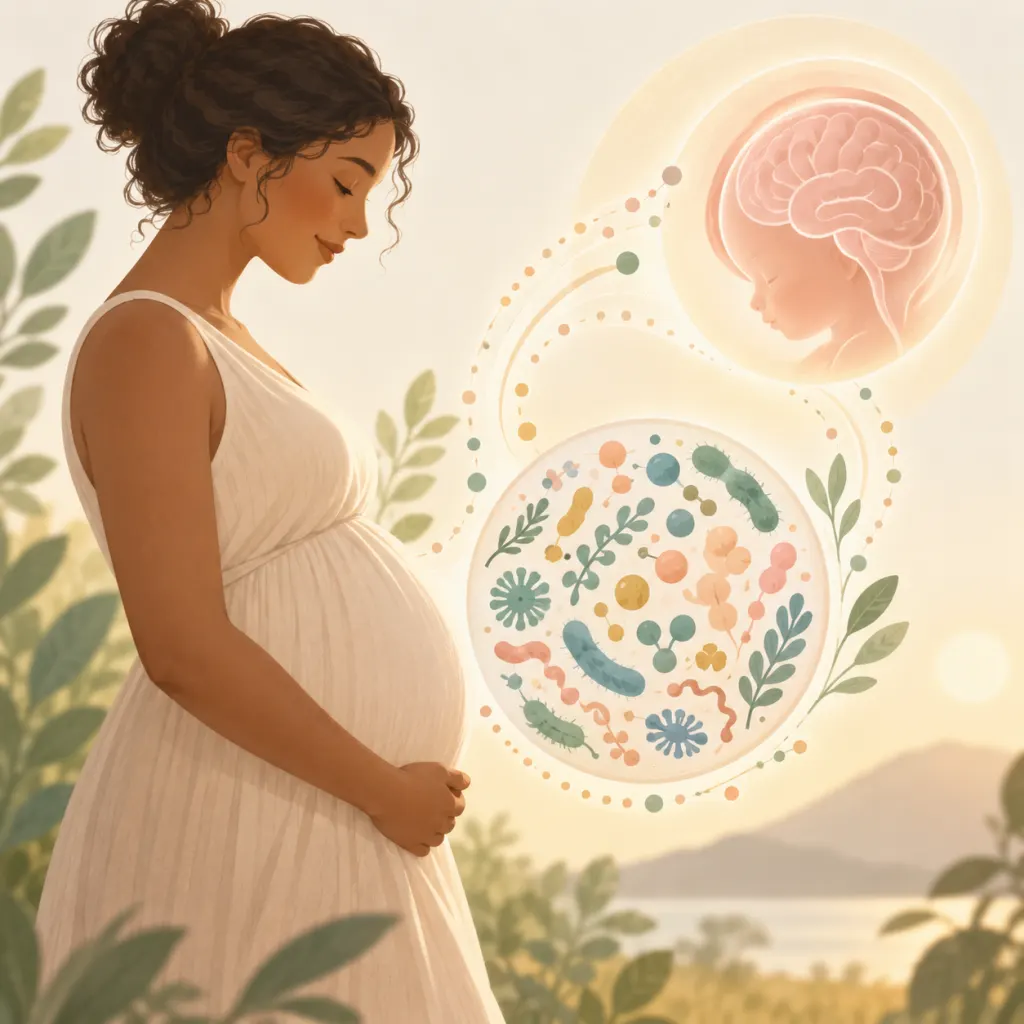
The idea that maternal gut health might matter for autism comes from two observations. First, the gut microbiome is not just a digestive community. NIEHS describes the microbiome as the collection of microbes and their genes that live in and on the body, with roles in immune development, digestion, and responses to environmental exposures https://www.niehs.nih.gov/health/topics/science/microbiome. Second, pregnancy is a period when immune, metabolic, hormonal, and developmental systems are closely linked. Researchers therefore ask whether microbial signals in the mother could help shape the environment in which fetal development occurs.
This does not mean that autism can be reduced to gut health. Autism spectrum disorder involves differences in social communication, behavior, learning, sensory processing, and development. NIMH describes it as a neurological and developmental condition whose signs commonly appear in the first two years of life https://www.nimh.nih.gov/health/topics/autism-spectrum-disorders-asd. CDC likewise emphasizes that there is not one cause of autism; different environmental, biologic, and genetic factors may interact https://www.cdc.gov/autism/about/index.html. That framing is important because microbiome research can add a piece to the puzzle without replacing established knowledge about genetic and developmental diversity.
What Researchers Mean by Maternal Gut Health
In this context, maternal gut health usually refers to the function and composition of microbes in the intestinal tract during the period around pregnancy. Researchers may measure bacterial groups, microbial genes, metabolites, inflammation-related markers, or the ways microbes interact with the immune system. A healthy gut microbiome is not one fixed formula. It varies by person, diet pattern, geography, medication exposure, infections, stress, and other life circumstances. That variation makes the field scientifically interesting, but it also makes simple consumer claims unreliable.
The word "microbiome" can also blur several different questions. Some studies look at the mother's gut during pregnancy. Others look at the infant's gut after birth, delivery mode, breastfeeding, antibiotics, or early feeding. Still others study gastrointestinal symptoms in autistic children. These are related topics, but they are not the same. An association between a child's gut microbiome and autism does not automatically prove that a maternal gut pattern during pregnancy caused later developmental differences.
The Strongest Evidence Is Mechanistic, Mostly in Animals
Much of the most detailed evidence comes from mouse models of maternal immune activation, often shortened to MIA. These models expose pregnant animals to an immune trigger and then examine offspring development and behavior. A 2022 review in Trends in Immunology summarized that heightened inflammation during pregnancy has been associated with neurodevelopmental outcomes in children, while rodent models have helped researchers investigate possible immune pathways https://pubmed.ncbi.nlm.nih.gov/35131181/. In those models, gut bacteria can influence immune signals such as IL-17A, which has been studied in relation to brain-development pathways in mice.
A useful way to read this evidence is to separate mechanism from clinical conclusion. A mouse experiment can show that a microbial community affects a measurable immune pathway under controlled conditions. It cannot, by itself, tell a pregnant person that a microbiome test result predicts autism in a child. Animal models are valuable because they reveal mechanisms that would be difficult or unethical to test directly in pregnancy. They are also limited because laboratory animals, controlled microbial exposures, and induced immune activation do not fully match human pregnancy or human autism.
- What animal studies can do: test whether changing microbes changes immune signaling, fetal brain markers, or behavior in a controlled model.
- What animal studies cannot do alone: prove that the same pathway explains autism in people.
- What human studies still need: larger cohorts, repeated microbiome sampling, careful adjustment for confounders, and long-term developmental follow-up.
Maternal Immune Activation Is a Bridge Between Gut and Brain Research
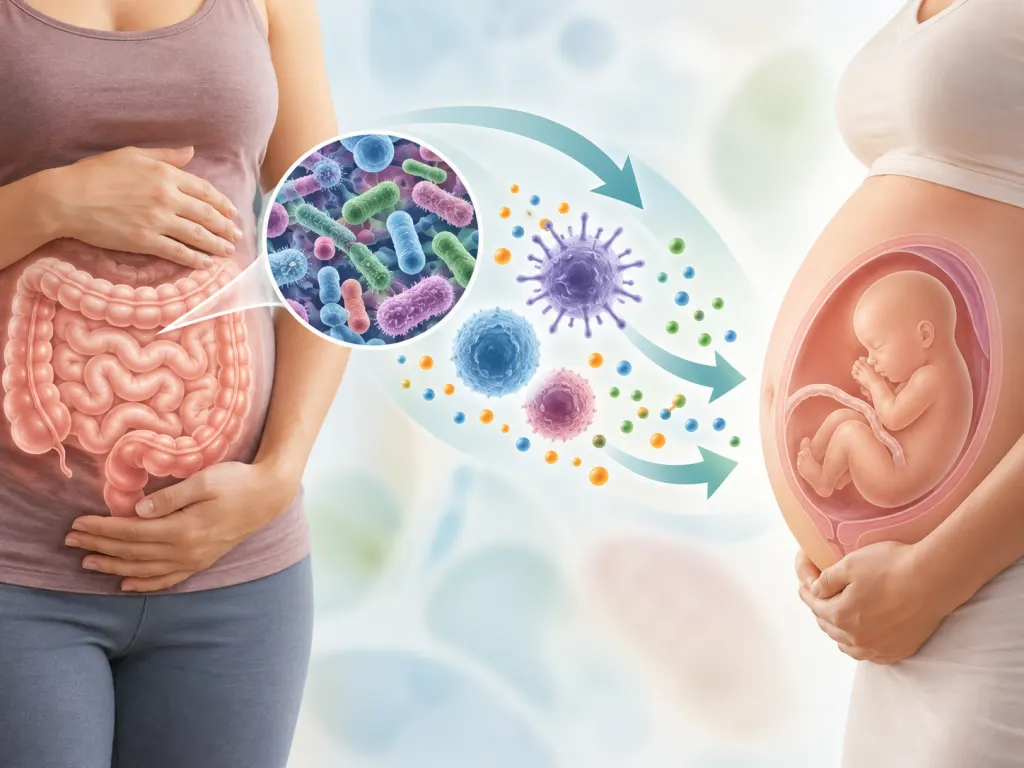
Maternal immune activation is one of the main bridges between gut-microbiome research and neurodevelopment research. The core idea is that immune signals during pregnancy can influence fetal development. Gut microbes can help regulate immune tone, so researchers ask whether certain maternal microbial communities make immune responses stronger, weaker, or different. A PubMed-indexed review notes that microbiomes may shape maternal immune function and autism-like phenotypes in MIA models https://pubmed.ncbi.nlm.nih.gov/35131181/.
Several details matter. The evidence is not saying that ordinary day-to-day digestive variation determines a child's development. It is also not saying that every infection, immune response, or microbial shift has the same meaning. Timing, intensity, genetic susceptibility, placental signals, fetal sex, environmental context, and measurement methods all matter. In a 2022 mouse study, maternal immune activation was associated with autism-like behavioral changes, neuroinflammatory markers, and gut microbiota changes in offspring of both sexes, while the authors emphasized the importance of studying both males and females in preclinical research https://pubmed.ncbi.nlm.nih.gov/36104346/.
What Systematic Reviews Add
Systematic reviews can help avoid building a whole story around one striking experiment. A 2023 systematic review and meta-analysis examined preclinical studies of maternal microbiome disturbance and offspring behavior. The authors found thirteen studies and reported that experimental perinatal microbiome disturbance in rodents was associated with behavioral effects in adult offspring, including measures related to sociability, while also noting limited human research and some conflicting preclinical findings https://pubmed.ncbi.nlm.nih.gov/37400971/. That is a meaningful signal for science, but it remains mostly a preclinical signal.
The most careful interpretation is that maternal microbial disturbance can affect offspring development in controlled animal settings. The open question is how much that explains in the much more complex setting of human pregnancy. People differ in genetics, nutrition, medication exposure, health conditions, stress, infections, healthcare access, environmental exposures, and child-development supports. A single microbial pattern is unlikely to explain such a broad and heterogeneous condition.
Why Human Evidence Is Harder to Interpret
Human studies face confounding. For example, diet pattern, antibiotic exposure, socioeconomic conditions, infections, sleep, stress, metabolic health, and healthcare access can all influence the microbiome and child outcomes. If a study finds that one microbial feature is more common in one group, researchers still have to ask whether that feature is part of a causal pathway, a bystander, a result of another exposure, or a measurement artifact. Microbiome studies can also differ in sampling time, stool handling, sequencing methods, statistical approaches, and how developmental outcomes are defined.
Another challenge is timing. A stool sample collected late in pregnancy may not represent the microbiome earlier in pregnancy. A sample collected after birth may reflect delivery, feeding, antibiotics, household exposures, or infant health rather than prenatal conditions. Because autism is usually identified through developmental history and behavior, not through a blood test or microbiome test, researchers must connect biological samples with years of developmental follow-up. CDC explains that autism diagnosis relies on developmental history and observed behavior rather than a medical test such as a blood test https://www.cdc.gov/autism/diagnosis/index.html.

What This Means for Parents and Families
The practical takeaway is measured: maternal gut health is worth studying, but it should not become a source of blame. Autism is not the result of one meal, one symptom, one probiotic decision, or one microbiome pattern. CDC reports that across surveillance sites, an average of 1 in 31 eight-year-old children were estimated to have autism spectrum disorder in 2022, and it occurs across racial and ethnic groups https://www.nimh.nih.gov/health/statistics/autism-spectrum-disorder-asd. A public-health picture that broad cannot be explained by one narrow factor.
Families reading about gut health should be especially cautious with consumer microbiome testing, supplement marketing, and sweeping claims about autism risk. The science is moving, but it is not at the point where a stool test can forecast a child's neurodevelopmental future. Likewise, mouse studies of probiotics, antibiotics, immune pathways, or microbial transfer are not instructions for self-experimentation during pregnancy. For a separate example of evaluating health claims with care, see Oregano Oil Health Claims: What the Evidence Says. For a food-focused article on digestive regularity, see Ginger and Dates for Digestive Regularity.
Developmental Monitoring Still Matters Most
While microbiome research develops, the most useful family-facing step remains developmental monitoring and timely evaluation when concerns arise. CDC describes developmental monitoring as an ongoing process of watching how a child plays, learns, speaks, behaves, and moves, and it encourages families to discuss concerns with a doctor or nurse https://www.cdc.gov/autism/diagnosis/index.html. Screening is not a diagnosis, but it can identify when a child needs a more detailed evaluation.
This point matters because fascination with biology can sometimes distract from support. Whether a child's autism is linked to genetics, prenatal factors, early-life exposures, or unknown pathways, the child still benefits from being understood as an individual with strengths, needs, preferences, and communication differences. Research may eventually identify more precise biological subgroups, but present-day care still depends on observation, family concerns, developmental history, and access to appropriate services.
A Balanced Bottom Line
Maternal gut health and autism research is neither empty hype nor settled science. The biologic pathway is plausible because gut microbes interact with immune and metabolic systems. Animal research shows that maternal microbiome changes can influence offspring immune and behavioral outcomes under experimental conditions. Reviews of maternal inflammation and microbiome disturbance support the idea that these pathways deserve continued study https://pubmed.ncbi.nlm.nih.gov/35131181/ https://pubmed.ncbi.nlm.nih.gov/37400971/. The missing piece is strong human evidence that translates those mechanisms into reliable prediction or specific pregnancy guidance.
The clearest answer today is that maternal gut health may be one influence within a complex developmental system, not a single explanation for autism. Good science will keep asking how genes, immune signals, microbes, metabolism, environment, and early development interact. Good communication should keep those possibilities in proportion.
Wrap-Up
Maternal gut health is a promising but early research area in autism science. The gut microbiome can influence immune and metabolic signals, and animal studies show that maternal microbial changes can affect offspring development under experimental conditions. However, human evidence is not strong enough to say that a specific maternal gut pattern causes autism or can predict it. Autism is multifactorial, and families should be wary of blame, microbiome-test certainty, and supplement claims. Developmental monitoring, respectful support, and qualified clinical guidance remain the most practical steps.
Frequently Asked Questions
- → Does maternal gut health cause autism?
Current evidence does not show that maternal gut health alone causes autism. Research suggests that gut microbes may influence immune and developmental pathways, especially in animal models, but autism has many contributing factors and human evidence remains limited.
- → Why do researchers study the gut microbiome in autism?
Researchers study it because gut microbes interact with immunity, metabolism, and signaling systems that may matter during early development. This makes the microbiome a plausible research target, but plausibility is not the same as proof in humans.
- → Are animal studies useful for understanding this topic?
Yes, but with limits. Animal studies can test mechanisms in controlled conditions, such as how microbes affect immune activation. They cannot directly predict what will happen in an individual human pregnancy or child.
- → Can a microbiome test show autism risk?
No reliable clinical microbiome test can determine whether a child will be autistic. Autism diagnosis is based on developmental history and behavior, not stool testing.
- → What should families focus on while the science develops?
Families can focus on routine healthcare, developmental monitoring, and early evaluation when concerns appear. Questions about pregnancy, child development, digestive symptoms, or supplements belong with a qualified health professional who knows the person's history.
References
This content was developed and refined using reliable sources.
- https://www.cdc.gov/autism/about/index.html
- https://www.nimh.nih.gov/health/topics/autism-spectrum-disorders-asd
- https://www.nimh.nih.gov/health/statistics/autism-spectrum-disorder-asd
- https://www.niehs.nih.gov/health/topics/science/microbiome
- https://pubmed.ncbi.nlm.nih.gov/35131181
- https://pubmed.ncbi.nlm.nih.gov/37400971
- https://pubmed.ncbi.nlm.nih.gov/36104346
- https://www.cdc.gov/autism/diagnosis/index.html