 Save
In 2022, Maximilian David Muñiz, the teenage son of Jennifer Lopez and singer Marc Anthony, appeared briefly on screen in his mother's romantic comedy Marry Me. That cameo offered a rare glimpse of a young man who, alongside his twin sibling Emme, has grown up partly in the public eye while his parents worked to give both children a measure of privacy and normalcy. Born on February 22, 2008, Max is now seventeen years old and at an age when personal identity, future direction, and public visibility can intersect in genuinely complicated ways.
Jennifer Lopez has spoken openly over the years about shielding her children from unnecessary media exposure, a stance consistent with what child development researchers describe as a protective factor for adolescents navigating fame-adjacent environments. Max's early appearance on screen is modest compared with the trajectories of children pushed into the spotlight at very young ages, yet the questions his story raises, about pressure, identity, and the well-being of adolescents who grow up with public attention, are real and worth examining through an evidence-based lens.
This article sets out what is publicly known about Max Muñiz's early steps in entertainment and draws on authoritative public health research to discuss what adolescent well-being science says about young people in high-visibility situations. It does not speculate about private matters. Instead, it uses Max's story as a starting point for a genuinely useful conversation about adolescent resilience, family support, and professional resources.
Who Is Maximilian David Muñiz?
Maximilian David Muñiz was born on February 22, 2008, the son of Jennifer Lopez and Marc Anthony. He is the twin brother of Emme Muñiz. The Lopez-Anthony twins arrived during one of the most prominent chapters in either parent's career, and media attention around their birth was intense. Their parents divorced in 2011, and a co-parenting arrangement has been in place since. Jennifer Lopez married actor and filmmaker Ben Affleck in 2022, though the couple announced their separation in 2024. Through all of these changes, Lopez has consistently described her role as a mother as her most important one, and both twins have benefited from that stated priority over her own public visibility.
From a young age, both Max and Emme have occasionally appeared alongside their mother at public events. Emme performed with Lopez during the 2020 Super Bowl halftime show, a moment that drew significant attention. Max has remained more private, a circumstance that many observers have noted with approval given the documented difficulties that can accompany very early childhood exposure to media scrutiny. The family has largely kept Max's personal life away from tabloid coverage, and that approach reflects a deliberate, consistent boundary that Lopez has maintained across the considerable changes in her own public circumstances over the past decade.
Early Steps in Entertainment
Max's most publicized entry into the entertainment world came through a cameo in the 2022 Universal Pictures romantic comedy Marry Me, which starred his mother alongside Owen Wilson and Colombian singer Maluma. The film centers on a pop star who impulsively marries a stranger at a concert and draws on a graphic novel of the same name. Max's appearance was brief, more a family moment captured on film than a starring debut, but it was widely noted in entertainment coverage as a meaningful milestone for a teenager who had otherwise stayed largely out of public view.
Before that film appearance, Max participated in school theatrical productions, including a role in a school staging of The Wizard of Oz. School theater is among the most widely recommended environments for young people interested in performing arts: it provides structure, peer collaboration, and the creative experience of stage performance without the commercial pressures or public scrutiny that professional productions carry. Educators and child development specialists point to school arts programs as beneficial for developing confidence and social skills in adolescents, regardless of whether those adolescents go on to pursue entertainment professionally. Max's early trajectory, school productions first, minor on-screen appearances later, is broadly consistent with the gradual, protected approach that professionals in this area recommend for young people with an interest in the performing arts.

Adolescent Well-Being in High-Visibility Environments
Understanding any teenager's situation thoughtfully requires looking at what researchers and public health bodies know about adolescents who grow up with significant public attention. The World Health Organization reports that one in seven young people between the ages of 10 and 19 experiences a mental health condition, with anxiety disorders among the most common, affecting approximately 4.1 percent of younger adolescents and 5.3 percent of older teenagers globally. The WHO specifically identifies peer pressure, identity exploration, and media influence as significant factors shaping adolescent well-being. All of these are amplified when a young person's family is prominent in public life, and the external dimension of that pressure, commentary, scrutiny, and public comparison, can be particularly difficult for teenagers to contextualize or manage on their own.
The National Institute of Mental Health (NIMH) notes that many adults living with mental health conditions showed early signs during childhood or adolescence that were not recognized or addressed at the time. This finding underscores the importance of awareness and early support rather than normalizing distress as simply an ordinary feature of growing up. NIMH also emphasizes that effective support is available and that early intervention tends to produce the most beneficial outcomes. For adolescents in demanding environments, whether that demand originates from public visibility, competitive performance, academic pressure, or significant family change, the organization recommends maintaining strong social connections, regular physical activity, consistent sleep routines, and professional help when persistent difficulties arise.
Building Resilience: What Research Says About Healthy Coping
NIMH outlines a range of evidence-based approaches associated with better outcomes for adolescents dealing with stress. These reflect consistent findings across the research literature on adolescent well-being:
- Physical activity: Regular exercise is consistently associated with improved mood regulation and reduced physiological stress response in adolescents.
- Consistent sleep: Sleep quality is closely linked to emotional regulation, cognitive performance, and resilience during the teenage years.
- Journaling and reflection: NIMH notes that expressive writing can serve as a useful tool for processing difficult emotions when practiced regularly.
- Mindfulness and breathing exercises: Relaxation techniques, including deep breathing and guided mindfulness, have documented benefits for reducing the body's stress response.
- Social connection: Supportive friendships and family relationships are consistently identified as protective factors for adolescent well-being.
- Managing media exposure: The WHO notes that media influence can intensify gaps between adolescents' real experiences and self-perception; intentionally moderating media time is a recognized protective measure.
- Professional support: When distress persists or interferes with daily life, both NIMH and MedlinePlus recommend speaking with a healthcare provider, school counselor, or qualified mental health professional.
These strategies are not unique to celebrity children, they are recommended broadly for adolescents in demanding academic, competitive, or otherwise high-pressure environments. What differs for young people who grow up with a public profile is the external dimension of that pressure: commentary, scrutiny, and comparison that originate entirely outside the family and can be difficult for a teenager to contextualize or control. Building internal resources, confidence, clear values, strong personal relationships, is widely considered the most durable buffer against these external forces. The most useful thing any environment can offer a teenager navigating these circumstances is the consistent message that seeking support is a sign of self-awareness, not weakness.
The Role of Family Support and Access to Professional Resources
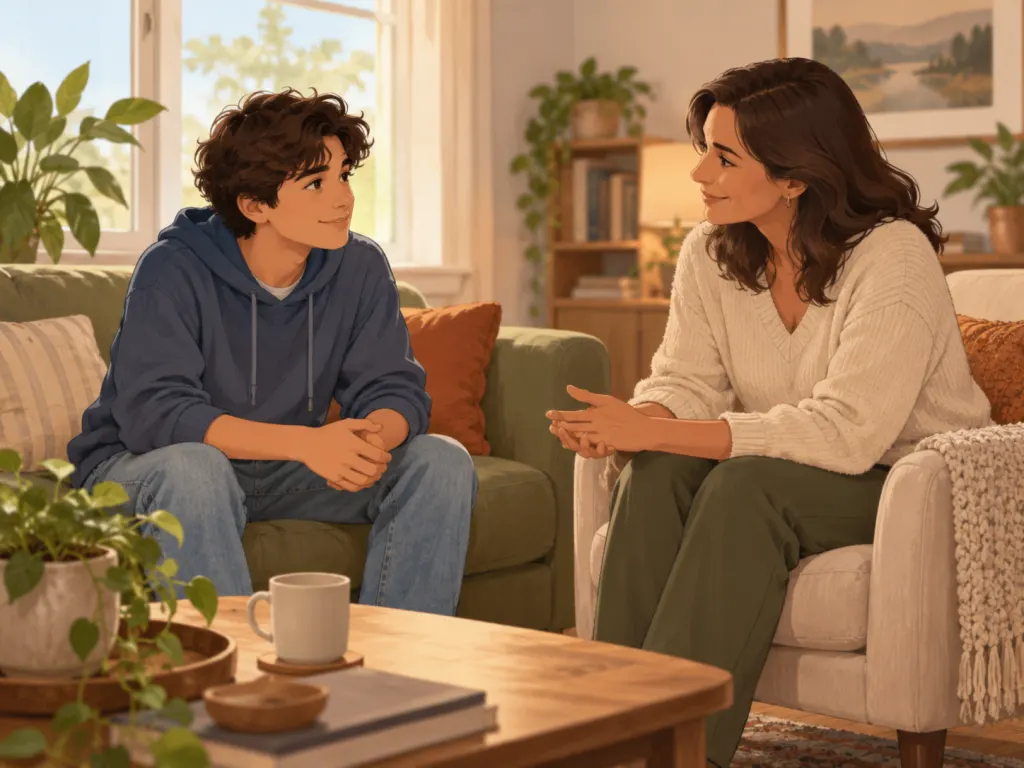
Research consistently identifies family support as among the most powerful protective factors available to adolescents navigating difficult circumstances. A parent who maintains open communication, models healthy boundaries, and validates a young person's experience, rather than minimizing it, creates an environment in which the teenager is more likely to seek help when it is needed. Jennifer Lopez has publicly described her parenting approach as one centered on presence and openness, values that align with what developmental researchers describe as authoritative parenting: warmth combined with clear expectations and ongoing dialogue. While no family structure is without challenges, these consistent communicative values are broadly supported by research as beneficial for adolescent outcomes across a wide range of family situations.
For families in which a young person shows signs of persistent distress, withdrawal, significant changes in behavior, difficulty engaging with school or daily routines, MedlinePlus and NIMH both recommend starting a conversation with a primary care physician or a school counselor rather than waiting. In the United States, the 988 Suicide and Crisis Lifeline is available by call or text for young people in acute crisis. SAMHSA's national helpline and online locator tool can help families identify local professional services. These resources exist for all adolescents, regardless of family background, public profile, or the specific source of the pressure they are navigating.
Looking Ahead: Perspective on a Young Career
At seventeen, Maximilian Muñiz is at the beginning of whatever path he will ultimately choose. The entertainment industry offers genuine opportunities for people with talent and drive, but it also requires resilience, a strong sense of self, and the ability to maintain perspective when public commentary, positive or negative, becomes noise. The foundational work of adolescence, developing identity, building relationships, discovering what genuinely matters to a person, is the same regardless of last name or family profile.
What research tells us is that adolescents who enter demanding or high-visibility environments with a foundation of family support, access to professional resources when needed, and their own clearly developed sense of self tend to navigate those environments more effectively than those without those foundations. Max Muñiz's story, as much of it as is visible to the public, is primarily the story of a teenager growing up. The same patience, care, and informed support that matter for any adolescent matter here as well.
Wrap-Up
Maximilian David Muñiz, known as Max, is Jennifer Lopez and Marc Anthony's seventeen-year-old son who made a brief on-screen appearance in the 2022 film Marry Me and has participated in school theatrical productions. As he steps into greater public visibility, the questions his circumstances raise about adolescent well-being deserve informed, evidence-based answers. The World Health Organization reports that one in seven adolescents globally experiences a mental health condition; the National Institute of Mental Health emphasizes that effective support exists and early intervention is most beneficial. Strong family relationships, healthy daily habits, clear personal boundaries, and access to professional help when needed are the consistent recommendations from public health authorities for any young person navigating high-pressure environments.
Frequently Asked Questions
- → Who are Jennifer Lopez's children?
Jennifer Lopez has two children, twins Maximilian David Muñiz (Max) and Emme Muñiz, born on February 22, 2008, from her marriage with singer Marc Anthony. Both are now teenagers.
- → Has Max Muñiz appeared in any films or stage productions?
Max Muñiz made a brief cameo appearance in his mother's 2022 film Marry Me. Before that, he participated in school theatrical productions, including a school staging of The Wizard of Oz. His path into entertainment has been gradual and family-centered.
- → What well-being challenges are most common among teenagers in high-pressure environments?
According to the World Health Organization, one in seven adolescents aged 10 to 19 experiences a mental health condition globally. The WHO identifies peer pressure, identity exploration, and media influence as significant contributing factors, all of which are amplified for young people growing up in high-visibility or high-expectation environments.
- → How can parents support a teenager dealing with significant public or performance-related pressure?
Public health researchers recommend open communication, consistent availability, and taking a teenager's experience seriously rather than minimizing it. Encouraging healthy routines, adequate sleep, physical activity, social connection, and establishing clear limits around media exposure are widely supported approaches. When persistent difficulties arise, a conversation with a primary care physician or school counselor is the recommended next step.
- → Where can teenagers and families find professional support in the United States?
In the United States, the 988 Suicide and Crisis Lifeline is available by call or text for young people in acute crisis. MedlinePlus recommends speaking with a parent, school counselor, or healthcare provider as a practical first step. SAMHSA's national helpline and online locator tool can help families identify local professional services.
- → At what point should a family seek professional help for a teenager experiencing persistent stress?
NIMH advises seeking professional support when stress symptoms interfere with everyday life, cause persistent avoidance behaviors, or remain constant over time. MedlinePlus notes that persistent feelings of worry, sadness, or hopelessness are signs worth discussing with a healthcare provider rather than waiting to see if they resolve on their own.