 Save
Oregano is a useful culinary herb, and its essential oil contains compounds that researchers study for antimicrobial behavior in laboratory systems. That does not mean an oregano infusion has the same strength, concentration, or purpose as an essential oil or a supplement. The practical takeaway is simple: enjoy oregano as food and as a warm herbal drink if you like its flavor, but read sweeping online claims with caution and separate kitchen use from concentrated products.
Why Online Oregano Claims Need Context
Oregano attracts attention because it sits at the intersection of food, tradition, and modern laboratory research. It is familiar enough to be in many spice racks, yet chemically interesting enough to appear in scientific papers. Cleveland Clinic describes oregano as a common herb used fresh or ground in food, and notes that oregano tea, oregano oil, and oregano essential oil are different forms with different uses and cautions https://health.clevelandclinic.org/oregano-benefits. That distinction matters because many viral claims flatten every form of oregano into one dramatic promise.
The strongest research language usually comes from studies of isolated compounds or essential oils, not from a mild cup made with dried leaves. A kitchen infusion is mostly water, aroma, warmth, and flavor. Essential oil is a concentrated product. A supplement has a label, a manufacturer, and a different regulatory category. Those three things should not be treated as interchangeable just because they come from the same plant family.
A grounded way to read oregano claims is to ask three questions:
- Which form is being discussed? Fresh leaves, dried leaves, tea, oil for cooking, essential oil, and capsules are not the same product.
- Where was the evidence produced? A laboratory dish, an animal model, a food packaging experiment, and a human study answer different questions.
- What is the claim asking oregano to do? Flavoring soup is ordinary food use; broad clinical promises require much stronger evidence.
What Oregano Contains
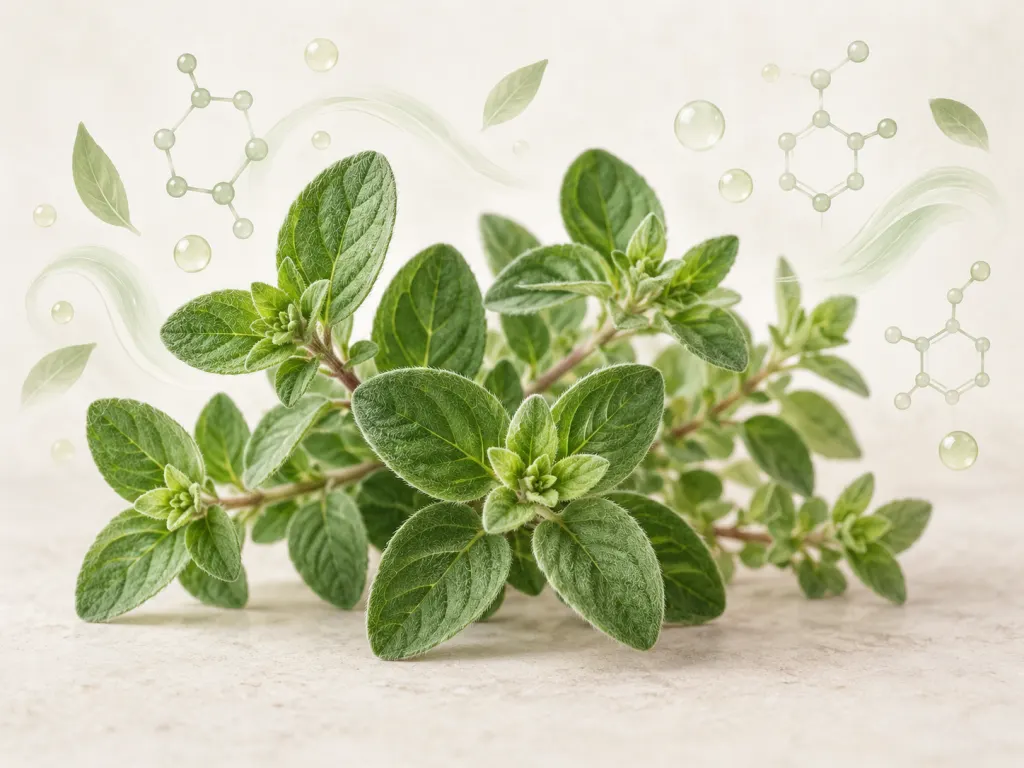
The familiar oregano flavor comes from volatile aromatic compounds. Two names appear often in research discussions: carvacrol and thymol. PubMed’s abstract for a review on carvacrol and thymol describes them as phenolic isomers associated with thyme and oregano essential oils and notes their use in food flavoring contexts https://pubmed.ncbi.nlm.nih.gov/31617738/. Another PubMed-indexed review focuses on thymol and describes its occurrence in essential oils from plants including Origanum species https://pubmed.ncbi.nlm.nih.gov/27211664/.
These compounds help explain why oregano smells pungent, peppery, and warm. They also explain why food scientists are interested in oregano essential oil. But chemistry alone is not a kitchen instruction. Amount, extraction method, purity, contact time, temperature, and the surface being studied can all change what researchers observe. A few leaves steeped in a mug will not match the concentration of an essential oil sample prepared for a controlled experiment.
Oregano also contains other plant constituents, including flavonoids and phenolic compounds. Cleveland Clinic summarizes oregano as containing several antioxidant compounds and notes that human research remains limited for many proposed benefits https://health.clevelandclinic.org/oregano-benefits. For an everyday reader, that means the most reliable claim is the modest one: oregano is a flavorful plant food with interesting compounds, not a stand-alone health strategy.
What Laboratory Findings Can Tell Us
Laboratory research is useful, but it has boundaries. When researchers place oregano essential oil, carvacrol, or thymol in direct contact with microbes under controlled conditions, they can observe behavior that helps build food science knowledge. That kind of work can inform questions about preservation, surfaces, packaging, and the chemistry of aromatic plants. It does not automatically tell us what happens after someone drinks a mild infusion at home.
The gap between a controlled lab system and a cup of tea is not a technicality. In a lab, the researcher knows the exact concentration, the organism being tested, the medium, the exposure time, and the endpoint. In a kitchen, the herb may be older or fresher, crushed or whole, steeped briefly or longer, and used with lemon, honey, garlic, cinnamon, or other ingredients. Each change affects what gets into the water and what the drink tastes like.
This is why cautious language is more honest than dramatic language. A fair summary is that oregano compounds have been studied for antimicrobial activity in non-kitchen research settings, especially when concentrated as essential oil or isolated components. A fair summary is also that a homemade infusion should be treated as a beverage, not as a concentrated research material.
How A Gentle Oregano Infusion Fits In The Kitchen
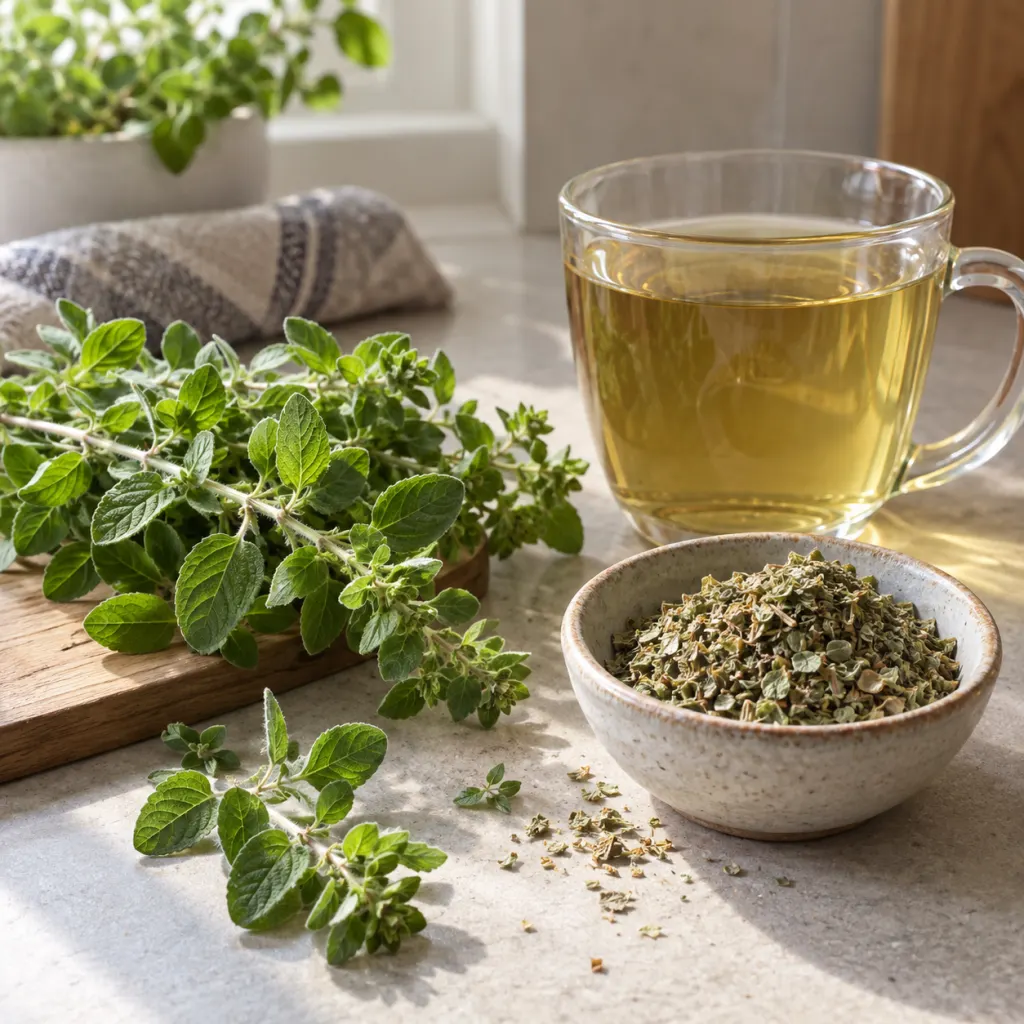
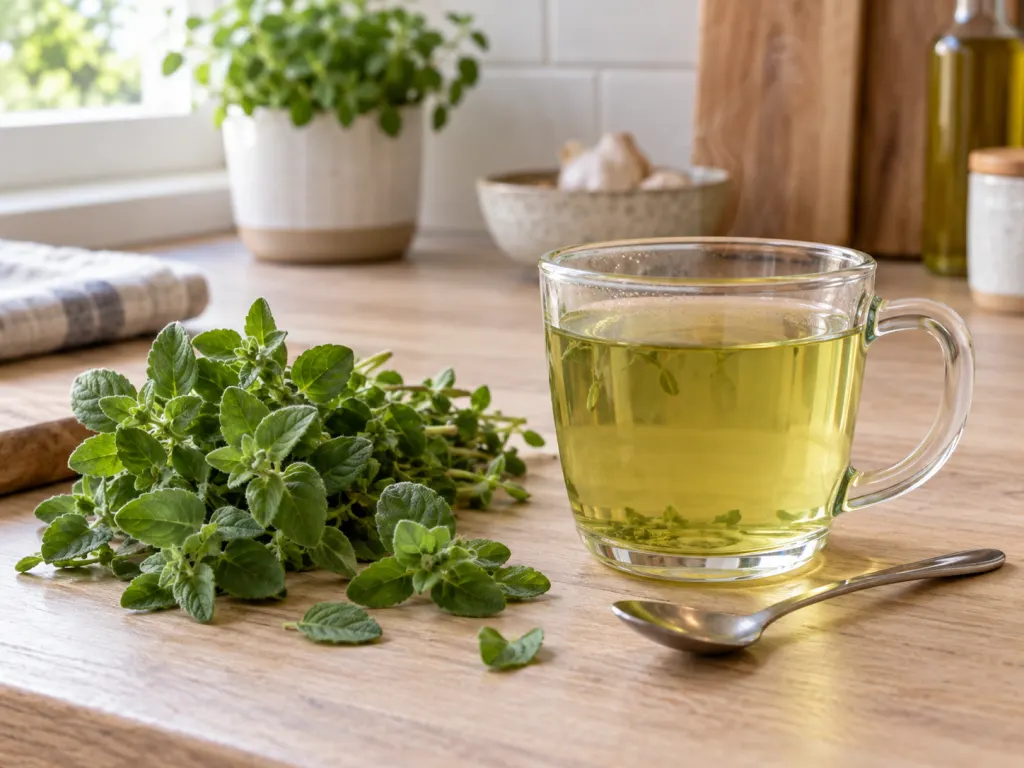
An oregano infusion can still be worthwhile without oversized claims. It is caffeine-free, savory, and aromatic. Some people enjoy it after meals because the flavor feels warm and herbal. Others prefer it as a cooking-adjacent drink, closer to sipping broth than to drinking a floral tea. The taste can be assertive, so a light hand often works better than a heavy one.
If you make one, keep the concept culinary: hot water, culinary oregano, and perhaps another ordinary kitchen ingredient for flavor. Dried oregano tends to be stronger than fresh leaves, so the goal is balance rather than intensity. Avoid using essential oil in a drink; Cleveland Clinic specifically distinguishes oregano essential oil from oregano tea and says essential oil is very concentrated https://health.clevelandclinic.org/oregano-benefits. That is one of the clearest practical lines in the whole topic.
Food habits are easier to keep sensible when they remain flexible. An oregano infusion does not need a rigid schedule, a challenge format, or a promise attached to it. It can simply be an occasional warm drink, especially for people who enjoy savory herbs. If the taste is too strong, that is useful feedback, not a sign that the drink is more powerful.
Supplements Are A Different Category
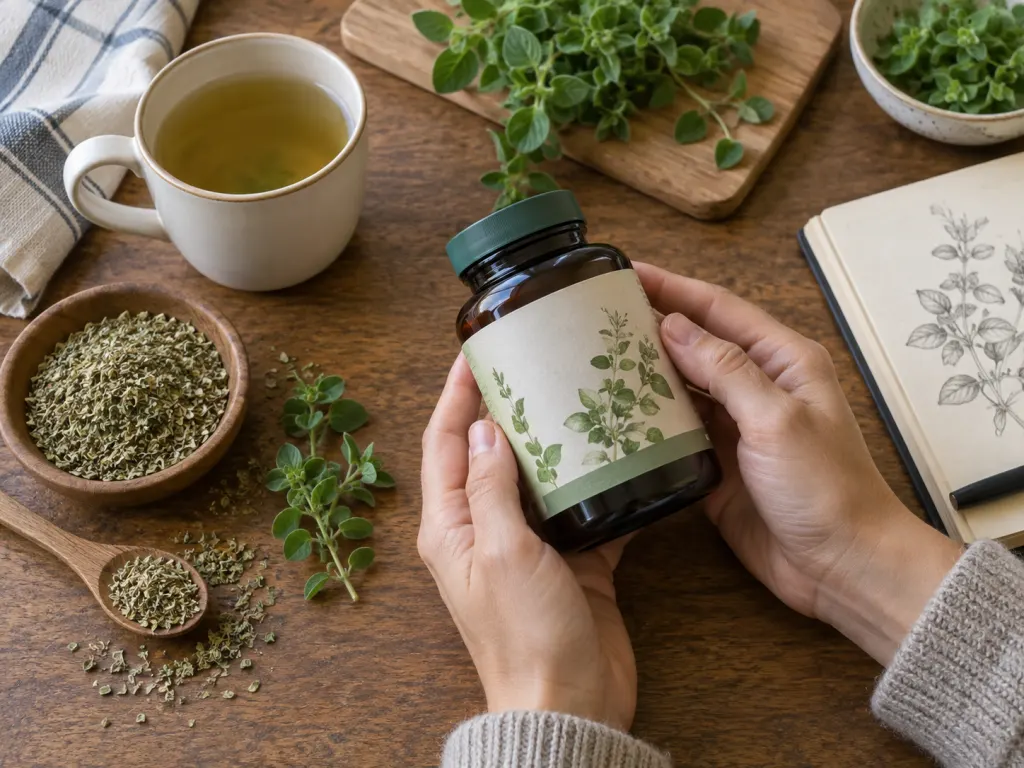
The U.S. Food and Drug Administration explains that dietary supplements may include herbs and botanicals, and that they are different from conventional food https://www.fda.gov/consumers/consumer-updates/fda-101-dietary-supplements. FDA also explains that supplement labels carry Supplement Facts information and that companies have responsibilities for label accuracy and product quality https://www.fda.gov/food/information-consumers-using-dietary-supplements/questions-and-answers-dietary-supplements. This is relevant because oregano oil capsules and concentrated extracts are not the same as seasoning a tomato sauce.
NCCIH notes that the amount of scientific evidence for supplements varies widely and that products sold in stores or online may differ from the products used in research studies https://www.nccih.nih.gov/health/dietary-and-herbal-supplements. In plain terms, a label may list oregano oil or carvacrol, but that does not make every bottle equivalent to every study. Brand, formulation, concentration, manufacturing controls, and intended use all matter.
How To Read Oregano Claims Without Getting Pulled Off Course
Start by looking for precision. A careful claim will name the form of oregano, the type of research, and the limits of the finding. A weak claim usually jumps from a lab result to a broad human promise without explaining the bridge. The bridge is where most of the uncertainty lives.
Next, notice whether the claim compares oregano with unrelated foods in a way that sounds exact but gives no method. Claims that rank oregano against lemon, garlic, or another ingredient may feel scientific because they use numbers, yet they often leave out what was measured. Was it antioxidant capacity in a test tube? A compound concentration? A sensory comparison? A food preservation experiment? Without that context, the number is not very useful.
Finally, separate enjoyment from expectation. If you like oregano infusion, that is enough reason to make it now and then. If a claim asks you to use it for a specific body outcome, the evidence bar becomes much higher. NCCIH advises people to tell their health care providers about supplements they use and notes that herb and supplement questions can be complex https://www.nccih.nih.gov/health/tips/tips-how-herbs-can-interact-with-medicines.
A Practical Kitchen Checklist
For everyday use, choose oregano for flavor first. Store dried oregano in a tightly closed container away from light and heat, because aroma fades with time. Crush a small pinch between your fingers before adding it to hot water or food; that releases more fragrance. If the jar smells dusty rather than lively, the infusion will probably taste flat.
For concentrated products, slow down and read the label. Look for the full ingredient list, the amount per serving, the manufacturer information, and any caution statements. FDA encourages consumers to be informed about supplements and to talk with a health care professional when deciding whether a supplement is appropriate https://www.fda.gov/consumers/consumer-updates/fda-101-dietary-supplements. That advice is especially relevant when a product is far more concentrated than the herb used in cooking.
The Bottom Line For Home Cooks
Oregano deserves respect as a flavorful herb and as a plant with compounds that scientists continue to study. The evidence is most solid when described narrowly: carvacrol, thymol, and oregano essential oil have been examined in laboratory contexts, while human evidence for broad wellness claims remains limited. A homemade oregano infusion can be a pleasant, savory drink, but it should stay in the category of food and routine comfort. The best use of oregano is still the simplest one: add it thoughtfully, enjoy its aroma, and be skeptical of claims that make a humble herb sound like a clinical shortcut.
Wrap-Up
Oregano is not just a pizza herb, but it is also not a shortcut around careful health decisions. Its aromatic compounds, especially carvacrol and thymol, explain why researchers study oregano essential oil in controlled settings. Those findings are interesting, but they do not make a mild herbal infusion equivalent to a concentrated oil or supplement. For most kitchens, the clearest guidance is to enjoy oregano for flavor, avoid ingesting essential oil, read supplement labels carefully, and treat strong claims as a reason to look for better evidence.
Frequently Asked Questions
- → Is oregano infusion the same as oregano essential oil?
No. An infusion is made by steeping culinary leaves in hot water, while essential oil is a concentrated aromatic product. They differ in strength, composition, and intended use.
- → Why do studies focus on carvacrol and thymol?
Carvacrol and thymol are aromatic compounds found in oregano and related herbs. Researchers study them because they help explain oregano’s strong scent and behavior in controlled food science and laboratory settings.
- → Can I use dried oregano from my spice rack for an infusion?
Yes, if it is culinary oregano and still smells fresh. The result will be a savory, herbal drink. Use flavor as your guide and keep the drink in the category of ordinary food.
- → What should I watch for when reading oregano oil supplement labels?
Check the full ingredient list, serving information, manufacturer details, and caution statements. Concentrated products are different from food use, so personal health decisions should be discussed with a qualified professional.
- → What is the most evidence-aware way to think about oregano?
Think of oregano as a flavorful herb with interesting plant chemistry. Laboratory findings about concentrated compounds are useful, but they should not be stretched into broad promises about a homemade drink.
References
This content was developed and refined using reliable sources.
- https://health.clevelandclinic.org/oregano-benefits
- https://pubmed.ncbi.nlm.nih.gov/31617738
- https://pubmed.ncbi.nlm.nih.gov/27211664
- https://www.fda.gov/consumers/consumer-updates/fda-101-dietary-supplements
- https://www.fda.gov/food/information-consumers-using-dietary-supplements/questions-and-answers-dietary-supplements
- https://www.nccih.nih.gov/health/dietary-and-herbal-supplements
- https://www.nccih.nih.gov/health/tips/tips-how-herbs-can-interact-with-medicines