 Save
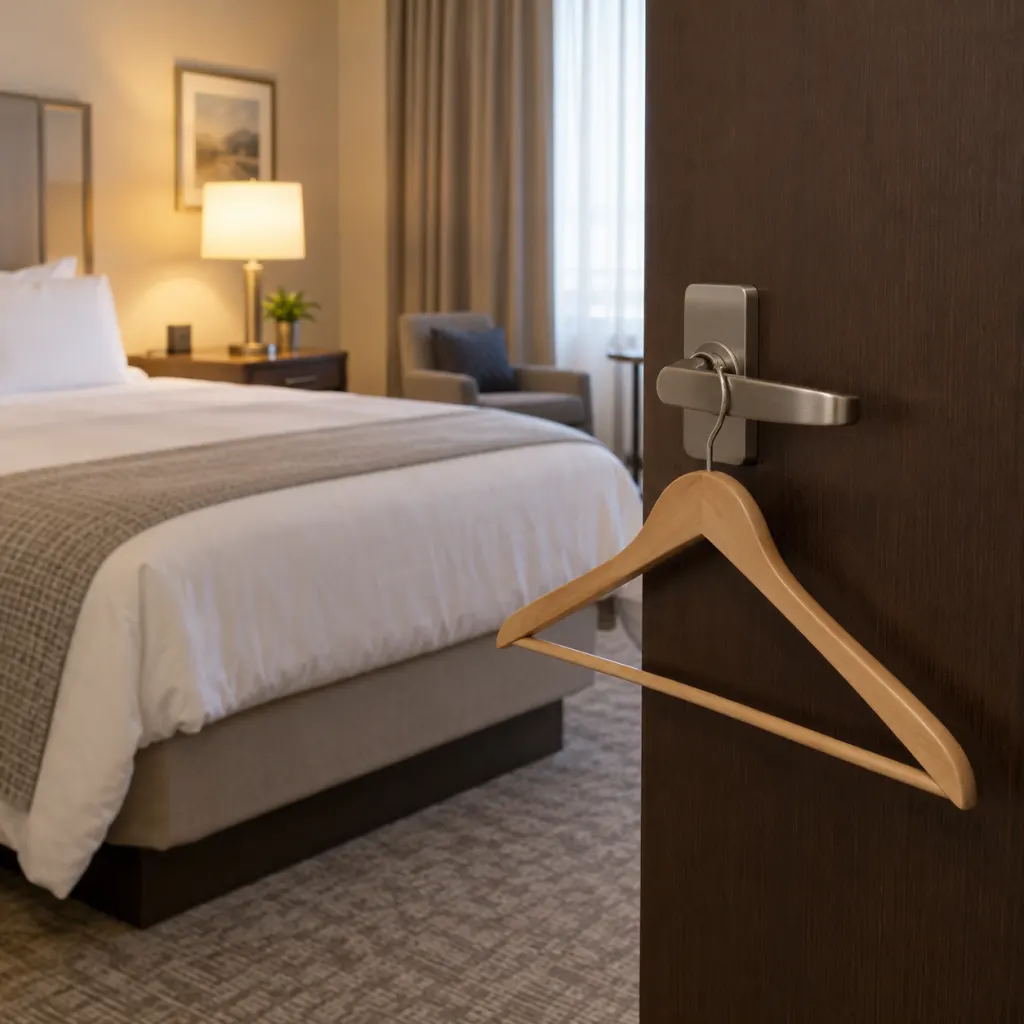
The main reason people hang a hanger on a door handle before sleep is simple: if the handle turns, the hanger may shift, rattle, or fall, creating a small sound that can alert the person inside. That does not make it a substitute for a working lock, deadbolt, latch, door viewer, or a safer lodging choice. Think of it as a low-tech noise cue and visual reminder, useful only after the basics are handled. The U.S. Department of State advises travelers to make sure hotel-room doors and windows lock properly and to contact the front desk about suspicious activity, which is a stronger foundation than any improvised trick travel.state.gov.
The Short Answer: It Is A Noise Cue, Not A Lock
A hanger works, when it works at all, because it is loose, light, and awkwardly balanced. If the handle moves enough, the hanger can scrape the metal, tap the door, or drop to the floor. That sound may be enough to wake a light sleeper or draw attention to someone touching the handle. The important limit is that a hanger does not strengthen the door, stop a forced entry, or verify who is outside. It is closer to placing a cup near a door than installing security hardware. The safest way to describe it is as an alert aid, not a barrier.
The habit has become popular because it is easy to picture and costs nothing. Most hotel closets have hangers, many interior doors have lever handles, and travelers often want one more step before sleeping in an unfamiliar room. But simple should not be confused with reliable. Door shape, handle style, hanger material, carpet, background noise, and how deeply you sleep all affect whether you hear anything. A wooden hanger on a hard floor may make a noticeable sound; a plastic hanger landing on thick carpet may barely register.
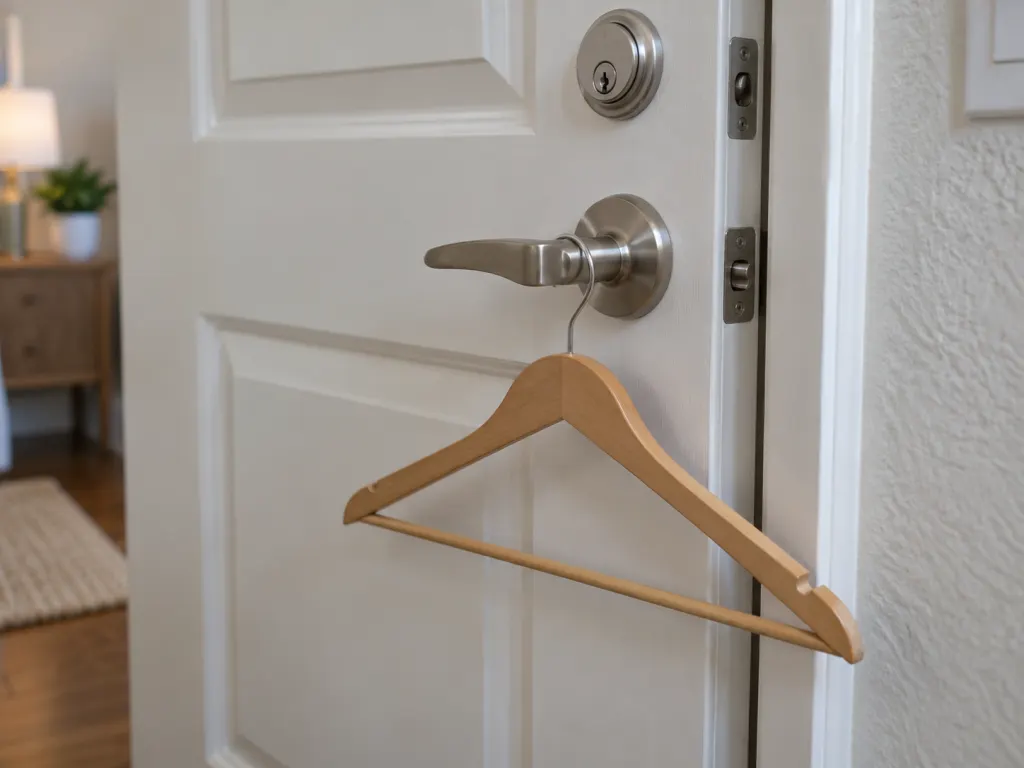
How The Hanger Trick Actually Works
For the trick to do anything, the hanger must be placed on the inside handle so it can move freely. It should not jam the latch, wedge the door, cover a peephole, trap the door closed, or require tools to remove. The goal is only to create a small, removable object that reacts to handle movement. If the door opens inward and the handle is a lever, the hanger may slide or knock against the door. If the door has a round knob, a flat handle, a recessed pull, or a self-closing mechanism, the hanger may not sit securely at all.
That makes this habit highly situational. It may make sense as part of a bedtime routine in a private room where you control the inside of the door. It makes less sense in a shared hallway, shared bedroom, hostel dorm, or any place where legitimate staff, roommates, family, or caregivers may need safe access. In those settings, an improvised alarm can startle people, create confusion, or send the wrong signal. A calm conversation, a working lock, and clear household expectations are usually better than a surprise object on the handle.
Where It May Be Useful
The hanger idea is most useful when it remains modest: a quick reminder to pay attention, not a claim that the room is secure. It may fit a few ordinary situations:
- Hotel stays: a traveler wants a light sound cue after checking that the room lock works.
- Short-term rentals: a guest wants a visible reminder to lock up and keep the key nearby.
- Dorms or shared buildings: a resident wants a harmless prompt to notice door movement, while still following housing rules.
- Home routines: someone wants to remember keys, a bag, or a morning errand by placing an item near the door.
In each case, the hanger is only the smallest layer. The main layer is still a door that closes, latches, and locks correctly.
What To Check First In A Hotel Or Rental
Before worrying about a hanger, check the room itself. The State Department’s lodging guidance recommends reviewing accommodations before booking, staying aware during the stay, making sure doors and windows lock properly, and meeting unfamiliar visitors in public spaces rather than inside the room travel.state.gov. Those steps matter because they address the real safety conditions: location, room access, working hardware, staff support, and whether anything in the room seems wrong.
Fire planning matters too. The U.S. Fire Administration advises hotel guests to read the evacuation plan, find the two closest exits, and count the doors between the room and exits so they can orient themselves if visibility is poor usfa.fema.gov. That guidance is easy to overlook when you arrive tired, but it is a more dependable bedtime habit than any object on a handle. If you use a hanger as a noise cue, it should never block the door, delay your exit, or make it harder to leave quickly.
At Home, It Is Mostly A Reminder
At home, the hanger trick is usually less about travel and more about routine. A hanger on the handle can remind you to take a jacket, bag, document, or set of keys in the morning. It can also remind you to check that the door is locked before bed. For actual home security, basic habits are more important. UC San Diego Police Department safety tips advise using locks on doors and windows, keeping doors locked whether home or away, knowing who is at the door before opening it, and keeping entrances well lit police.ucsd.edu. Those are practical steps that do not depend on whether an improvised object makes a sound.
A useful home version is simple: lock the door, check the window, set the phone where you can reach it, keep the floor path clear, and use the hanger only as a memory cue. If you live with others, say what you are doing. A silent personal habit can become confusing when another person opens the door at night and hears something fall. The best safety routines are predictable, shared when necessary, and easy to undo in a hurry.
When A Hanger Is The Wrong Tool
Skip the hanger if it creates more uncertainty than awareness. It is the wrong tool if the door handle must remain clear for children, older adults, guests, roommates, or anyone who may need to enter. It is also a poor choice if the hanger could scratch a rental door, trigger repeated false alarms, or make you feel protected enough to ignore a broken lock. A trick that lowers your attention to the basics is not helping.
It is also worth separating ordinary caution from ongoing fear. If you repeatedly feel unsafe in a room, apartment, relationship, or shared living arrangement, the answer is not to build more complicated bedtime alarms out of household objects. The answer is to bring in appropriate help: building staff, a trusted person, campus safety, local authorities, or a qualified local support service depending on the situation. A hanger can make a noise; people and institutions can help solve the underlying problem.
A Better Five-Minute Night Routine
If the hanger idea appeals to you, build it into a stronger routine rather than letting it stand alone:
- Confirm the door closes fully. Push or pull gently so you know the latch catches.
- Use the installed lock. Engage the deadbolt, security latch, or chain when provided and appropriate.
- Check windows and connecting doors. Make sure they are closed and locked if they are part of your room.
- Keep essentials reachable. Place your phone, glasses, key, wallet, and shoes where you can find them quickly.
- Know your exit path. In a hotel or rental, identify the nearest exits before sleeping.
- Use the hanger only as a cue. If you place one on the handle, keep it loose, removable, and out of the path.
This routine is not complicated, and that is the point. Good safety habits should work when you are tired. They should not require special gear, perfect memory, or a complicated setup in the dark. If a room fails the basic checks, the safer response is to fix the problem, switch rooms, or leave the setting, not to decorate a bad door with an object that might make a sound.
Why The Idea Persists
The hanger trick persists because it answers an emotional need as much as a practical one. Sleep requires trust: trust in the lock, the building, the people nearby, and your ability to respond if something is wrong. In unfamiliar places, people often look for a small ritual that restores a sense of control. A hanger is visible, physical, and easy to place. That can feel reassuring, even though the actual security value is limited.
There is nothing wrong with a harmless ritual when it stays in proportion. The problem begins when a viral tip is treated as expert safety advice. Authoritative guidance is much less dramatic: research lodging, check locks, stay aware, keep exits clear, and report suspicious activity. Those steps are not as eye-catching as a hanger on a handle, but they are more grounded and more repeatable.
The Bottom Line
Hanging a hanger on the door handle before sleep can make sense as a small sound cue or morning reminder. It may be useful in a hotel room, rental, dorm, or home bedroom when it is loose, harmless, and easy to remove. It should never be treated as a lock, alarm system, barricade, or guarantee. If the door does not secure properly, if the room feels unsafe, or if you have a real concern about someone entering, address that concern directly through the lock, the property staff, security, trusted support, or emergency services.
Wrap-Up
The hanger-on-door-handle habit is best understood as a tiny awareness tool. It may rattle if the handle moves and it may remind you to lock up or take something with you in the morning. The dependable safety steps are still checking locks, keeping doors and windows secure, knowing exits, keeping paths clear, and asking for help when the room or situation is not right.
Frequently Asked Questions
- → Does hanging a hanger on the door handle make a room secure?
No. It may create a small sound if the handle moves, but it does not strengthen the lock, stop entry, or replace safer lodging and working door hardware.
- → Is this useful in a hotel room?
It can be a harmless extra cue after you have checked that the door and windows lock properly. The more important steps are using the installed lock, knowing the exit route, and contacting the front desk if anything seems wrong.
- → Could a hanger on the handle be unsafe?
Yes, if it blocks the door, delays exit, damages property, startles people who have legitimate access, or gives a false sense of security. Keep it loose and easy to remove, or skip it.
- → What should I do if a hotel room door does not lock properly?
Do not rely on a hanger. Contact the front desk or property manager and ask for the lock to be fixed or for a different room. If there is immediate danger, use local emergency services.
- → Can I use the hanger trick as a reminder instead of a safety cue?
Yes. At home, it may be most useful as a visual reminder for keys, a jacket, a bag, or an errand. Just make sure it does not block the door or confuse other people in the household.
References
This content was developed and refined using reliable sources.
- https://travel.state.gov/en/international-travel/planning/guidance/lodging-safety.html
- https://www.usfa.fema.gov/prevention/hotel-fires
- https://www.usfa.fema.gov/prevention/home-fires/prepare-for-fire/home-fire-escape-plans
- https://police.ucsd.edu/resources/tips.html
- https://travel.state.gov/content/travel/en/international-travel/before-you-go/travelers-checklist.htmlhecklist.html