 Save
The short answer: eating purslane every day after 60 may add useful nutrients and more leafy-green variety, but it should be treated as food, not as a health intervention. Purslane, or Portulaca oleracea, is a succulent green used in salads, soups, stews, and cooked dishes. University of Florida IFAS Extension describes it as a vegetable source of alpha-linolenic acid, vitamin A, vitamin E, and minerals, while the National Institutes of Health notes that ALA is the essential omega-3 fatty acid found in plant foods. Those facts make purslane interesting, especially for older adults who want simple, flavorful greens, but the evidence does not support turning it into a daily cure-all.
Why Purslane Gets Attention After 60
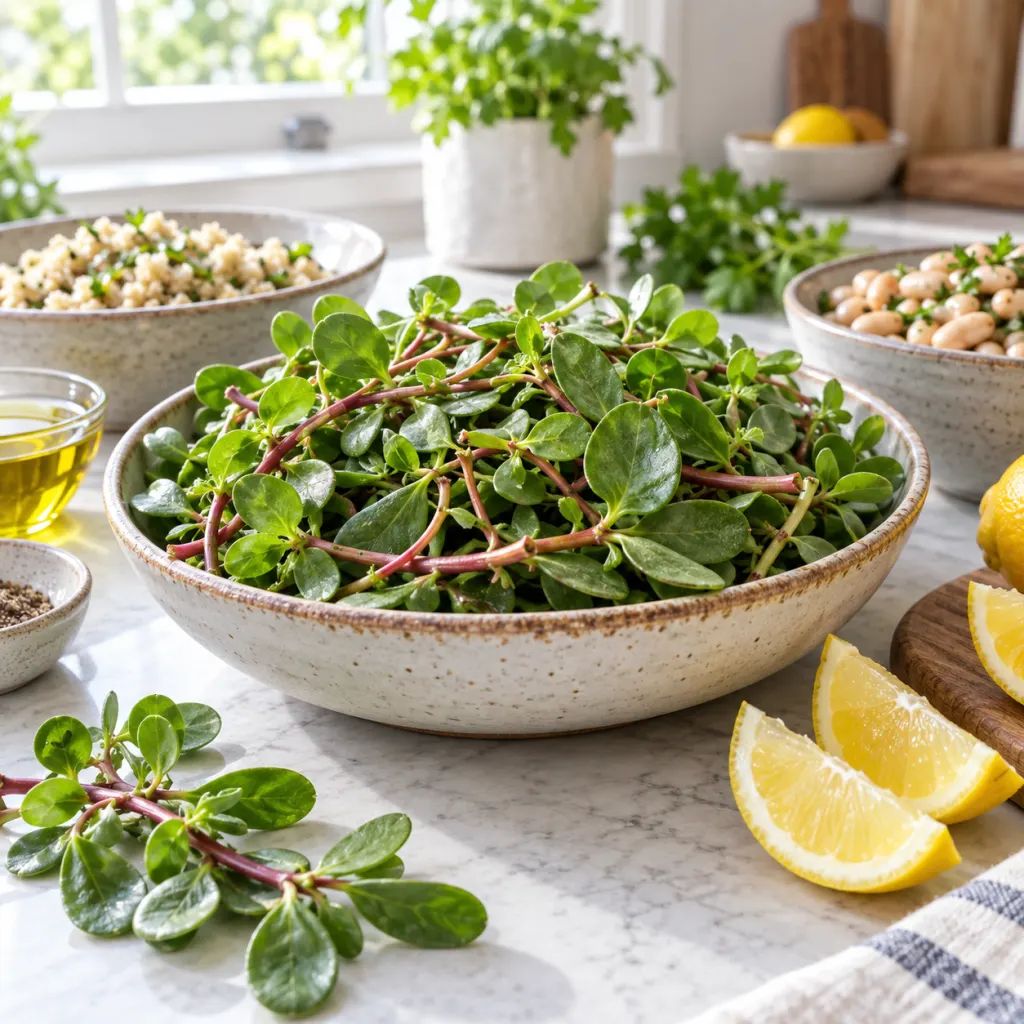
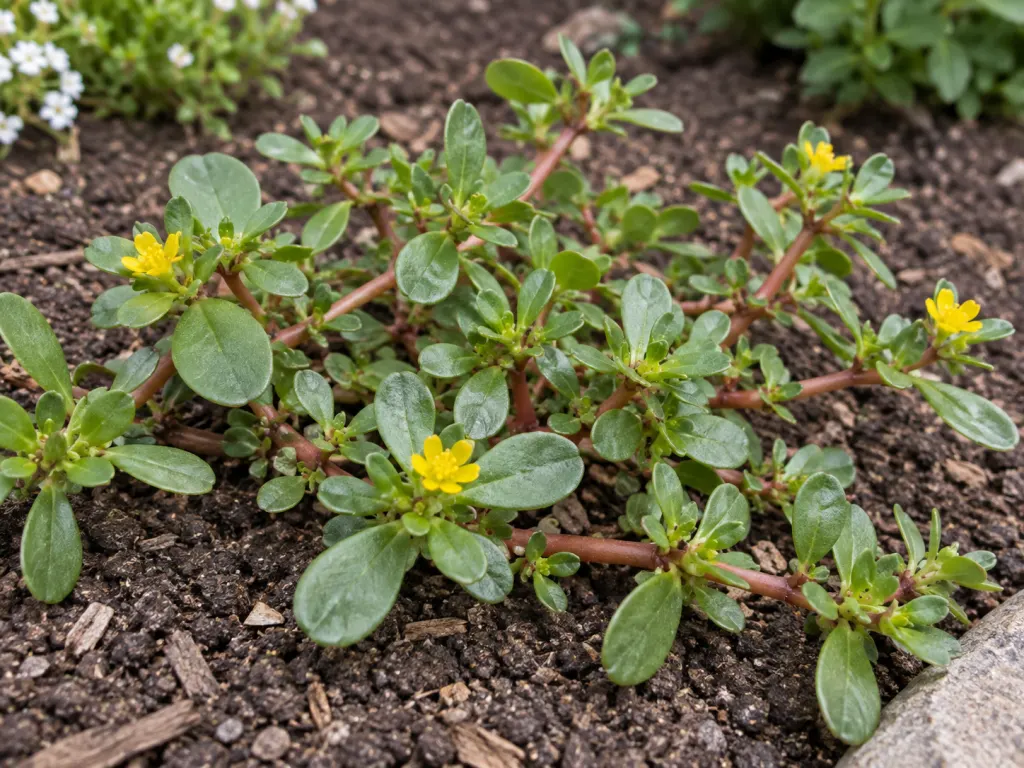
Purslane sits in an unusual space: gardeners may know it as a spreading weed, while cooks in many food traditions know it as a tangy green. The University of Florida IFAS Extension page on purslane notes that raw purslane leaves and stems contain vitamin A, vitamin E, minerals, and plant omega-3 fatty acids, including alpha-linolenic acid, also called ALA https://ask.ifas.ufl.edu/publication/HS1484. That combination explains why it often appears in conversations about aging well. It is soft enough to eat raw when young, sturdy enough to cook, and bright enough in flavor to make simple food feel less flat.
After 60, the useful question is not whether purslane produces dramatic body changes. The more practical question is what happens when a leafy green becomes part of the routine: meals may include more vegetables, more color, more plant compounds, and more texture. Those are everyday food effects, not guaranteed medical outcomes. Purslane can be one small piece of a broader eating pattern that includes vegetables, fruits, beans, whole grains, dairy or fortified alternatives, protein foods, nuts, seeds, and unsweetened drinks.
The Plant Omega-3 Point, Without the Hype
One reason purslane stands out among greens is its ALA content. The NIH Office of Dietary Supplements explains that ALA is an essential omega-3 fatty acid, meaning it must come from food, and that the body converts only limited amounts of ALA into the longer-chain omega-3 fats EPA and DHA https://ods.od.nih.gov/factsheets/Omega3FattyAcids-HealthProfessional/. That distinction matters. Purslane can contribute ALA, but it should not be framed as the same thing as eating fish or using a specially formulated supplement.
For someone over 60 who enjoys mostly plant-based meals, purslane can be one more ALA-containing food alongside walnuts, chia, flax, soybean oil, and canola oil. The effect is dietary enrichment rather than a targeted result. A few bites of purslane do not transform a meal by themselves, but repeated use can make greens easier to include because purslane tastes lemony, slightly salty, and fresh. That is often the real advantage: a food that people actually enjoy is more likely to stay in the rotation.
Vitamin A Carotenoids and Color on the Plate
Purslane also earns attention for vitamin A activity from carotenoids. NIH describes vitamin A as important for normal vision, immune function, growth, development, and the proper work of organs, and it lists green leafy vegetables among foods that provide provitamin A carotenoids https://ods.od.nih.gov/factsheets/VitaminA-Consumer/. University of Florida IFAS Extension reports that 100 grams of raw purslane leaves and stems contain 1320 IU, or 396 micrograms, of vitamin A activity, based on its cited data.
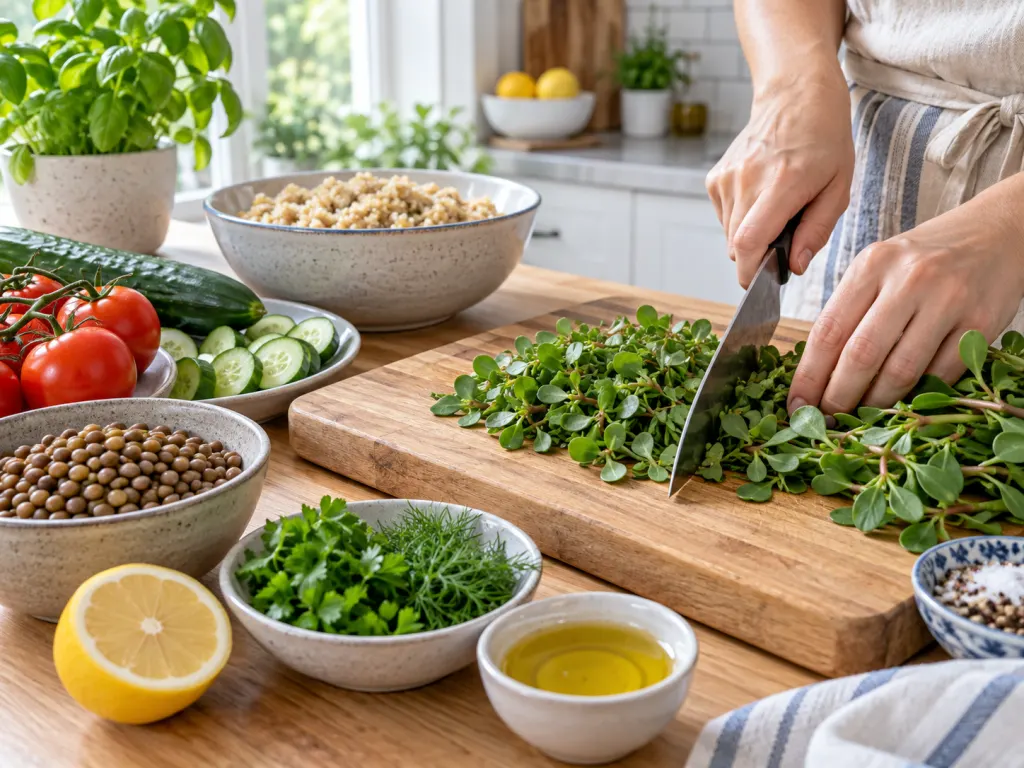
This does not mean more purslane is automatically better. Vitamin A is part of a larger nutrition picture, and the body handles carotenoids from vegetables differently from preformed vitamin A found in certain animal foods and supplements. The everyday takeaway is simpler: purslane can help add green color, carotenoids, and variety to a plate. It pairs well with tomatoes, cucumbers, lentils, eggs, yogurt sauces, olive oil, lemon, herbs, garlic, and cooked grains.
Minerals That Matter in Ordinary Meals
Purslane contains minerals, including magnesium and potassium, which are part of normal body function. NIH explains that magnesium supports processes involving muscle and nerve function, protein formation, bone, and DNA, and it lists green leafy vegetables among magnesium-containing foods https://ods.od.nih.gov/factsheets/magnesium-consumer/. NIH also describes potassium as a mineral found in many foods and involved in normal cell function, nerve transmission, and muscle contraction https://ods.od.nih.gov/factsheets/Potassium-HealthProfessional/.
These mineral facts are worth knowing, but they should stay in proportion. Purslane is not a complete mineral plan, and no single green should crowd out the rest of the diet. The most sensible effect of regular purslane use is that it can replace less nutrient-dense add-ons in a meal. For example, a bowl of beans and rice with chopped purslane, herbs, and a little olive oil is likely to feel fresher and more satisfying than the same bowl without vegetables. That kind of small upgrade is modest, but it is also realistic.
What Daily Use Might Change in the Kitchen
Daily use does not need to mean eating the same salad every day. Purslane changes character depending on how it is prepared. Raw leaves are crisp and juicy, cooked stems become softer, and the plant’s natural mucilage can gently thicken soups and stews. University of Florida IFAS Extension notes that purslane is used in salads, soups, stews, and culinary sauces, and that cooking gives it a texture that can help thicken dishes https://ask.ifas.ufl.edu/publication/HS1484.
For older adults, that flexibility is useful because appetite, chewing comfort, cooking energy, and household size can change over time. Purslane can be chopped finely into a soft grain bowl, stirred into a soup near the end of cooking, folded into eggs, or used as a lemony accent on a plate of fish, beans, or roasted vegetables. It does not require complicated prep, and young stems can be tender enough for quick meals.
A Simple Way to Use Purslane Often
A daily purslane habit works best when it is easy and varied. The goal is not to chase a specific number. It is to make the green convenient enough that it fits naturally into meals. A practical weekly pattern might look like this:
- Raw: add young leaves to tomato, cucumber, bean, or grain salads.
- Cooked: stir chopped purslane into soups, stews, omelets, or sauteed vegetables.
- Herby: mix finely chopped purslane with parsley, mint, lemon, and olive oil.
- Soft meals: fold it into warm lentils, scrambled eggs, or rice when a gentler texture is preferred.
- Flavor balance: pair its tangy taste with creamy yogurt, avocado, tahini, beans, or mild cheeses.
The most noticeable kitchen effect may be brightness. Purslane has a naturally tart, juicy bite, so it can reduce the need for heavier sauces in some meals. That said, it is still a green with a distinct texture. People who dislike its raw snap may prefer it cooked, where it becomes softer and blends into the dish. Those who find cooked purslane too slippery may prefer small raw leaves as a garnish.
Sourcing Matters More Than the Trend
Because purslane often grows close to the ground, sourcing is important. University of Florida IFAS Extension advises using purslane from pesticide-free areas and positively identifying the plant before eating it, especially when foraging https://ask.ifas.ufl.edu/publication/HS1484. That point is especially important because not every low-growing succulent in a yard is the same plant. When identity is uncertain, a local Extension office, a reliable field guide, or a knowledgeable grower is a better resource than a quick glance at a photo.
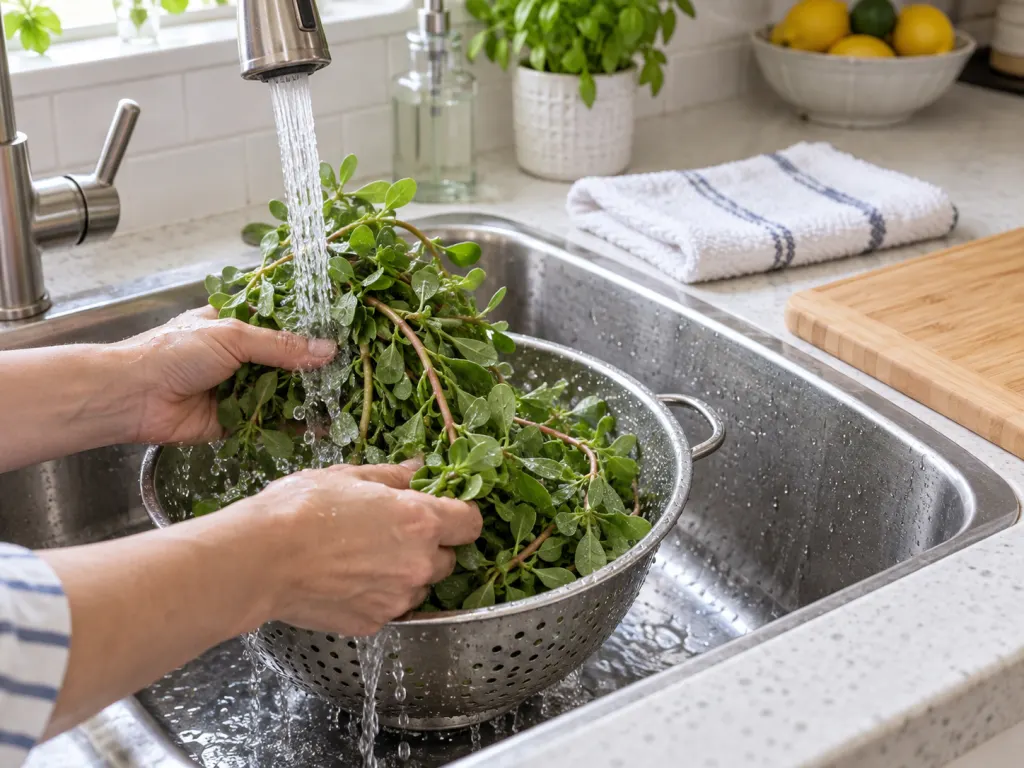
Food safety also matters. The FDA advises washing fresh produce under running water, cutting away damaged areas, keeping produce separate from raw meat, poultry, and seafood, and avoiding soap or detergent on produce https://www.fda.gov/food/buy-store-serve-safe-food/selecting-and-serving-produce-safely. The CDC has separate food-safety guidance for adults 65 and older and lists unwashed fresh fruits and vegetables among riskier choices https://www.cdc.gov/food-safety/foods/adults-65-older.html. For purslane, that means clean water, clean hands, clean cutting boards, and trustworthy growing areas are part of the story.
Where the Evidence Is Limited
The evidence for purslane as a food is much stronger than the evidence for specific personal outcomes from eating it every day. Nutrient composition, culinary use, and traditional food history are well described by agricultural and nutrition sources. Claims about major body changes are much harder to support because they depend on the person’s whole diet, health history, activity, sleep, access to care, and many other factors. A daily green can contribute to a pattern; it cannot define the whole pattern.
This is especially important after 60, when people may already have individualized nutrition guidance. Purslane contains minerals and naturally occurring plant compounds, so it should fit into personal food planning rather than override it. Anyone using a medically tailored eating plan should bring food changes to a qualified professional who knows their history. For everyone else, purslane is best approached as a flavorful vegetable: enjoyable, useful, and not magical.
Bottom Line for Daily Purslane After 60
Daily purslane consumption after 60 is most reasonable when it means a modest, food-based habit: a little more green on the plate, a plant source of ALA, carotenoids, vitamin E, magnesium, potassium, and a tangy flavor that may make simple meals more appealing. The strongest case for purslane is not that it changes the body overnight. It is that it can make vegetable-rich eating easier to sustain.
The safest and most useful approach is to keep it varied, clean, and culinary. Choose correctly identified purslane from a trusted source, wash it well, rotate it with other greens, and use it in meals that also include protein, fiber-rich carbohydrates, healthy fats, and enough fluid. In that context, purslane can be a bright, practical addition to the table after 60.
Wrap-Up
Purslane is a tangy leafy green with plant omega-3 ALA, vitamin A carotenoids, vitamin E, magnesium, potassium, and culinary flexibility. After 60, its value is best understood as part of a varied eating pattern, not as a stand-alone solution. Use it from trusted sources, wash it well, rotate it with other vegetables, and discuss personal nutrition limits with a qualified health professional.
Frequently Asked Questions
- → Is purslane worth eating every day after 60?
It can be worth using often if you enjoy it and can source it safely. Purslane adds leafy-green variety, ALA, carotenoids, vitamin E, magnesium, potassium, and a bright flavor. It should be one vegetable among many, not the main feature of the diet.
- → Is raw or cooked purslane better?
Both can fit. Raw purslane is crisp, juicy, and lemony, while cooked purslane becomes softer and can thicken soups or stews. The better choice depends on texture preference, meal style, and food-safety comfort.
- → Can purslane replace fish for omega-3s?
Purslane contributes ALA, a plant omega-3. NIH explains that EPA and DHA are different long-chain omega-3s and that conversion from ALA is limited. Purslane is a useful plant food, but it is not the same as seafood.
- → How should purslane be washed?
Wash it under running water, remove damaged pieces, and use clean hands, knives, and cutting boards. FDA guidance does not recommend washing produce with soap, detergent, or commercial produce wash.
- → What is the biggest mistake with purslane?
The biggest mistake is treating it as a guaranteed body-changing food. Its strengths are culinary and nutritional: flavor, variety, plant compounds, and minerals. It works best as part of a balanced pattern with many foods.
References
This content was developed and refined using reliable sources.
- https://ask.ifas.ufl.edu/publication/HS1484
- https://ods.od.nih.gov/factsheets/Omega3FattyAcids-HealthProfessional
- https://ods.od.nih.gov/factsheets/VitaminA-Consumer
- https://ods.od.nih.gov/factsheets/magnesium-consumer
- https://ods.od.nih.gov/factsheets/Potassium-HealthProfessional
- https://www.fda.gov/food/buy-store-serve-safe-food/selecting-and-serving-produce-safely
- https://www.cdc.gov/food-safety/foods/adults-65-older.html