 Save
Sage can support relaxation best as a sensory cue: its resinous scent, warm flavor, and familiar kitchen associations can help mark the shift from a busy day into a quieter evening. That is different from saying sage reliably changes sleep, stress, or mood on its own. The National Center for Complementary and Integrative Health notes that only small amounts of research have been done on sage for health conditions, so firm conclusions are limited (NCCIH). The practical takeaway is simple: enjoy sage as a fragrant culinary herb and a mindful ritual, while keeping concentrated products and body-contact trends in perspective.
The Takeaway: Sage Is Calming as a Ritual, Not a Shortcut
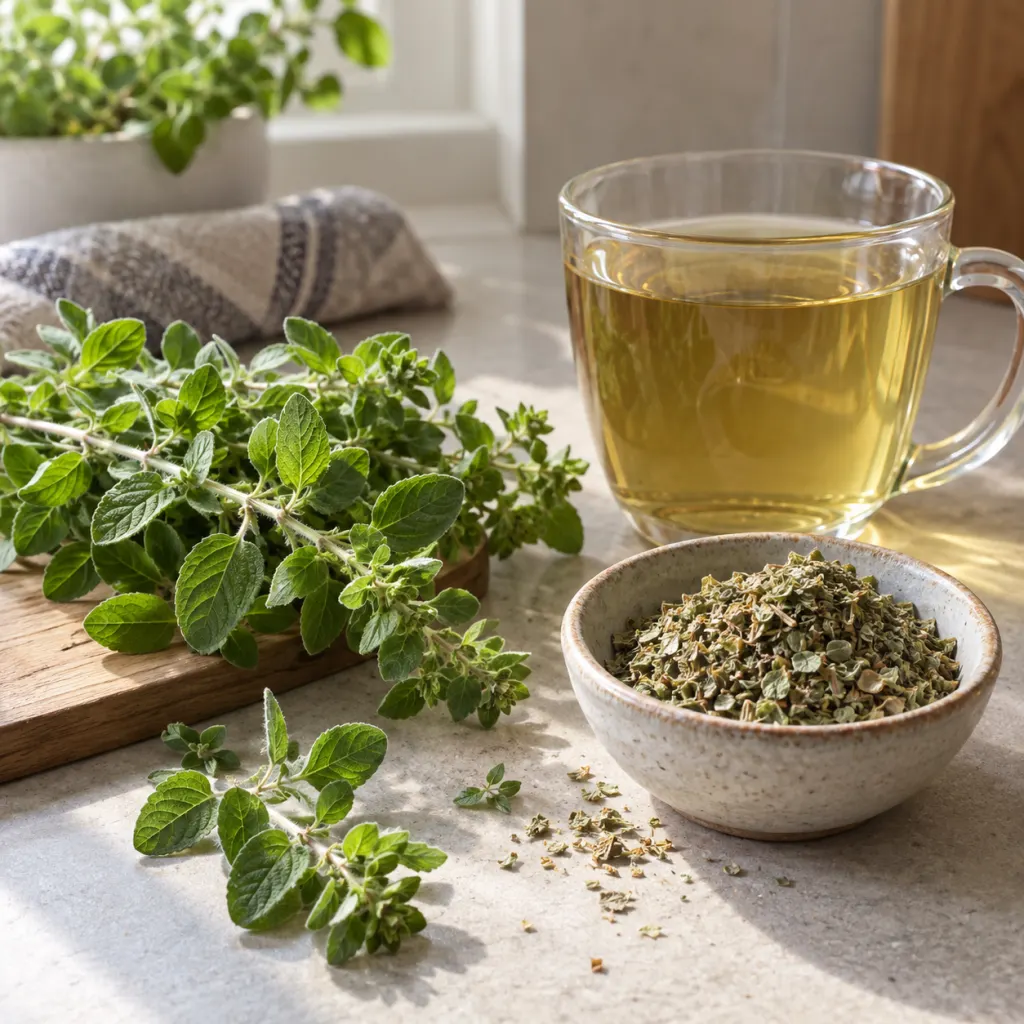
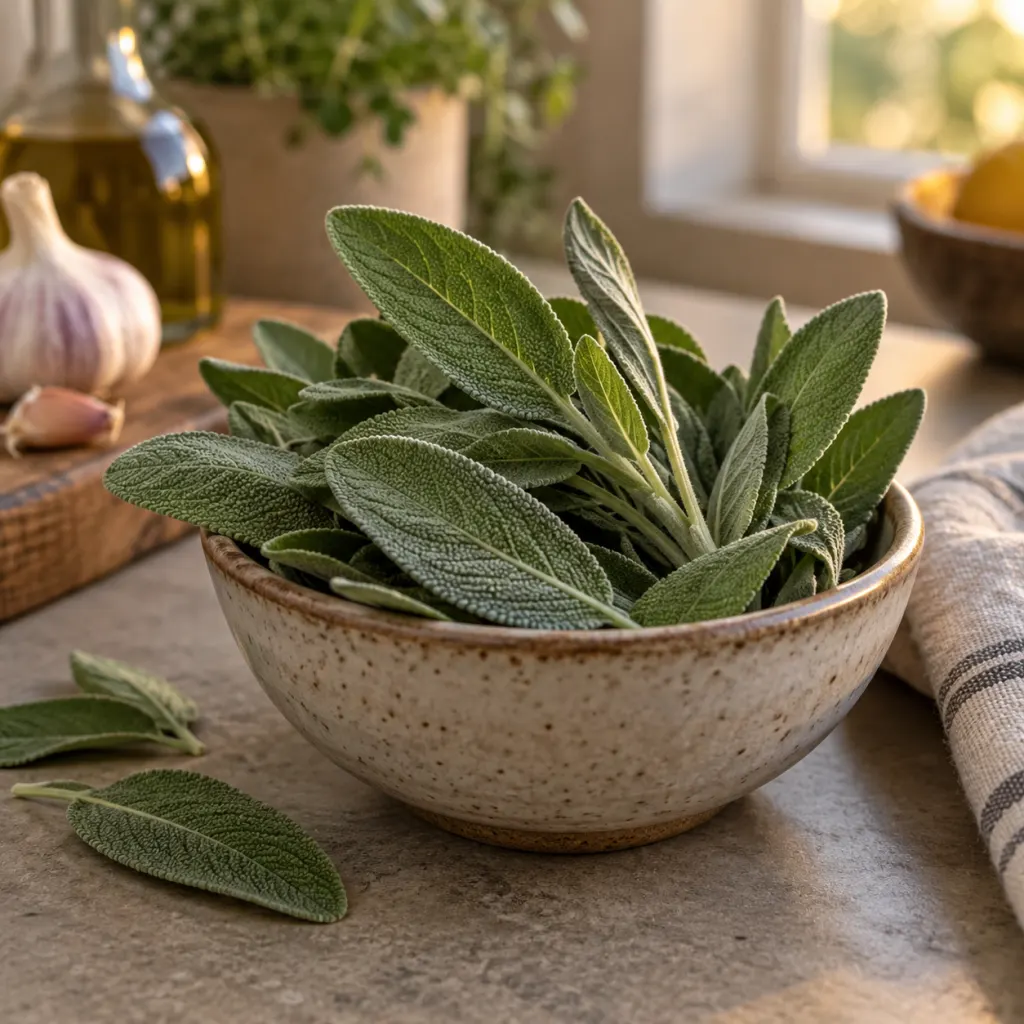
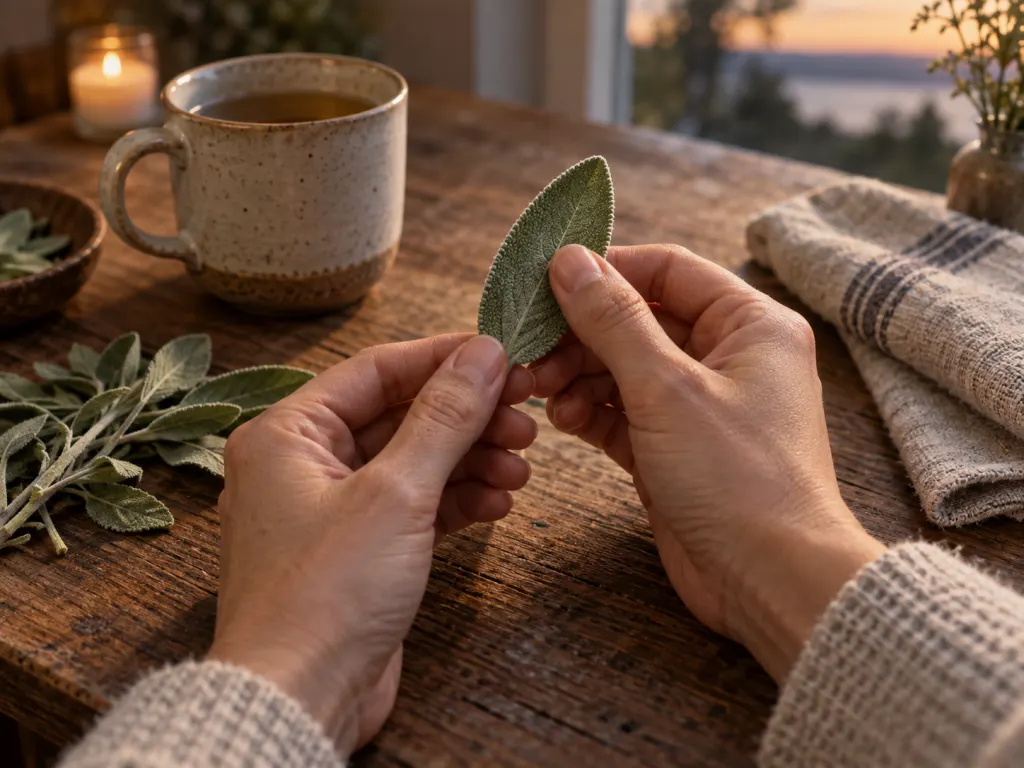
Common sage, or Salvia officinalis, belongs to the mint family and is one of the best-known culinary sages. It has a strong, slightly peppery aroma that comes from volatile plant compounds, which is why a small amount can change the mood of a dish or a room. A relaxing sage practice can be as modest as rubbing a clean leaf between your fingers, steeping a mild kitchen infusion for aroma and warmth, or adding chopped sage to a simple supper. These uses work mostly through the ordinary pathways of comfort: scent, routine, attention, warmth, and personal association.
Why Sage Feels Grounding
Aromatic plants often feel calming because smell is tied closely to memory, emotion, and expectation. Sage has a savory, camphor-like profile that many people connect with slow cooking, autumn meals, gardens, or herbal tea. That association matters. A consistent cue at the same time of day can tell the brain that the pace is changing, especially when it is paired with lower light, a quieter room, and a screen-free pause. MedlinePlus describes relaxation practices as ways to help the body settle from a stress response into a calmer state, with examples such as breathing, meditation, and progressive relaxation (MedlinePlus). Sage can be part of that setting, but it should not be treated as the main mechanism.
A useful sage ritual is concrete and low-pressure. It gives the hands something simple to do and gives the senses a clear signal. Try building the ritual around ordinary, non-concentrated sage rather than strong extracts:
- Place a few clean fresh leaves in a small bowl near your evening reading spot so the aroma is present but not overpowering.
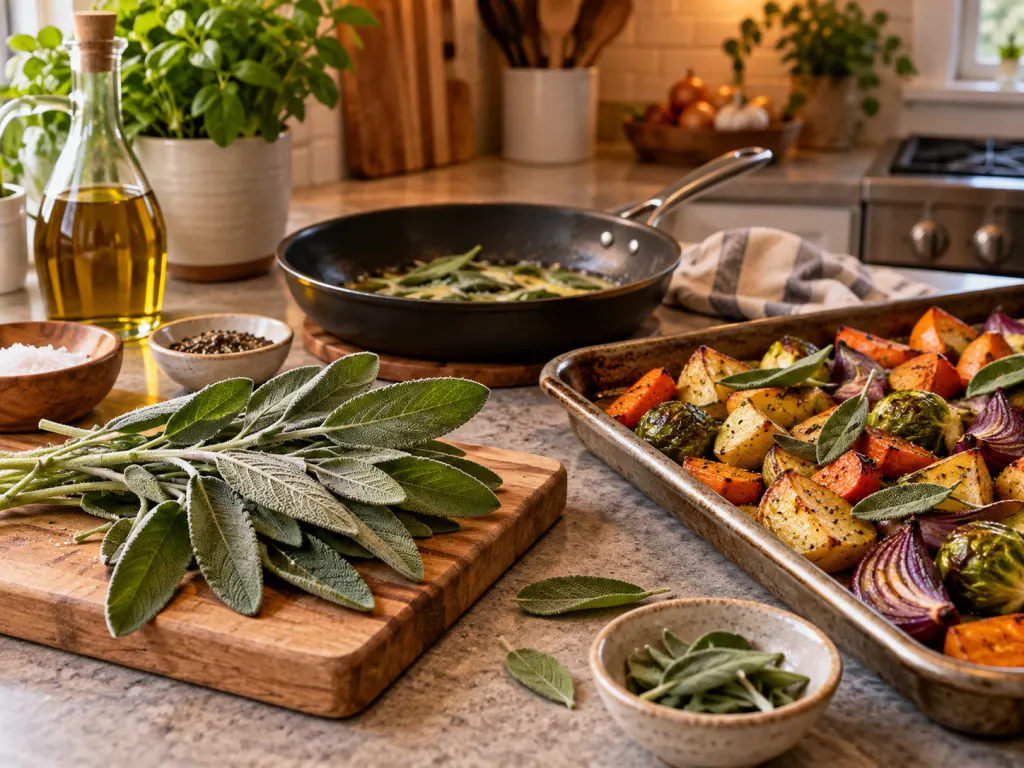
- Add fresh or dried sage to roasted vegetables, beans, soup, or a simple butter sauce earlier in the evening.
- Pair the scent with a repeatable action, such as dimming lights, tidying the kitchen counter, or taking five slow breaths.
- Keep the practice optional. If the scent feels too sharp or distracting, choose another calming cue.
What The Evidence Actually Supports
The evidence around sage is narrower than many wellness claims suggest. NCCIH says sage is used in cooking and has been promoted for several supplement purposes, but it also states that the overall amount of research is small (NCCIH). One small double-blind, placebo-controlled crossover study in healthy young adults reported short-term changes in mood ratings after dried sage leaf, but the study included only 30 participants and tested specific single-use conditions rather than everyday home rituals (PubMed). That makes it interesting background, not a broad promise.
Aromatherapy research also asks for caution. NCCIH explains that aromatherapy uses plant essential oils by inhalation or diluted skin application, but says there has been little rigorous research for insomnia specifically (NCCIH). A Veterans Affairs evidence map found low-to-moderate confidence signals for some outcomes, including stress in healthy adults and sleep quality in varied groups, but evidence maps are meant to summarize where research exists, not to turn every scented plant into a dependable intervention (NCBI Bookshelf). For a home reader, the fairest conclusion is that sage may help create a calming setting, while the broader health claims remain uncertain.

How To Use Sage In A Low-Risk Relaxation Routine
The safest place for sage is usually the kitchen. Culinary amounts let you enjoy its aroma and flavor without treating it like a concentrated health product. Fresh sage pairs well with beans, squash, mushrooms, poultry, potatoes, brown butter, and lemon. Dried sage is stronger by volume, so it is best added with restraint. For a relaxing evening, the goal is not intensity. A gentle aroma in the air, a familiar taste at dinner, and a repeatable winding-down sequence are enough.
Sleep guidance from the National Heart, Lung, and Blood Institute emphasizes habits that are broader than any single herb: a regular sleep schedule, a quiet and cool room, less bright artificial light before bed, and avoiding caffeine close to bedtime (NHLBI). Sage fits best as one small cue inside that larger pattern. It cannot compensate for a stressful room, late caffeine, a bright phone screen, or an inconsistent bedtime, but it can make a healthier routine feel more appealing and personal.
What About Placing Sage On The Soles Of The Feet?
Some social posts show fresh sage leaves held under the feet with socks. There is no good clinical evidence that this placement creates a special whole-body effect. The feet are sensitive, but sensitivity is not the same as a proven delivery route for an herb. If someone likes the idea because it feels earthy or symbolic, a lower-hassle version is to keep clean leaves nearby, use sage in a foot bath for scent only, or simply enjoy the herb in cooking. Avoid leaving crushed leaves pressed against skin for long periods if they feel itchy, hot, or uncomfortable. A pleasant ritual should feel pleasant while it is happening.
Buying, Storing, And Handling Fresh Sage
Fresh sage is produce, so basic kitchen hygiene still applies. The FDA advises washing fresh produce under running water before preparing or eating it, starting with clean hands, cutting away damaged areas, and storing perishable produce such as herbs in a clean refrigerator at 40 degrees F or below (FDA). These steps are practical whether you plan to cook the sage, smell it, or place it in a bowl as part of a relaxation ritual. Skip soap or detergent on herbs; running water and gentle drying are the better fit for delicate leaves.
Fresh sage should look sturdy, dry, and gray-green rather than slimy or blackened. At home, wrap it loosely in a barely damp towel or keep it in a breathable produce bag in the refrigerator. Dried sage should smell vivid when rubbed between the fingers; if it smells flat or dusty, it will not do much for either cooking or atmosphere. A tiny jar that gets used is better than a large one that sits open for years.
Culinary Sage, Sage Tea, And Concentrated Products
There is an important difference between cooking with sage and using concentrated sage products. NCCIH describes culinary sage as likely safe in amounts commonly found in foods, while also noting that some sage species contain thujone, a component that can be toxic in large amounts (NCCIH). Essential oils, extracts, and capsules are not the same as a few leaves in a pan. The FDA also reminds consumers that dietary supplements are regulated differently from drugs and are not approved by FDA for safety and effectiveness before they are sold (FDA).
For a calm household article about sage, that distinction is the line to keep. A pot of soup with sage, a warm mug held in both hands, or the scent of leaves on a counter belongs to everyday life. Concentrated products belong in a more careful conversation with a qualified professional, especially when someone has ongoing symptoms, uses other health products, or has personal risk factors. The more concentrated the product, the less it should be treated like ordinary food.
A Practical Evening Routine With Sage
A balanced routine might begin after dinner. Rinse a few fresh sage leaves, pat them dry, and place them where their scent is noticeable but gentle. Put the phone away from the bed, lower the lights, and choose one quiet task that does not pull you back into work mode. If you like warm drinks, make a caffeine-free beverage you already tolerate and let sage be a nearby aroma rather than a required ingredient. Sit somewhere comfortable, loosen the shoulders, and breathe slowly for a minute. The sage is not doing all the work; it is helping mark the moment.
This kind of routine is flexible. People who dislike sage can use another familiar kitchen scent. People who love it can keep a plant on the windowsill, add a leaf to dinner, or dry small bundles for cooking. What matters is that the cue is consistent, modest, and enjoyable. Relaxation practices are easier to keep when they fit the household you actually live in, not an idealized version of one.
Wrap-Up
Sage has a real place in a calming home routine, but its most reliable value is sensory and culinary. The aroma can signal quiet, the flavor can make simple food feel cared for, and the act of preparing it can slow the evening down. Current evidence does not justify strong promises about sage and relaxation, and unusual practices such as keeping leaves under socks should be viewed as personal rituals rather than proven techniques. Use sage gently, handle fresh leaves like other produce, and keep concentrated products separate from ordinary kitchen use.
Frequently Asked Questions
- → Does sage actually make people relaxed?
Sage may help some people feel relaxed as part of a sensory routine, especially if they enjoy its aroma and connect it with comfort. The evidence is limited, so it is better to think of sage as a pleasant cue rather than a dependable stand-alone health tool.
- → Is it better to smell sage or eat it?
For most households, culinary use is the most practical option. Smelling fresh leaves, cooking with sage, or using it as part of a quiet evening routine keeps the herb in an everyday range. Concentrated oils and extracts are a different category and deserve more caution.
- → Should I put sage leaves in my socks overnight?
There is no good evidence that holding sage under the feet has a special effect. If the idea appeals to you, consider a gentler version, such as keeping clean leaves nearby for aroma. Stop any body-contact practice if it feels irritating or uncomfortable.
- → Can sage be part of a bedtime routine?
Yes, if you like the scent and use it modestly. It works best alongside habits with stronger support, such as dimmer light before bed, a consistent schedule, a quiet cool room, and limiting caffeine late in the day.
- → Are sage essential oils the same as fresh sage leaves?
No. Essential oils are much more concentrated than fresh or dried culinary leaves. A few leaves in food or nearby for aroma are not the same as using a concentrated product for personal health reasons.
References
This content was developed and refined using reliable sources.
- https://www.nccih.nih.gov/health/sage
- https://www.medlineplus.gov/ency/patientinstructions/000874.htm
- https://pubmed.ncbi.nlm.nih.gov/16205785
- https://www.nccih.nih.gov/health/aromatherapy
- https://www.ncbi.nlm.nih.gov/books/NBK551017/?report=reader
- https://www.nhlbi.nih.gov/health/sleep-deprivation/healthy-sleep-habits
- https://www.fda.gov/food/buy-store-serve-safe-food/selecting-and-serving-produce-safely
- https://www.fda.gov/consumers/consumer-updates/fda-101-dietary-supplements