 Save
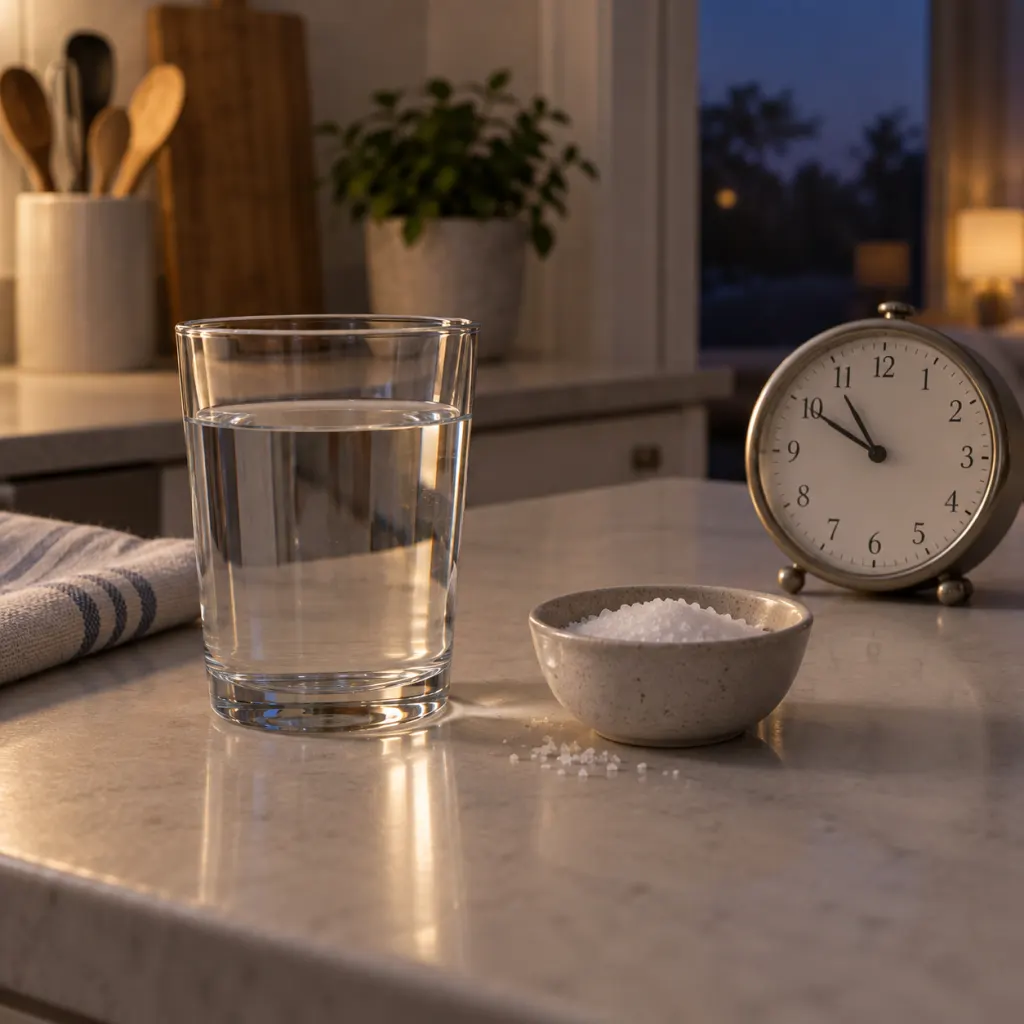
Drinking salt water before bed is usually not necessary, and it may be a poor fit for people who are watching sodium, waking to urinate, or managing heart, kidney, or blood pressure concerns. Sodium helps the body maintain fluid balance and supports nerve and muscle function, but most people in the United States already consume more sodium than recommended, according to the CDC and the FDA. If you are thirsty at night, plain water and daytime hydration habits are the better place to start.
Why This Habit Became Popular
The idea sounds simple: add a pinch of salt to warm water, drink it before bed, and hope for steadier sleep or fewer overnight discomforts. The appeal is easy to understand. Salt is familiar, water is inexpensive, and the word electrolytes makes the habit sound more scientific than a glass of water alone. But a home routine can sound plausible without being well matched to the body, especially when it adds sodium at a time of day when many people are trying to reduce nighttime thirst and bathroom trips.
The first thing to separate is ordinary nutrition from a specific bedtime claim. Sodium is a real electrolyte, and the body does need it. The FDA explains that sodium is needed in relatively small amounts for fluid balance and for muscles and nerves to work smoothly, while also noting that higher-sodium diets are associated with higher blood pressure risk. That means the useful question is not whether sodium matters. It is whether adding salty water at bedtime is a sensible way to support your own needs.

What Sodium Does In The Body
Sodium attracts water and helps regulate the amount of fluid in and around cells. It is also involved in normal nerve signaling and muscle contraction. The CDC describes sodium and potassium as electrolytes involved in hydration, blood volume, and nerve and muscle function. This is the kernel of truth behind many salt-water claims: electrolytes are not imaginary, and sodium is not automatically bad. The context, however, matters. Sodium from a planned medical rehydration product, sodium naturally present in foods, and salt stirred casually into a bedtime drink are not the same decision.
Most daily sodium does not come from a pinch added to a glass. The FDA states that more than 70 percent of dietary sodium comes from packaged and prepared foods, not from table salt added during home cooking or at the table. That matters because a small evening habit can feel harmless while the rest of the day already contains sodium from bread, soups, sauces, snacks, deli meats, frozen meals, restaurant food, and other common items. If you are evaluating the habit, look at your whole day rather than the glass alone.
A Bedtime Drink Can Work Against Sleep
A glass of liquid near bedtime can be a sleep issue even when it contains only water. MedlinePlus notes that drinking too much fluid in the evening can lead to urinating more often at night, which can disrupt sleep cycles. Salt may add another wrinkle: salty foods or drinks can make some people feel thirsty, which may lead to more drinking after the original glass. For a person already waking several times, adding liquid late in the evening may make the night feel more broken rather than more settled.
Healthy sleep guidance tends to point in a different direction. MedlinePlus recommends sleep habits such as a regular bedtime and wake time, avoiding caffeine in the afternoon and evening, avoiding alcohol before bed, and avoiding large meals and drinks late at night. The CDC similarly lists consistent sleep timing, a quiet and cool bedroom, less screen exposure before bed, and avoiding large meals, alcohol, and afternoon or evening caffeine as practical sleep supports. Those recommendations are broader than one kitchen ingredient, but they are also better supported.

Sea Salt, Pink Salt, And Table Salt
Specialty salts are often marketed with an aura of extra minerals. Mayo Clinic explains that sea salt is less processed than table salt and can retain trace minerals that affect flavor and color, but sea salt and table salt have comparable sodium by weight and the same basic nutritional value. In practical terms, switching from table salt to sea salt, pink salt, or another coarse salt does not turn a salty bedtime drink into a low-sodium choice.
Texture can affect how much salt someone uses in cooking, because large crystals may sprinkle differently from fine table salt. But once salt is dissolved in water, texture is no longer part of the experience. The body is receiving sodium dissolved in fluid. If you are choosing a salt for flavor at the table, personal preference is reasonable. If you are choosing one because you expect a different health result from drinking it at night, the evidence is much less convincing.
When Hydration Is The Real Issue
Some people do underdrink during the day, especially during hot weather, after heavy sweating, or during an illness that causes fluid loss. MedlinePlus describes dehydration as happening when the body loses more fluid than it takes in and lists thirst, dry mouth, dark urine, dry skin, tiredness, and dizziness among adult warning signs. The CDC notes that daily water needs vary by age, sex, activity level, climate, and other factors, and that water from beverages and water-rich foods contributes to the total.
If dehydration is a genuine concern, the answer is still not automatically a salty bedtime drink. Timing, cause, and personal health history matter. Someone who sweats heavily during outdoor work has a different question from someone who is thirsty because the bedroom is dry, dinner was very salty, alcohol was consumed, or a medication increases urination. For ordinary evening thirst, a small amount of plain water earlier in the evening may be enough. For repeated thirst, dark urine, dizziness, or major changes in urination, the pattern deserves a conversation with a qualified health professional.
A practical self-check can help you decide whether this habit is worth dropping or discussing:
- Look at timing: if you wake to urinate after late drinks, move more of your fluid intake earlier in the day.
- Look at total sodium: check labels on packaged foods, sauces, soups, snacks, breads, and restaurant meals before adding salt to drinks.
- Look at thirst triggers: salty dinners, alcohol, caffeine, dry air, heavy exercise, and fever can all change how thirsty you feel.
- Look at patterns: repeated nighttime waking, burning with urination, blood in urine, or sudden changes in thirst should not be treated as a kitchen experiment.
Who Should Be More Careful
People with high blood pressure concerns, heart failure, kidney disease, significant swelling, or instructions to limit sodium or fluid should be especially cautious about adding salty drinks. NIDDK advises that people with kidney failure or heart failure should not drink too much water and should talk with a health care professional about how much liquid is right for them. MedlinePlus also lists chronic kidney disease, heart failure, certain water pills, and excessive fluid intake among possible contributors to nighttime urination. These are not situations for trial-and-error bedtime routines.
It is also worth being careful if nighttime urination is the main problem. MedlinePlus says waking to urinate more often can be linked with evening fluids, caffeine, alcohol, urinary tract problems, prostate enlargement, chronic kidney disease, diabetes, heart failure, certain medicines, leg swelling, sleep apnea, stress, and restlessness. In other words, the bathroom trip may be a clue, not just an annoyance. Adding salt water may distract from the more useful work of tracking what is happening and asking for help when the pattern persists.

A Better Evening Routine
If the goal is steadier sleep, build the evening around habits that reduce interruptions. Keep most fluids earlier in the day, especially if you already wake to urinate. Choose plain water when you are thirsty. Keep dinner flavorful without leaning heavily on salty sauces or packaged foods. If your mouth feels dry at night, consider bedroom humidity, mouth breathing, alcohol, caffeine, and dental or medication-related causes instead of assuming you need more salt. The National Institute on Aging notes that dry mouth can be related to many common medicines and suggests sipping water or sugarless drinks while also discussing persistent dryness with a dentist or doctor; because that page was not used as a formal reference here, consider this a general prompt for a care conversation rather than a complete dry-mouth guide.
For sleep itself, the best-supported routine is plain and slightly boring in a good way. Keep a consistent schedule, dim the environment, avoid large late meals and drinks, limit alcohol before bed, be mindful of caffeine timing, and make the bedroom cool, dark, and quiet. If you want a warm drink because it feels calming, choose something without caffeine and keep the amount modest enough that it does not send you back to the bathroom. The ritual may matter more than the ingredient.
When To Ask For Help Promptly
Get prompt medical help for possible serious dehydration signs such as confusion, fainting, lack of urination, rapid heartbeat, rapid breathing, or shock, as listed by MedlinePlus. Contact a health care provider if nighttime urination continues for several days, bothers you, comes with pain or burning, or includes blood in the urine. Those boundaries matter because thirst, sleep disruption, and urinary changes can have many causes, and a salty drink can blur the picture instead of clarifying it.
Bottom Line
Drinking salt water before bed is best viewed as an unproven wellness habit, not a necessary nightly routine. Sodium is essential, but most people already get plenty, and often too much, from everyday foods. Bedtime liquid can interrupt sleep, and salty liquid may be an especially awkward choice for people managing sodium, fluid balance, or nighttime urination. If you feel better focusing on hydration, start with daytime water, a reasonable evening cutoff, and a look at your whole sodium pattern. If symptoms are persistent or new, bring the pattern to a health professional instead of trying to solve it with salt.
Wrap-Up
Salt water before bed has a scientific-sounding explanation, but the practical case is weak for most healthy adults. Sodium helps with fluid balance and normal nerve and muscle function, yet public-health sources emphasize that many people already consume more than recommended. A late salty drink can also add fluid close to sleep, which may worsen nighttime bathroom trips for some people. Plain water earlier in the evening, attention to sodium across the whole day, and consistent sleep habits are more sensible places to start.
Frequently Asked Questions
- → Is drinking salt water before bed good for everyone?
No. It is not a necessary nightly habit for most people. Sodium is essential in small amounts, but many people already get more than recommended from everyday foods. People with blood pressure, kidney, heart, swelling, or fluid-limit concerns should ask a qualified health professional before adding salty drinks.
- → Can salt water help if I wake up thirsty?
Thirst at night has many possible causes, including a salty dinner, dry air, alcohol, caffeine, mouth breathing, heavy sweating, or some health conditions. For ordinary thirst, plain water and better daytime hydration are usually more sensible than adding salt at bedtime.
- → Is sea salt or pink salt better than table salt in water?
Not in a meaningful sodium sense. Mayo Clinic notes that sea salt and table salt have comparable sodium by weight and the same basic nutritional value. Specialty salts may differ in texture, color, or flavor, but dissolving them in water still adds sodium.
- → Could a bedtime drink make nighttime urination worse?
Yes, it can for some people. MedlinePlus notes that drinking too much fluid in the evening can cause more nighttime urination and disrupt sleep cycles. If you often wake to urinate, shifting fluids earlier in the day may be more useful than adding a salty drink before bed.
- → When should nighttime thirst or urination be checked?
Contact a health care provider if nighttime urination continues for several days, bothers you, comes with pain or burning, or includes blood in the urine. Seek prompt help for serious dehydration warning signs such as confusion, fainting, lack of urination, rapid heartbeat, or rapid breathing.
References
This content was developed and refined using reliable sources.
- https://www.fda.gov/food/nutrition-education-resources-materials/sodium-your-diet
- https://www.cdc.gov/salt/about/index.html
- https://www.medlineplus.gov/healthysleep.html
- https://www.medlineplus.gov/ency/article/003141.htm
- https://www.niddk.nih.gov/health-information/urologic-diseases/bladder-control-problems/prevention
- https://www.mayoclinic.org/healthy-lifestyle/nutrition-and-healthy-eating/expert-answers/sea-salt/faq-20058512?p=1
- https://www.medlineplus.gov/dehydration.html
- https://www.cdc.gov/healthy-weight-growth/water-healthy-drinks/index.html