 Save
The subtle sensory sign is not simply losing smell for a few days. It is repeatedly having trouble identifying familiar odors, such as smoke, soap, rose, leather, coffee, or natural gas, when the nose seems otherwise clear. Several long-term studies have linked lower odor-identification scores with a higher chance of later mild cognitive impairment or Alzheimer's dementia, but the sign is only one clue. Smell can change for many ordinary reasons, including aging, sinus problems, respiratory infections, smoking, head injury, dental issues, chemical exposure, and some medicines. That is why the most useful step is not alarm, but documentation: notice whether the change is persistent, whether it is paired with memory or daily-task changes, and whether it deserves a medical conversation.
The Sensory Clue Researchers Watch
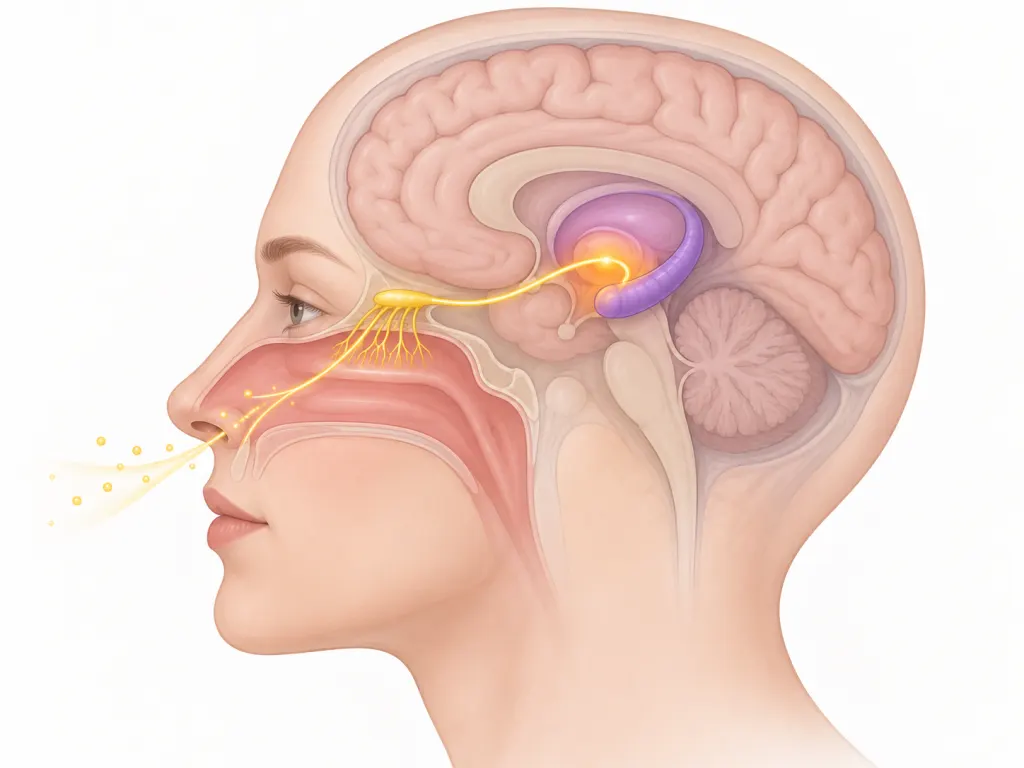
Smell is unusually connected to memory. Odors travel through specialized sensory cells high in the nose and into brain networks that help identify a smell and attach meaning to it. The National Institute on Deafness and Other Communication Disorders explains that smell also supports flavor and alerts people to hazards such as smoke, spoiled food, gas leaks, and dangerous fumes: https://www.nidcd.nih.gov/health/smell-disorders. In everyday life, the clue may show up as a person saying food tastes flat, confusing one household scent for another, missing a familiar perfume, or failing to recognize a smell that other people in the room notice.
Research interest is strongest around odor identification, not just odor strength. A person might detect that something has a scent but be unable to choose what it is. In a JAMA Neurology study from the Mayo Clinic Study of Aging, participants took the 12-item Brief Smell Identification Test, which included food and non-food odors such as cherry, lemon, leather, smoke, soap, natural gas, and rose. Lower scores were associated with higher risk of amnestic mild cognitive impairment and with progression from amnestic mild cognitive impairment to Alzheimer's dementia: https://jamanetwork.com/journals/jamaneurology/fullarticle/2469511.

What the Studies Actually Found
The evidence is meaningful, but it needs careful wording. In a JAMA Psychiatry longitudinal study, 589 older adults without cognitive impairment at the start completed a 12-item smell identification test and were followed annually for up to five years. People with lower odor-identification scores had a higher risk of later mild cognitive impairment; the study reported a 50 percent higher risk when comparing a below-average score of 8 with an above-average score of 11: https://jamanetwork.com/journals/jamapsychiatry/fullarticle/482353. That does not mean a single home smell mistake predicts Alzheimer's. It means that, across groups of older adults, poorer performance on standardized smell identification tasks has been associated with later cognitive change.
Another study in the Journal of Alzheimer's Disease found that odor identification added useful information when combined with a cognitive screening test. Researchers compared healthy older adults, people with mild cognitive impairment, and people with Alzheimer's disease, using the Sniffin' Sticks Odor Identification Test and the Montreal Cognitive Assessment. Odor-identification scores were generally highest in healthy older adults, lower in mild cognitive impairment, and lower still in Alzheimer's disease, and combining smell testing with cognitive screening improved classification in that research setting: https://pmc.ncbi.nlm.nih.gov/articles/PMC5350629/.
Several points matter for readers. Standardized smell tests use controlled materials and scoring; guessing from a kitchen jar is not the same thing. A low score can reflect many causes outside Alzheimer's. Also, many people with smell changes will not develop Alzheimer's, and some people with Alzheimer's may not notice smell changes early. The value is in pattern recognition, especially when smell difficulty appears alongside memory, planning, language, judgment, or familiar-task changes.
Why Smell Alone Cannot Diagnose Alzheimer's
Alzheimer's disease is diagnosed by looking at the whole clinical picture. MedlinePlus explains that Alzheimer's begins slowly over many years and affects thinking, memory, and language; it may be mistaken for normal aging at first, but it is not a normal part of aging: https://medlineplus.gov/alzheimersdisease.html. A clinician may review medical history, medicines, memory and thinking changes, behavior or personality changes, and tests that help rule out other conditions. Smell information can be part of that conversation, but it does not stand alone.
The CDC lists common warning signs that deserve attention, including memory loss that disrupts daily life, challenges in planning or solving problems, trouble completing familiar tasks, confusion with time or place, new language problems, misplacing items and being unable to retrace steps, poor judgment, withdrawal, and mood or personality changes: https://www.cdc.gov/alzheimers-dementia/signs-symptoms/alzheimers.html. If smell change is the only concern, the first question is often whether there is a nose, sinus, medication, exposure, or aging-related explanation. If smell change appears with cognitive or daily-life changes, it becomes more important to raise.
Common Non-Alzheimer's Reasons Smell Changes
A smell change can be temporary, persistent, mild, or severe. It can also be distorted: a familiar smell may seem wrong, unpleasant, or absent. Before treating it as a cognitive clue, it helps to consider other explanations. NIDCD and MedlinePlus both describe many possible causes of impaired smell, including:
- Recent upper respiratory infection, cold, flu-like illness, or sinus infection.
- Allergies, nasal polyps, or other nasal blockage.
- Smoking or exposure to chemicals such as solvents or insecticides.
- Head injury, dental problems, or prior nasal or sinus surgery.
- Some medicines that may affect smell.
- Normal aging, which can reduce smell ability over time.
- Neurological conditions, including Parkinson's disease, Alzheimer's disease, and others.
That list is the reason context matters. A person who notices smell loss after a respiratory illness is in a different situation from someone who has gradually stopped recognizing odors while also repeating questions, missing appointments, or struggling with familiar routines. The same sign can mean different things depending on timing, persistence, and accompanying changes.

How to Notice the Pattern Without Spiraling
If you are concerned about yourself or someone close to you, write down practical observations for two to four weeks. Note whether the person can identify familiar odors, whether the change is new or long-standing, whether taste seems affected, and whether safety odors such as smoke or gas are missed. Also note congestion, allergies, recent illness, new medicines, dental issues, smoking changes, or chemical exposure. A simple written record is often more useful than a worried memory of scattered incidents.
Look for pairing. Smell difficulty becomes more concerning when it travels with cognitive or daily-life changes: repeated questions, missed bills, getting lost in familiar places, new trouble following a recipe, unusual judgment, or withdrawal from normal activities. For a broader overview, see our related guide on early signs of Alzheimer's disease. If you are watching changes in a parent, spouse, or friend, our guide to subtle aging signs in loved ones may help you separate ordinary variation from patterns worth discussing.
What to Bring to an Appointment
A useful appointment note can be simple: when the smell change began, whether it is improving or worsening, examples of missed odors, whether taste changed, and any cognitive or daily-function concerns. Include recent illnesses, allergy symptoms, sinus history, head injuries, dental problems, chemical exposures, smoking history, and a current medicine list. Ask whether an ear, nose, and throat evaluation, a smell test, memory screening, or another assessment makes sense for the situation. The goal is not to force a conclusion; it is to give the clinician enough detail to decide what should be checked.
The Bottom Line
Difficulty identifying familiar smells can be an early clue associated with Alzheimer's-related cognitive change, especially when it is gradual and appears with memory, planning, language, judgment, or familiar-task problems. It is not a stand-alone diagnosis, and it has many other possible explanations. Treat it as a reason to observe carefully, protect safety around smoke and gas, and seek a qualified evaluation when the change is persistent, unexplained, or paired with other concerns.
Wrap-Up
A persistent change in odor identification can be a subtle sign worth noticing, but it should be interpreted cautiously. Research links poorer standardized smell-test performance with later mild cognitive impairment and Alzheimer's dementia in groups of older adults, while public-health sources also emphasize that smell disorders have many causes. The safest response is practical: document the pattern, watch for cognitive or daily-function changes, and discuss persistent or unexplained changes with a qualified health professional.
Frequently Asked Questions
- → Is losing my sense of smell always an early sign of Alzheimer's?
No. Smell changes have many causes, including aging, allergies, sinus problems, respiratory infections, smoking, head injury, dental issues, chemical exposure, and some medicines. A persistent change is worth mentioning to a qualified health professional, especially if it appears with memory or daily-task changes.
- → What kind of smell change is most relevant?
Research often focuses on odor identification: being able to recognize what a smell is, not just detect that something has an odor. Repeatedly failing to identify familiar odors, when there is no clear nasal or illness-related reason, is more relevant than one isolated mistake.
- → Can I test this at home with kitchen items?
You can notice patterns at home, but kitchen testing is not the same as a standardized smell test. Odor strength, freshness, congestion, room conditions, and guessing can all affect the result. Home observations are best used as notes to bring to a medical visit.
- → When should someone seek medical evaluation?
Consider evaluation when smell change is persistent, unexplained, worsening, or paired with memory loss, confusion, trouble managing familiar tasks, language changes, poor judgment, or safety concerns. Sudden smell loss after illness or injury also deserves individualized guidance from a qualified professional.
- → Why does smell connect with memory at all?
Smell signals travel through neural pathways closely tied to recognition, emotion, and memory. That close relationship is one reason researchers study smell testing in aging and cognitive change. The connection is real, but it still needs clinical context before drawing conclusions about any one person.
References
This content was developed and refined using reliable sources.
- https://www.nidcd.nih.gov/health/smell-disorders
- https://www.cdc.gov/alzheimers-dementia/signs-symptoms/alzheimers.html
- https://medlineplus.gov/alzheimersdisease.html
- https://jamanetwork.com/journals/jamaneurology/fullarticle/2469511
- https://jamanetwork.com/journals/jamapsychiatry/fullarticle/482353
- https://pmc.ncbi.nlm.nih.gov/articles/PMC5350629