 Save
A prune shake can be a useful morning drink because it adds natural sweetness, fiber, and a creamy texture without needing added sugar. The realistic takeaway is simple: it may support a steadier, more satisfying breakfast routine, but it will not turn back skin aging or create dramatic energy on its own. Dried plums, commonly called prunes, are concentrated fruit, so they bring useful nutrients and calories in a small amount. That makes them practical in a shake, especially when blended with milk, yogurt, oats, nut butter, or seeds. The best version is not a beauty promise. It is a balanced, food-first drink that fits into an overall pattern of eating, skin care, and daily habits.
Why prune shakes became a wellness trend
Prune drinks have been getting attention because they sit at the intersection of several popular ideas: breakfast smoothies, healthy aging, digestive comfort, and skin glow. The appeal is easy to understand. Prunes taste sweet, blend smoothly after soaking, and make a shake feel richer than a thin fruit juice. They also have a reputation as an old-fashioned pantry staple, which can make them feel more trustworthy than a complicated supplement routine. Still, the trendy claim often runs ahead of the evidence. A prune shake is best understood as a convenient way to eat dried fruit and other nourishing ingredients, not as a single answer for aging, fatigue, or complexion changes.
The strongest case for a prune shake starts with ordinary nutrition. MedlinePlus describes dietary fiber as a plant carbohydrate found in foods such as fruits, vegetables, nuts, seeds, and whole grains, and notes that adding fiber too quickly can cause gas, bloating, and cramps for some people https://medlineplus.gov/dietaryfiber.html. That matters because prunes are a dried fruit, and dried fruit is compact. A handful can be easier to eat than the same fruit volume in fresh form. In a shake, that compactness can be helpful, but it also means the portion deserves attention.
What prunes contribute to a shake
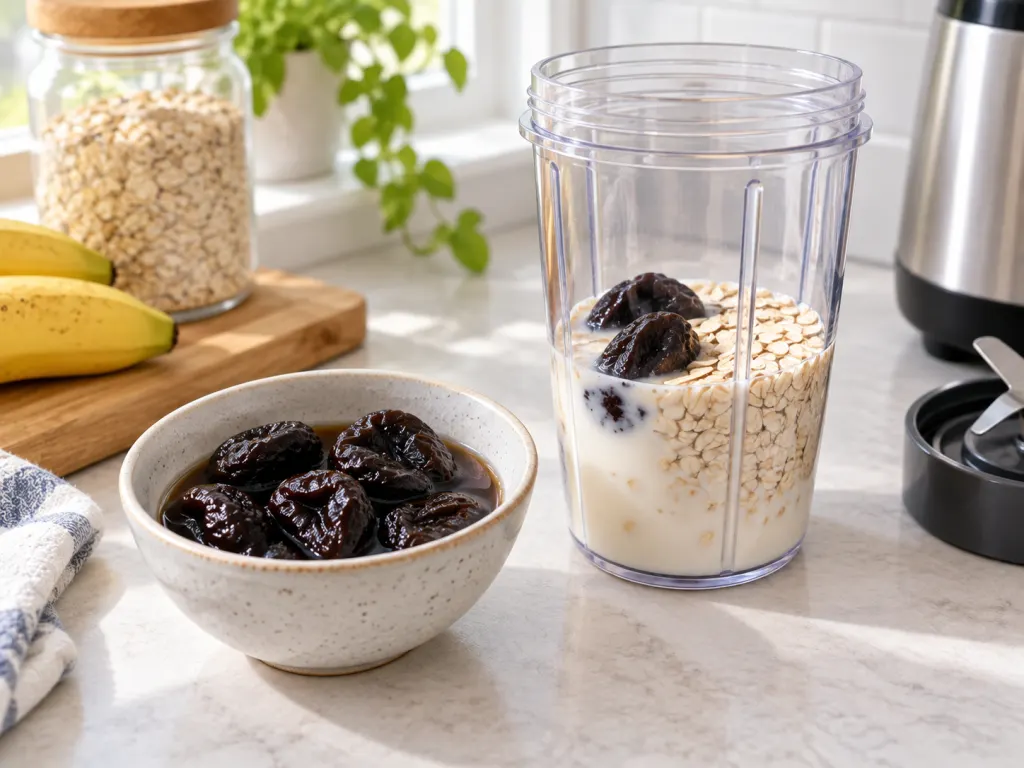
Prunes are dried plums, so the drying process removes water and concentrates natural sugars, flavor, and calories. Cleveland Clinic notes that prunes are plums with much of their moisture removed, and that dried fruit can be easier to overeat because the volume is smaller than fresh fruit https://health.clevelandclinic.org/benefits-of-plums. In practical terms, this is why a prune shake can taste pleasantly sweet without honey, syrup, or sweetened drink mixes. It is also why the drink should be built like food, not like a bottomless beverage.
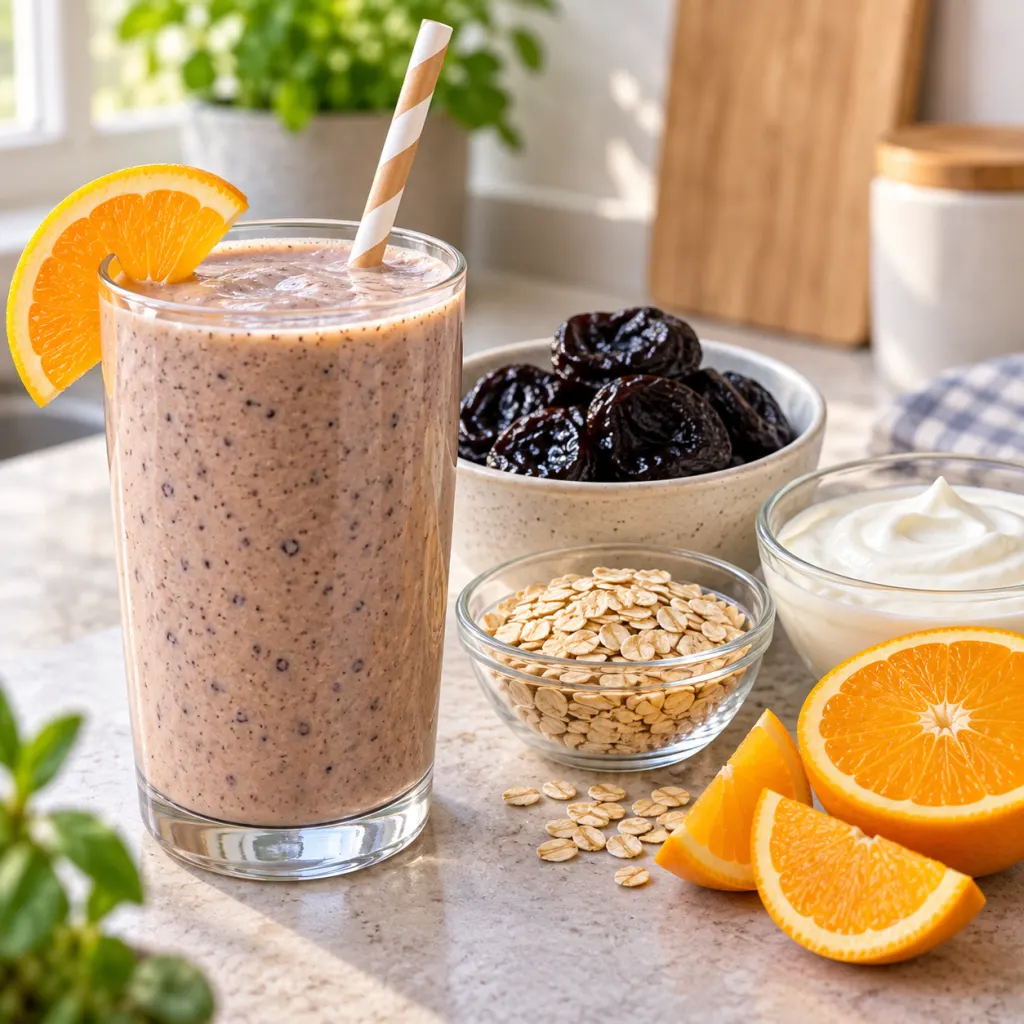
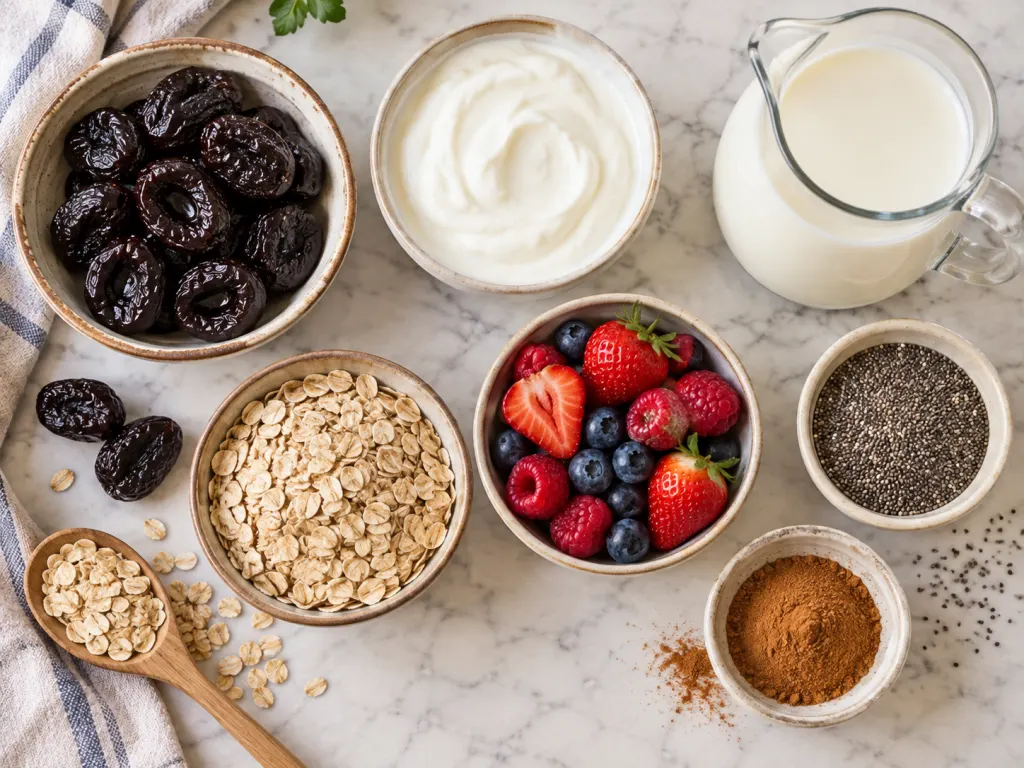
A more balanced prune shake usually includes four roles: prunes for sweetness and body, a fluid for blending, a protein-rich ingredient for staying power, and a mild flavor support such as cinnamon, cocoa, citrus, or vanilla. The protein-rich part can be plain yogurt, kefir, dairy milk, fortified soy milk, or another option that fits the reader's usual eating pattern. Oats, chia seeds, or ground flax can make the texture thicker, but they also add more fiber, so they should be introduced gradually if the reader is not used to them. A shake that includes only fruit and juice may taste bright, but it may not feel as satisfying as one with protein and fat.
A practical framework for building one
For an everyday shake, think in terms of structure rather than a rigid formula. The goal is a drink that tastes good, digests comfortably, and works with the rest of the day. A useful framework is:
- Soften the prunes first: soaking them briefly in warm water or milk helps them blend smoothly.
- Choose an unsweetened base: milk, fortified soy milk, plain yogurt, kefir, or water can all work, depending on taste and dietary needs.
- Add body slowly: oats, chia, nut butter, or avocado can make the shake more filling, but each changes the texture and calorie level.
- Use bright flavors: orange, berries, ginger, cinnamon, or a little cocoa can balance the deep sweetness of dried fruit.
- Check comfort: if the drink feels too heavy or causes bloating, use fewer high-fiber add-ins next time.
This flexible approach keeps the shake from becoming a disguised dessert or a one-note health ritual. It also makes room for different needs. Someone who wants a quick breakfast might use plain yogurt and oats. Someone who wants a lighter afternoon drink might use fewer prunes, more ice, and a splash of milk. Someone who dislikes banana can use berries or pear instead. The point is not to force a single recipe; it is to make prunes work as one ingredient in a balanced drink.
What the research says about prunes and aging-related nutrition
The most specific human research on prunes is not about facial skin or instant energy. It has focused more often on areas such as bone-related outcomes, especially in postmenopausal women. A 2026 systematic review and meta-analysis of randomized controlled trials found preliminary evidence of modest skeletal benefits from 50 to 100 grams of prunes in studied groups, while also emphasizing that the overall research base remains limited and varied https://pubmed.ncbi.nlm.nih.gov/42123941/. That is interesting, but it should not be stretched into a broad claim that any prune shake will transform the way a person looks or feels.
For skin, the more dependable message is broader. The American Academy of Dermatology explains that natural aging is influenced by time and genetics, while everyday choices such as sun protection, smoking avoidance, balanced eating, and skin care habits can influence premature skin aging https://www.aad.org/public/everyday-care/skin-care-secrets/anti-aging/reduce-premature-aging-skin. A prune shake can fit into the balanced-eating part of that picture, especially if it helps replace a less satisfying breakfast. It cannot replace sunscreen, sleep, or a realistic skin-care routine.
The skin-support angle, without overpromising
Skin-supporting nutrition is about patterns, not one drink. Vitamin C is one nutrient people often connect with skin because the National Institutes of Health Office of Dietary Supplements explains that the body needs vitamin C to make collagen, a protein required for normal wound healing https://ods.od.nih.gov/factsheets/VitaminC/Consumer/. Prunes are not usually the first fruit people choose for vitamin C, so a shake aimed at skin-supporting variety might include strawberries, citrus, kiwi, or another vitamin C-rich fruit alongside the prunes. This keeps the drink grounded in real food variety rather than forcing prunes to do everything.
Hydration also matters, but a shake should not be presented as a special skin-hydration solution. Fluids in milk, water, yogurt, and fruit contribute to daily fluid intake, while moisturizers and sun protection address skin from the outside. If the skin goal is a fresher-looking routine, the most sensible combination is simple: use a balanced shake as one meal or snack option, apply broad-spectrum sunscreen when appropriate, moisturize as needed, and avoid turning food into a test of personal discipline. Calm consistency beats dramatic claims.
Energy is steadiness, not a spark
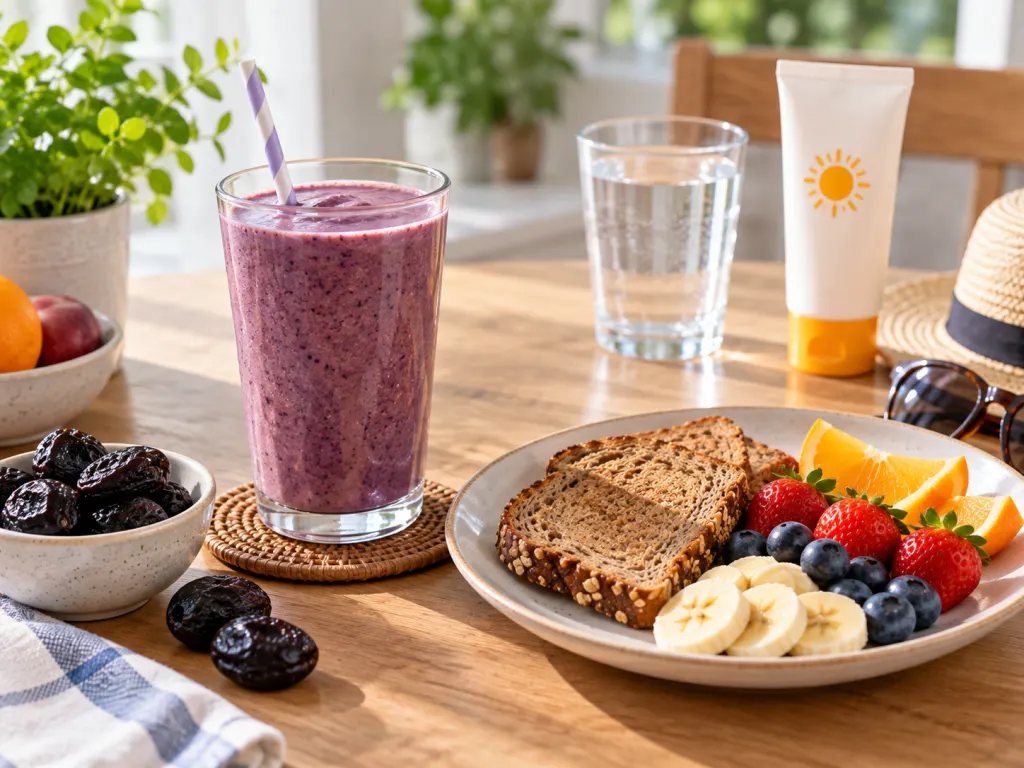
When people say a drink gives them energy, they may mean several different things: calories, fullness, alertness, hydration, or simply a pleasant morning ritual. A prune shake can provide food energy because prunes contain natural carbohydrate, and the drink may feel steadier when paired with protein and fat. But it is not a stimulant unless caffeine is added, and it should not be framed as a cure for tiredness. If the main problem is skipping breakfast, a balanced shake may help simply because eating something nourishing is better than running on coffee alone.
The British Nutrition Foundation describes fiber as a plant carbohydrate that the body cannot fully digest and notes that fiber-rich foods include whole grains, pulses, fruits, vegetables, nuts, and seeds https://www.nutrition.org.uk/nutritional-information/fibre/. This is helpful context for the shake: prunes can contribute fiber, but so can oats, berries, seeds, and many other foods. A good breakfast routine does not need to depend on prunes every day. Rotating ingredients can make the habit more enjoyable and can reduce the chance that one very fiber-heavy drink feels uncomfortable.
Who may want to be careful with prune shakes
Prune shakes are ordinary food for many people, but ordinary foods can still be a poor fit in certain situations. Because prunes are concentrated dried fruit, they may be too sweet, too filling, or too fiber-rich for some readers when used generously. People who are changing their fiber intake may do better starting with a small amount and watching comfort over the next day. Anyone who has been told to follow a specific medical nutrition plan, limit certain minerals, or manage blood sugar closely should treat prune shakes as part of that larger plan rather than as a separate wellness habit.
It is also worth noting that many shake recipes online add several concentrated ingredients at once: prunes, banana, dates, nut butter, seeds, protein powder, and sweetened milk. That can turn a simple drink into a very dense meal. Dense is not automatically bad; it may be useful for someone who needs a filling breakfast. But it should be intentional. If the reader wants a lighter drink, use fewer dense add-ins and rely on ice, unsweetened fluid, and bright fruit for volume and flavor.
How to keep the habit realistic
The most sustainable prune shake is the one that fits the kitchen the reader already has. Keep pitted prunes in a sealed container, soak a few while making coffee, and blend them with a familiar base. If the drink becomes boring, change the flavor direction rather than increasing sweetness: try cocoa and cinnamon one day, orange and ginger another, or berries and yogurt when a tangier version sounds better. The shake can be breakfast, but it can also be a small snack, a post-walk drink, or a way to use plain yogurt before it expires.
Readers should also give themselves permission not to drink it every day. Food routines work best when they are flexible. A prune shake can sit alongside oatmeal, eggs and toast, cottage cheese with fruit, leftovers, or any other breakfast that feels satisfying. If the shake helps someone eat more fruit, reduce added sugar, or build a calmer morning, that is useful. If it becomes another rule to obey, it has missed the point.
Bottom line
A prune shake can be a smart, comforting, fiber-containing drink when it is built with balance in mind. Its strengths are practical: natural sweetness, smooth texture, pantry convenience, and compatibility with yogurt, milk, oats, seeds, and fruit. Its limits are just as important. The evidence does not support treating a prune shake as a shortcut for younger-looking skin or special vitality. Use it as one enjoyable food habit inside a wider routine that includes varied meals, sun protection, enough fluid, sleep, movement, and professional guidance when personal health questions come up.
Wrap-Up
A prune shake is best treated as a balanced food choice, not a beauty promise. Prunes can add sweetness, fiber, and body to a breakfast drink, especially when paired with protein-rich and unsweetened ingredients. For skin and healthy aging, the evidence points toward overall habits: varied food choices, sun protection, hydration, sleep, movement, and realistic expectations. Keep the portion comfortable, rotate ingredients, and use the shake because it fits your routine, not because it promises dramatic results.
Frequently Asked Questions
- → Can I drink a prune shake every morning?
Many people can include a prune shake regularly if it fits their overall eating pattern and feels comfortable. Because prunes and common shake add-ins can be fiber-rich, it is wise to keep the portion moderate and adjust if the drink causes bloating or discomfort.
- → Will a prune shake make my skin look younger?
A prune shake cannot guarantee younger-looking skin. It can contribute to a varied eating pattern, but skin appearance is also shaped by genetics, sun exposure, sleep, smoking status, hydration, skin care, and time. Think of the shake as one supportive habit, not the main skin strategy.
- → What should I blend with prunes for a more balanced shake?
Pair prunes with an unsweetened fluid and a protein-rich ingredient such as plain yogurt, kefir, dairy milk, or fortified soy milk. Oats, chia, nut butter, berries, citrus, cinnamon, or cocoa can add flavor and texture, but add high-fiber extras gradually.
- → Is prune juice the same as a prune shake?
No. Prune juice is a strained beverage, while a shake usually keeps more of the whole fruit and may include protein-rich or creamy ingredients. A shake can be more filling, but it can also become more calorie-dense depending on what is added.
- → What if I do not like the taste of prunes?
Use a smaller amount and blend them with flavors that balance their deep sweetness, such as berries, orange, ginger, cocoa, or cinnamon. If you still dislike them, there is no need to force the habit; many fruits, vegetables, whole grains, nuts, and seeds can contribute to a varied eating pattern.
References
This content was developed and refined using reliable sources.
- https://medlineplus.gov/dietaryfiber.html
- https://health.clevelandclinic.org/benefits-of-plums
- https://pubmed.ncbi.nlm.nih.gov/42123941
- https://www.aad.org/public/everyday-care/skin-care-secrets/anti-aging/reduce-premature-aging-skin
- https://ods.od.nih.gov/factsheets/VitaminC/Consumer
- https://www.nutrition.org.uk/nutritional-information/fibre