 Save
For men over 50, dandelion root tea is best viewed as a bitter, earthy herbal drink, not a prostate shortcut or a replacement for a health conversation. The U.S. National Center for Complementary and Integrative Health says there is little scientific evidence about dandelion use for health purposes, even though the plant has a long history in food and traditional preparations (NCCIH). If bathroom trips, urgency, or incomplete emptying are the real reason this tea caught your attention, the wiser first step is to understand what those changes can mean and when to ask a professional.
Why this topic matters after 50
Dandelion root tea often enters the conversation through social posts that connect it with aging, bladder comfort, or the prostate. That framing can be tempting because it offers a simple kitchen ritual for a complicated subject. But men over 50 deserve a clearer distinction: enjoying an herbal infusion is one thing; interpreting urinary changes is another. The National Institute of Diabetes and Digestive and Kidney Diseases explains that prostate problems can include benign enlargement, inflammation, and other conditions, and symptoms may include frequent urination, weak flow, urgency, or trouble starting a stream (NIDDK). Those changes are common enough to feel ordinary, but they are also worth discussing when they are new, worsening, or disrupting life.

What dandelion root tea actually is
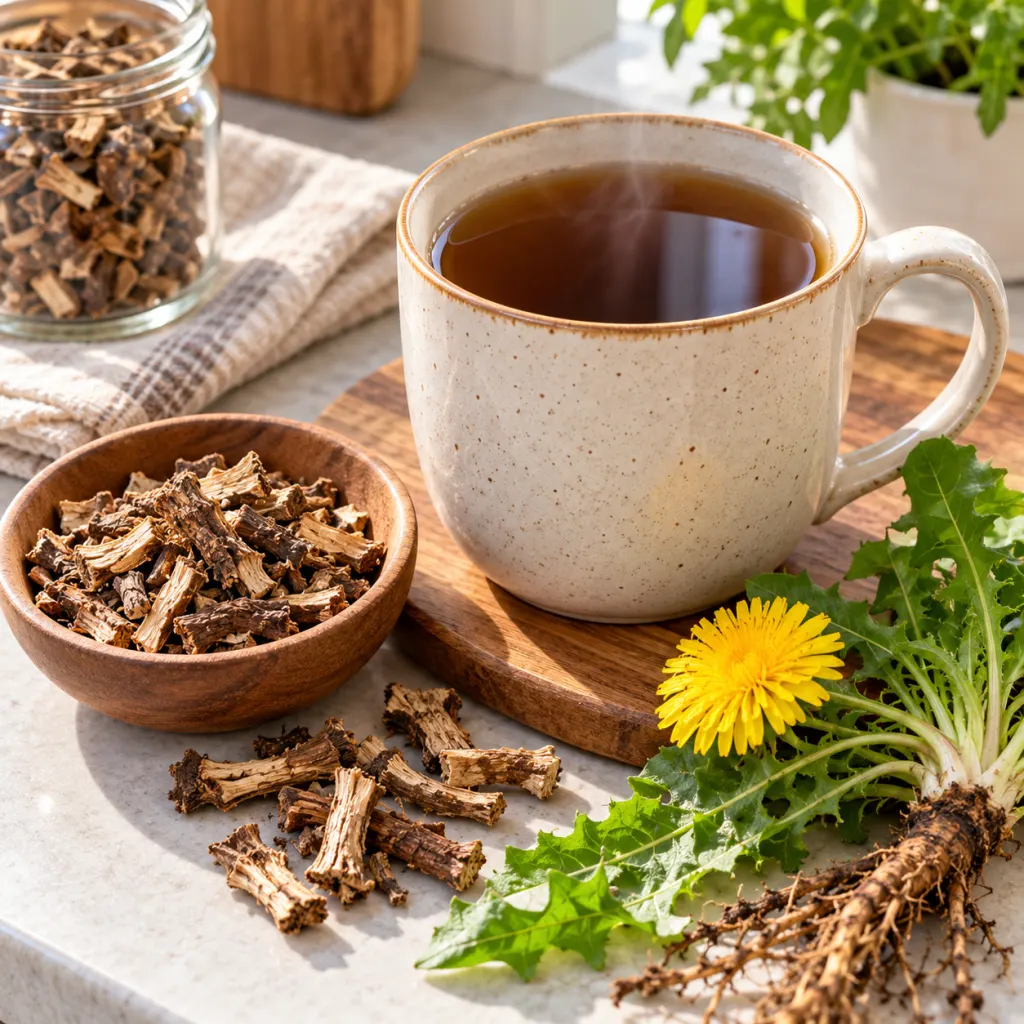
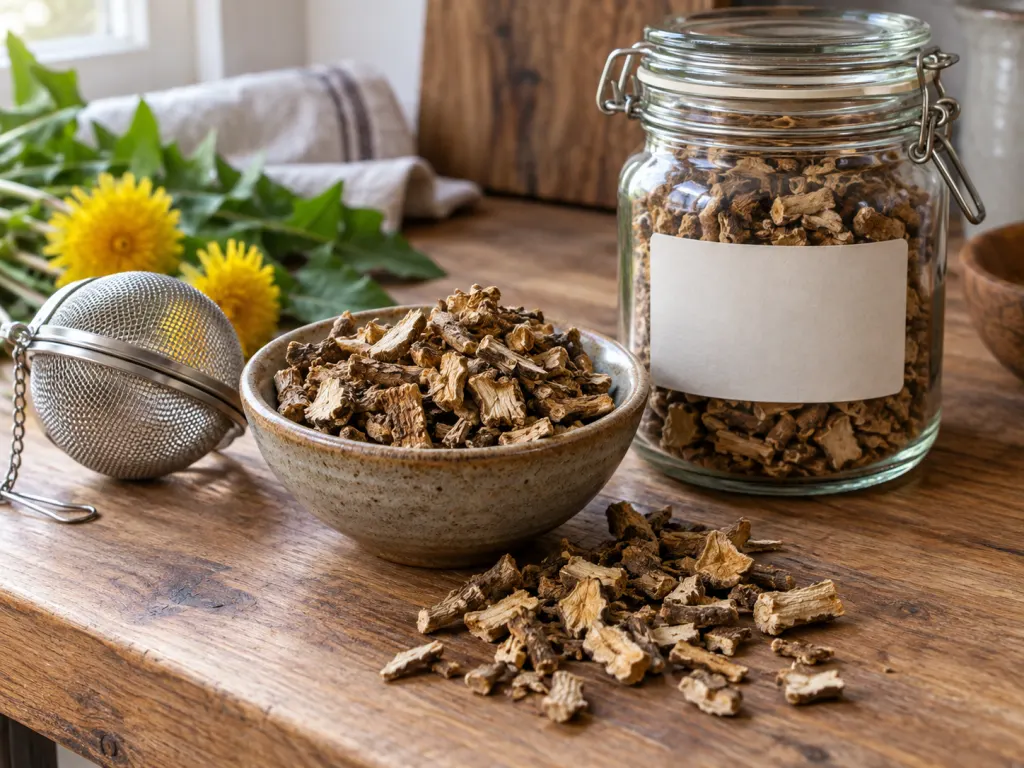
Dandelion is a plant in the Taraxacum genus, familiar to many people as a lawn weed and to others as a food plant. Its leaves, flowers, and roots have all been used in different food traditions. Dandelion root tea is usually made by steeping or simmering dried, cut root in hot water, producing a dark, roasted, slightly bitter drink. It is not the same as eating fresh dandelion greens, taking a concentrated capsule, or using a laboratory extract. That distinction matters because research on one form cannot automatically be applied to another form. A mug of tea may contain a different mixture and amount of plant compounds than a capsule, tincture, or purified extract.
What the evidence can and cannot support
The careful answer is modest: dandelion contains plant compounds that researchers can measure, but current human evidence is not strong enough to promise a specific result from dandelion root tea. NCCIH notes that dandelion has been used traditionally for several purposes, yet scientific evidence for health-related uses remains limited (NCCIH). Laboratory studies have identified phenolic compounds and other constituents in Taraxacum officinale, but those studies are not the same as evidence that a household tea will reliably change how a person feels or functions (PubMed). For a reader, the practical takeaway is simple: composition is interesting, but it should not be turned into a personal health guarantee.
That does not make the tea useless as a beverage. Some people enjoy its roasted bitterness in the same way they enjoy chicory, black coffee, or strong herbal infusions. It can be part of an evening or morning routine if it agrees with you. The problem begins when a pleasant routine is asked to answer questions it cannot answer. If a man is waking many times at night, planning errands around restroom access, or feeling anxious about urgency, the question is no longer just what to drink. It becomes a question about patterns, timing, other symptoms, medicines, hydration, sleep, and whether a prostate or bladder evaluation is appropriate.
A practical way to think about urinary changes
Urinary changes after midlife can have more than one explanation. The prostate sits below the bladder and surrounds the urethra, so changes in prostate size or irritation can affect urine flow. But fluid intake, caffeine, alcohol, sleep quality, constipation, some medicines, and other health factors can also influence bathroom patterns. NIDDK lists several prostate-related symptoms that deserve attention, including frequent urination, pain or burning, blood in the urine, painful ejaculation, or pain in the lower back, hips, pelvis, or rectal area (NIDDK). A tea routine cannot sort those possibilities on its own.
A useful self-check is to notice the pattern without turning it into a diagnosis. Consider writing down what happens for a few days before a medical visit: when you drink most fluids, how often you wake, whether urgency appears suddenly, whether flow feels weaker than before, and whether there is discomfort. This kind of record can make a conversation with a clinician more specific. It also helps separate a one-off day of extra fluids from a pattern that is changing your sleep, travel, work, or confidence.
Choosing and using dandelion root tea more thoughtfully
If you choose to drink dandelion root tea, treat it as a food-grade herbal product. Buy from a seller that provides clear ingredient information, avoid products with vague blends if you are trying to understand your response, and follow the package directions instead of assuming more is better. Yard-harvested roots can be uncertain because lawns may have been exposed to herbicides, pesticides, road runoff, or pet waste. Commercial products are not automatically perfect, but a clearly labeled food-grade product gives you more information than a random plant from a high-traffic area.
Because dandelion root tea has a strong roasted bitterness, many people find it easier to enjoy when prepared simply and consistently. The following kitchen habits keep the focus on taste and tolerance rather than hype:
- Try it plain first so you know its natural flavor.
- Use the preparation directions on the product label rather than guessing.
- Avoid mixing several new herbs at once, because blends make it harder to tell what agrees with you.
- If it seems to change your bathroom pattern, move it earlier in the day or pause until you can ask a qualified professional.
- Keep expectations modest: a pleasant beverage is not the same as a personalized care plan.
Why supplement labels deserve a careful read
Many dandelion products are sold as teas or dietary supplements, and the label matters. The U.S. Food and Drug Administration explains that dietary supplements are regulated differently from conventional foods and medicines; companies are responsible for evaluating safety and labeling before marketing, while FDA acts when problems arise or requirements are not met (FDA). For a consumer, that means a polished package is not the same as a personalized recommendation. Look for the exact plant part used, the full ingredient list, serving directions, warnings, and whether the product includes other active herbs.
MedlinePlus also cautions that natural products can still cause unwanted effects and may not be appropriate for everyone, especially when a person uses medicines or has ongoing health conditions (MedlinePlus). With dandelion specifically, NCCIH notes that people who are allergic to related plants such as ragweed, chrysanthemums, marigolds, or daisies may also react to dandelion, and it flags extra caution for people using certain medicines (NCCIH). This is not a reason for panic; it is a reason to keep the decision ordinary, informed, and discussable.

When not to wait on tea
Some urinary situations should not be handled by watching and waiting over a mug of tea. NIDDK describes urinary retention as trouble emptying the bladder and notes that acute urinary retention, when a person suddenly cannot urinate, requires immediate medical care (NIDDK). New severe discomfort, visible blood, fever with urinary symptoms, or sudden inability to pass urine should be treated as a care issue, not as a beverage-timing issue. For less urgent but persistent changes, booking a routine appointment is still sensible, especially if sleep is repeatedly interrupted or daily plans are being shaped around restroom access.
Where dandelion root tea fits in a sensible routine
The best place for dandelion root tea is modest and realistic. It can be a warm drink for someone who likes bitter herbal flavors. It can be part of a calmer evening ritual if it does not send you back and forth to the bathroom. It can be a way to reduce reliance on very sweet beverages if you enjoy it unsweetened. But it should not become the explanation for symptoms, the reason to delay a checkup, or the centerpiece of a plan for aging well. For men over 50, the more useful routine is broad and boring in the best sense: drink fluids steadily, notice changes, stay active within your ability, keep regular appointments, and bring specific questions when something changes.
The bottom line
Dandelion root tea is not something men over 50 need to fear, but it is also not something to overstate. The evidence supports a cautious, practical view: it is an herbal beverage with traditional use, measurable plant compounds, possible sensitivities for some people, and limited human evidence for specific outcomes. If your interest comes from taste, curiosity, or a desire for a less sweet warm drink, it may be reasonable to consider. If your interest comes from urinary changes, interrupted sleep, discomfort, or worry about the prostate, let the tea remain a side note and make the health question the main conversation.
Wrap-Up
Dandelion root tea can be a pleasant herbal drink for men over 50, especially for those who enjoy roasted, bitter flavors. The evidence does not support turning it into a promise about prostate or urinary comfort. Authoritative sources emphasize that dandelion research for health uses is limited, supplement labels require careful reading, and urinary changes after midlife deserve clear attention. Use food-grade products, avoid vague blends when you are trying something new, and do not let an herbal routine delay care for sudden, painful, or worsening symptoms. The most sensible approach is calm: enjoy the tea if it suits you, keep expectations modest, and bring persistent urinary concerns to a qualified professional.
Frequently Asked Questions
- → Is dandelion root tea proven to help men over 50 with urinary changes?
No strong human evidence shows that dandelion root tea reliably addresses urinary changes in men over 50. NCCIH says evidence for dandelion health uses is limited. If urinary changes are new, worsening, painful, or sleep-disrupting, the better step is to discuss the pattern with a qualified clinician.
- → Can I drink dandelion root tea every night?
Some people may tolerate it as an ordinary herbal drink, but nightly use is not automatically right for everyone. If you notice more bathroom trips, stomach discomfort, itching, rash, or any unusual reaction, pause and ask a qualified professional. Follow the product label rather than increasing amounts on your own.
- → Is dandelion root tea the same as dandelion greens?
No. Dandelion root tea is made from the root, usually dried and cut or roasted. Dandelion greens are leaves eaten as a food. Different plant parts and preparations can contain different compounds, so information about one form should not be treated as proof for another.
- → Who should be especially cautious with dandelion products?
People with allergies to related plants such as ragweed, chrysanthemums, marigolds, or daisies should be cautious because NCCIH notes possible related reactions. Anyone using regular medicines or managing ongoing health conditions should ask a doctor or qualified health professional before making dandelion products a routine habit.
- → When should urinary symptoms be checked promptly?
Seek prompt care if you suddenly cannot urinate, have severe discomfort, visible blood, fever with urinary symptoms, or rapidly worsening changes. NIDDK describes sudden inability to urinate as an urgent medical situation. For ongoing but less urgent changes, schedule a routine conversation and bring notes about timing and frequency.
References
This content was developed and refined using reliable sources.
- https://www.nccih.nih.gov/health/dandelion
- https://www.niddk.nih.gov/health-information/urologic-diseases/prostate-problems
- https://www.niddk.nih.gov/health-information/urologic-diseases/urinary-retention/definition-facts
- https://www.fda.gov/consumers/consumer-updates/fda-101-dietary-supplements
- https://medlineplus.gov/ency/patientinstructions/000868.htm
- https://pubmed.ncbi.nlm.nih.gov/15593267