 Save
A lemon-garlic drink can fit into an eye-friendly routine, but it should be understood modestly: it is a flavored water, not a stand-alone way to manage vision concerns. The National Eye Institute emphasizes habits such as regular dilated eye exams, nourishing foods, screen breaks, sunglasses, and protective eyewear as practical foundations for eye health NEI. Lemon can make water more appealing and contributes vitamin C, while garlic is a familiar culinary plant with a long history of use in food. The useful question is not whether one drink can transform your eyes, but how a simple beverage can support steadier daily habits without overstating what it can do.
What This Drink Can Realistically Add
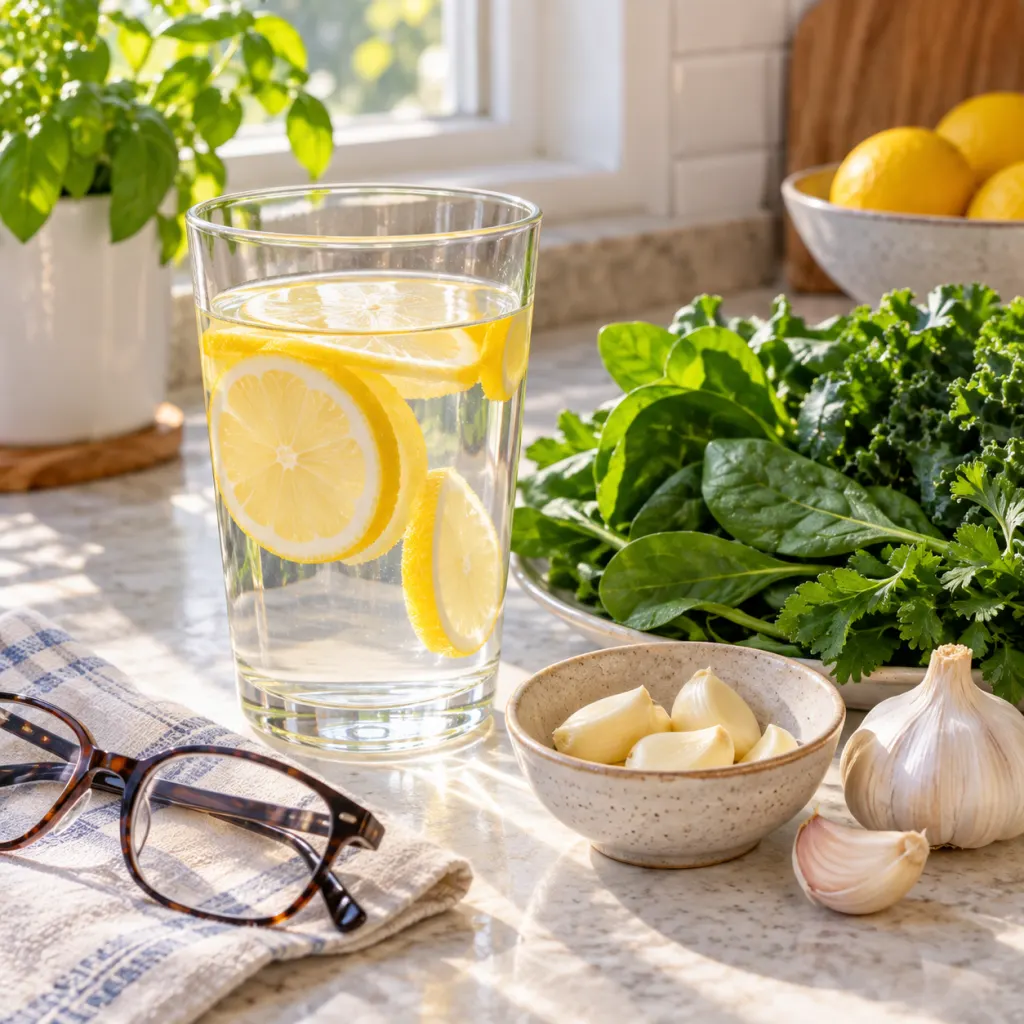
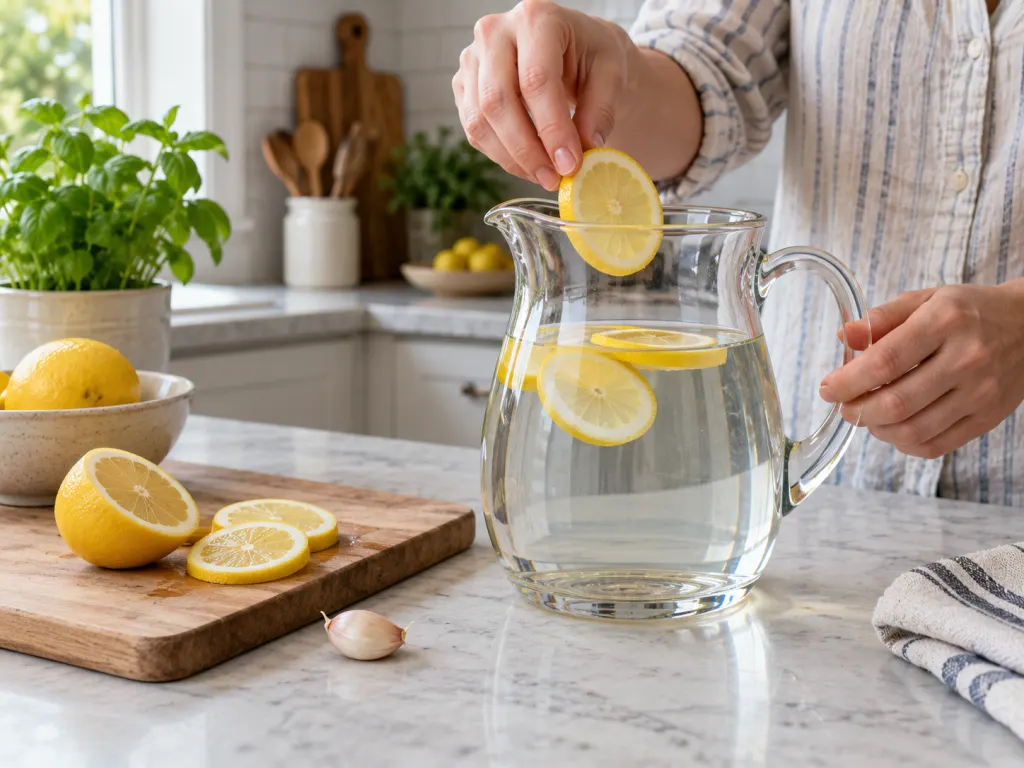
The most defensible benefit of a lemon-garlic drink is practical: it may help some people choose water more often. The CDC notes that plain water counts toward daily fluid intake and that adding lemon or lime can make water more appealing without turning it into a sugary drink CDC. That matters because many people do not struggle with finding exotic ingredients; they struggle with repeating ordinary habits. If a lightly flavored drink helps you pause, hydrate, and step away from a screen for a moment, it can be useful as part of a routine.
Lemon also brings vitamin C, a water-soluble nutrient found in citrus fruits and juices. The NIH Office of Dietary Supplements explains that vitamin C acts as an antioxidant in the body and is found in fruits and vegetables such as citrus, peppers, strawberries, broccoli, tomatoes, and potatoes NIH ODS. That does not make lemon water a special eye formula. It simply places lemon among many plant foods that can contribute to an overall nutrient pattern. Garlic, meanwhile, brings a strong savory flavor; for some people that makes the drink intriguing, while for others it may be too sharp for daily use.
Eye Care Starts With the Bigger Routine
The clearest eye-care advice is broader than any single glass. NEI recommends a comprehensive dilated eye exam because some eye conditions may not cause noticeable warning signs early on NEI. The same guidance points to eating well, staying active, avoiding smoking, wearing sunglasses that block UVA and UVB rays, using protective eyewear for risky tasks, and resting the eyes during long computer use. These are not glamorous habits, but they are the kind of steady actions that make an eye-care routine more complete.
For a practical daily framework, think of the drink as one small piece beside these core habits:
- Schedule routine eye care instead of waiting until vision changes become disruptive.
- Use the 20-20-20 screen break: every 20 minutes, look about 20 feet away for 20 seconds, as NEI advises.
- Eat a varied pattern that includes leafy greens, colorful fruits and vegetables, and fish when it fits your preferences.
- Wear sunglasses outdoors and safety glasses for home repairs, yard work, or workshop tasks.
- Keep contact lens hygiene careful if you wear contacts.
- Choose unsweetened drinks more often than sweetened beverages.
Screen-heavy days deserve special attention. NEI notes that looking at a computer for a long time can tire the eyes and recommends periodic breaks NEI. A lemon-garlic water break can be paired with that pause: stand up, look into the distance, blink naturally, and drink a few sips. The drink itself is not doing the whole job; the value is in creating a repeatable cue for rest, hydration, and a reset from close-up focus.

What Lemon, Garlic, and Antioxidants Mean Here
Antioxidants are often mentioned in eye-related food claims, so it helps to keep the term grounded. MedlinePlus explains that antioxidants are substances found in many foods, including fruits and vegetables, and gives examples such as beta-carotene, lutein, vitamin A, vitamin C, and vitamin E MedlinePlus. It also cautions that it is not always clear whether benefits linked with fruit and vegetable-rich eating patterns come from antioxidants themselves, other parts of the foods, or the broader pattern. In other words, the category is real, but it should not be used as a blank check for bold drink claims.
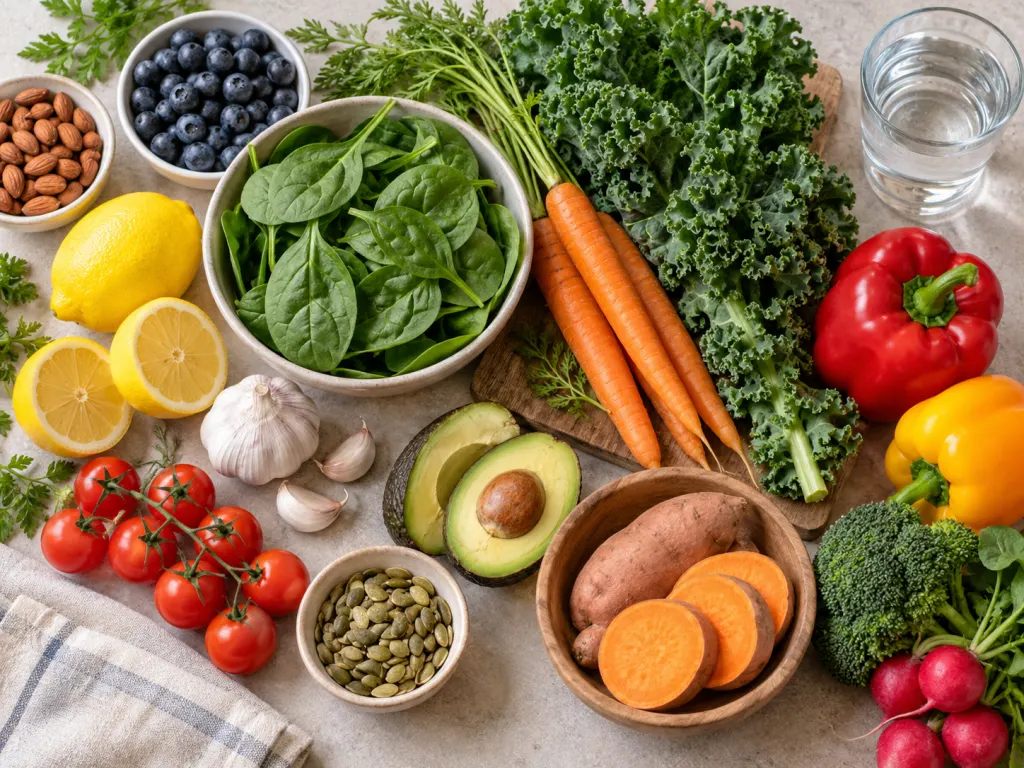
Eye-specific nutrient research is more nuanced than social captions usually suggest. NEI’s AREDS and AREDS2 information discusses lutein and zeaxanthin, carotenoids found in green leafy vegetables and present in the retina and lens, where they may act as natural antioxidants and help absorb certain high-energy light NEI AREDS. That is one reason leafy greens show up so often in eye-health guidance. Lemon and garlic are flavorful, but they are not the main foods highlighted for lutein and zeaxanthin. If your goal is an eye-friendly kitchen pattern, the drink should sit alongside vegetables, fruit, fish, beans, nuts, and other everyday foods rather than crowding them out.
Garlic Is Food First
Garlic has a long culinary history and is cultivated worldwide. The National Center for Complementary and Integrative Health notes that garlic is used in foods and has also been studied in supplement form for several health-related questions NCCIH. For this article, the food context is the important one. A small amount of garlic can add aroma and bite to savory lemon water, but more intense is not automatically better. Raw garlic is powerful, and some people find it unpleasant in drinks. If it makes the beverage harder to enjoy, a lemon-only water, cucumber water, unsweetened tea, or plain water may be a better daily choice.
It is also worth separating a kitchen drink from a supplement habit. A clove used for flavor is not the same as a concentrated product. NCCIH describes safety considerations for garlic supplements and notes that oral garlic can cause unwanted effects in some people NCCIH. The conservative kitchen approach is simple: use food-level amounts, keep the drink unsweetened, stop using it if it clearly disagrees with you, and bring personal questions to a qualified professional.
A Better Way to Build the Glass
If you want to try lemon-garlic water, keep it simple and gentle. Use cold or warm water, fresh lemon for brightness, and a very small amount of crushed or steeped garlic if you actually like the savory edge. Strain it if texture bothers you. Avoid turning it into a sweet lemonade, because the eye-care story here is not about sugar; it is about a drink that helps you choose water, pause from screens, and stay consistent with a wider routine. The CDC lists plain water, sparkling water, seltzer, plain coffee, and tea among low- or no-calorie options, and notes that limited amounts of 100% juice or low-sodium vegetable juice can also fit within recommended calorie limits CDC.
For many readers, a more eye-friendly beverage pattern may mean rotation rather than loyalty to one drink. Lemon water can be refreshing in the morning. Unsweetened tea may suit an afternoon break. A smoothie with leafy greens and fruit may help someone who struggles to eat produce, though it should still fit their overall food needs. Low-sodium vegetable juice may appeal to someone who wants a savory drink without raw garlic. The best option is the one that supports steady habits without creating discomfort, stress, or unrealistic expectations.
When a Drink Is Not the Right Answer
Food habits can support general wellness, but new or sudden eye changes deserve real attention. Sudden vision loss, a serious eye injury, chemical splash, intense eye discomfort, new flashes or floaters, or a major change in vision should not be handled with a kitchen drink. NEI’s dry eye guidance also points out that environmental factors, screen time, sleep, hydration, and professional treatment plans may all matter when eyes feel dry or irritated NEI Dry Eye. A beverage can be part of self-care, but it cannot tell you what is happening inside the eye.
There is a quieter reason to be careful, too: confident food claims can make people delay sensible care. If your eyes often feel tired, dry, blurry, gritty, or strained, the useful next step may be adjusting lighting, changing screen habits, checking contact lens routines, reviewing your workspace, or booking an eye exam. The drink may remain a pleasant habit, but it should not become the main explanation for symptoms or the main plan for concerns.
Wrap-Up
Lemon-garlic water is best understood as an optional unsweetened drink, not a special formula for the eyes. Lemon can contribute flavor and vitamin C, garlic can add a savory note, and water can help anchor a better beverage habit. The stronger eye-care foundation is broader: regular eye exams, eye breaks during screen use, protective eyewear, sunglasses, contact lens hygiene, varied foods rich in fruits and vegetables, and timely professional care when vision or comfort changes. If the drink helps you repeat those habits, it has a reasonable place. If it tastes harsh, upsets your routine, or distracts from proper care, choose a simpler drink and keep the bigger eye-care habits in focus.
Frequently Asked Questions
- → Is lemon-garlic water specifically proven to care for the eyes?
Evidence does not establish this specific drink as a targeted eye-care tool. It is more reasonable to view it as an unsweetened flavored water that may support a broader routine built around eye exams, screen breaks, protective eyewear, and varied foods.
- → Why is lemon often included in eye-friendly drink ideas?
Lemon adds flavor and contributes vitamin C, a nutrient found in citrus fruits and many other fruits and vegetables. That makes lemon useful in a general food pattern, but it does not make lemon water a stand-alone eye plan.
- → Does garlic need to be in the drink?
No. Garlic is optional and mainly adds a strong savory flavor. If raw garlic makes the drink unpleasant, choose lemon water, cucumber water, plain water, unsweetened tea, or another low-sugar drink you can enjoy consistently.
- → What habits matter more than a single drink?
Regular eye exams, the 20-20-20 screen break, sunglasses, safety glasses for risky tasks, careful contact lens hygiene, sleep, hydration, and a varied eating pattern are more important than relying on one beverage.
- → When should I get professional help for eye concerns?
Seek qualified care promptly for sudden vision changes, eye injury, chemical exposure, intense discomfort, or new flashes or floaters. For ongoing dryness, strain, or blurry vision, an eye-care professional can help identify practical next steps.
References
This content was developed and refined using reliable sources.
- https://www.nei.nih.gov/eye-health-information/healthy-vision/how-eyes-work/keep-your-eyes-healthy
- https://ods.od.nih.gov/factsheets/VitaminC-Consumer
- https://www.nccih.nih.gov/health/garlic
- https://www.cdc.gov/healthy-weight-growth/water-healthy-drinks/index.html
- https://medlineplus.gov/antioxidants.html
- https://www.nei.nih.gov/eye-health-information/clinical-trials/age-related-eye-disease-studies-aredsareds2/aredsareds2-frequently-asked-questions
- https://www.nei.nih.gov/eye-health-information/eye-conditions-and-diseases/dry-eye