 Save
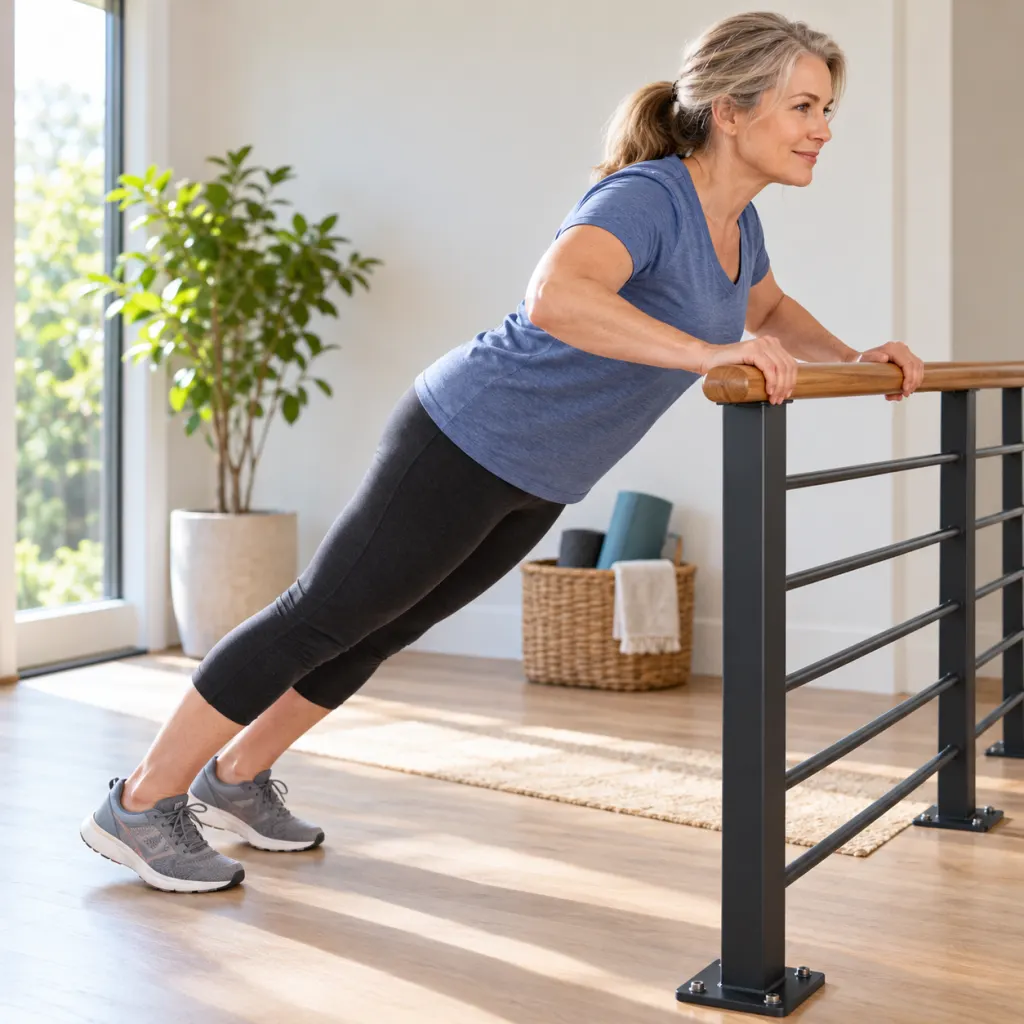
Pushups can build upper-body strength when the difficulty matches your current ability and practice includes controlled movement, gradual progression, and recovery. Starting against a wall or a sturdy raised surface is a practical way to begin. The aim is a repeatable strength habit, with technique guiding how much you do. Health and Wellbeing Queensland includes wall, bench, and floor options in its exercise guidance.
This guide explains how to choose a variation, recognize useful progress, and organize practice around ordinary responsibilities. Its examples are planning suggestions, not an individualized exercise program. Your starting point can be modest, and the plan can change as you learn what is manageable.
What pushups train, and where they fit
A pushup uses body weight as resistance. The chest muscles and triceps at the back of the upper arms help perform the pressing movement, while the trunk helps maintain position. Mayo Clinic's modified-pushup demonstration describes both the pressing muscles and the importance of maintaining a stable body position.
That makes pushups one useful component of a broader routine. The CDC's adult activity guidance recommends muscle-strengthening activity involving all major muscle groups on at least two days each week, alongside aerobic activity. Pushups alone leave gaps: a weekly plan also needs activities involving the legs, hips, and back. Treat the pushup as a movement to practice within that larger picture.
Choose a starting variation you can control
A useful starting question is whether you can lower and press back smoothly while maintaining your position. If a floor pushup immediately becomes a struggle to keep your body aligned, choose a different version. Harvard Health describes modifying pushups to match current ability and emphasizes good form over a universal repetition target.
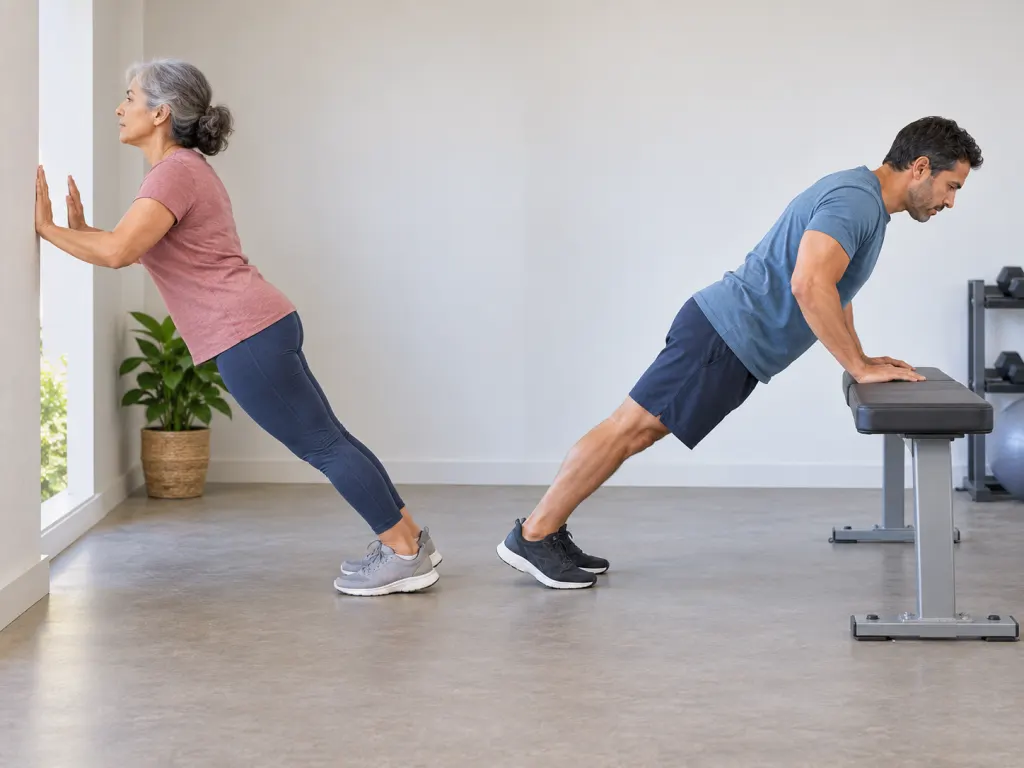
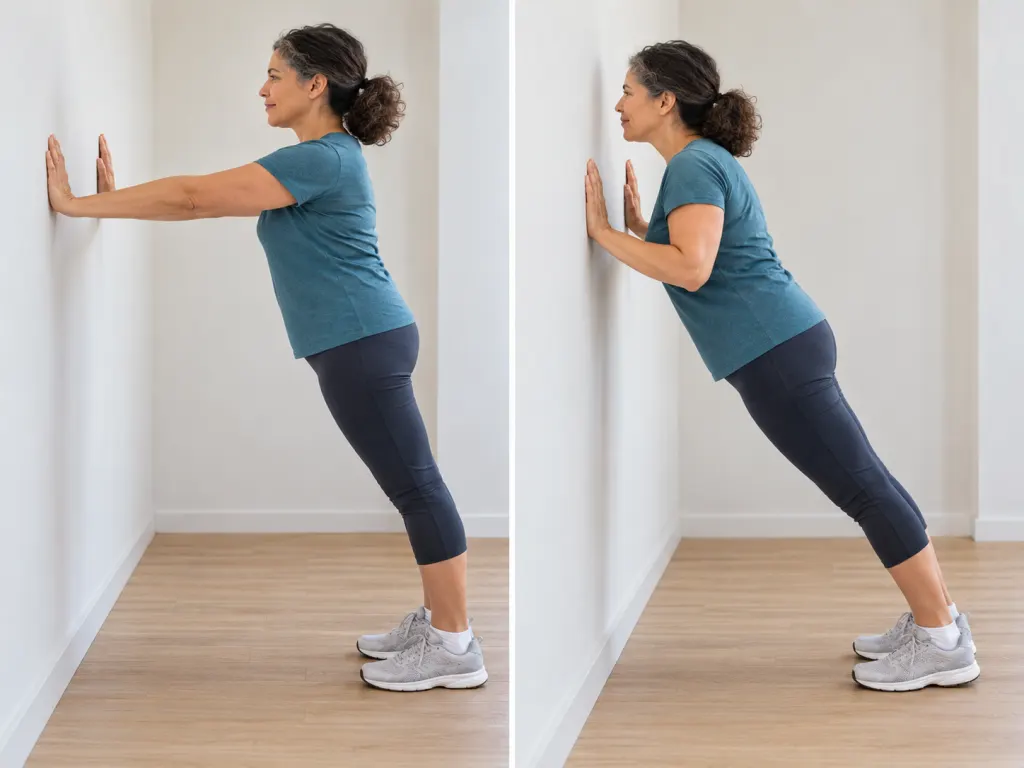
- Wall pushup: Face a wall with your palms around shoulder height. Bend your elbows to bring your body toward the wall, then press away while keeping your body aligned.
- Incline pushup: Place your hands on a secure raised support, such as a fixed exercise bench, and practice the pressing movement with your feet on the floor.
- Floor pushup: Use this option when you can control the movement from a plank position without your hips sagging or lifting to complete the repetition.
Wall and bench versions are included in Queensland's pushup guidance. Check your practice area before starting: the support should remain fixed under pressure, your feet should have traction, and the space should be clear of obstacles.
Make technique observable
For modified pushups, Mayo Clinic recommends a straight back, engaged abdominal muscles, and smooth, controlled movement. Avoid letting the middle of your body drop or thrusting upward to finish. These principles also apply to its wall-pushup demonstration. Keep the movement within a comfortable range rather than forcing depth. See Mayo Clinic's technique guidance.
Give yourself one clear observation for each practice session. You might notice whether your hips travel with your shoulders, whether the final repetition resembles the first, or whether you rush the return. Trying to correct several details at once can make the session hard to assess. A qualified fitness professional can provide feedback if you are unsure what you are seeing.
A brief note such as “steady position until the last repetition” is more useful for planning than simply recording “finished.” It identifies what to repeat or adjust next time without turning every session into a performance test.
Use repetitions as information
The American Heart Association describes one set of eight to 12 repetitions as a common general strength-training starting framework. That range is not an entry requirement for floor pushups. Choose a variation that makes controlled practice possible, and finish the set when you can no longer maintain the intended technique.
A repetition is one complete lowering and pressing movement; a set is a group of repetitions performed before resting. In your own record, describe both the number and the variation. “Eight wall pushups” tells you something different from “eight floor pushups.” Neither entry needs a value judgment attached to it.
For an initial practice session, focus on learning the setup and observing your movement. Leave the session with enough information to choose the next session sensibly. There is no need to establish a maximum score before you have established a consistent way to perform and record the exercise.
Progress by changing one feature at a time
As an exercise becomes easier, resistance can increase gradually. Mayo Clinic's strength-training guidance uses that principle when describing progression. For pushups, Harvard Health also explains that changing body angle changes difficulty, including moving the feet farther from a wall. See its pushup modification guide.
A practical way to organize this is to change one recorded feature at a time. You could keep the same wall setup and add a repetition, or try a slightly more demanding angle while accepting a smaller count. Avoid changing the support, pace, and amount of work together if you want to understand the result.
For example, someone might record six controlled repetitions at a particular wall position, repeat that setup on later training days, and eventually find it manageable enough to adjust. That is an illustration of decision-making, not a schedule everyone should follow. Keep the easier option available when a new setup proves unsuitable.
Plan recovery into the week
Mayo Clinic advises allowing one full day between training the same muscle group. The American Heart Association's general guidance allows two rest days between sessions for a muscle group. Both place recovery within the training plan. A Monday-and-Thursday arrangement is one example that leaves space between pushup sessions. See Mayo Clinic and the American Heart Association.
Write the recovery days into your calendar when you choose the training days. Also account for other pressing exercises you already perform; a pushup session belongs in the context of the whole week. A calendar entry might say “strength practice Thursday” without requiring pushups every morning in between.
If a planned session moves, review the spacing before moving the next one. The calendar serves the routine, so it should be adjustable. A missed appointment is a planning problem to solve, rather than a reason to compress several sessions into the remaining days.
Choose a time you can realistically repeat
Exercise timing is personal. The American Heart Association's timing guidance emphasizes choosing a time that supports consistency and allowing flexibility when schedules vary. It also suggests changing the timing if late exercise makes falling asleep difficult.
Compare actual openings in your week. Before work may suit someone with predictable mornings; an afternoon break may fit someone whose mornings involve caregiving. For shift workers, a familiar point in the waking day may be easier to plan around than a fixed clock time.
Write a specific cue, such as “after changing out of work clothes on Thursday.” Then add a fallback appointment that preserves recovery spacing. This gives the routine a place to go when the original appointment disappears. Review the arrangement after trying it rather than assuming the first choice must become permanent.
Lower the practical barriers to beginning
Before strength work, allow time for a few minutes of walking or another light warmup, as described by Mayo Clinic. Keep that preparation in the appointment instead of allocating every available minute to repetitions.
Then make the setup straightforward. Decide which clear wall or fixed support you will use, where you will place your belongings, and how you will record the session. A simple paper note is sufficient; a new app or device is optional.
For a busy week, distinguish between the full appointment and an appointment that needs rescheduling. If you only have enough time to prepare the space and review your notes, record that honestly as preparation. Keeping an accurate record is more useful than labeling every interaction with the routine a completed strength session.

Track progress without promising a deadline
Create a short record with the date, variation, support used, controlled repetitions, and a comment about effort. For a wall version, include a consistent reference for foot placement. For an incline version, identify the support so you can reproduce the setup. Without those details, two identical repetition counts may describe different tasks.
Review the record using concrete questions: Did I attend the appointments I planned? Did I maintain the position I intended? Was the setup repeatable? What single adjustment would make the next session clearer? These questions give you useful decisions even when the repetition count stays the same.
Keep goals specific to the activity: “practice twice this week with the same setup” is something you can review directly. Appearance goals and calendar deadlines provide less information about how a particular repetition was performed. This guide offers no fixed date for reaching a floor pushup or achieving a particular appearance.
Know when to stop and seek help
If a strength exercise causes pain, stop, as Mayo Clinic advises. Do not use a repetition goal as a reason to continue through wrist, elbow, or shoulder pain. New, increasing, or recurring muscle or joint pain warrants advice from a qualified health professional before you keep testing it. The Veterans Health Library's exercise-safety guidance includes new or increased joint or muscle pain among reasons to contact a healthcare provider.
Stop exercising and seek emergency help for chest pain or pressure, faintness, severe weakness, or unusual shortness of breath. Call your local emergency number rather than trying another set to see what happens. These boundaries follow the Veterans Health Library's safety guidance. If you have an existing condition or concerns about whether exercise is appropriate, discuss a suitable starting plan with your health professional.
Wrap-Up
A sustainable pushup routine starts with a suitable variation and an appointment you can keep. Record the setup and quality of movement, leave space for recovery, and make small, understandable changes. Use your notes to decide what comes next. The most useful plan is one you can assess honestly and adjust to your circumstances.
Frequently Asked Questions
- → Do wall pushups count as a useful starting exercise?
Yes. Wall pushups are an established modification included in Health and Wellbeing Queensland's guidance. Record them by name so you can compare later sessions using the same setup. You can keep using a wall version when it suits your ability and goals; reaching the floor does not need to be your only goal.
- → What if I cannot complete a floor pushup?
Choose a wall or secure incline version for your practice. Harvard Health describes adjusting pushups to current ability. Start your record with the variation you can control, rather than repeatedly recording unsuccessful floor attempts.
- → How can I track practice without filming myself?
Use a short written checklist: support used, foot position, repetitions completed with your intended form, and one observation. For example, note whether the last repetition stayed controlled. If you remain unsure about technique, ask a qualified fitness professional for direct feedback instead of relying on a count alone.
- → Can a short pushup session cover my whole weekly exercise plan?
Pushups are one part of strength training. The CDC recommends strengthening all major muscle groups and accumulating at least 150 minutes of moderate aerobic activity weekly, or an equivalent vigorous combination. Plan other activities alongside pushups rather than treating a brief pressing session as the entire program.
- → What should I change when I repeatedly miss my planned sessions?
Review the appointment before increasing the goal. Is the time regularly interrupted? Does setup take longer than expected? Is the location inconvenient? Choose one practical change and try it. The American Heart Association supports choosing exercise timing that works consistently with your life.
References
This content was developed and refined using reliable sources.
- https://hw.qld.gov.au/physical-activity/push-ups-on-bench-wall-floor
- https://www.mayoclinic.org/healthy-lifestyle/fitness/multimedia/modified-pushup/vid-20084674
- https://www.cdc.gov/physical-activity-basics/guidelines/adults.html
- https://www.health.harvard.edu/exercise-and-fitness/modify-your-push-ups-to-meet-your-fitness-level
- https://www.heart.org/en/healthy-living/exercise-and-physical-activity/fitness-basics/strength-and-resistance-training-exercise
- https://www.mayoclinic.org/healthy-lifestyle/fitness/in-depth/strength-training/art-20046670
- https://www.heart.org/en/healthy-living/exercise-and-physical-activity/fitness-basics/when-is-the-best-time-of-day-to-work-out
- https://www.veteranshealthlibrary.va.gov/encyclopedia/3,82083