 Save
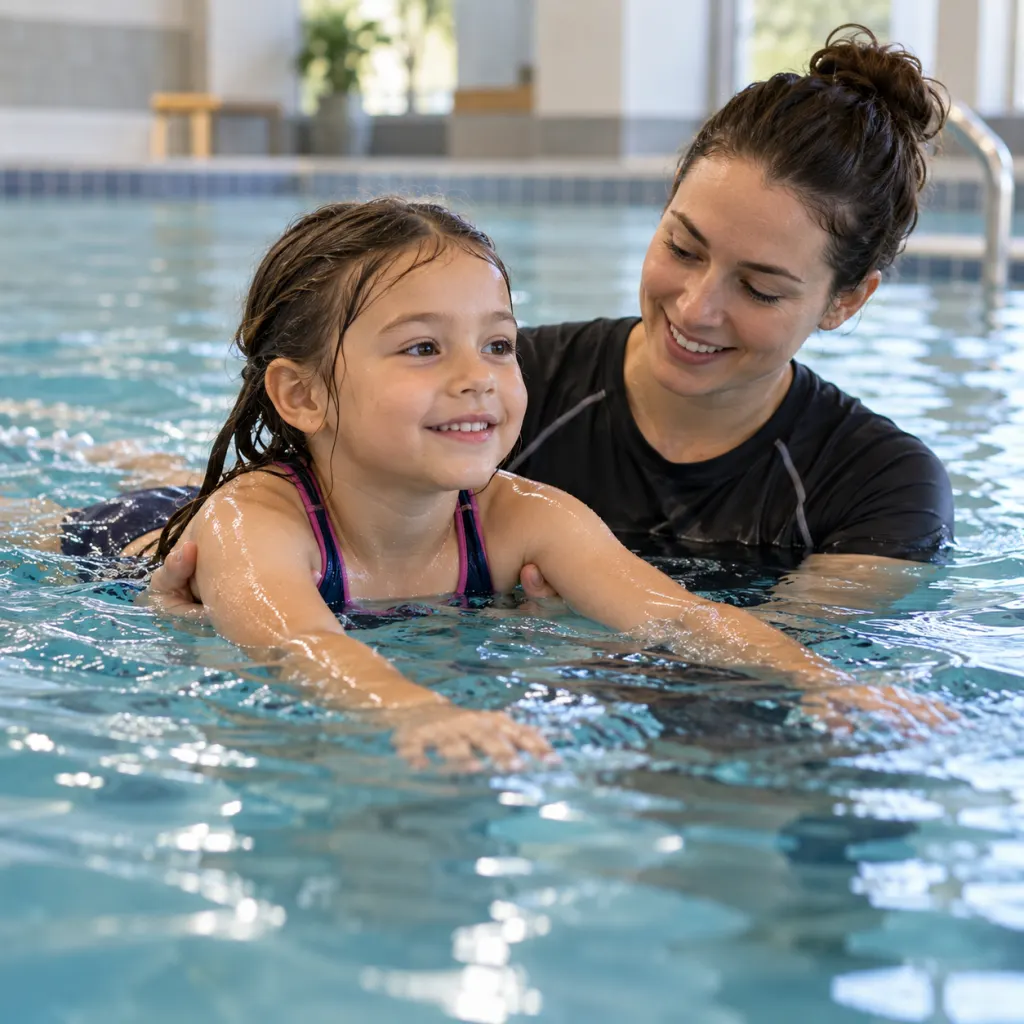
Swimming can support children's wellbeing by offering enjoyable physical activity, opportunities to learn and time with other people. Its value depends on whether the experience is safe, accessible and welcome to the child. General evidence supports being active; it does not establish swimming as the best activity for every child or guarantee a particular emotional response. The World Health Organization identifies physical and mental wellbeing benefits from regular physical activity.
For families, the useful question is how to make swimming a positive, manageable experience. That means balancing enjoyment and learning with individual preferences, realistic expectations and consistent water safety.
What the evidence supports, and what remains individual
The strongest starting point is the evidence for physical activity overall. WHO describes benefits for children's physical fitness, motor development and cognitive outcomes. Swimming can contribute to an active routine, alongside walking, cycling, dancing and play. Those broad findings should not be stretched into promises about what a particular swimming class will accomplish for a particular child. WHO's physical activity overview describes the wider evidence.
The CDC also reports that swimming can improve mood and that people report enjoying water-based exercise. Its overview covers different ages and circumstances, so it does not establish a guaranteed emotional benefit for every child. A child's own experience remains important: looking forward to a session, feeling comfortable asking for help and wanting to return are useful things for families to notice. Read the CDC overview of swimming and health.
Fit swimming into a varied week
For children aged 5-18, NHS guidance recommends an average of at least 60 minutes of moderate or vigorous physical activity a day across the week, with varied activities that develop movement skills, muscles and bones. Swimming is one listed option. This is a recommendation about the overall week, rather than a target for a single pool visit. See the NHS guidance for children and young people.
Time booked at a pool and time spent moving are different things. A lesson may include explanations, waiting and rest. Families do not need to turn this into a stopwatch exercise; simply leave room for other enjoyable movement. For younger children, the NHS emphasizes activity spread throughout the day, including active play. An occasional swim can be one part of that broader pattern. The under-five guidance explains the age differences.
Build confidence around specific skills
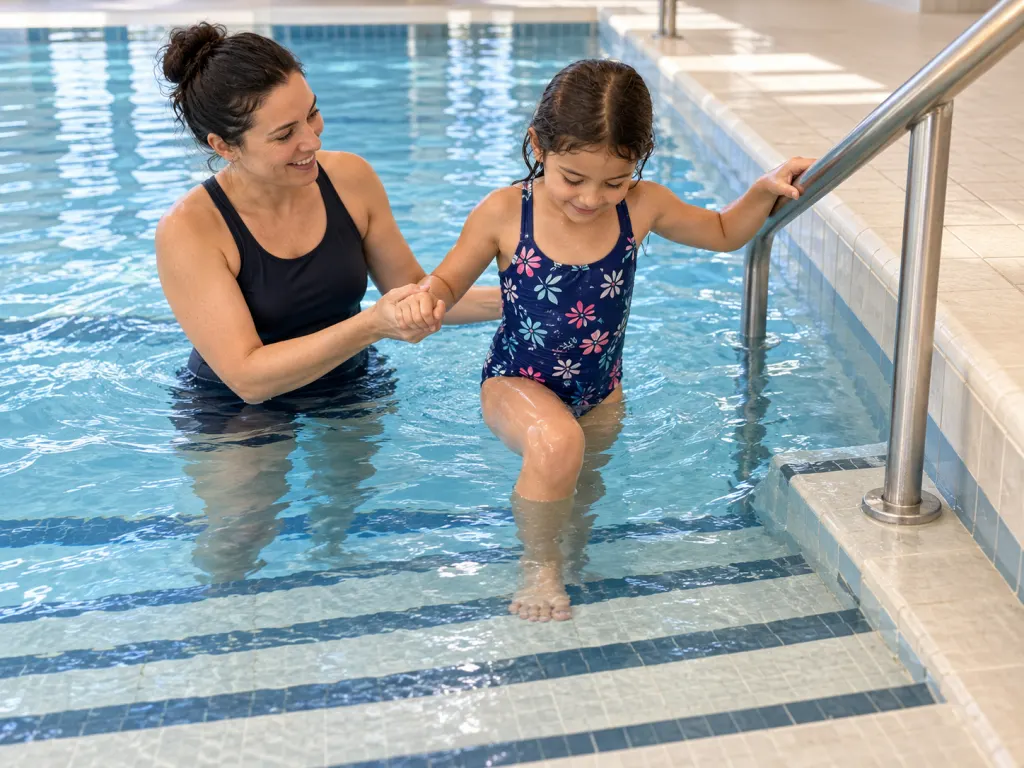
Water confidence is most useful when adults describe what a child can actually do. Saying that a child willingly enters using the steps gives an instructor clearer information than saying the child is confident. Likewise, enjoying splashing does not tell you whether a child can return to the edge or get out. Ask the instructor to explain the skills being practised and the support still needed.
For encouragement, choose small, observable goals. A child might practise listening for the instructor's signal, asking for assistance or using a familiar exit with support. Praise the action: “You told the teacher you needed help” is more informative than a broad judgment about being brave. Let the instructor determine suitable water tasks; a family outing should not become an improvised assessment.
Confidence should include permission to communicate uncertainty. Agree on a simple way to request a break, and explain what happens next. A child who can say that something feels difficult gives adults useful information for planning the next attempt.
Leave room for enjoyment and companionship
A pool visit can offer ordinary opportunities to share an activity: greeting a familiar teacher, taking turns or talking about a favourite moment afterward. These are possibilities rather than outcomes every lesson will deliver. Some children want a lively group; others prefer individual instruction or a quieter family session.
Ask concrete questions afterward. “Which part would you choose again?” often gives more useful planning information than “Was it good?” If the answer is that the child liked talking with a friend but disliked the crowded lesson, keep those two observations separate. You can value the social experience while reconsidering the class format. Avoid making friendship, speed or enthusiasm another performance requirement.
Sensory comfort differs from child to child
A swimming pool is a distinctive sensory environment. Shropshire Community Health NHS Trust identifies pools as one example of a noisy setting that some children find challenging. Its sensory information also describes differences in how people process touch, texture and temperature. These differences are a reason to ask about the child's experience instead of assuming that water feels soothing. Read the NHS trust's sensory information.
As practical options, ask the venue about quieter sessions, arrange to look around before joining a class or allow extra changing time. Ask the child which part is difficult: getting changed, hearing instructions, wearing equipment or entering the water. Change one manageable feature at a time so you can tell whether it helped.
Describe the result narrowly. If a child enjoyed a quieter session, that is a useful observation about that setting. It does not establish a predictable nervous-system effect. Keep future plans flexible, since a child may want a different pace on another day.
Choose instruction that welcomes questions
The American Academy of Pediatrics places swimming lessons within a wider approach to water safety and advises beginning when children are ready to learn. Readiness and suitable support deserve a conversation with the provider. See the AAP's water safety overview.
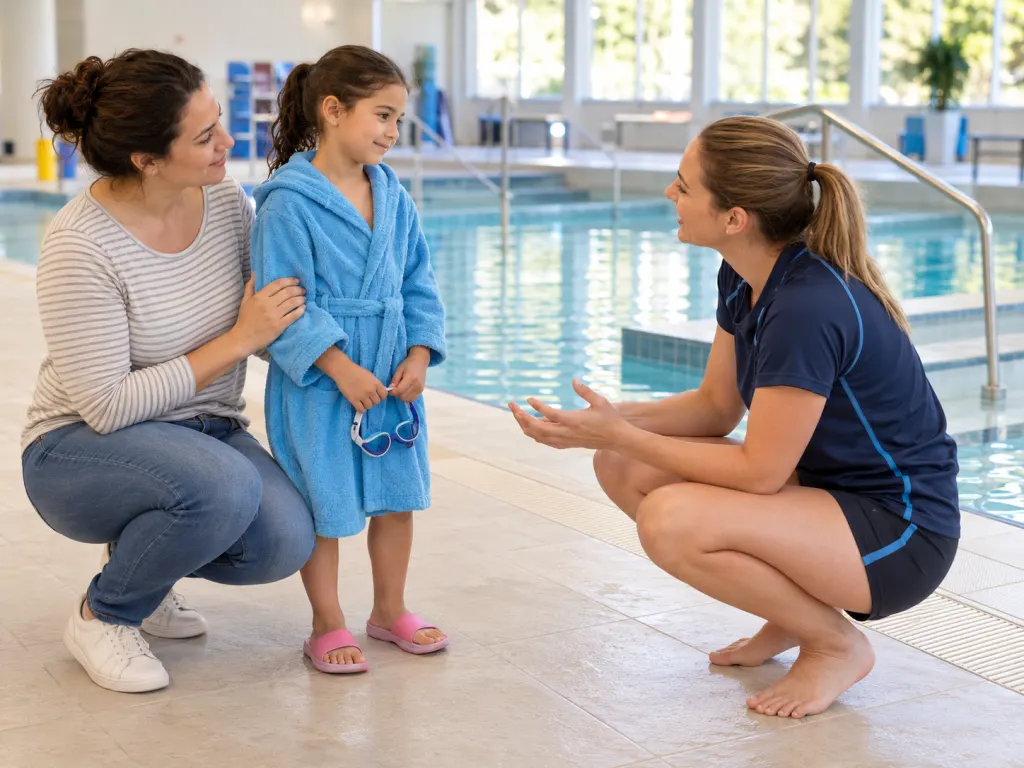
Before committing, ask how the instructor assesses starting skills, supports a hesitant child and communicates progress. Find out who supervises children while others take a turn, how breaks work and what happens if the usual instructor is absent. Ask whether you can observe a session and whether an introductory visit is available.
For a child who needs adaptations, explain the relevant communication or access requirements before arrival. Ask about entry equipment, changing facilities and the teacher's experience with similar needs. A clear answer is more useful than a general promise that everyone will be fine. If the proposed arrangement leaves essential questions unanswered, consider another provider.
Keep several water safeguards working together
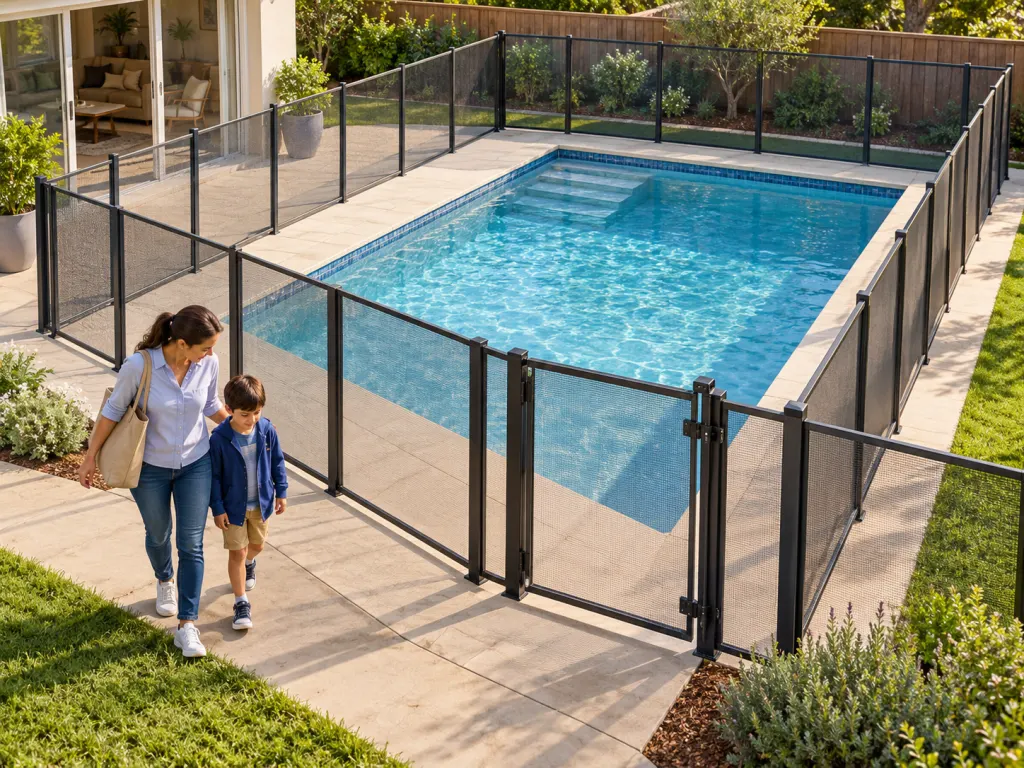
Swimming lessons do not drown-proof children. The AAP emphasizes several layers of protection, including close supervision and four-sided residential pool fencing. Gates, barriers and supervision still matter as skills develop. AAP water safety guidance supports this combined approach.
- Assign a specific adult to watch closely and continuously, without phone use or other distractions.
- Continue caregiver supervision when lifeguards are present.
- Use appropriate, properly fitted life jackets for the setting; inflatable toys are not safety equipment.
- Keep access to water secured when swimming ends.
- Exclude underwater breath-holding competitions, prolonged breath-holding and deliberate overbreathing before submersion.
These precautions reflect CDC water safety guidance. For young children and weak swimmers, plan close, hands-on adult support rather than watching from across the pool.
Treat open water as a different setting
Pool familiarity does not establish readiness for a lake, river or sea. Natural water can involve currents, waves, hidden obstacles and limited visibility. Follow local restrictions, choose designated swimming areas and use suitable life jackets. The CDC recommends life jackets for children during activities in and around natural water. Its guidance explains these additional hazards.
Before a trip, discuss the actual location with the adults responsible. Decide where children may go and who will supervise each child. If those arrangements cannot be maintained, choose a different activity.
Make the whole outing manageable
Consider the visit from leaving home to getting dressed afterward. A pool session that fits comfortably into the day may be easier to repeat than an ambitious plan squeezed between other commitments. As a planning exercise, list transport, admission, changing time and equipment alongside the lesson itself. Ask about community sessions or assistance with fees if cost limits the options.
Give children a simple account of the visit: who will be there, where belongings go and how they can ask for a break. Bring familiar essentials and avoid adding several new expectations at once. For example, the first visit to an unfamiliar venue could focus on meeting the teacher and understanding the layout rather than achieving a new swimming distance.
Allow time for a drink and a comfortable transition afterward. For a separate discussion of everyday drinking routines, see drinking water on an empty stomach: what to know. You do not need a complicated wellness ritual to make a family activity worthwhile.
Keep shared-pool habits straightforward
The CDC advises showering before entering, avoiding swallowing pool water and taking regular bathroom breaks. Children should stay out of the water when they have diarrhea. Even water that looks clean can contain germs. These are ordinary shared-pool responsibilities to build into the visit. Read the CDC's swimming hygiene guidance.
Explain these expectations before arrival in plain language, then follow the venue's rules. Keep bathroom supplies accessible and ask where changing facilities are located. Making the practical arrangements beforehand leaves fewer decisions to make while supervising children.
Review progress without making comparisons
Choose a few questions for occasional review: Is the child willing to attend? Are the arrangements workable? Can the instructor explain the next learning goal? Is there enough time for activities the child chooses? These questions help distinguish a useful routine from one that continues only because the family has already invested in it.
A child's reluctance to swim is information about an activity, not a verdict on the parent-child relationship. Listen before assigning a motive. If broader communication difficulties are also present, our separate article on children emotionally distancing from their mother considers that different family topic. A poolside disagreement alone does not establish such a pattern.
Adjusting the time, teacher or format can be a reasonable experiment. So can keeping swimming lessons focused on essential skills while choosing another activity for recreation. The aim is a routine that respects the child and that the family can sustain.
Know when the situation is an emergency
If a child is struggling in the water, alert the lifeguard and summon emergency help immediately. Avoid entering into a rescue situation beyond your ability. An unresponsive child who is not breathing normally after removal from the water needs an immediate emergency response: call the local emergency number and follow dispatcher instructions.
For cardiac arrest following drowning, the American Heart Association recommends CPR that includes breaths and chest compressions. Arrange practical CPR training before an emergency; this article is not a resuscitation course. The AHA guidelines explain the importance of breathing support and prompt CPR.
Wrap-Up
Choose swimming for the opportunities it offers: movement, learning, shared time and enjoyment. Ask what suits your child, select instruction that answers practical questions and review the experience as circumstances change. Keep water safeguards consistent as confidence grows. A worthwhile swimming routine is one the child can participate in comfortably and the adults can manage responsibly.
Frequently Asked Questions
- → Does a child need to join a swimming club to benefit?
No club membership is required to make swimming part of an active routine. A suitable lesson or supervised recreational session may fit the family's goals better. Choose the format around current skills, enjoyment, access and the supervision available. Competitive swimming is a separate choice with its own commitments.
- → Should siblings be placed in the same class?
Ask the provider to assess each child rather than choosing solely for convenience. Siblings may have different starting skills, communication needs or preferences. If they attend separate classes, check that the timetable still allows adequate supervision before and after lessons. Sharing transport does not require sharing every learning goal.
- → What should we ask a teacher after a break from lessons?
Ask for a fresh assessment of current skills and support needs before returning to the previous class level. Describe the length of the break and any changes in the child's comfort or requirements. Request a clear explanation of the proposed starting point rather than relying only on an old badge or certificate.
- → How can we tell whether a quieter session is worth trying?
Ask the child what feels difficult and ask the venue what quieter means in practice: fewer swimmers, less music or a different class arrangement. Treat a visit as an opportunity to observe the fit. Notice whether the child could hear instructions, communicate needs and participate comfortably; avoid assuming that a quieter setting suits everyone.
- → What if regular lessons are beyond our budget?
Ask schools, local authorities and community pools about subsidized instruction, concession rates or available assistance. Clarify equipment and transport costs before booking. Meanwhile, choose accessible land-based activities for enjoyment and keep the same water access boundaries whenever children are near a pool or other body of water.
References
This content was developed and refined using reliable sources.
- https://www.who.int/news-room/fact-sheets/detail/physical-activity
- https://www.cdc.gov/healthy-swimming/about/index.html
- https://www.nhs.uk/live-well/exercise/physical-activity-guidelines-children-and-young-people
- https://www.nhs.uk/live-well/exercise/physical-activity-guidelines-children-under-five-years
- https://www.shropscommunityhealth.nhs.uk/CHOT-senses-information
- https://www.aap.org/en/patient-care/drowning-prevention-and-water-safety
- https://www.cdc.gov/drowning/prevention/index.html
- https://www.cdc.gov/healthy-swimming/prevention/index.html
- https://cpr.heart.org/en/resuscitation-science/cpr-and-ecc-guidelines/adult-and-pediatric-special-circumstances-of-resuscitation