 Save
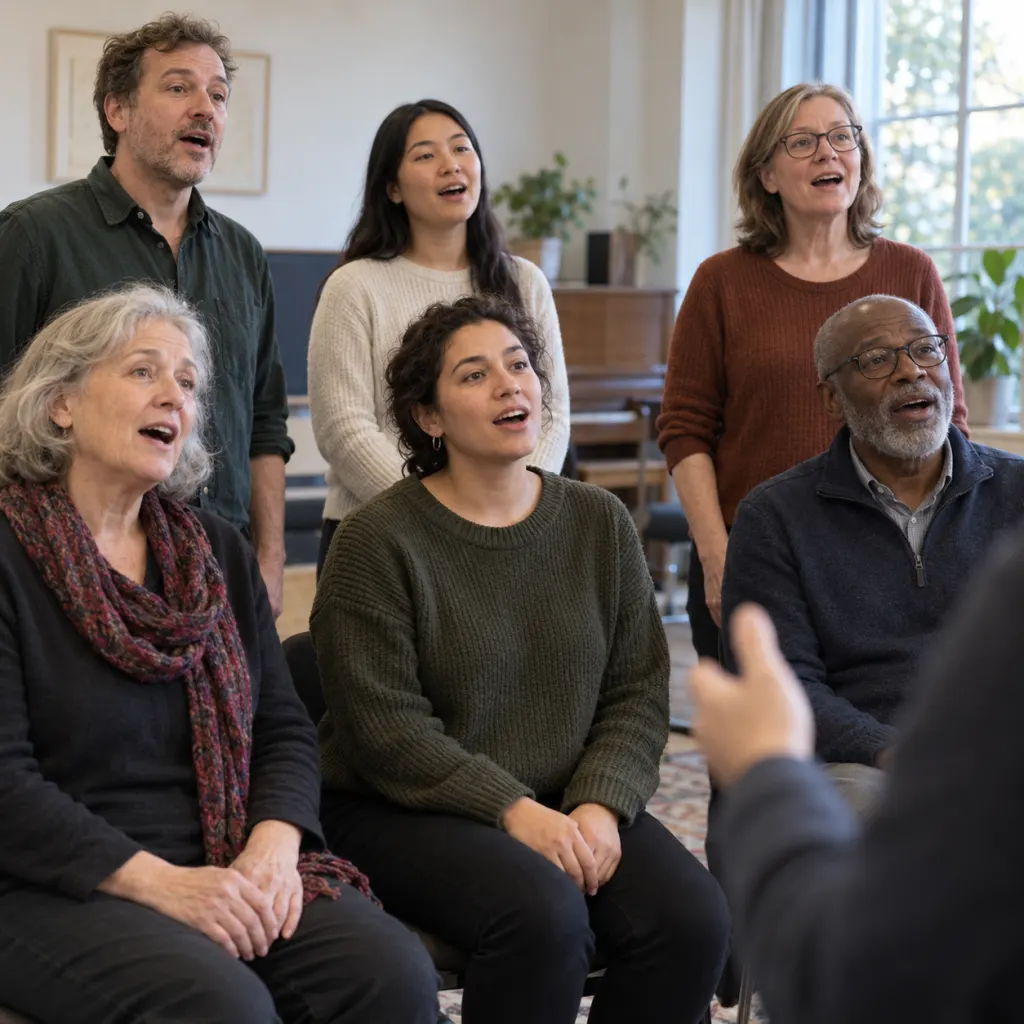
Singing can be an enjoyable way to share an activity and feel connected to other people. Research offers encouraging findings, including a community choir trial in older adults that found improvements in loneliness and interest in life. That supports trying singing as a meaningful leisure activity, while leaving important questions about individual experiences and longer-term outcomes open. The University of California San Francisco research summary describes both the findings and their limits.
You do not need to perform publicly or aim for a polished voice to explore whether singing belongs in your life. A familiar chorus at home, a casual gathering with friends and an organized choir are different experiences. Choosing among them starts with your interests, comfort and circumstances, rather than a promise that one activity will produce a particular emotional result.
Separate enjoyment, mood and lasting connection
These three outcomes overlap, but they answer different questions. Enjoyment concerns whether you like the activity. Mood concerns how you feel at a particular time. Lasting connection concerns relationships and a sense of belonging that continue beyond one session. A pleasant rehearsal can be worthwhile even when it does not lead to close friendships. Equally, a challenging rehearsal might still be part of an activity you value.
When deciding whether to continue, consider the experience in ordinary terms. Did you enjoy any part of the music? Were you able to participate at your own pace? Did someone make room for you? Would you like to return? These questions are more useful for choosing a hobby than expecting every session to leave you cheerful. They also leave space for mixed feelings: pleasure in the music, uncertainty about the group or frustration while learning something unfamiliar.
What the UCL research actually tells us
A UCL-led study reported in 2023 examined data from 93,263 people aged 65 and over across 16 countries. Having a hobby was associated with greater happiness and life satisfaction, alongside fewer depressive symptoms. The researchers also examined changes over time, but the study was observational and could not establish causation. UCL notes that the relationship may work in both directions: wellbeing could influence participation, as well as participation influencing wellbeing. See UCL's account of the research.
This was research on hobbies broadly, rather than a test showing that singing alone produced those outcomes. It provides useful context for valuing enjoyable activities in later life. It cannot establish that joining a choir will produce a particular result, or that singing is a better choice than gardening, reading or another personally meaningful interest.
Direct singing studies offer a more specific picture
The UCSF Community of Voices trial involved 390 older adults at 12 senior centers. Centers were assigned either to begin a choir program immediately or to wait six months. At the six-month comparison, choir participation was associated with improvements in loneliness and interest in life. The research did not find corresponding group differences in the measured cognitive or physical outcomes or healthcare costs. Those distinctions matter: a positive finding in one area does not automatically extend to every other outcome. The project's research page explains the design and results.
The program also had practical features worth noticing. Professional leaders selected music appropriate for a range of abilities and adapted it to the participating communities. This was an organized group experience, rather than simply an instruction to sing more. The UCSF study report describes that setting.
A separate preliminary study published in 2016 followed 193 adults already participating in choirs for people affected by cancer, including patients and carers. Participants reported more positive mood and less stress after one choir rehearsal. However, everyone attended the singing session: there was no comparison group spending the same period doing something else. The findings therefore cannot separate singing from companionship, expectations, the passage of time or other features of the rehearsal. The original research paper is useful evidence about an immediate experience, with substantial limits on broader conclusions.
Existing choir members may also differ from people who dislike singing or have never joined a group. Results from that setting should not become a requirement that everyone sing, or an expectation that a newcomer will have the same response.
Research summaries also vary in scope. The World Health Organization published a 2019 scoping review on the arts, health and wellbeing. Its subject is the broader arts field. A reference to that review is not, by itself, evidence for a particular claim about a choir or an individual singer. When reading an appealing headline, look for the actual activity, participants, comparison and follow-up period behind it.
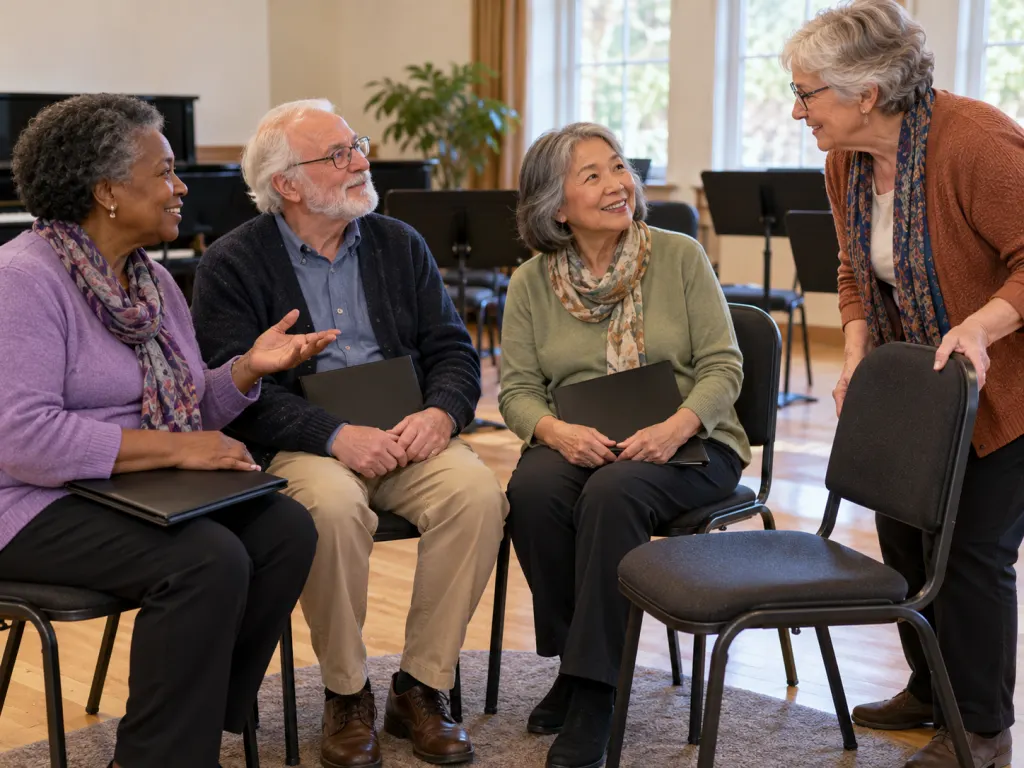
A shared activity can give conversation somewhere to begin
A singing group provides an obvious shared task: learning and making music together. That creates practical opportunities for interaction. You can ask which verse comes next, share a folder or discuss a song during a break. For someone who dislikes arriving at a gathering with nothing to talk about, that structure may be appealing. This is a reason to consider the format, rather than a guarantee about how you will feel.
Shared participation and personal friendship are still different things. If you want to know people beyond rehearsals, leave room for ordinary conversation. Learn a name, introduce yourself to someone new or ask whether the group gathers afterward. Respect a person's preference to arrive, sing and leave. Our article on how your place at the table changes connection offers another everyday setting in which to consider opportunities for conversation.
Choose a group by its atmosphere and practical fit
The word choir covers many arrangements. Some groups prepare demanding performances; others emphasize participation and familiar songs. Neither description tells you whether the group suits your current interests. Before committing, ask the organizer what a normal session involves and whether you can attend once before deciding.
- Entry expectations: Are auditions required? Can beginners join? Is reading music expected?
- Participation: Can members sit, take breaks or listen during part of a session?
- Music: What styles and languages are included? Can members suggest songs?
- Commitment: Are performances optional? What attendance is expected?
- Cost and access: Check fees, transport, building access and the time you would get home.
- Welcome: Ask who helps newcomers find their place during the first rehearsal.
A group that fits your calendar and budget is easier to consider on its actual merits. Clear expectations also help you distinguish ordinary unfamiliarity from a mismatch. You might enjoy a demanding musical challenge, or prefer an informal gathering where getting every note right matters less. Either preference is reasonable.
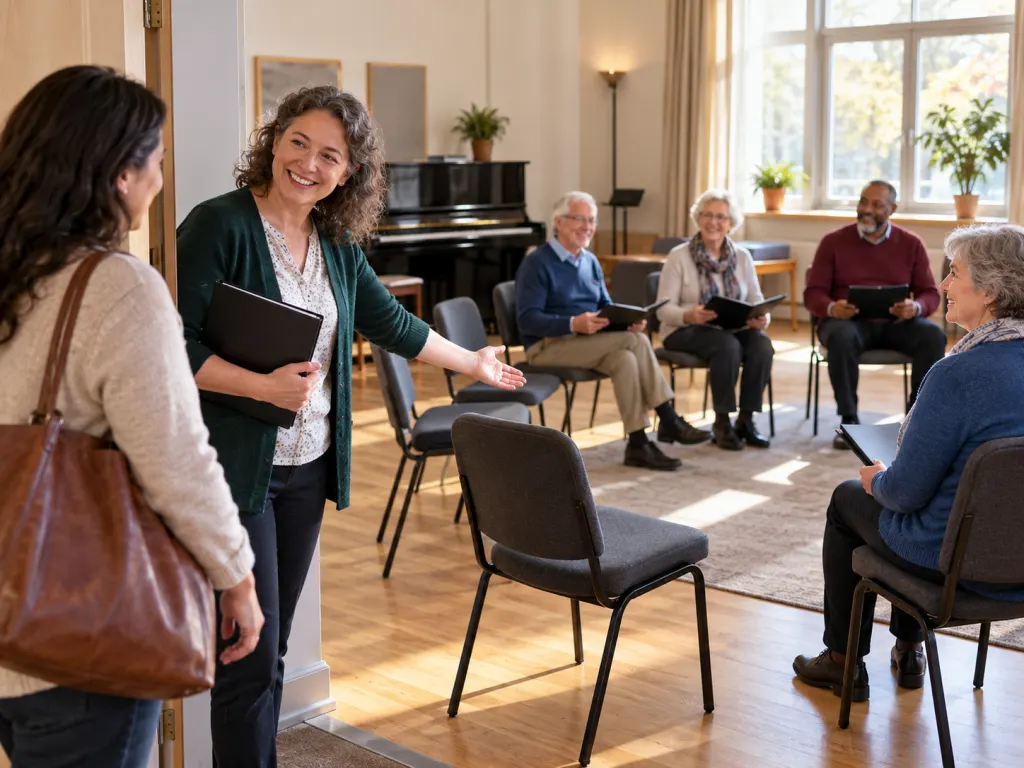
Singing alone is a different, equally valid starting point
You may want music without a new social commitment. In that case, choose a familiar song and a private setting where you feel at ease. Sing a chorus, follow part of a recording or simply listen before deciding whether to join in. There is no need to record yourself, compare your voice with the original performer or turn a leisure activity into a project.
Keep expectations specific. Singing at home can be an opportunity for enjoyment, but it does not recreate the interpersonal experience of an in-person choir. If companionship is what you want, consider inviting a friend to share songs or looking for a small local gathering. If privacy is what you want, solo singing may fit better. The useful question is which experience you are seeking, rather than which version sounds more impressive.
Song choice is personal, too. You can prefer a reflective song to a cheerful one, change tracks halfway through or decide that silence suits you better that day. Participation remains a choice.
Keep voice use comfortable
The US National Institute on Deafness and Other Communication Disorders advises avoiding singing when your voice is hoarse or tired, resting your voice and avoiding extremes of range and volume. Its voice-care guidance also recommends water and avoiding attempts to compete with background noise.
In practice, choose songs that sit comfortably within your range and lower the backing track if it makes you push to hear yourself. Leave difficult notes out. Take a break when your voice feels tired, and stop if singing feels painful or forced. Completing the song is optional.
If hoarseness, discomfort or effortful speaking persists or recurs, ask a doctor about it rather than repeatedly testing your voice. NIDCD identifies these as reasons to seek an assessment. For an everyday singing session, the aim is comfortable participation, not proving how high, loud or long you can sing.
Make room for different ways of participating
A useful invitation explains what someone can expect and gives them room to decline. Instead of promising that a reluctant friend will feel better, describe the actual gathering: the music, the length of the session, the seating and whether visitors can listen. Ask what would make joining easier without assuming you know why they are hesitant.
Organizers can make expectations visible through simple choices: introduce newcomers, explain unfamiliar terms, offer a seat and ask permission before taking photographs or sharing recordings. Ask participants about access needs rather than guessing. These are practical hosting suggestions, not a formula for producing a particular emotional outcome.
For families, the same approach applies to informal singing. Someone may enjoy choosing the next song or listening without singing. Avoid making participation a test of enthusiasm or closeness. Our discussion of social habits in older age provides a related starting point for thinking about everyday interactions.

Judge the experience by what matters to you
After trying a session, separate the parts of the experience. Perhaps you liked the songs but found the room too loud. Perhaps the people were welcoming but the travel was difficult. Perhaps you enjoyed singing alone and discovered that rehearsals were more commitment than you wanted. Each observation points toward a practical choice: ask about another seat, try another group or keep singing at home.
You can also distinguish musical goals from social ones. Learning harmonies, enjoying familiar music and meeting neighbors are different reasons to attend. A group may serve one purpose well and another less well. If your main aim is conversation, a rehearsal with little time to talk may be less suitable than an informal gathering.
A disappointing experience is information about that occasion or setting. You do not need to interpret it as a verdict on your voice or your ability to connect with people. Continuing, changing the format and choosing another interest are all available decisions.
Wrap-Up
Singing is worth considering when the music or the shared activity appeals to you. Research offers encouraging findings for some aspects of mood and connection, while the size, design and setting of each study limit what can be concluded. Start with an experience that fits your interests, keep your voice comfortable and pay attention to the atmosphere as well as the songs. Enjoyment and a welcome place to return are useful outcomes in their own right.
Frequently Asked Questions
- → Do I need a good singing voice to join a choir?
Requirements vary. Some choirs audition members, while others welcome beginners. Ask whether you need to read music, prepare anything or sing alone during an assessment. A participation-focused group may suit someone who wants shared music without performance expectations.
- → Does the large UCL hobbies study prove that singing improves wellbeing?
No. It examined hobbies broadly and found associations with wellbeing among older adults. It did not isolate singing as the cause. Its observational design also leaves uncertainty about the direction of the relationship. See UCL's study summary.
- → How often should I sing?
The research discussed here does not establish a universal schedule for everyday singing. Choose an amount that fits your interest and remains comfortable. Attending a weekly group and occasionally singing at home are different options, rather than targets everyone needs to meet.
- → What if I feel embarrassed during my first group session?
You can ask to observe, attend with a friend or speak to the organizer beforehand. Find out whether newcomers are expected to sing individually. Afterward, consider whether you felt respected and whether you want to return. You are free to try another setting or choose a different activity.
- → Is online singing the same as an in-person choir?
It is a different format. Some online sessions involve singing along while microphones are muted; others include conversation or separate recordings. Ask what the session offers. Findings from an in-person choir should not automatically be applied to every online arrangement.
References
This content was developed and refined using reliable sources.
- https://www.ucl.ac.uk/news/2023/sep/hobbies-linked-lower-depression-levels-among-older-people
- https://cov.ucsf.edu/research
- https://www.ucsf.edu/news/2018/11/412281/community-choirs-reduce-loneliness-and-increase-interest-life-older-adults
- https://pmc.ncbi.nlm.nih.gov/articles/PMC4854222
- https://www.who.int/publications/i/item/what-is-the-evidence-on-the-role-of-the-arts-in-improving-health-and-well-being-a-scoping-review
- https://www.nidcd.nih.gov/health/taking-care-your-voice