 Save
Raw green onions add crisp flavor to salads, tacos, dips, and garnishes, but they should be handled like other fresh produce. Produce can pick up harmful germs from soil, water, storage, or kitchen prep, so careful washing and clean handling matter. This guide walks you through a simple, practical way to prepare green onions for raw eating.
Step 1: Choose fresh, undamaged bunches
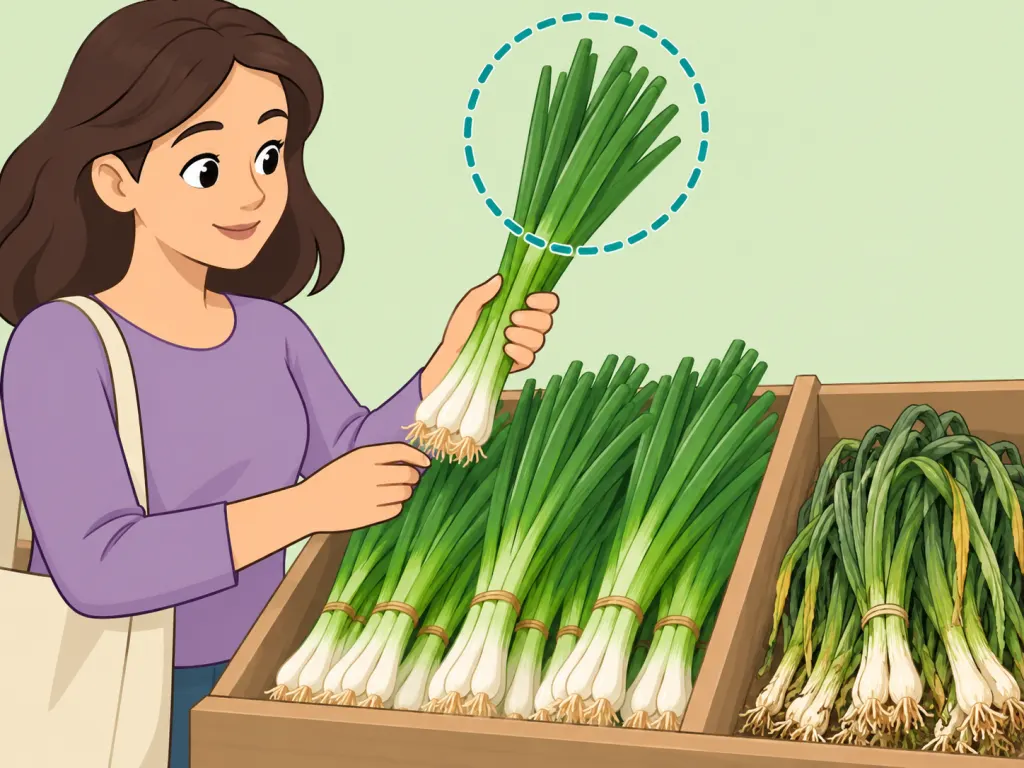
Pick green onions with crisp green tops, firm white bases, and no slimy patches, mold, or strong off smell. The FDA advises choosing produce that is not bruised or damaged because damaged areas can make safe handling harder. Bag fresh produce separately from raw meat, poultry, and seafood on the way home, as recommended in the FDA’s produce safety guidance.
Step 2: Refrigerate them until you are ready to prep
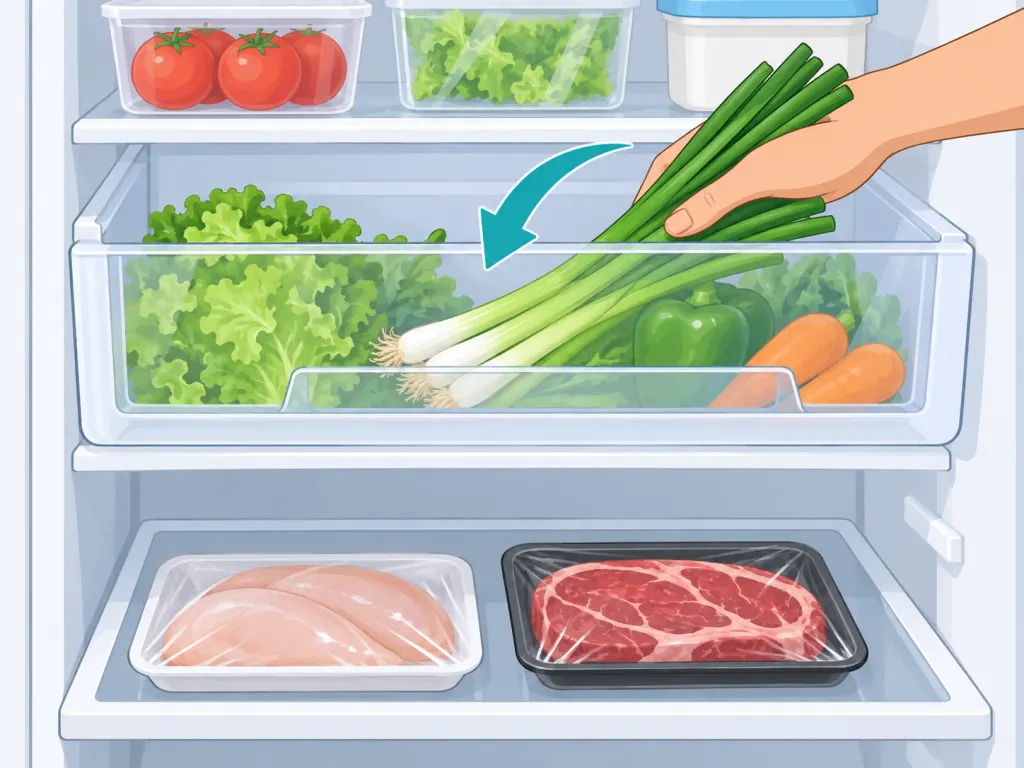
Store green onions in a clean refrigerator, ideally in a loose bag or container that keeps them from drying out. FDA guidance says perishable fresh produce should be kept at 40°F or below, and the CDC also recommends keeping the refrigerator at 40°F or below for food safety. Keep them away from raw meat, poultry, seafood, and eggs so juices cannot drip onto food you plan to eat raw.
Step 3: Wash your hands and prep surfaces first
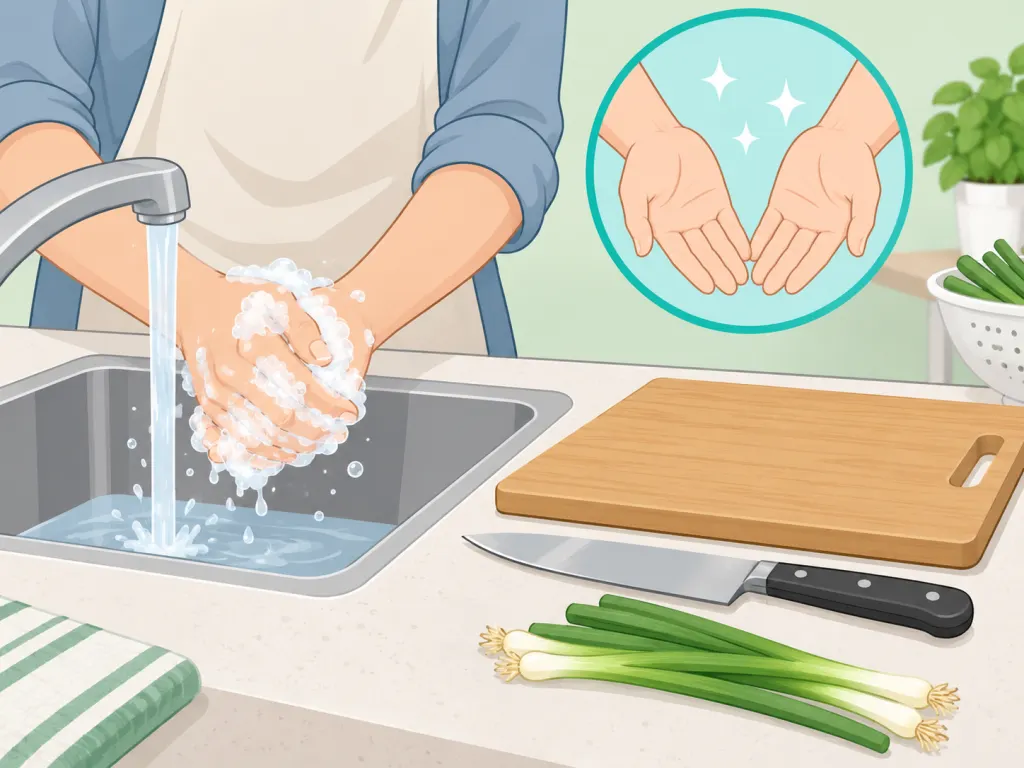
Before handling green onions, wash your hands with soap and water for at least 20 seconds. Clean the cutting board, knife, sink area, and counter if they have been used for other foods. The CDC’s basic food safety steps include cleaning hands and surfaces and separating raw foods from ready-to-eat foods.
Step 4: Rinse each stalk under running water
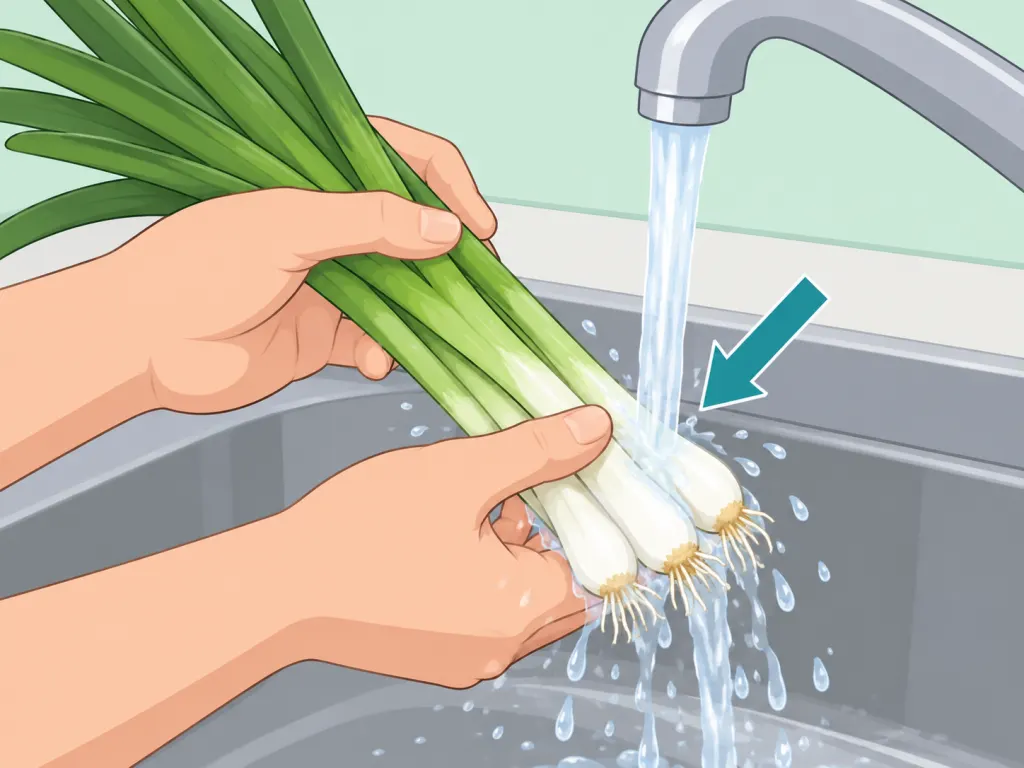
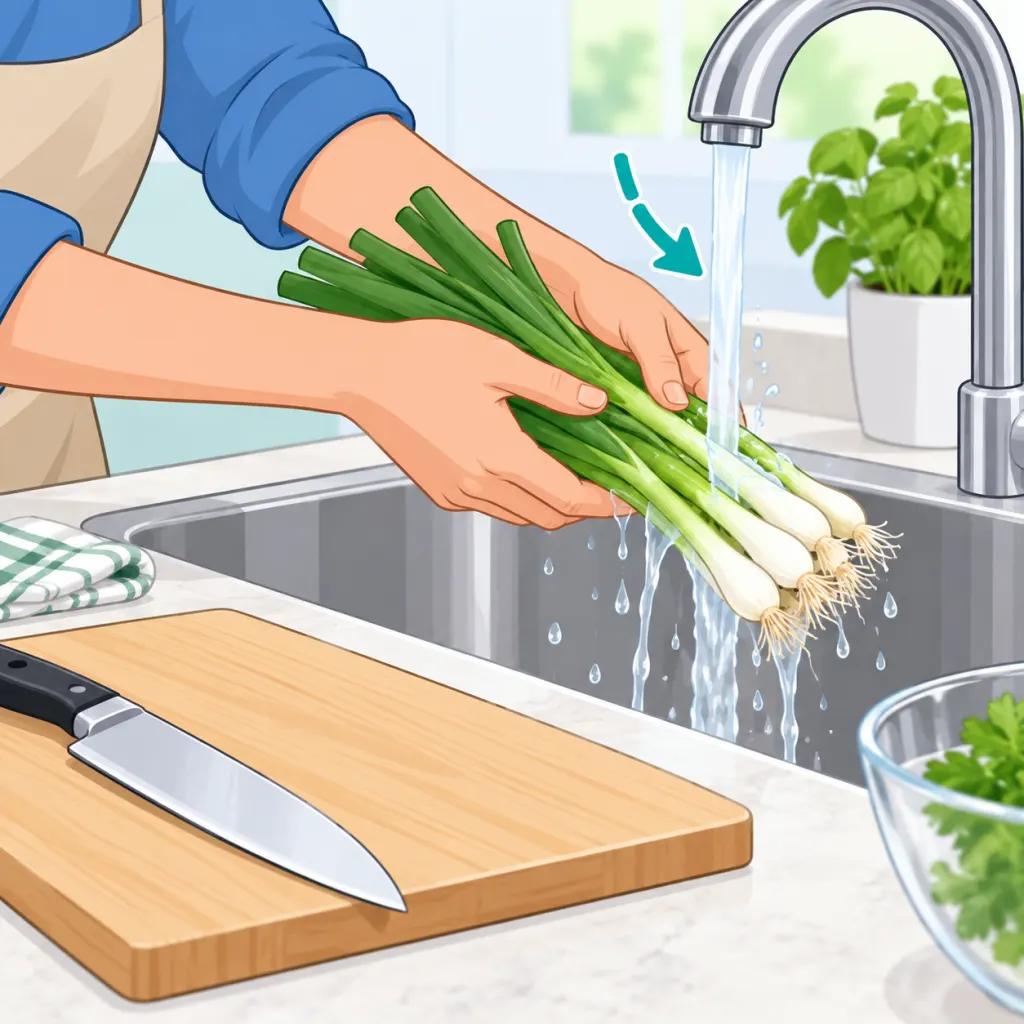
Hold the green onions under cool running water and gently rub along the white bases, green tops, and folds where grit can cling. FDA cleaning advice says to rub produce under plain running water and dry it with a clean towel afterward. Do not soak a dirty bunch in a bowl and reuse the water, since loosened grit can stay in the water.
Place the rinsed onions on a clean board, then cut off the root ends. Peel away any wilted, slimy, bruised, or discolored outer layer before using the onion raw. The FDA recommends cutting away damaged or bruised areas and throwing away produce that looks rotten.
Step 6: Dry and slice with clean tools
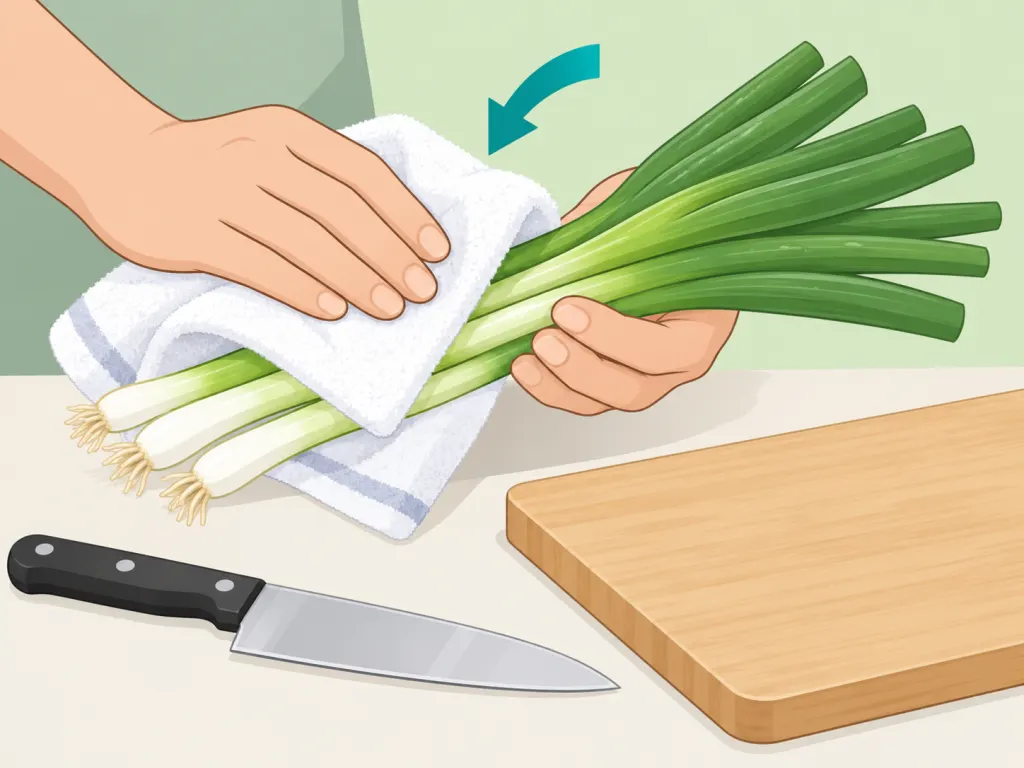
Pat the onions dry with a clean paper towel or kitchen towel before slicing. Drying removes extra surface moisture and helps the pieces stay crisp. Use a knife and cutting board reserved for produce, or wash them with hot, soapy water first, following the FDA’s clean and separate food handling advice.
Step 7: Serve them promptly or chill leftovers
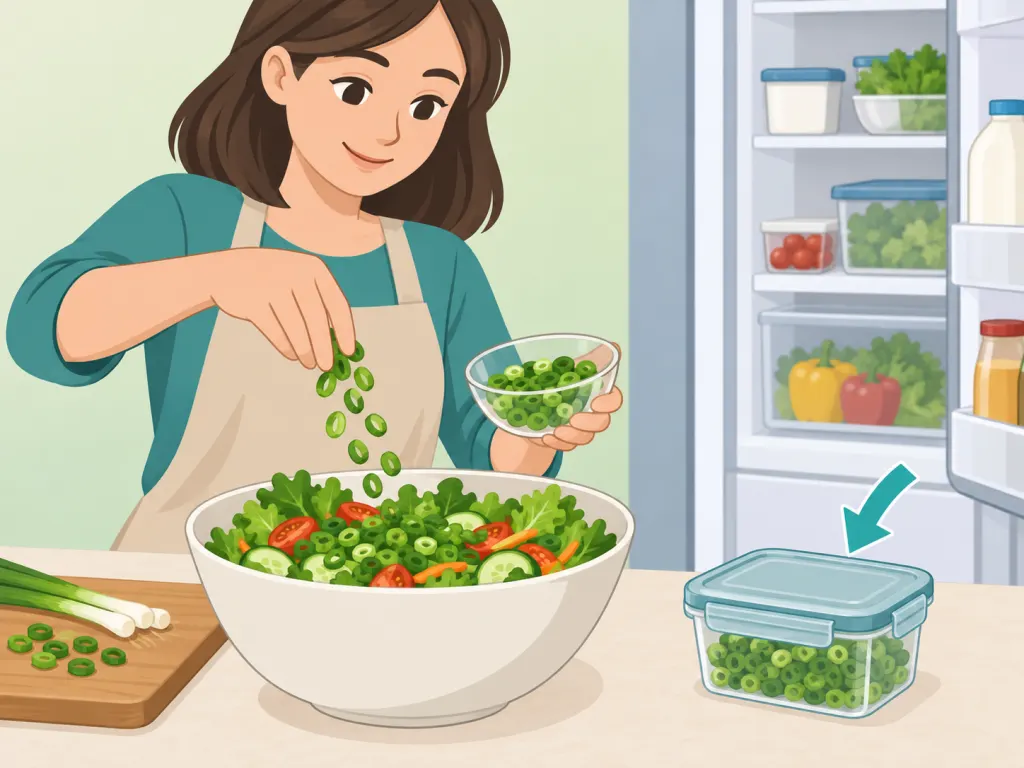
Add sliced green onions to the dish shortly before serving so they stay crisp and spend less time at room temperature. Refrigerate cut green onions or dishes containing them within 2 hours, or within 1 hour above 90°F, following the CDC’s chill guidance for perishable foods. Store leftovers in a clean, covered container.
Step 8: Call a doctor for severe symptoms

If someone develops severe symptoms after eating, get medical help rather than trying to judge it at home. The CDC says to see a doctor for warning signs such as bloody diarrhea, diarrhea lasting more than 3 days, fever over 102°F, frequent vomiting, or signs of dehydration. You can review the CDC’s food poisoning symptom guidance for more detail.
Wrap-Up
The bottom line: raw green onions are safest when they start fresh, stay cold, get rinsed under running water, and are cut on clean surfaces away from raw meat, poultry, seafood, and eggs. If the onions look slimy, smell off, or have been left out too long after cutting, throw them away.
Frequently Asked Questions
- → Can you eat raw green onions?
- Yes. Green onions can be eaten raw when they are fresh, washed under running water, trimmed, and handled with clean hands, knives, and cutting boards.
- → Should you wash green onions before cutting them?
- Yes. Rinse them before cutting so dirt and germs on the outside are less likely to be dragged through the onion by the knife.
- → Do you need soap or vinegar to clean green onions?
- No. Use plain running water and gentle rubbing. Soap, detergent, bleach, and produce washes are not recommended for fresh produce.
- → Which parts of a green onion can you eat raw?
- The white base and green tops are both edible. Trim off the root end, remove any wilted or damaged outer layer, and use the crisp parts.
- → How long can cut green onions sit out?
- Treat cut green onions as perishable. Refrigerate them within 2 hours, or within 1 hour if the room or outdoor temperature is above 90°F.
- → What if my green onions feel slimy?
- Throw them away. A slimy texture, sour smell, mold, or badly wilted leaves are signs that the bunch is no longer good for raw eating.
References
This content was developed and refined using reliable sources.
- https://www.fda.gov/food/buy-store-serve-safe-food/selecting-and-serving-produce-safely
- https://www.fda.gov/consumers/consumer-updates/7-tips-cleaning-fruits-vegetables
- https://www.fda.gov/food/buy-store-serve-safe-food/safe-food-handling
- https://www.cdc.gov/food-safety/prevention/index.html
- https://www.cdc.gov/food-safety/signs-symptoms/?CDC_AAref_Val=https%3A%2F%2Fwww.cdc.gov%2Ffoodsafety%2Fsymptoms.html