 Save
Baked cod with cream and vegetables is a gentle, one-dish dinner built around mild fish, thin-cut vegetables, and a simple sauce. This guide shows you how to prepare it safely, bake it without drying out the fish, and handle leftovers with care. Use a food thermometer when you can, especially with thick fillets.
Step 1: Choose and thaw the cod safely
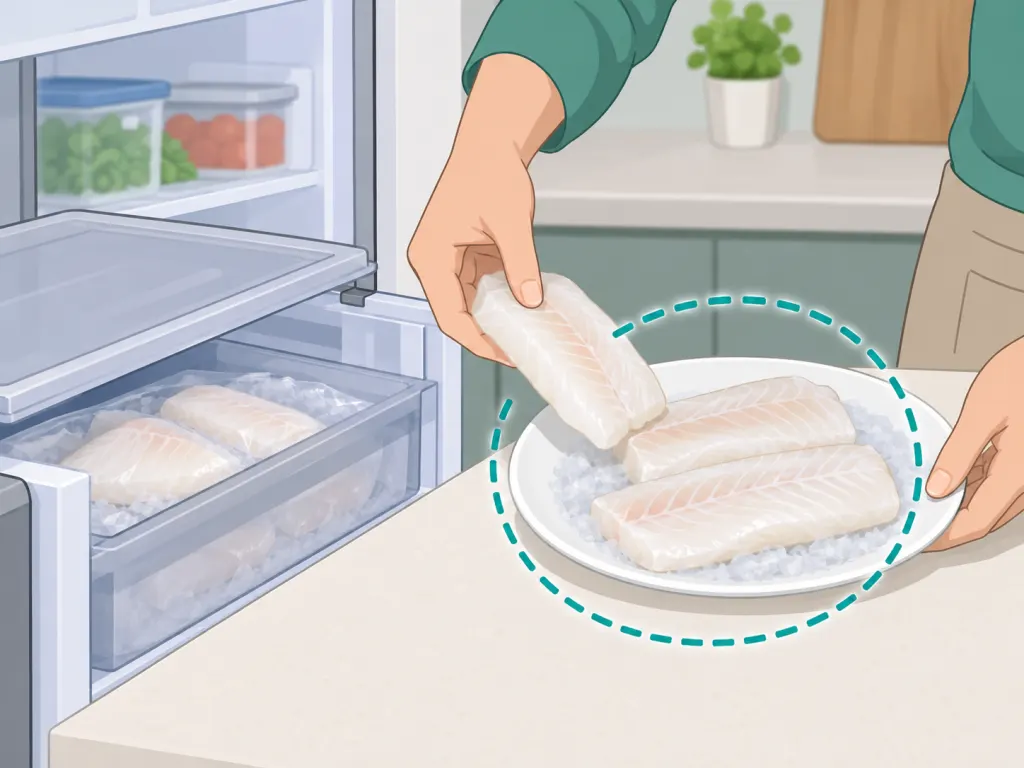
Use cod fillets that smell fresh and mild, with no sour, rancid, or ammonia-like odor; the FDA's seafood guidance recommends buying fish that is refrigerated, iced, or still solidly frozen. If the cod is frozen, thaw it overnight in the refrigerator, or use the FDA's cold-water quick-thaw method only if you will cook it right away. Pat the fillets dry before seasoning so the cream sauce stays smooth instead of thin.
Step 2: Wash up and slice the vegetables thinly
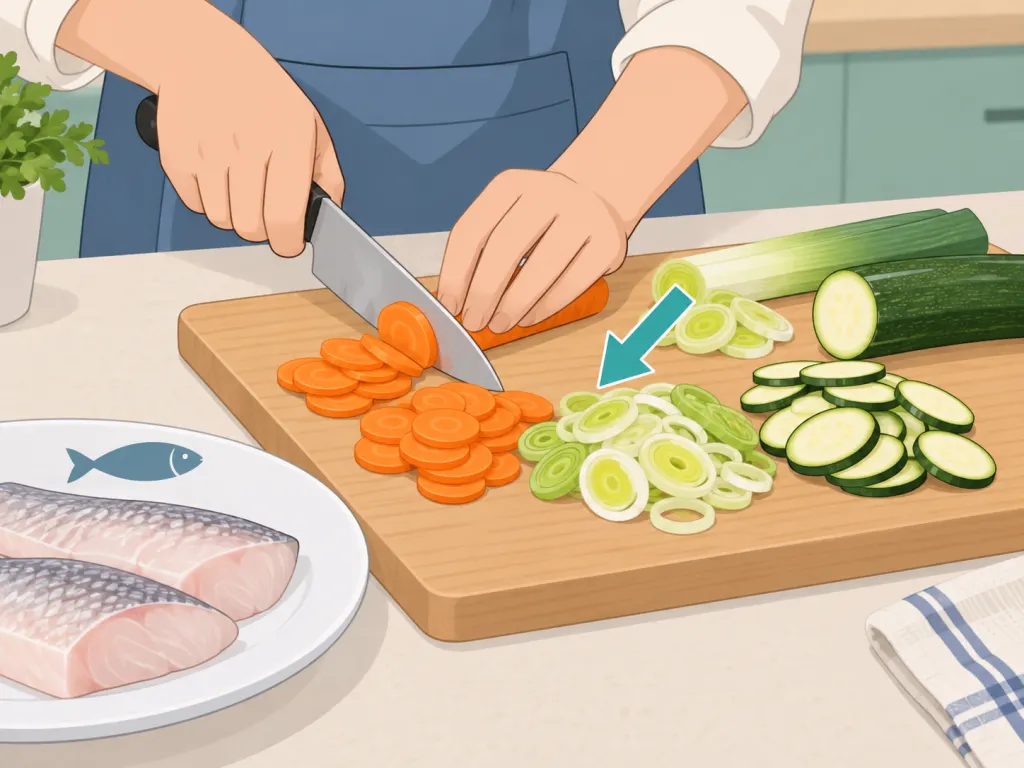
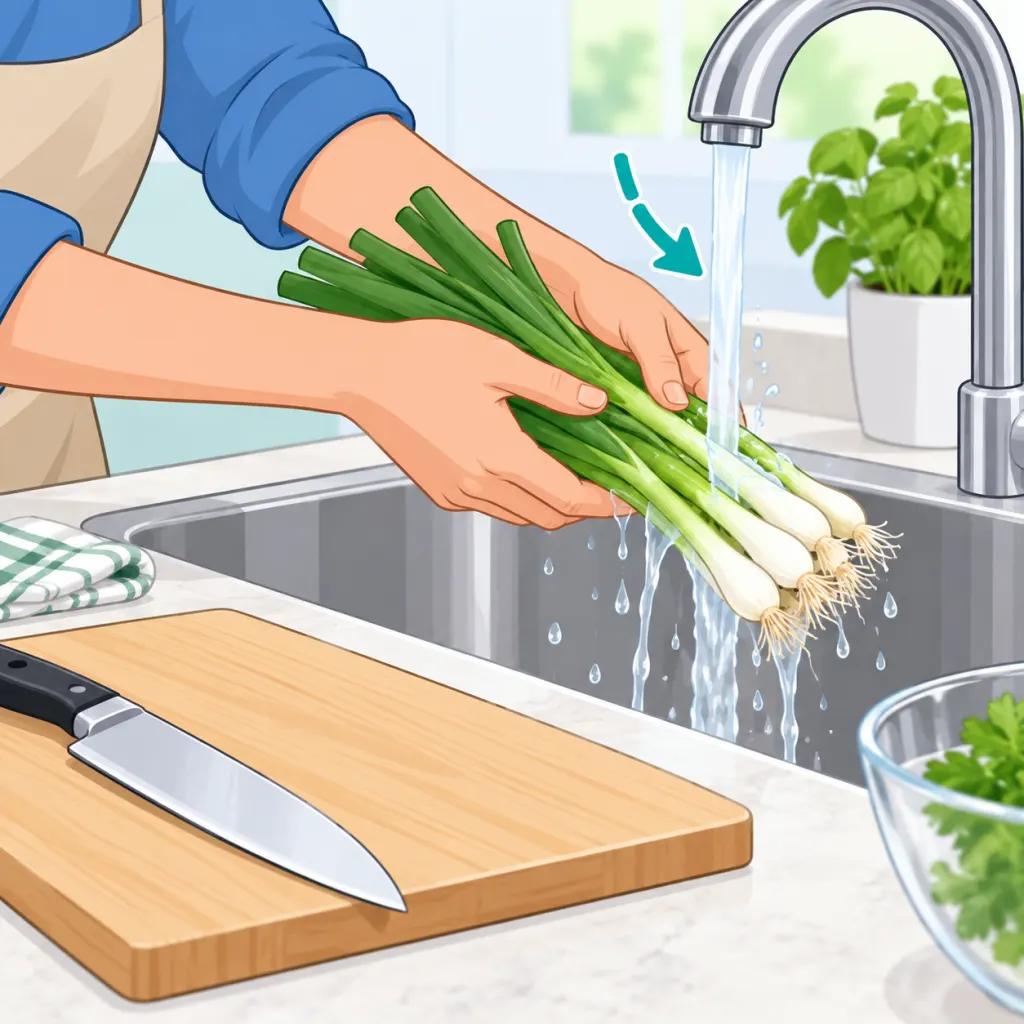
Wash your hands before handling food, then rinse the vegetables under running water and dry them with a clean towel. FoodSafety.gov advises keeping hands, utensils, and surfaces clean and using separate boards or plates for raw seafood and ready-to-eat foods as part of the basic food safety steps. Slice carrots, leeks, zucchini, or peppers thinly so they can soften in the same time the fish takes to bake.
Step 3: Heat the oven and prepare the baking dish
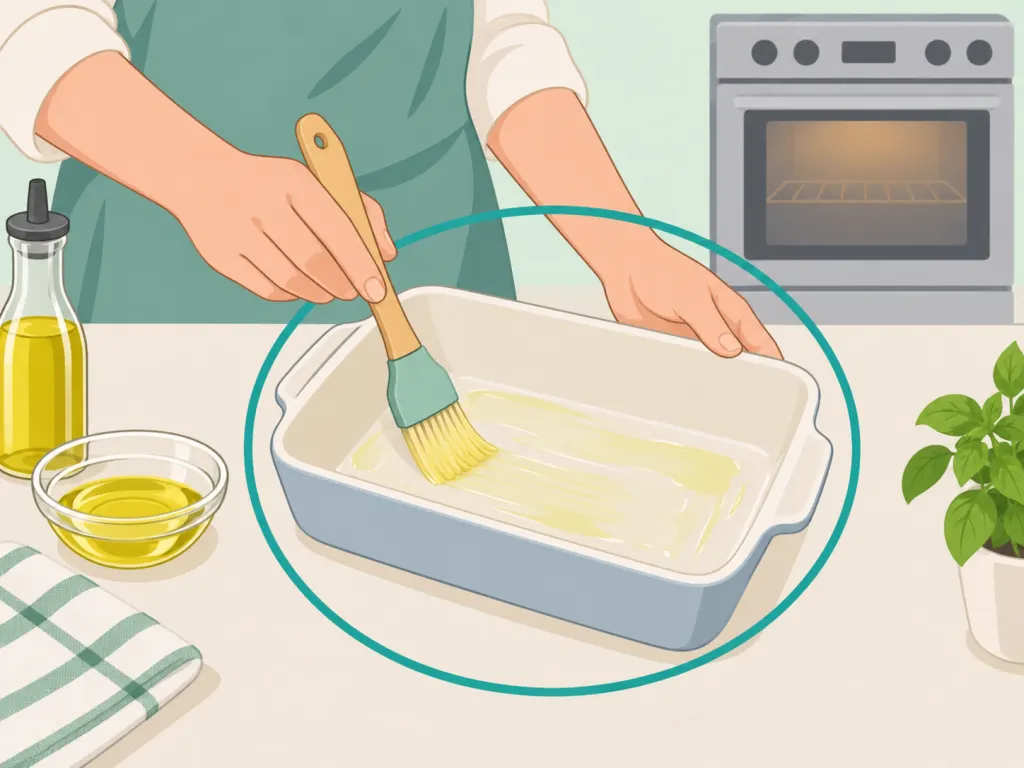
Set the oven to 400°F and lightly coat a medium baking dish with butter or olive oil. A dish that holds the fish in one layer gives the cod room to cook evenly and lets the sauce bubble around the vegetables. Keep the cod refrigerated until you are ready to layer it into the dish.
Step 4: Layer the vegetables and cod
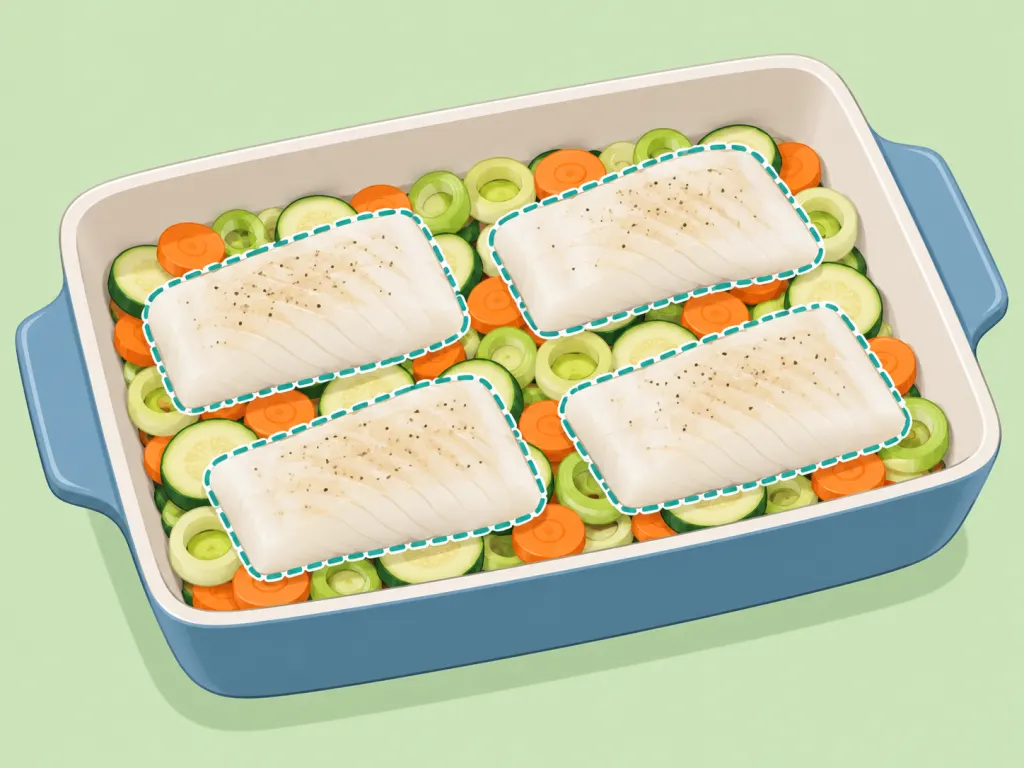
Spread the sliced vegetables in the bottom of the dish, then place the cod fillets on top in a single layer. Season the fish with salt, pepper, minced garlic, and a mild herb such as thyme, dill, or parsley. Leave a little space between fillets when possible so the heat and sauce can move evenly around them.
Whisk about 1 cup of cream with 1/2 cup of broth, 1 tablespoon of lemon juice, and 1 teaspoon of Dijon mustard if you like a slightly sharper flavor. Pour the sauce around and lightly over the cod rather than drowning the fish completely. If your broth is salty, season the sauce gently and adjust at the table.
Step 6: Bake until the cod is fully cooked
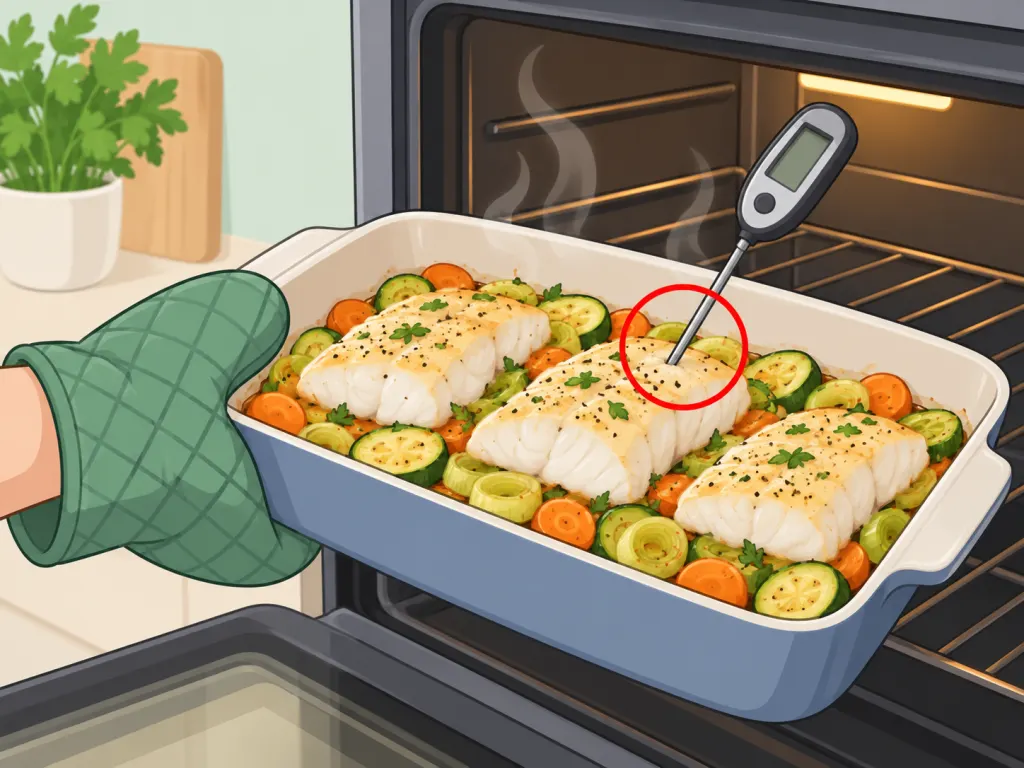
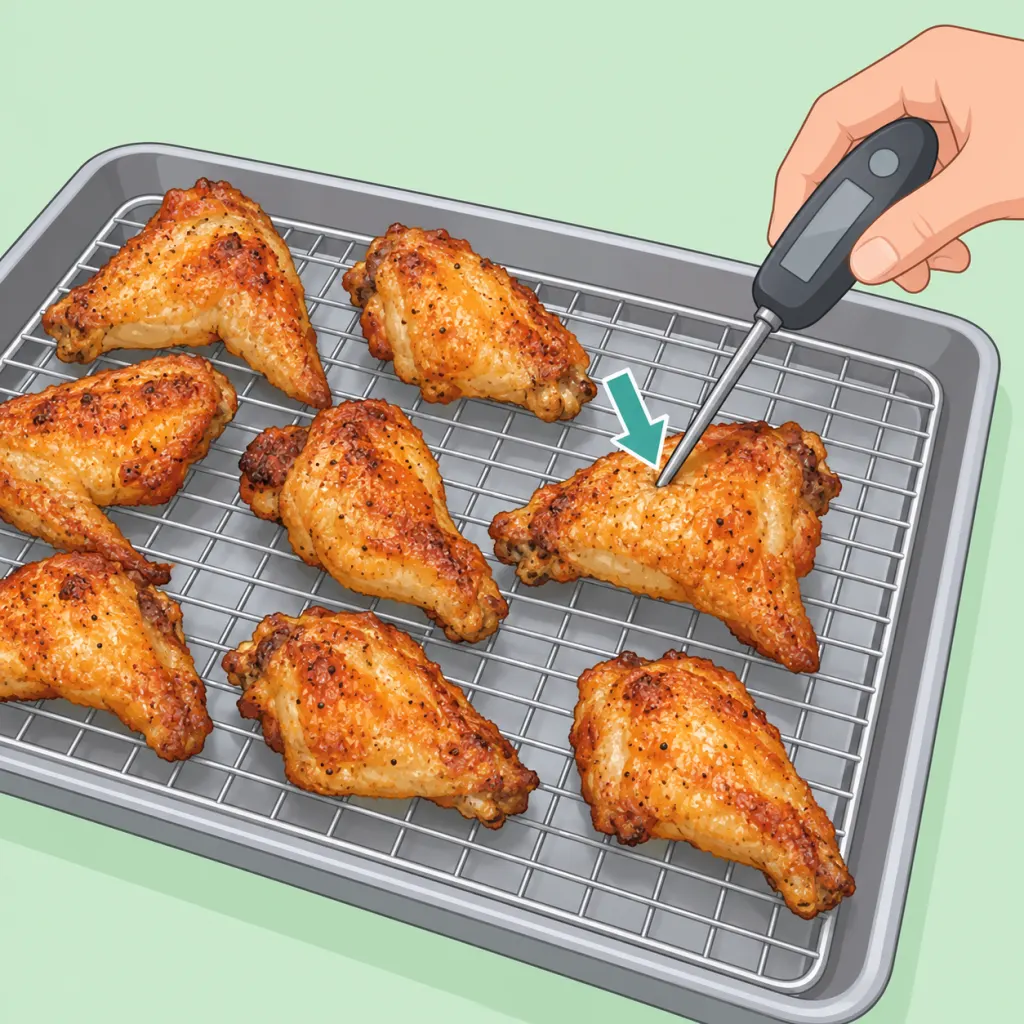
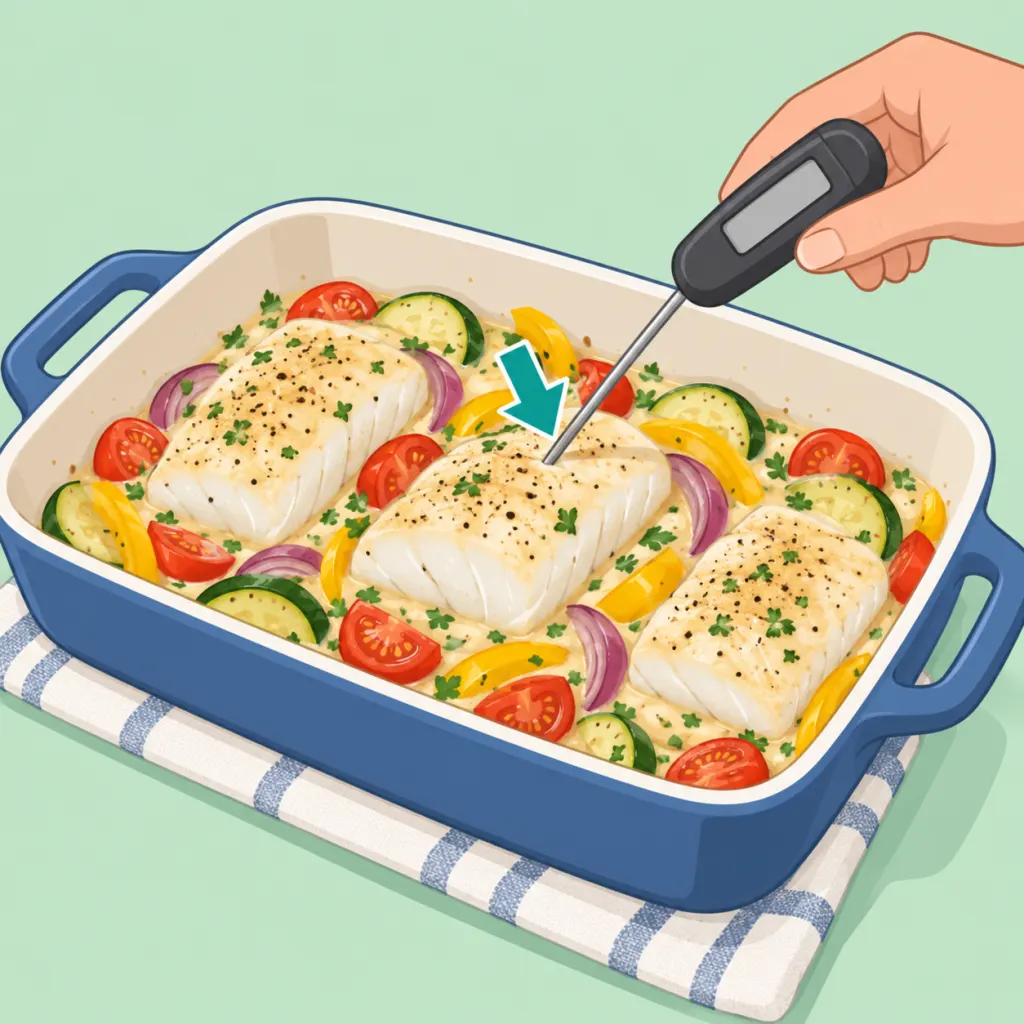
Bake the dish for about 15 to 22 minutes, depending on the thickness of the fillets. Check the thickest part with a food thermometer; FoodSafety.gov lists 145°F as the safe internal temperature for cod and other fish. If you do not have a thermometer, the fish should be opaque and separate easily with a fork.
Step 7: Rest, garnish, and serve promptly
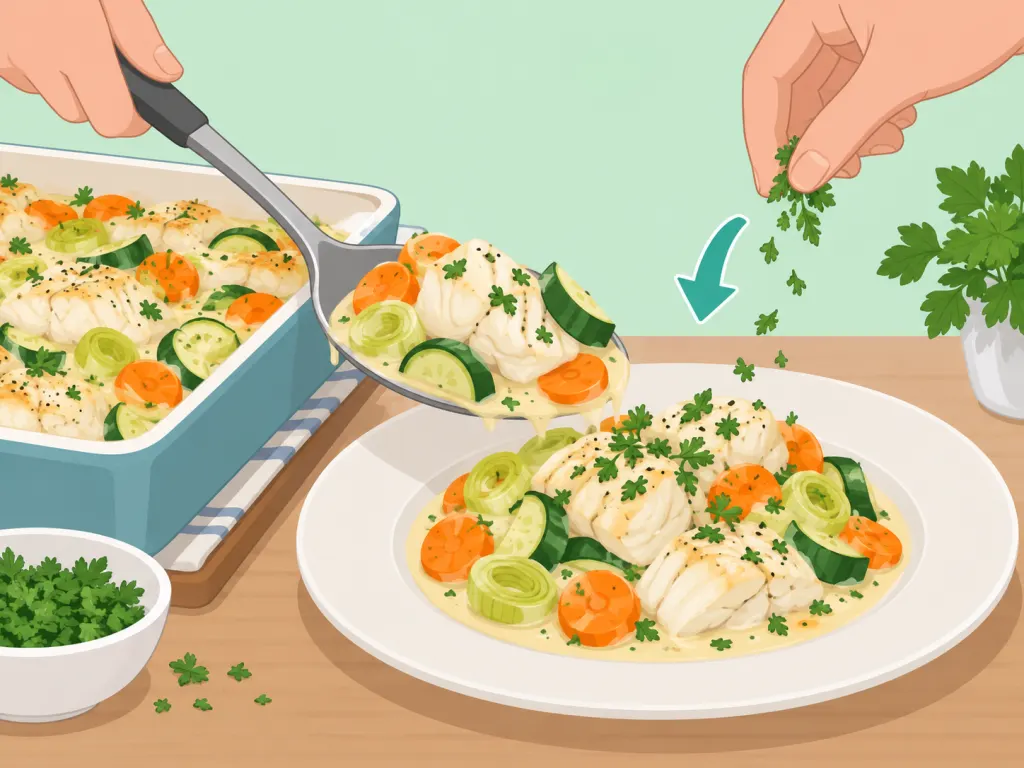
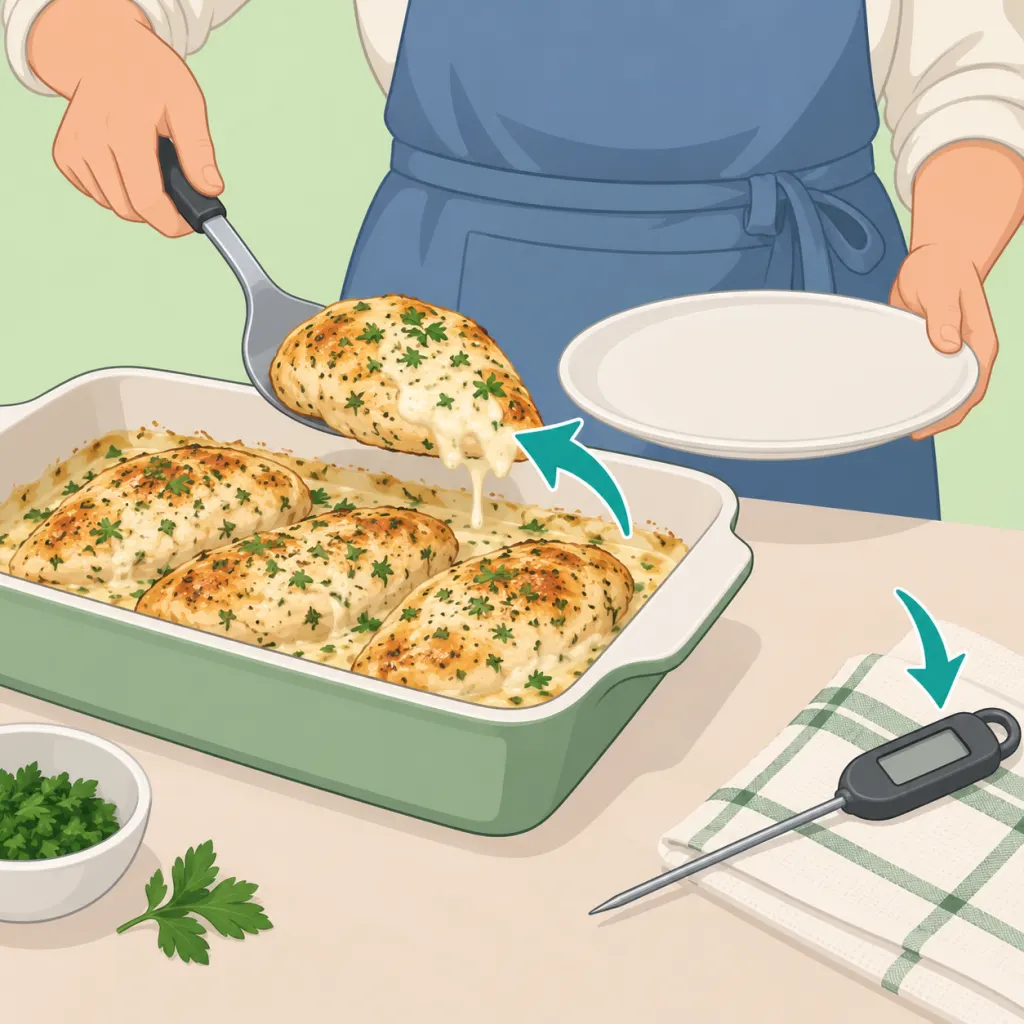
Let the baking dish stand for 3 to 5 minutes so the sauce settles slightly. Spoon vegetables and sauce over each portion, then add chopped parsley, dill, or a small squeeze of lemon. Serve the cod with potatoes, rice, or bread while it is still hot.
Step 8: Cool and refrigerate leftovers quickly

Move leftovers into shallow containers and refrigerate them within 2 hours, or within 1 hour if the room is hotter than 90°F; FoodSafety.gov explains that perishable foods should stay out of the 40°F to 140°F temperature range as much as possible. The cold storage chart lists most cooked leftovers for 3 to 4 days in the refrigerator. Reheat leftovers gently until hot throughout, knowing the fish may be softer the second time.
Step 9: Seek medical help for serious symptoms
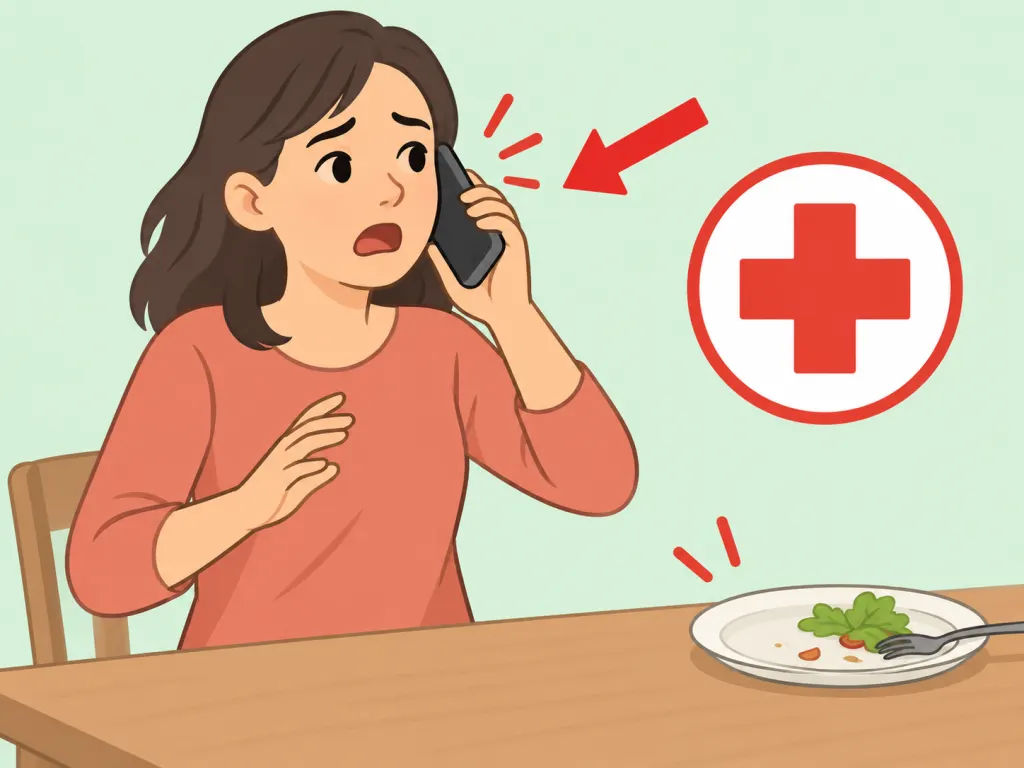
If someone develops severe symptoms after eating, contact a doctor or local emergency service. The CDC advises medical help for serious food poisoning symptoms such as bloody diarrhea, diarrhea lasting more than 3 days, fever over 102°F, repeated vomiting, or signs of dehydration. For a serious allergic reaction, seek urgent medical help right away.
Wrap-Up
The bottom line: keep the cod cold until prep, cut the vegetables thin, use a moderate oven, and check the thickest part of the fish for safe doneness. Serve it soon after baking, then chill leftovers promptly.
Frequently Asked Questions
- → Can I use frozen cod for this dish?
Yes. Thaw it in the refrigerator, then pat it dry before baking so the sauce does not become watery. The FDA also gives quick-thaw options for seafood that will be cooked right away.
- → What vegetables work best with creamy baked cod?
Thinly sliced leeks, carrots, zucchini, cherry tomatoes, spinach, and bell pepper all work well. Firmer vegetables should be sliced thin so they soften during the fish's short baking time.
- → How do I know when baked cod is done?
The safest check is a food thermometer in the thickest part of the fillet. FoodSafety.gov lists 145°F for fish, or flesh that is no longer translucent and separates easily with a fork.
- → Can I replace the cream?
You can use half-and-half, cooking cream, lactose-free cream, or an unsweetened dairy-free cooking cream if it suits your needs. Check labels carefully because fish and milk are major food allergens.
- → Why did my sauce turn watery?
The cod may have been partly frozen, very wet, or packed tightly in the dish. Thaw frozen fish fully, pat it dry, and avoid overcrowding so extra liquid can evaporate during baking.
- → How long can I keep leftovers?
Refrigerate leftovers promptly in a shallow container. FoodSafety.gov storage charts list most cooked leftovers for 3 to 4 days in a refrigerator at 40°F or below.
References
This content was developed and refined using reliable sources.
- https://www.fda.gov/food/buy-store-serve-safe-food/selecting-and-serving-fresh-and-frozen-seafood-safely
- https://www.foodsafety.gov/keep-food-safe/4-steps-to-food-safety
- https://www.foodsafety.gov/food-safety-charts/safe-minimum-internal-temperatures
- https://www.foodsafety.gov/food-safety-charts/cold-food-storage-charts
- https://www.fda.gov/food/buy-store-serve-safe-food/food-allergies-what-you-need-know
- https://www.cdc.gov/food-safety/signs-symptoms/index.html