 Save
There is no single, proven explanation for why a pair of shoes ends up dangling from a power line. Despite how often the sight turns up, on quiet suburban streets, dense city blocks, and rural highways alike, no folklorist, utility company, or historian has ever traced the practice, sometimes nicknamed "shoefiti," back to one confirmed origin. Instead, several explanations circulate side by side: a rite-of-passage tradition, a marker of neighborhood territory, a form of bullying, a memorial, or simply bored kids having fun with an old pair of sneakers. None of these theories has been documented well enough to rule out the others, and the most likely answer is that the meaning changes from one town, or even one block, to the next. What is documented, and matters more than any theory, is that power lines carry live current and that interfering with them, whether by throwing shoes, climbing a pole, or trying to retrieve something already up there, is genuinely dangerous.
Where This Custom Actually Comes From
The image is familiar enough that it has become a kind of shorthand in photography, social media captions, and local news filler pieces: two shoes, laces knotted together, slung over a cable and swinging in the wind. Reporters and bloggers have tried for decades to pin down where the custom started, and the honest answer researchers keep landing on is that it likely has many independent starting points rather than one. The practice has been observed in American cities since at least the 1960s and 1970s, and similar shoe-covered wires, poles, and trees have been reported in other countries as well, though the meaning people attach to it shifts with local culture.
Because nobody organizes or documents the tradition, it spreads the way a lot of informal customs do: through imitation. Once one pair of shoes appears on a stretch of wire, more tend to follow, the same way graffiti tags accumulate once a wall has the first one. That pattern is one reason many people who study everyday customs treat shoefiti less as a coded message and more as a self-perpetuating habit, a visible target that invites the next pair of shoes regardless of what the first pair meant.

Coming-of-Age and Celebration Theories
One of the oldest explanations ties the custom to milestones. A commonly repeated story holds that soldiers threw their boots over wires or fences after finishing basic training or completing service, treating the toss as a small, physical way of closing one chapter and starting another. A similar logic shows up in stories about high school seniors tossing sneakers after graduation, or friends marking a birthday, a move, or another life change by getting rid of a worn-out pair together instead of individually. None of these accounts come with hard documentation, since no service branch or school district tracks the custom, but they share a common thread: shoes, once outgrown or worn out, become a stand-in for a version of yourself you're leaving behind.
- Finishing military basic training or a tour of service
- Graduating high school or college
- Marking a first job, a breakup, or a move away from home
- Celebrating a sports win or a team tradition
Neighborhood Identity, Memorials, and Warning Theories
The theory that gets repeated most often in news coverage is also the one with the least supporting evidence: that shoes on a wire mark a gang's territory, flag a house where drugs are sold, or warn rival groups to stay away. This idea has circulated for decades and shows up almost every time a city debates removing the shoes. It has never been substantiated with data connecting shoe locations to documented gang boundaries or drug activity. A related, gentler version of the theory holds that shoes mark a memorial, a way for friends to mark a spot tied to someone who died, with no territorial or criminal intent at all.

Bullying, Boredom, and the Simplest Explanation
Bullying is another theory with real-world examples behind it, but probably not the dominant one. Most people who grew up in neighborhoods where shoefiti is common describe it less as an act of cruelty and more as restless fun: a pair of old shoes, a free afternoon, and a dare to see who can get them to stick on the first throw. That mundane explanation tends to hold up better than the more dramatic ones simply because it requires the least evidence and fits the ordinary texture of how bored teenagers actually spend time. It also explains why the custom clusters in some neighborhoods and not others, since it depends less on any organized meaning than on whether a few kids started the habit and others copied it.
Why Researchers Are Skeptical of the Darker Theories
People who study neighborhood life and informal customs generally treat the criminal-marker theories with skepticism, for a practical reason: publicly marking the exact location of an illegal drug sale or a gang boundary would draw police attention rather than avoid it. Wherever the practice has been examined closely, the number of shoe-covered wires in a given city consistently outnumbers any plausible count of active drug houses or gang boundary lines, which suggests most of what people are seeing is imitation and play rather than a coded map of anything.
Why Power Lines Are Genuinely Dangerous, Whatever the Reason
Whatever explanation feels most convincing, the practical safety facts don't change. Power lines are rarely insulated in a way that protects a person who touches them, and it is impossible to tell by looking whether a line is carrying live current. The U.S. Consumer Product Safety Commission has tracked hundreds of electrocutions tied to people or objects, including poles, antennas, and ladders, coming into contact with overhead power lines, and has warned plainly that contact with a live line is frequently fatal. Distance is the only reliable protection: safety guidance from state emergency-management agencies instructs people to keep themselves, ladders, and anything they are carrying at least 10 feet away from any power line, and to treat every line as though it is live, even if it looks dead or covered.
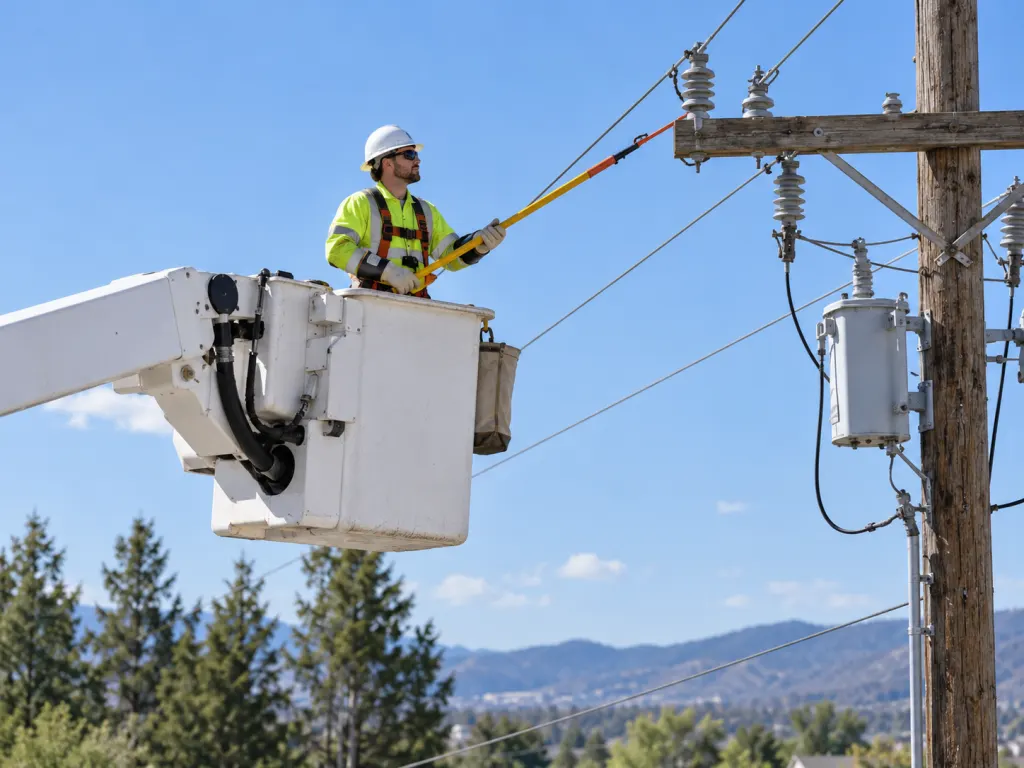
That guidance applies just as much to a stray shoe as it does to a ladder or an antenna. Throwing an object at a line risks momentary contact that can cause a short circuit, damage equipment, or knock out power to nearby homes, and it puts whoever throws the object within reach of the line itself. If a shoe, or anything else, becomes tangled with a transformer or a connection point, only utility crews with the right training and insulated equipment can remove it safely. Climbing a pole, or using a stick, broom, or pole to knock something down, is exactly the kind of contact safety agencies warn against, because a person doesn't need to touch a line directly to be injured; getting close enough can be enough, depending on the voltage.
What To Do If You See Shoes on a Line Near You
If shoes or anything else are stuck on a power line near your home, the safest response is also the simplest one: leave it alone and report it.
- Contact your local electric utility company and describe the location; most utilities have a process for removing debris from lines
- Avoid throwing rocks, sticks, or other shoes at the line to try to knock the object down yourself
- Keep children away from the area, and explain why climbing poles or attempting a retrieval is not worth the risk
- If a line is sparking, sagging, or has fallen, treat it as live, stay back, and call your local emergency number right away
And if you're holding a pair of old sneakers you were considering adding to a line yourself, a better use for them is to donate them if they're still wearable, or dispose of them with regular trash if they're not. Either option keeps the shoes out of a spot where a utility crew will eventually have to spend time and equipment getting them down.
Wrap-Up
Shoes hanging from a power line are one of the most recognizable pieces of everyday American folklore, and after decades of stories, no single explanation has been proven. Rite-of-passage traditions, neighborhood memorials, bullying, and simple boredom-driven fun all show up in accounts of the custom, while the most dramatic theory, that the shoes mark gang territory or drug activity, remains unsupported by documented evidence. What's certain is the danger of the power lines themselves: they carry live current that can't be identified by sight, and guidance from the Consumer Product Safety Commission and state emergency-management agencies is consistent that the safest response to shoes, or anything else, on a line is to keep your distance and call your utility company rather than intervening yourself.
Frequently Asked Questions
- → Do shoes on power lines really mark gang territory?
There's no documented evidence connecting shoe locations to specific gang boundaries or drug houses, and people who study neighborhood customs are generally skeptical of this theory, partly because publicly marking an illegal activity's location would attract attention rather than avoid it. It remains one of several unproven explanations, not a confirmed meaning.
- → Is throwing shoes onto a power line illegal?
Rules vary by city and utility provider, but many places treat it as littering, vandalism, or interference with utility equipment, and some municipalities allow public works crews to remove it. Beyond any legal risk, throwing objects at a line risks contact with live current.
- → Why can't I just knock the shoes down myself with a pole or a rock?
Power lines can carry live current that isn't visible from the ground, and getting close enough to knock an object loose can be enough to cause a serious shock depending on the voltage. Removal is a job for trained utility crews with insulated equipment, not something to attempt yourself.
- → What should I do if I see shoes stuck on a line near my house?
Leave the shoes alone and contact your local electric utility company to report the location. Keep children away from the area, and treat any sagging or damaged-looking line as though it is live.
- → Where did the custom of throwing shoes on wires come from?
There's no single confirmed origin. Stories trace it to military boot-camp traditions, high school graduation rituals, and plain neighborhood mischief, and it likely developed independently in different places rather than spreading from one source.
- → Does the custom mean the same thing everywhere?
No. Because there's no organized meaning behind it, the explanation people give often depends on local culture and whichever story got repeated first in that area, which is part of why so many competing theories exist.