 Save
The best shoes for a dress are not always the shoes in the exact same color. Start with the occasion, then choose a pair that supports the dress rather than competing with it. A formal satin dress usually looks best with a sleek heel, dressy flat, or minimal metallic sandal. A casual cotton dress can take sandals, sneakers, espadrilles, or ankle boots. A printed dress often looks most polished with a neutral shoe or a shoe that repeats one color from the print. Color matters, but formality, texture, and proportion matter just as much.
Start With The Dress, Not The Shoe
A good shoe match begins by reading the dress. Look at five things before choosing anything from the closet: the dress color, the fabric, the shape, the hemline, and the event. A slinky black slip dress, a floral midi dress, a bright red party dress, and a linen shirt dress may all be called dresses, but they ask for different shoes because they carry different moods. Utah State University Extension describes clothing design through elements such as line, shape, texture, and color, and those elements are exactly what decide whether a shoe feels connected to the outfit or strangely separate from it https://extension.usu.edu/research/elements-of-design.
When the dress already has a strong personality, the shoe should usually be quieter. When the dress is very plain, the shoe can become the intentional accent. That is the simplest answer to the question: match the energy, not just the shade. A simple navy sheath can handle a red pump, silver sandal, tan loafer, or white slingback depending on where you are going. A heavily embellished dress often looks better with a slim shoe in black, nude, gold, silver, or a tone already visible in the dress.
The Easiest Color Matches
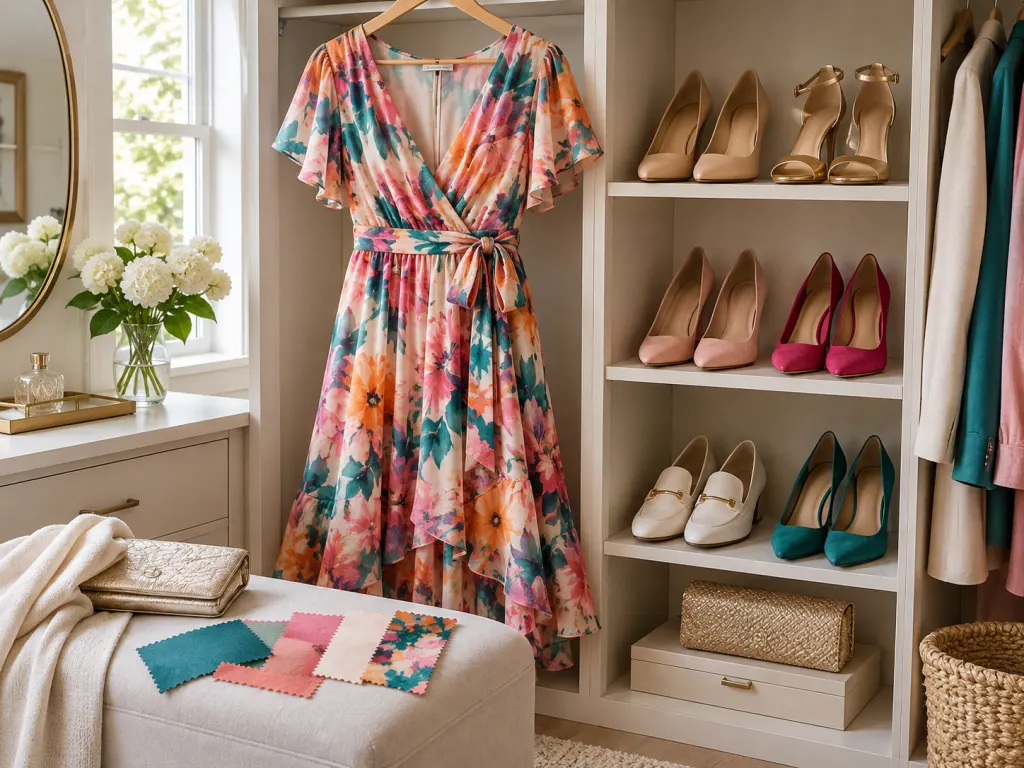
If you are standing in front of a mirror with very little time, use the reliable color groups first. Nude or skin-tone shoes lengthen the line of the leg and work with most hemlines. Black shoes add definition and are especially strong with black, jewel tones, deep florals, gray, navy, red, and evening fabrics. Metallic shoes behave almost like neutrals: gold warms up cream, coral, olive, red, and brown; silver cools down black, white, blue, lavender, gray, and icy pastels. Tan and brown shoes make casual dresses feel softer and less formal, especially in cotton, linen, denim, crochet, or knit fabrics.
Color theory gives a useful vocabulary for why some combinations feel calm and others feel lively. Alabama Cooperative Extension explains common schemes such as monochromatic, complementary, and adjacent color groupings in design https://www.aces.edu/blog/topics/4h/interior-design/. In outfit terms, monochromatic means keeping the shoe close to the dress color, such as blush shoes with a pink dress or burgundy shoes with a wine dress. Complementary contrast means using colors across from each other for energy, such as blue with orange accents or green with red accents. Adjacent colors sit near each other and feel smoother, such as blue with green, pink with red, or yellow with tan.
Match The Occasion First
The same dress can change character with shoes. A black midi dress with flat sandals feels easy for daytime. With pointed pumps, it becomes office-ready. With strappy metallic heels, it becomes evening-appropriate. This is why occasion should come before color. For professional settings, Alabama Cooperative Extension recommends clean, polished, conservative shoes and accessories that complement clothing rather than distract from it https://www.aces.edu/blog/topics/finance-career/job-interviews-dressing-for-success/. That guidance translates well beyond interviews: when the room is formal, conservative, or work-focused, shoes should support the outfit quietly.
- Formal evening dress: choose slim heels, dressy flats, slingbacks, or metallic sandals in satin, leather, suede, or polished finishes.
- Cocktail dress: try pumps, block heels, heeled sandals, pointed flats, or ankle-strap shoes that feel refined but not overly bridal.
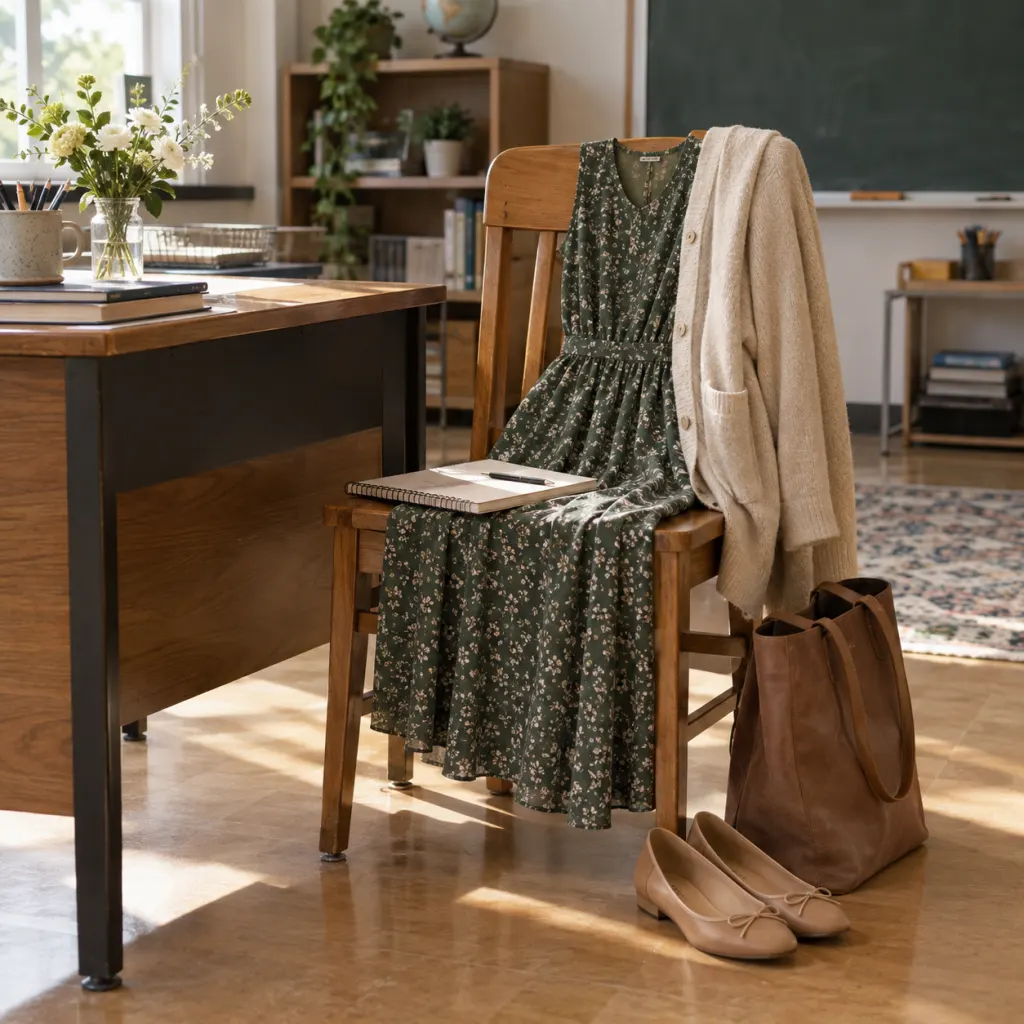
- Work dress: choose loafers, low pumps, slingbacks, ballet flats, ankle boots, or clean neutral shoes that do not pull attention away from the full outfit.
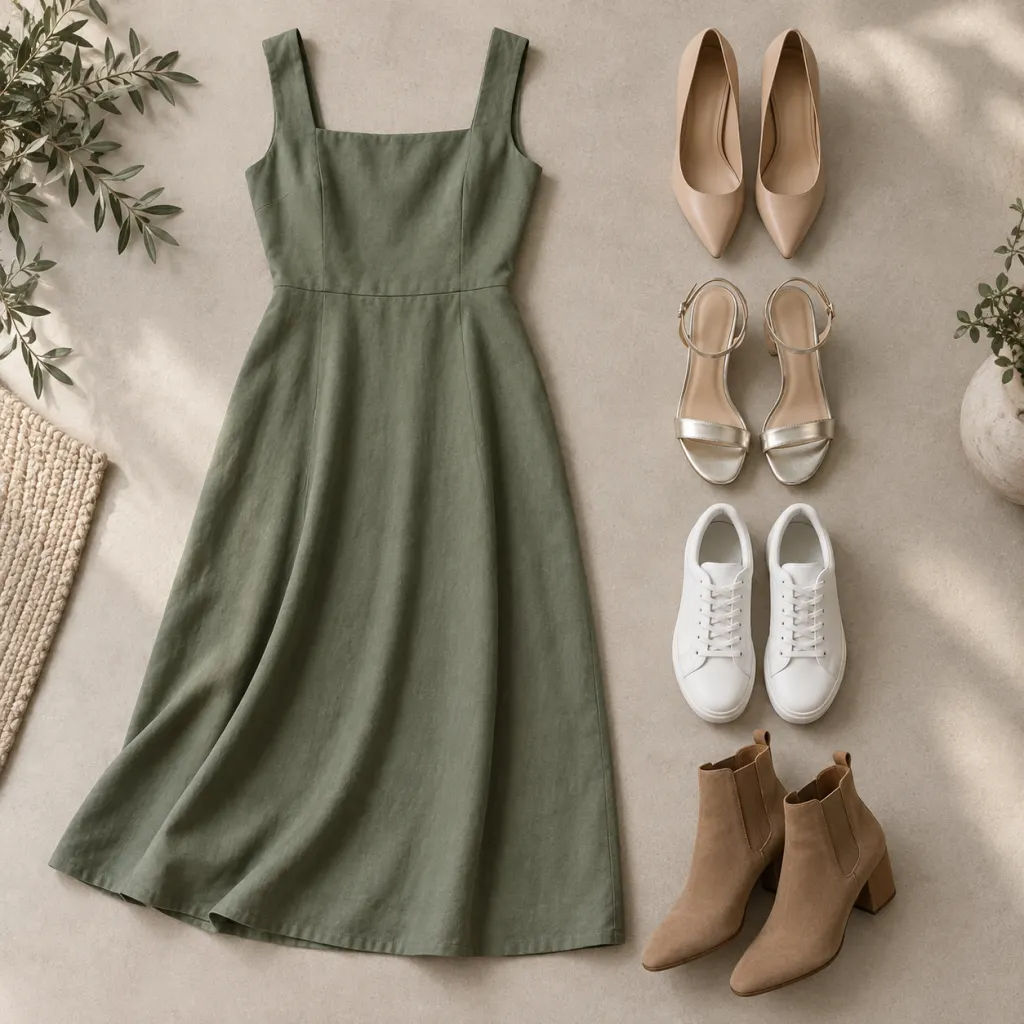
- Casual sundress: pair with flat sandals, espadrilles, simple sneakers, clogs, or woven slides.
- Sweater dress: balance the knit texture with ankle boots, knee-high boots, loafers, or suede flats.
- Maxi dress: consider flat sandals, platforms, wedges, slim boots, or low heels that do not snag the hem.
How To Pair Shoes With Common Dress Colors
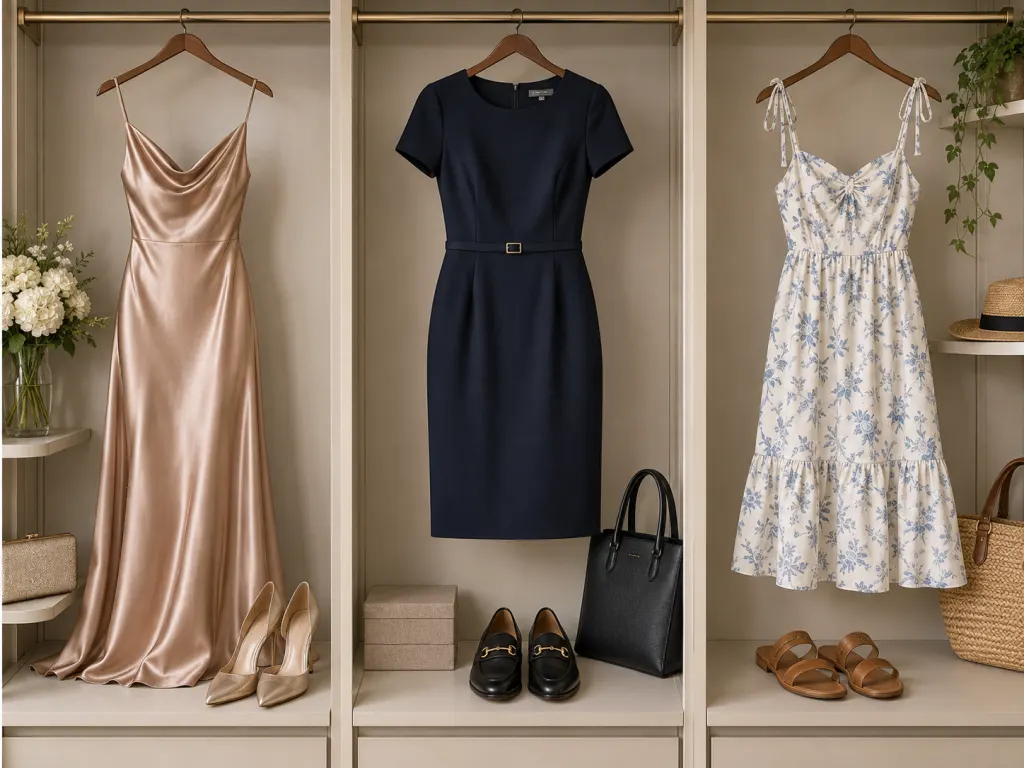
A black dress is the easiest starting point because almost every shoe color can work. Black shoes create a continuous, elegant line. Nude shoes lighten the outfit. Red shoes turn the look into a statement. Metallic shoes make it feel festive. White shoes make it sharper and more modern, especially with a short or midi dress. Brown can work with black when the brown is deliberate, such as cognac boots with a black sweater dress or chocolate sandals with a black linen dress.
A white or cream dress usually looks best with shoes that match its season and texture. White sneakers, tan sandals, raffia wedges, metallic flats, and soft nude shoes are easy choices. Black shoes can work, but they should feel intentional; a black shoe with a delicate white dress may look heavy unless the outfit repeats black in a belt, bag, jacket, or print. Cream dresses often prefer warmer shoes than stark white dresses: gold, champagne, caramel, cognac, beige, soft brown, or warm blush.
A red dress has enough presence on its own. Nude, black, gold, silver, clear, red, or deep brown shoes are the most reliable options. A matching red shoe can look polished when the tones are close; if the reds clash, choose a neutral instead. Navy and red can look crisp, especially for daytime, while leopard-style prints can read as a neutral accent if the dress itself is simple. The key is restraint: let the red dress be the main note.
A navy dress works beautifully with nude, tan, white, silver, gold, burgundy, blush, and navy shoes. Black shoes can also work with navy, especially when the dress is formal or the black is repeated elsewhere. A green dress often pairs well with nude, gold, brown, black, cream, silver, or soft pink. A pink dress can go with nude, white, silver, gold, tan, burgundy, red, or chocolate brown. A yellow dress often looks strongest with tan, white, gold, brown, navy, or soft metallics.
Consider Fabric And Texture
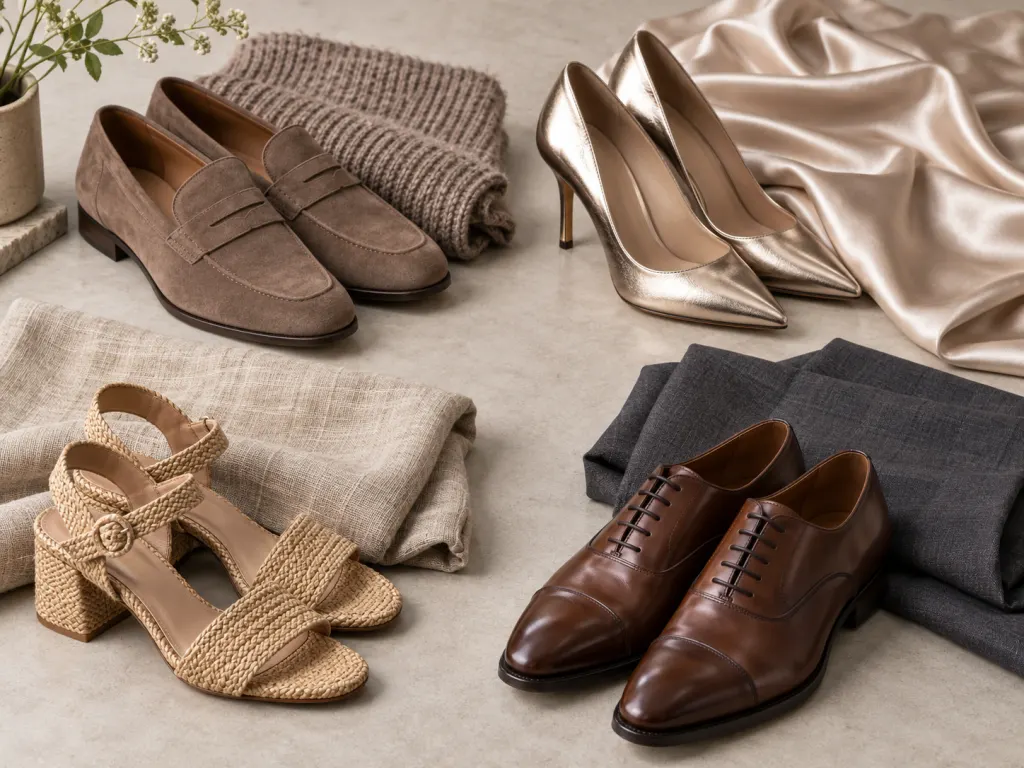
Texture is one of the fastest ways to make a pairing feel right. USU Extension notes that texture affects both comfort and appearance in clothing, from smooth and shiny to dull, crisp, fuzzy, or delicate https://extension.usu.edu/research/elements-of-design. Shoes have texture too. Patent leather looks sharper than suede. Raffia looks more relaxed than satin. A chunky rubber sole changes a dress instantly. Before asking whether the color matches, ask whether the shoe material belongs in the same world as the dress.
For silky, satin, velvet, or embellished dresses, choose refined shoes with a polished finish. Satin sandals, suede pumps, metallic heels, sleek flats, or narrow slingbacks usually work. For cotton, denim, linen, chambray, or jersey dresses, less formal shoes often look more natural: leather sandals, sneakers, espadrilles, loafers, woven flats, or ankle boots. For knit dresses, suede, leather, and boots tend to balance the visual weight of the fabric better than very delicate sandals.
Balance The Hemline And Shoe Shape
Hemline changes the shoe decision because it controls how much of the shoe is visible. A mini dress shows the whole shoe, so heavy boots, sneakers, platforms, and statement heels become part of the main outfit. A knee-length dress often looks clean with pumps, loafers, slingbacks, ballet flats, or ankle-strap shoes. A midi dress can be the trickiest: if the hem hits at the calf, a low-vamp shoe, pointed toe, slim sandal, or skin-tone shoe can keep the line open. A maxi dress needs a shoe that works with the fabric length, so check that the hem falls neatly and does not drag.
The shoe’s toe shape also changes the mood. Pointed toes read more dressed-up and lengthening. Round toes feel softer and classic. Square toes look current and architectural. Almond toes sit in the middle and are often the easiest choice. Chunky soles add casual structure; delicate straps add lightness. If the dress has strong lines, such as a tailored sheath or sharp pleats, a structured shoe often fits. If the dress is airy, tiered, or romantic, a lighter sandal, ballet flat, espadrille, or soft suede shoe may feel more natural.
When Matching Exactly Works
Exact matching works best when the outfit is intentionally monochromatic or formal. A navy dress with navy suede pumps can look elegant. A red dress with carefully matched red heels can look dramatic. A cream dress with cream shoes can look bridal, polished, or summery depending on the cut. Monochrome dressing is strongest when the textures vary slightly, because that keeps the outfit from looking flat. For example, a matte jersey dress with suede heels often has more depth than a jersey dress with shoes in the same flat finish.
Exact matching is less successful when the colors are almost, but not quite, the same. Two slightly different blacks are usually fine because lighting hides the difference, but two different reds, pinks, creams, or greens can look accidental. If the match is imperfect, move away from matching and choose a neutral, metallic, or deliberate contrast. The outfit will look more considered.
A Printed Dress Needs A Simpler Strategy
With a printed dress, the shoe should usually do one of three things: repeat the background color, repeat a minor color, or stay neutral. If the dress is a black floral with green leaves and pink flowers, black shoes make the outfit grounded, green shoes make it playful, and nude shoes keep the focus on the dress. If the print is very busy, avoid adding a second loud shoe unless the event or your personal style welcomes the clash. The more colors in the dress, the more useful a calm shoe becomes.
Print scale matters too. A tiny floral dress can often handle a woven sandal, sneaker, or boot. A large graphic print may need a cleaner shoe because the pattern already has movement. If the dress includes white space, white or cream shoes can freshen it. If the dress includes dark outlines, black or espresso shoes can make it feel anchored. If the print includes metallic thread, a metallic shoe may look especially connected without needing an exact color match.
Shoes Can Change The Story Of A Dress
Fashion history is full of small choices that carry social meaning. The Museum at FIT highlights a famous literary moment involving black shoes with a red dress, a reminder that shoe color has long been treated as part of the message of an outfit, not just a practical afterthought https://exhibitions.fitnyc.edu/prousts-muse/shoes/. Today, the rules are more flexible, but the principle remains: shoes can make a dress quieter, sharper, softer, younger, more formal, or more relaxed.
That flexibility is useful. A floral dress with sneakers says everyday and active. The same dress with espadrilles says summer lunch. With block heels, it says garden party. With tall boots and a jacket, it moves into fall. A slip dress with sandals feels minimal; with combat boots it becomes edgy; with a low slingback it becomes elegant. There is no single correct answer without the setting, but there is usually a best answer for the message you want the outfit to send.
Practical Checks Before You Leave
Before choosing the final pair, check the outfit in full length if possible. Look at the shoe from the front, side, and while walking. If the dress is long, make sure the hem clears the shoe. If the shoe is bold, see whether the eye goes straight to your feet or moves comfortably through the whole outfit. If the event involves grass, cobblestones, stairs, or long standing, a block heel, wedge, flat, or platform may be more practical than a narrow heel. A beautiful match is less useful if the shoe makes the dress hard to wear.
Condition matters too. Scuffed shoes can make a good dress feel less polished. If the pair is washable and suited to machine care, the site’s guide to washing shoes in a washing machine may help with routine care decisions. For dress shoes, delicate materials, or structured leather, follow the care label or manufacturer guidance rather than assuming every shoe can be cleaned the same way.
The Simple Decision Formula
Use this order when you are deciding quickly: occasion, dress color, dress texture, hemline, then accessories. If the event is formal, begin with polished shoes. If the event is casual, begin with relaxed shoes. If the dress is bright or printed, try nude, black, tan, white, or metallic first. If the dress is simple, decide whether the shoe should disappear or become the accent. Then check the hemline and repeat one color or finish elsewhere in the outfit if the shoes feel disconnected.
A shoe does not need to match the bag exactly, though matching can look classic. It only needs to relate. Gold earrings can justify gold sandals. A black belt can make black shoes feel intentional. A woven bag can connect to tan espadrilles. A red lip, red bag, or red hair accessory can make red shoes feel less random with a neutral dress. Think in echoes rather than duplicates.
Wrap-Up
The best shoes for a dress are chosen by context first and color second. Use neutrals, metallics, or a shade from the dress for the easiest matches. Choose sleek shoes for formal fabrics, relaxed shoes for casual fabrics, and proportions that work with the hemline. Exact color matching can look elegant, but near-matches can feel accidental, so move to contrast or a neutral when the colors are not close enough.
Frequently Asked Questions
- → Should shoes be lighter or darker than the dress?
Either can work. Lighter shoes usually soften a look, while darker shoes ground it. For formal outfits, darker or metallic shoes often feel polished. For spring, summer, and daytime dresses, lighter nude, tan, white, or metallic shoes often feel easier.
- → What shoe color works with almost any dress?
Nude or skin-tone shoes, black shoes, tan shoes, and metallic shoes are the most flexible. Silver tends to suit cooler colors, while gold and champagne tend to suit warmer colors. A clean white shoe can also be versatile with casual and warm-weather dresses.
- → Can I wear sneakers with a dress?
Yes, when the dress and occasion are casual enough. Sneakers work especially well with cotton, jersey, denim, T-shirt, shirt, and simple floral dresses. Choose clean, simple sneakers if you want the outfit to look intentional rather than purely practical.
- → Do shoes and bags need to match?
No. Matching shoes and bags can look classic, but they only need to relate. You can connect them through color family, texture, metal tone, or overall formality. For example, tan sandals and a woven bag relate without being identical.
- → What shoes look best with a midi dress?
Midi dresses often look best with shoes that keep the line open, such as pointed flats, slingbacks, low-vamp pumps, slim sandals, skin-tone shoes, or ankle boots that sit neatly under the hem. Very bulky shoes can work, but they should look deliberate and balanced with the dress shape.