 Save
The clearest sign that you may be eating too much added sugar is not one dramatic symptom. It is a pattern: sweet drinks, desserts, sweetened coffee, flavored yogurt, cereal, sauces, and packaged snacks quietly appearing across the day. Added sugars are different from the sugars naturally present in fruit and plain milk, and the FDA says they are listed separately on packaged food labels so shoppers can compare products more easily. A practical first step is to check whether your usual foods regularly reach 20% Daily Value or more for added sugars, which the FDA considers high per serving. https://www.fda.gov/food/nutrition-facts-label/added-sugars-nutrition-facts-label
First, Know What Counts As Added Sugar
Added sugar means sugar added during processing, preparation, or at the table. It includes table sugar, syrups, honey, and concentrated fruit or vegetable juices used as sweeteners. It does not include the sugars naturally found in whole fruit, vegetables, or plain milk. That distinction matters because whole foods often bring fiber, water, protein, vitamins, minerals, or other nutrients along with their natural sweetness. The FDA explains that added sugars can make it harder to meet nutrient needs while staying within calorie limits, especially when they come from foods that are easy to drink or snack on quickly. https://www.fda.gov/food/nutrition-facts-label/added-sugars-nutrition-facts-label
There is not one perfect number for every person, but there are useful guideposts. The FDA Daily Value for added sugars is 50 grams per day based on a 2,000-calorie diet. The American Heart Association recommends a stricter target for many adults: no more than about 6 teaspoons, or 25 grams, per day for most women and no more than about 9 teaspoons, or 36 grams, for most men. These numbers are not a personal prescription, but they give you a way to notice whether your ordinary day is drifting far above common guidance. https://www.heart.org/en/healthy-living/healthy-eating/eat-smart/sugar/added-sugars

1. Your Drinks Are Doing Most Of The Work
Sugary drinks are one of the easiest ways for added sugar to climb because liquid calories can pass through a day almost unnoticed. The CDC identifies sugary drinks as a leading source of added sugars in the American diet, including soda, fruit drinks, sports drinks, energy drinks, sweetened waters, and sweetened coffee or tea beverages. A single regular soda can contain roughly 10 teaspoons of added sugar, depending on the product. If your morning coffee, lunch drink, afternoon energy drink, and evening soda are all sweetened, the pattern may matter more than any one choice. https://www.cdc.gov/healthy-weight-growth/rethink-your-drink/
A useful check is to write down only beverages for three days. Include coffee add-ins, bottled teas, flavored waters, cocktails or mocktails with syrups, smoothies with sweetened bases, and sports drinks. Many people find that changing drinks is simpler than overhauling every meal. Unsweetened tea, water with citrus, sparkling water, plain coffee, or plain milk can lower added sugar without requiring a complicated eating plan.
2. Your Usual Packaged Foods Keep Reading High On The Label
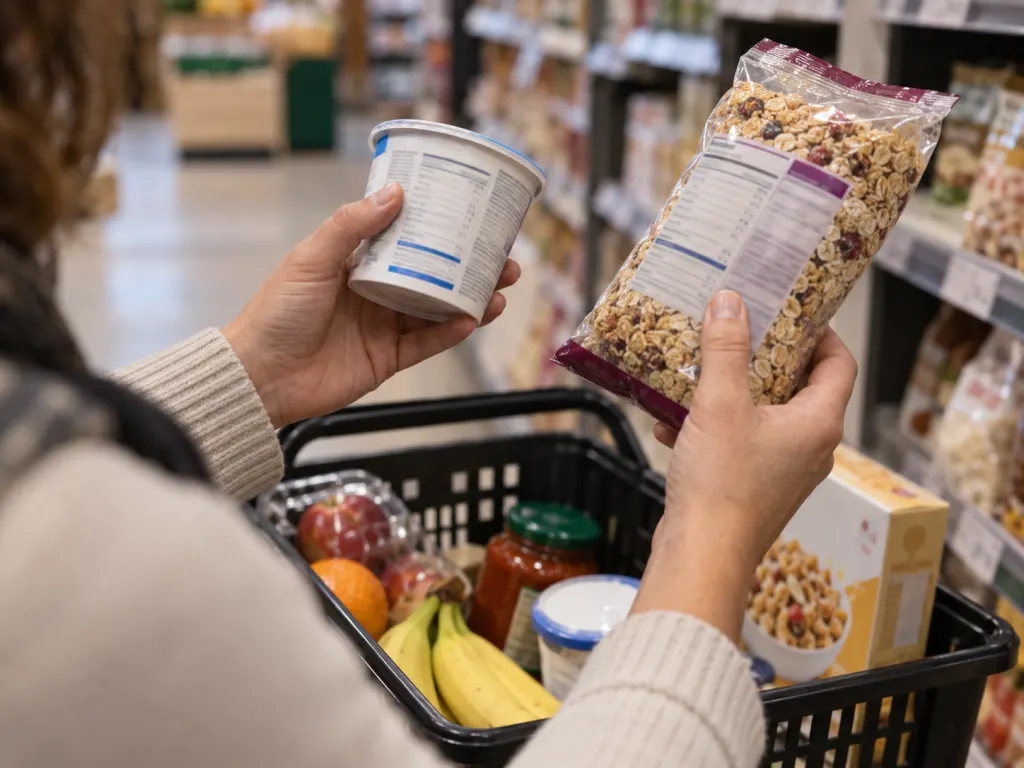
The Nutrition Facts label gives you two numbers to watch: grams of added sugar and Percent Daily Value. The FDA says 5% Daily Value or less is low and 20% Daily Value or more is high for added sugars. That makes the label a quick sorting tool. A breakfast cereal, granola bar, flavored yogurt, bottled dressing, or pasta sauce may not taste like dessert, but it can still contribute a meaningful amount. The issue is not that one food is forbidden; it is that several ordinary foods can stack up before dinner.
- Check serving size first, because the added sugar number applies to that serving.
- Compare similar products, such as two yogurts or two cereals, side by side.
- Look for repeated sweeteners in the ingredient list, including syrup, honey, molasses, cane sugar, dextrose, sucrose, and fruit juice concentrate.
- Notice foods you eat daily, since small amounts become more important when they repeat.
3. Sweet Foods Are Replacing More Filling Ones
Added sugar often becomes a problem when it crowds out foods that help a meal feel complete. MedlinePlus notes that many foods with added sugars add calories without many other nutrients, while naturally sweet foods such as fruit also provide vitamins, minerals, and fiber. If breakfast is usually sweetened coffee and a pastry, lunch is a sweet drink and a snack bar, and dinner ends with dessert most nights, you may be missing more satisfying combinations such as protein, whole grains, beans, vegetables, fruit, or unsweetened dairy. https://www.medlineplus.gov/ency/article/002444.htm
4. You Feel Hungry Soon After Sweet Snacks
Feeling hungry soon after a sweet snack does not prove that sugar is the cause. Sleep, stress, activity, meal size, and total food intake all matter. Still, a snack that is mostly added sugar may not be very filling. If you often reach for candy, sweet drinks, pastries, or sweetened coffee and then feel hungry again quickly, look at what is missing. A more balanced snack usually includes at least one slower, more filling element, such as fruit with plain yogurt, toast with peanut butter, vegetables with hummus, or leftovers from a real meal.
5. You Notice Energy Swings Around Sweet Drinks Or Snacks
A quick lift followed by a slump is a common reason people start examining sugar intake, but it is not a diagnosis. The more useful question is timing. Do you feel most uneven after a sweetened coffee without breakfast, a soda in the afternoon, or candy eaten in place of lunch? The CDC notes that dehydration can also contribute to low energy, and its drink guidance suggests water or unsweetened beverages as practical swaps. If tiredness is persistent, severe, new, or paired with other symptoms, it deserves a conversation with a clinician rather than a self-test based on sugar alone. https://www.cdc.gov/healthy-weight-growth/rethink-your-drink/
6. Your Teeth Are Giving You Feedback
Frequent sugar exposure can matter for teeth because mouth bacteria use sugars and starches to make acids. The National Institute of Dental and Craniofacial Research explains that repeated acid attacks can weaken enamel over time and contribute to cavities. This does not mean one dessert harms your teeth, and it does not mean sugar is the only factor. Brushing, fluoride, saliva, dental visits, and how often you snack all matter. But if cavities, tooth sensitivity, or frequent between-meal sweets are showing up together, your sugar pattern is worth reviewing with a dentist. https://www.nidcr.nih.gov/health-info/tooth-decay/more-info/tooth-decay-process
7. Your Skin Breakouts Seem To Track High-Sugar Patterns
Skin changes are easy to overinterpret, so keep this one modest. The American Academy of Dermatology says some small studies suggest that high-glycemic foods and drinks, which raise blood sugar quickly, may worsen acne for some people, but the evidence is mixed and more research is needed. If you already notice breakouts after stretches of sugary drinks, pastries, or other high-glycemic foods, a simple food-and-skin diary may help you see whether there is a personal pattern. Skin care, hormones, stress, and medications can also play a role, so persistent acne is best discussed with a qualified professional. https://www.aad.org/public/diseases/acne/causes/diet
8. Your Weight Is Creeping Up Without Another Clear Change
Body weight changes for many reasons, including sleep, stress, activity, medications, age, health conditions, and total eating pattern. Added sugar is only one possible contributor. Still, sugary drinks and sweet snacks can add energy quickly while doing little to make meals more filling. The CDC states that frequent sugar-sweetened beverage intake is associated with weight gain and several health problems. If your weight is gradually increasing and your drink or snack routine has become sweeter, that is a practical place to look without turning the issue into blame. https://www.cdc.gov/nutrition/php/data-research/sugar-sweetened-beverages.html
9. You Depend On Sweetness To Make Most Foods Appealing
Another sign is not physical at all: plain foods start to feel dull unless they are sweetened. This can happen when sweetness appears at breakfast, in coffee, in sauces, in snacks, in drinks, and after dinner. A reset does not have to be extreme. Start by keeping the foods you enjoy most and reducing the automatic sugars that add the least pleasure. For example, choose unsweetened tea but keep dessert on Friday, or buy plain yogurt and add fruit instead of choosing a very sweet flavored cup every day.
10. Thirst, Frequent Urination, Or Ongoing Fatigue Are Showing Up
Some symptoms should not be filed under ordinary sugar habits. The CDC lists increased thirst, frequent urination, increased hunger, fatigue, blurry vision, and unexplained weight loss among possible symptoms of diabetes, while also noting that some people have few or no symptoms. These signs do not prove you have diabetes, and eating sugar is not something to self-diagnose from. But if these symptoms are persistent, new, or worrying, it is sensible to talk with a doctor or qualified health professional and ask what evaluation is appropriate for you. https://www.cdc.gov/diabetes/signs-symptoms/index.html
How To Check Your Added Sugar Pattern Without Obsessing
Use a short audit rather than a permanent tracking project. For three typical days, write down sweetened drinks, desserts, candy, sweet breakfast foods, packaged snacks, condiments, sauces, and flavored dairy. Then check labels for the foods you eat most often. The goal is not to make every bite perfect. It is to find the few repeated items that contribute the most added sugar and decide which swaps feel realistic.
Good first swaps are boring in the best way: water or unsweetened tea instead of one daily soda, plain yogurt with fruit instead of a very sweet cup, oatmeal with cinnamon and berries instead of a frosted cereal, or a smaller portion of dessert eaten slowly instead of grazing from the package. If you reduce added sugar gradually, your routine may feel less abrupt, and you are more likely to notice which changes actually help.

When The Label Matters More Than The Front Of The Package
Front-of-package words can be confusing. Terms like natural, lightly sweetened, made with fruit, honey-sweetened, or wholesome do not tell you how much added sugar is in a serving. The Nutrition Facts label and ingredient list are more reliable. The FDA notes that added sugars appear under Total Sugars, and ingredients can reveal sweeteners by many names. CDC guidance on hidden sugars also points out that sugar may appear in foods people do not think of as sweet, including some nut butters, drinks, and savory packaged foods. https://www.cdc.gov/diabetes/healthy-eating/spotting-hidden-sugars-in-everyday-foods.html
A Calm Way To Cut Back
Pick one category for two weeks. Drinks are often the easiest. If drinks are already mostly unsweetened, choose breakfast, snacks, or sauces. Keep the change specific enough to measure: one less sweet drink per day, a lower-sugar cereal, unsweetened yogurt three mornings a week, or dessert plated once instead of nibbled repeatedly. This approach respects real life. Sugar does not have to disappear from your kitchen for your pattern to improve.
Also avoid turning fruit into the enemy. The main concern in this article is added sugar, not whole fruit. Whole fruit brings water, fiber, and nutrients, and it usually takes longer to eat than candy or soda. If your sweet cravings are strongest in the afternoon, fruit paired with protein or fat can be a more satisfying bridge than another sweetened drink.
Wrap-Up
The warning signs of too much added sugar are usually routine-based: sugary drinks every day, high added sugar labels, frequent sweet snacks, foods that do not keep you full, tooth concerns, skin patterns, and gradual weight changes. Use labels, not guesswork. If symptoms such as unusual thirst, frequent urination, unexplained weight changes, or persistent fatigue appear, bring them to a qualified health professional instead of assuming sugar is the whole explanation.
Frequently Asked Questions
- → Is natural sugar in fruit the same as added sugar?
No. Fruit contains natural sugars along with water, fiber, vitamins, minerals, and other food components. Added sugar is put into foods or drinks during processing, preparation, or at the table. For most people, the first place to look is sweetened drinks, desserts, candy, sweetened cereals, sauces, and packaged snacks.
- → What is the easiest way to know if a food is high in added sugar?
Check the Nutrition Facts label. The FDA says 5% Daily Value or less is low and 20% Daily Value or more is high for added sugars. Always check serving size too, because a package may contain more than one serving.
- → Do I need to quit sugar completely?
Most people do better with practical limits than all-or-nothing rules. A useful goal is to reduce the added sugars that show up automatically every day, especially sweet drinks and highly sweetened packaged foods, while leaving room for foods you genuinely enjoy.
- → Can eating too much sugar cause fatigue?
Some people notice energy swings around sweet drinks or snacks, especially when they replace a balanced meal. However, fatigue has many possible causes. If tiredness is persistent, severe, new, or paired with symptoms such as unusual thirst or frequent urination, talk with a doctor or qualified health professional.
- → Are honey, maple syrup, and coconut sugar better choices?
They may taste different, but they still count as added sugars when used to sweeten foods or drinks. The American Heart Association notes that added sugar is added sugar, no matter what it is called. Use the label and ingredient list rather than the sweetener's image.
References
This content was developed and refined using reliable sources.
- https://www.fda.gov/food/nutrition-facts-label/added-sugars-nutrition-facts-label
- https://www.heart.org/en/healthy-living/healthy-eating/eat-smart/sugar/added-sugars
- https://www.medlineplus.gov/ency/article/002444.htm
- https://www.cdc.gov/healthy-weight-growth/rethink-your-drink
- https://www.nidcr.nih.gov/health-info/tooth-decay/more-info/tooth-decay-process
- https://www.aad.org/public/diseases/acne/causes/diet
- https://www.cdc.gov/nutrition/php/data-research/sugar-sweetened-beverages.html
- https://www.cdc.gov/diabetes/signs-symptoms/index.html
- https://www.cdc.gov/diabetes/healthy-eating/spotting-hidden-sugars-in-everyday-foods.html