 Save
Eating avocados mainly adds unsaturated fat, fiber, potassium, folate, vitamin E, vitamin K, and a creamy texture to meals. It also adds calories, so the best use is as one rich part of a balanced plate rather than as a food to eat without limits. Harvard T.H. Chan School of Public Health describes avocados as a fruit from the Persea americana tree and notes that a whole medium avocado has about 240 calories, 22 grams of fat, 13 grams of carbohydrate, 3 grams of protein, and 10 grams of fiber https://nutritionsource.hsph.harvard.edu/avocados/. That profile explains why avocado feels satisfying in toast, salads, bowls, tacos, smoothies, and dips: most of its energy comes from fat, while its fiber and water help give the flesh body.
The useful answer is balance, not a dramatic claim
Avocados became popular because they solve a practical cooking problem: they make food feel rich without needing butter, cream, or a heavy dressing. That does not make them a cure-all food, and it does not mean more is always better. It means they can be a smart ingredient when the rest of the meal has room for a source of fat and fiber. A few slices can round out a grain bowl. Mashed avocado can stand in for mayonnaise on a sandwich. A spoonful can thicken a smoothie without making it taste strongly sweet.
From a nutrition-label perspective, the important point is that serving size matters. The U.S. Food and Drug Administration explains that the % Daily Value tells how much a nutrient in one serving contributes to a daily diet, and it lists daily values such as 28 grams for dietary fiber, 78 grams for total fat, 4,700 milligrams for potassium, and 400 micrograms DFE for folate https://www.fda.gov/food/nutrition-facts-label/daily-value-nutrition-and-supplement-facts-labels. That framework keeps avocado in proportion: half an avocado may fit naturally into breakfast, while a large bowl of guacamole can quietly become the richest part of the meal.
What is actually in an avocado
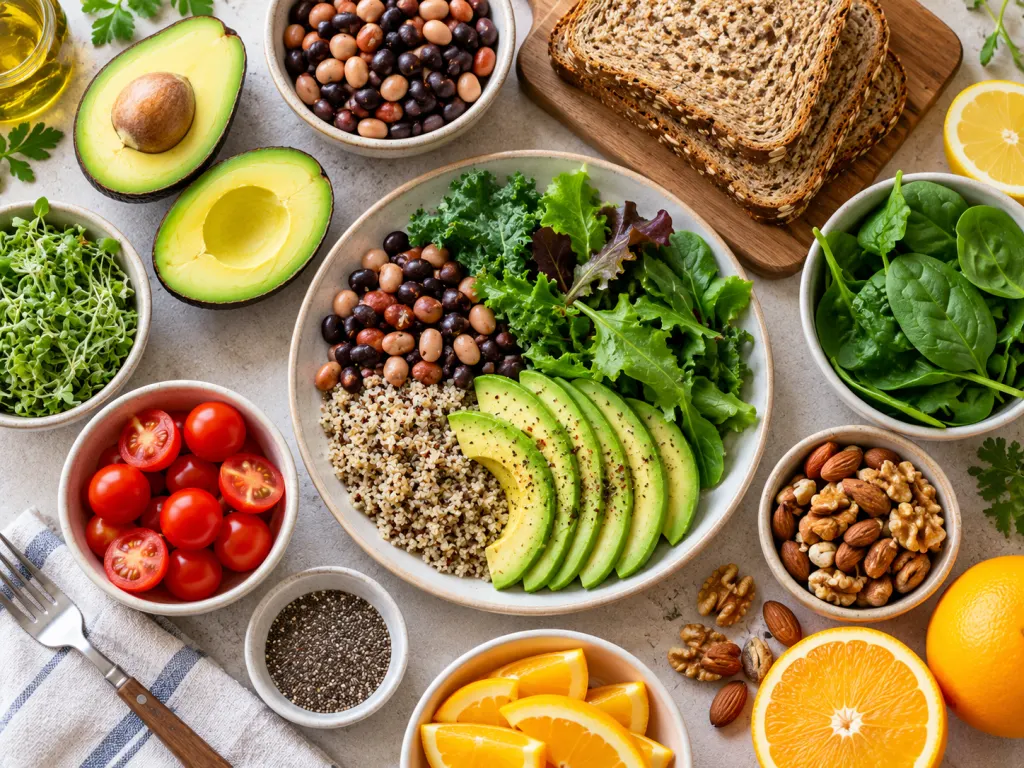
Avocado is unusual among fruits because it is creamy and higher in fat than carbohydrate. Harvard lists it as a source of mostly monounsaturated fat, fiber, B vitamins, vitamin C, vitamin E, vitamin K, folate, potassium, magnesium, and carotenoids https://nutritionsource.hsph.harvard.edu/avocados/. The exact amount varies by size and variety, but the broad pattern is consistent: avocado is rich, low in sodium, naturally free of added sugar, and useful in both savory and mildly sweet dishes.
- Fat: mostly unsaturated fat, which gives avocado its smooth texture.
- Fiber: a plant carbohydrate that adds bulk and helps a meal feel more substantial.
- Potassium: a mineral involved in muscle contraction and nerve transmission.
- Folate: a B vitamin involved in DNA formation and cell division.
- Vitamin E and vitamin K: fat-soluble nutrients found in a range of plant foods.
- Low sodium: useful when you want richness without adding salt.
Why avocado feels filling
The satisfying quality of avocado comes from texture, fat, and fiber working together. Fiber is a plant-based carbohydrate found in fruits, vegetables, whole grains, nuts, and seeds. MedlinePlus explains that dietary fiber adds bulk, can help food feel filling faster, and should be increased gradually because adding too much too quickly can lead to gas, bloating, or cramps https://medlineplus.gov/dietaryfiber.html. Avocado is not the only way to get fiber, but it is one pleasant way to add it to meals that might otherwise be mostly refined grain or protein.
The fat matters too. Fat slows the eating experience because it carries flavor and gives food a softer mouthfeel. That is why a small amount of avocado can make simple ingredients feel complete: toast with tomato, rice with beans, salad with citrus, eggs with salsa, or roasted vegetables with lime. The goal is not to cover every dish with avocado. It is to use enough to make the meal satisfying so that the plate feels finished.
A practical way to think about portions
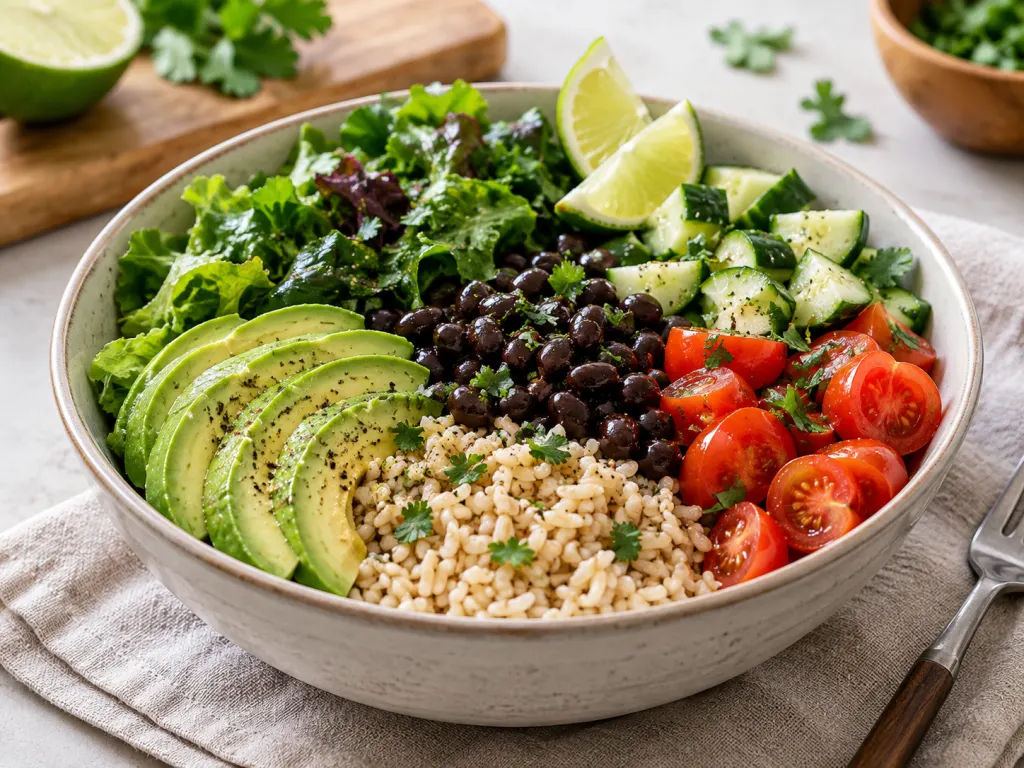
A helpful kitchen rule is to decide what role avocado is playing before you cut it. If it is the main rich ingredient, such as avocado toast or a grain bowl with beans and salsa, half a medium avocado may make sense. If it is only a topping, a few slices may be enough. If the meal already contains cheese, nuts, creamy dressing, fried items, or another rich sauce, avocado may be better as a smaller accent.
FDA label guidance is useful here because it separates a serving from a personal target. The agency notes that Nutrition Facts label values are tied to the serving shown, not necessarily to the amount a person should eat https://www.fda.gov/food/nutrition-facts-label/daily-value-nutrition-and-supplement-facts-labels. In everyday terms, that means the question is not whether avocado is “good” or “bad.” The better question is whether the amount fits the rest of the meal.
The nutrients people often notice most
Potassium is one reason avocados show up in nutrition conversations. The NIH Office of Dietary Supplements explains that potassium is found in many foods and is needed for many body functions, including muscle contraction and nerve transmission https://ods.od.nih.gov/factsheets/Potassium-Consumer/. Fruits, vegetables, beans, nuts, dairy foods, fish, and meats can all contribute potassium, so avocado should be seen as one option among many rather than a single required food.
Folate is another nutrient worth understanding. NIH describes folate as a B vitamin naturally present in many foods and needed for DNA and other genetic material, as well as cell division https://ods.od.nih.gov/factsheets/Folate-Consumer/. Avocado contributes folate, but so do leafy greens, asparagus, Brussels sprouts, oranges, beans, peas, peanuts, and fortified grain foods. The best pattern is variety, because different foods bring different nutrient packages.
Where avocado fits in real meals
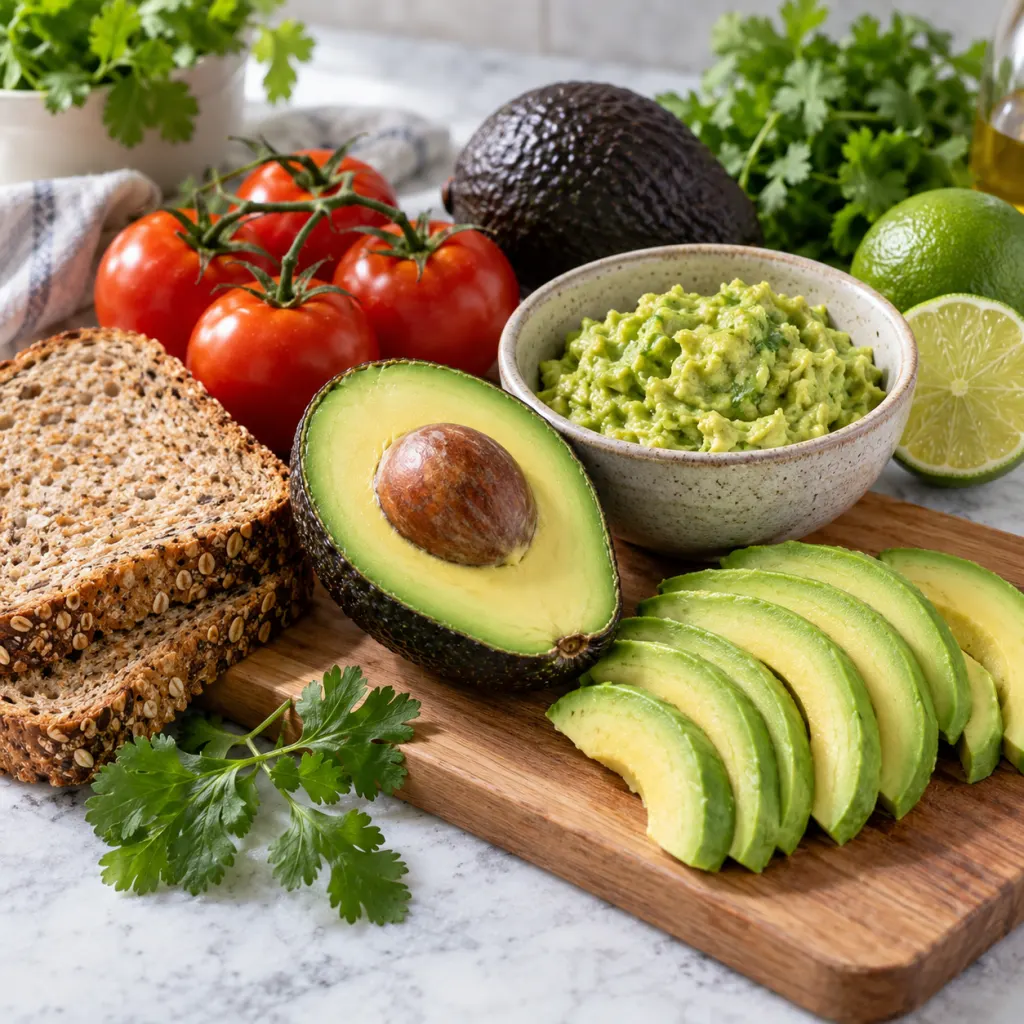
Avocado is easiest to use well when it is treated like a rich ingredient, not a side garnish added automatically. It pairs especially well with bright, acidic, crunchy, or spicy foods because those elements keep the plate from feeling heavy. Lime juice, tomatoes, radishes, cucumbers, herbs, chile, pickled onions, whole grains, and beans all make avocado taste more complete. That is why guacamole works so well: the avocado supplies body, while citrus, salt, chile, onion, and cilantro keep each bite lively.
For breakfast, avocado can replace part of the butter or cheese on toast. For lunch, it can make a bean salad feel more satisfying without needing a creamy bottled dressing. For dinner, it can cool a spicy taco, soften a grain bowl, or add richness to soup just before serving. In smoothies, a small amount can thicken the texture, but it is easy to overdo the richness if the smoothie already contains nut butter, coconut milk, or sweetened additions.
Buying, ripening, and storing avocados
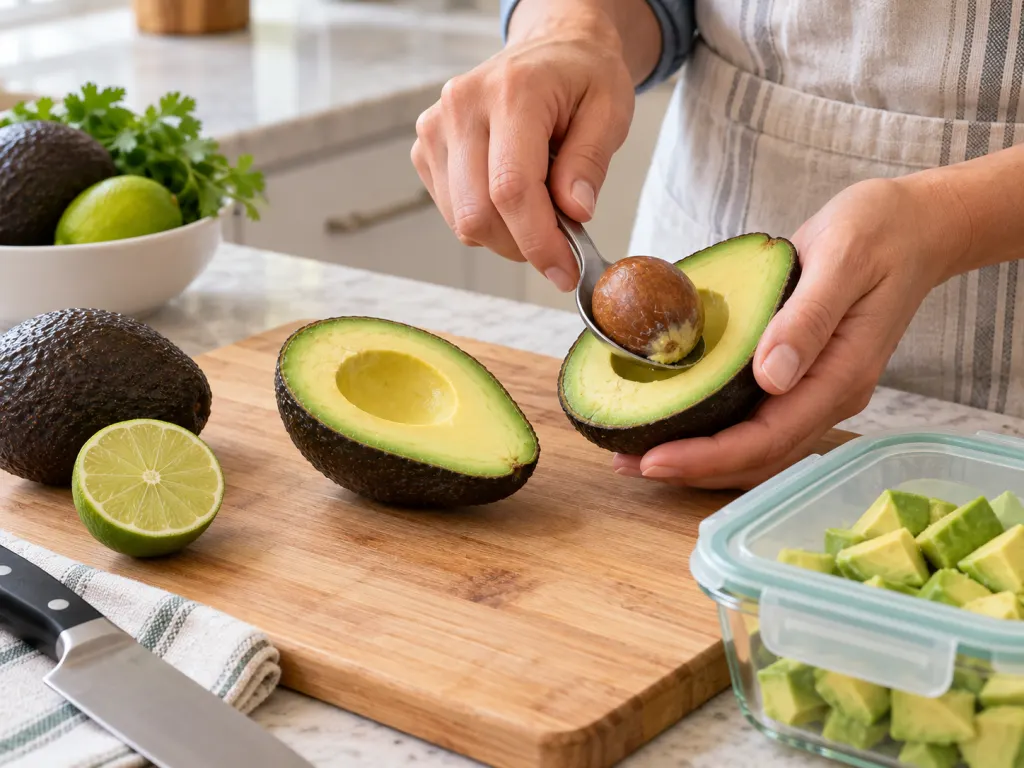
Harvard notes that avocados continue to ripen after harvest and that a ripe avocado should feel slightly soft when squeezed gently https://nutritionsource.hsph.harvard.edu/avocados/. Very firm fruit usually needs a few days at room temperature. If you need to slow things down once an avocado is ripe, refrigerating it can buy extra time. After cutting, air exposure turns the flesh brown; lemon or lime juice plus a tight wrap or sealed container can help slow that change.
For prep, choose a stable cutting board and avoid dramatic knife tricks. Slice around the pit, twist the halves apart, and remove the pit without striking toward your hand. Scoop, dice, slice, or mash the flesh depending on the dish. Slight browning is usually a quality issue rather than a reason to discard the whole fruit, but unpleasant odor, deep mushiness, or visible mold means the avocado should not be used.
What to keep in perspective
Avocado is nutritious, but it is not automatically the best choice for every meal. People sometimes add it on top of an already rich plate and then wonder why the meal feels heavy. Others use it as a replacement for every other fat and miss the variety that comes from olive oil, nuts, seeds, fish, yogurt-based sauces, or tahini. A more flexible approach is to rotate avocado with other flavorful fats and keep the plate colorful.
It is also worth remembering that nutrition depends on patterns. A few avocado slices on a plate with vegetables, beans, whole grains, or protein can be very different from a large portion eaten mostly with salty chips. The avocado itself may be the same, but the total meal changes. For most home cooks, the best avocado habit is simple: choose ripe fruit, use a portion that fits the meal, pair it with fresh ingredients, and enjoy the texture it brings.
The bottom line
Eating avocados adds a rich mix of unsaturated fat, fiber, potassium, folate, vitamin E, vitamin K, and creamy texture. The most useful way to eat them is not as a special fix, but as a flavorful whole food that can make simple meals more satisfying. Use avocado where it improves the plate, keep the amount in context, and let variety do the rest.
Wrap-Up
Avocados are best understood as a creamy, nutrient-dense fruit that works like a whole-food source of fat and fiber. They can make meals more satisfying, add potassium and folate, and bring a smooth texture to toast, salads, bowls, dips, tacos, sandwiches, and smoothies. The key is portion and context: avocado fits best when it complements the rest of the plate rather than becoming an automatic extra.
Frequently Asked Questions
- → Is avocado a fruit or a vegetable?
Botanically, avocado is a fruit. In the kitchen, many people use it like a savory ingredient because it is creamy, mild, and not sweet.
- → How much avocado is reasonable in one meal?
It depends on the rest of the plate. A few slices can work as a topping, while half a medium avocado may fit when it is the main rich ingredient. If the meal already has cheese, nuts, creamy dressing, or fried foods, a smaller amount may feel better.
- → Why does avocado make meals feel more filling?
Avocado contains fat and fiber, and both affect texture and satisfaction. Fiber adds bulk, while fat carries flavor and creates a smooth mouthfeel.
- → What is the best way to keep cut avocado from browning?
Limit air exposure. Add lemon or lime juice to the cut surface, press wrap close to the flesh or use a sealed container, and refrigerate it.
- → Can avocado replace butter or mayonnaise?
In many sandwiches, toast, dips, and some baked goods, mashed avocado can replace part or all of a creamy spread. The flavor and texture are different, so it works best where a mild, fresh taste fits the dish.
References
This content was developed and refined using reliable sources.
- https://nutritionsource.hsph.harvard.edu/avocados
- https://www.fda.gov/food/nutrition-facts-label/daily-value-nutrition-and-supplement-facts-labels
- https://medlineplus.gov/dietaryfiber.html
- https://ods.od.nih.gov/factsheets/Potassium-Consumer
- https://ods.od.nih.gov/factsheets/Folate-Consumer
- https://ods.od.nih.gov/factsheets/VitaminK-Consumer/?n=%40