 Save
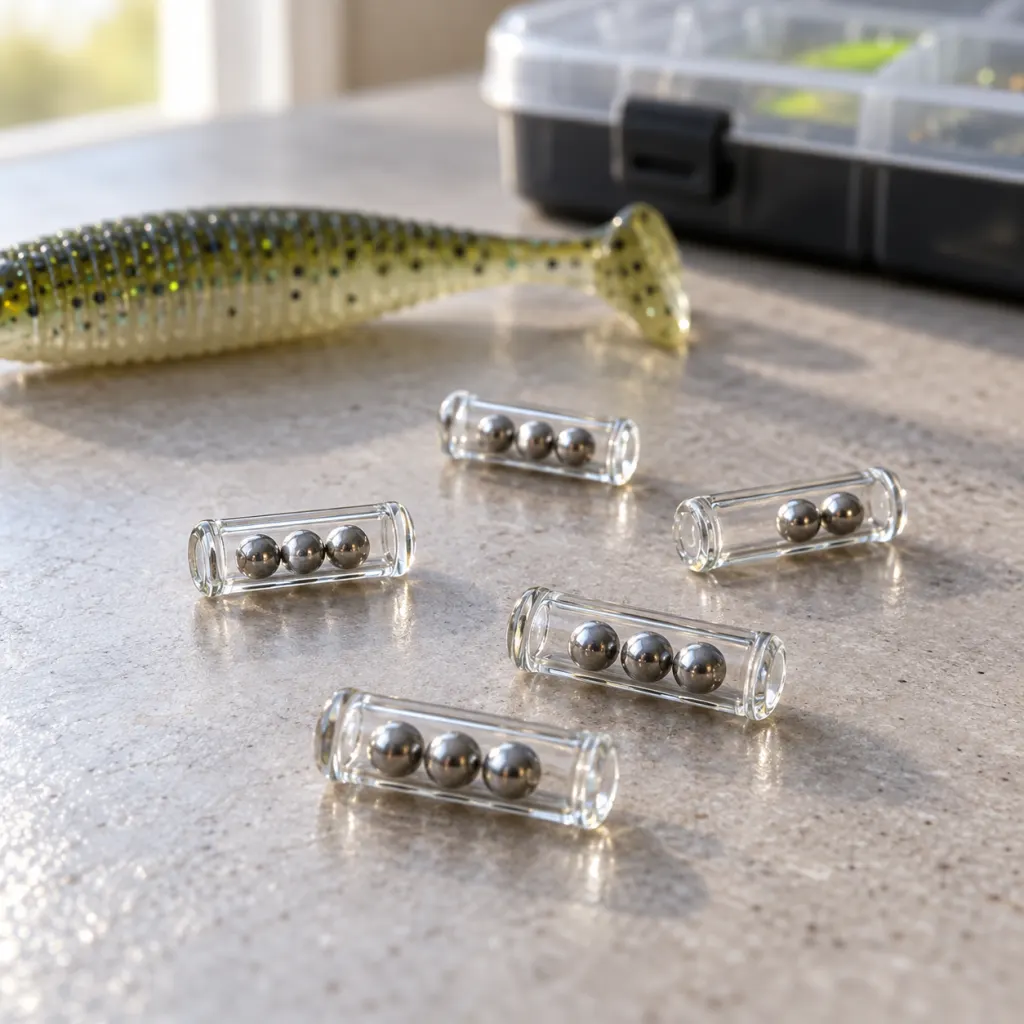
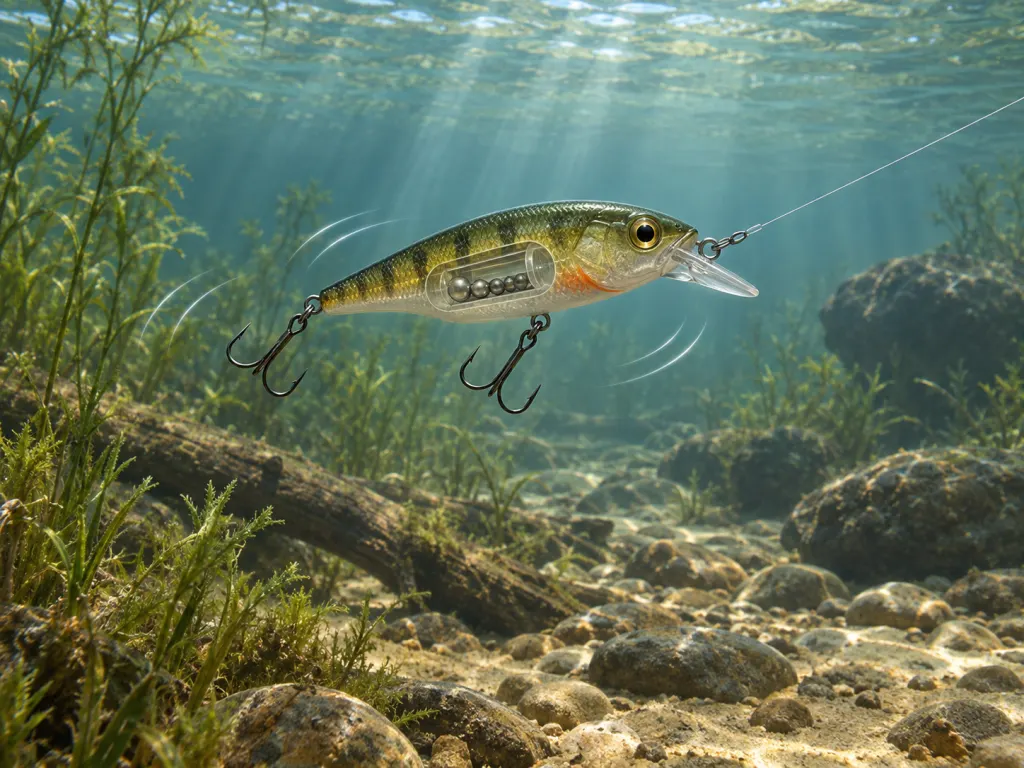
The small glass tubes with three tiny ball bearings are most likely fishing lure rattles: miniature sealed capsules used inside artificial baits to add clicking sound and vibration underwater. They are not batteries, medicine ampules, beads, or lab samples if they are sealed, transparent, non-liquid, and found near fishing tackle. Their purpose makes sense in fishing because many fish use a lateral line system to sense water movement and vibrations, a feature described by the University of Hawaii’s fish anatomy materials at Exploring Our Fluid Earth. Still, identification should be cautious. Similar-looking parts can come from craft supplies, toys, old instruments, or specialty devices, so the surrounding context matters as much as the object itself.
The Most Likely Identification
A lure rattle is a very small noise-making insert, usually a sealed glass or clear plastic capsule with tiny metal balls inside. When the lure moves, the balls strike the capsule wall and each other. That produces a light tick, click, or buzz. In a tackle box, the clue is not only the tube itself but the company it keeps: soft plastic worms, craws, tube baits, hooks, jig heads, sinkers, split rings, and line are all context clues pointing toward fishing gear.
These pieces are easy to mistake for something more mysterious because they look unusually precise. A single tube may be about the size of a grain of rice or a small seed bead, though sizes vary. It is usually straight, smooth, and closed at both ends. The interior balls often look silver or dark gray, and they roll freely when the capsule is tilted. If you hear a faint dry rattle when it is shaken, that supports the fishing-tackle explanation.
Why A Rattle Makes Sense In A Fishing Lure
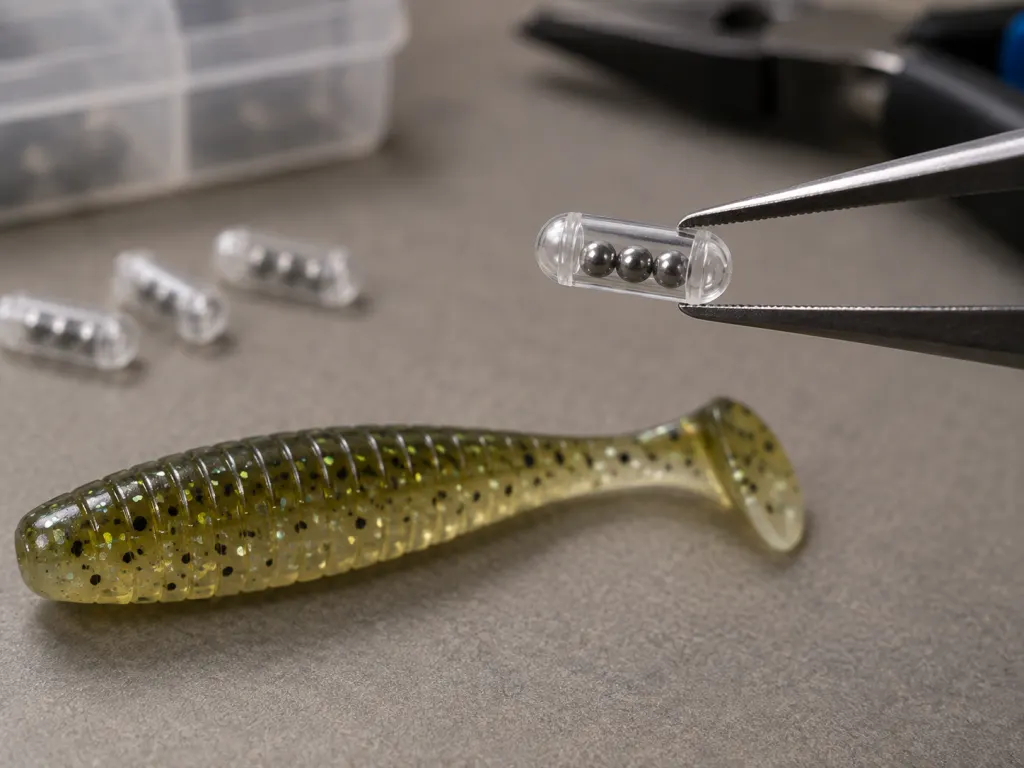
Artificial lures are built to offer a fish several kinds of cues at once: shape, movement, flash, color contrast, water displacement, and sometimes sound. The rattle is the sound-and-vibration cue. NOAA Fisheries notes that fish and invertebrates produce and respond to underwater sounds for activities such as feeding, avoiding predators, communicating, and spawning, and scientists study these sounds with passive acoustic monitoring at NOAA Fisheries. A lure rattle does not need to be loud to be useful; in water, even a small moving object can create a local disturbance.
The other part of the explanation is the lateral line. Most fish have a line of sensory structures along the body that helps them detect vibrations from prey, predators, schooling fish, and nearby obstacles, according to the University of Hawaii resource at manoa.hawaii.edu. A NOAA repository record from MIT Sea Grant similarly describes the fish lateral-line organ as a pressure-sensing system involved in schooling, tracking prey, and recognizing nearby objects at repository.library.noaa.gov. That does not mean every rattle improves every cast, but it explains why anglers experiment with them.
How To Tell It Apart From Other Small Objects
Start with the safest observation: look, do not crush or cut it open. A lure rattle is usually clear enough to see discrete balls inside, and those balls move independently. It should not contain liquid, powder, a wick, a filament, a button-cell shape, or electrical contacts. It should not have a printed scale or a medical-looking label. If the object has a cap, residue, chemical odor, sharp broken edges, or any unknown material inside, treat it as an unknown small item rather than fishing gear.
- Strong fishing clue: sealed clear tube, two or three loose metal balls, dry clicking sound, found with soft baits or hooks.
- Craft clue: many identical pieces stored with beads, jewelry findings, glue, or decorative supplies.
- Instrument clue: one small tube found inside a level, gauge, or measuring device, especially if liquid or a bubble is present.
- Safety clue: broken glass, loose tiny balls, unknown powder, or chemical smell means it should be isolated and handled carefully.
Where They Are Used On Lures
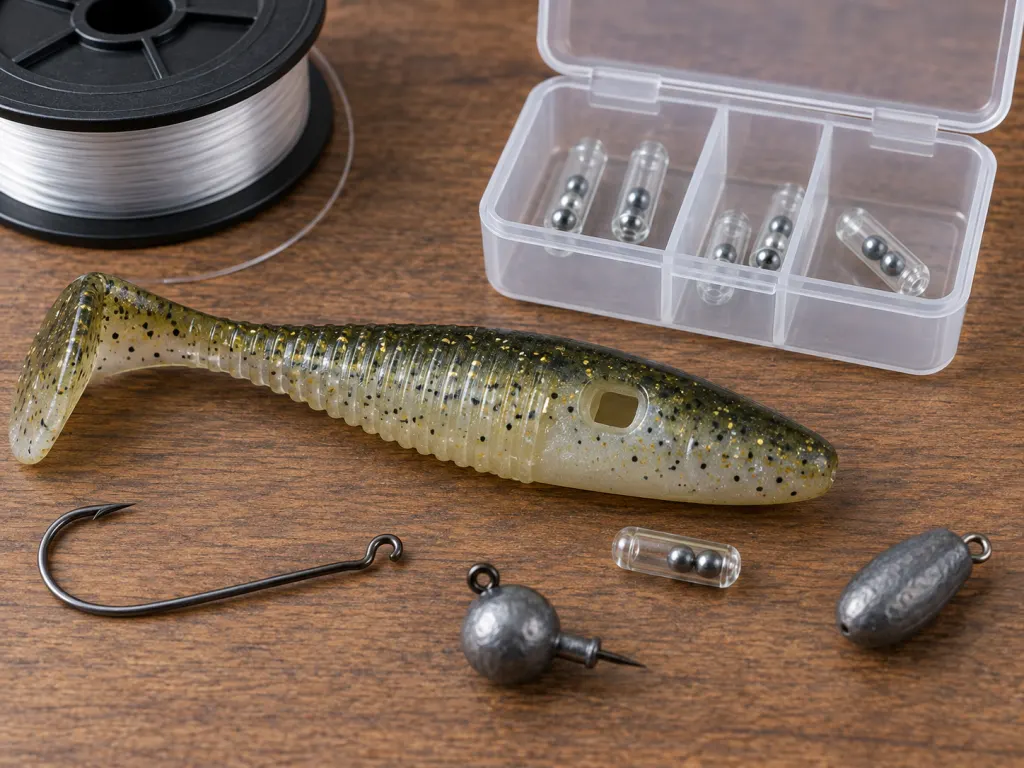
In soft plastic baits, a rattle is often inserted into the body of the lure so the plastic holds it in place. Tube baits, hollow-bodied lures, craw-shaped plastics, and larger worms are common candidates because they have enough material to grip the capsule. Some hard lures already have internal rattles built into their bodies; a separate loose glass tube is more likely an add-on insert than a part meant to be seen on the outside.
Placement changes the sound and movement. A rattle near the tail may click more as the bait flexes. One closer to the center may be quieter but more secure. A rattle pushed too shallowly can fall out; one forced too deeply may split the plastic or stop moving freely. For identification purposes, this matters because tiny puncture holes in soft baits, especially near the tail or belly, are another sign that the capsule belongs with fishing gear.
When A Rattle May Help Or Hurt Presentation
Anglers often use rattles when visibility is limited, such as stained water, low light, vegetation, current, or bottom contact where a little extra clicking may help a lure stand out. In clearer and calmer conditions, a quieter presentation may be preferable. This is practical angling judgment rather than a universal rule. The science supports the basic premise that fish can detect vibration and underwater sound; it does not guarantee that a specific rattle will outperform the same lure without one.
The best way to evaluate a rattle is simple comparison. If two similar lures are fished in similar places with the same retrieve, one with a rattle and one without, the angler can see whether the sound seems helpful that day. Water clarity, species, temperature, fishing pressure, lure size, and retrieve speed can all matter. The little glass tube is only one variable in a much larger setup.
Handling, Storage, And Household Safety
Because these capsules are tiny, they should be stored like small hardware rather than left loose in a drawer, pocket, carpet, or tackle tray that children can open. The U.S. Consumer Product Safety Commission explains that small parts that fit into a small-parts cylinder can present choking, aspiration, or ingestion hazards for children under three, and its small-parts guidance is available at cpsc.gov. A lure rattle is not a toy, and loose metal balls from a broken capsule are even easier to lose track of.
If a capsule breaks, avoid sweeping tiny glass with bare hands. Use stiff paper, tape, or a damp disposable towel to collect fragments, then place the waste in a puncture-resistant container before disposal. If the tiny balls appear magnetic, they are probably steel, but appearance alone is not a reliable materials test. Also separate unknown small glass tubes from food containers, spice jars, pill organizers, and craft jars so no one mistakes them for something else later.
Lead, Tackle Boxes, And Responsible Cleanup
The rattle itself usually contains small steel balls, but an old tackle box may also contain lead sinkers, jigs, or split shot. EPA materials on people and fishing sinkers advise using pliers rather than biting lead tackle and washing hands after handling lead sinkers or cleaning a tackle box at archive.epa.gov. EPA also notes that lost or swallowed lead fishing sinkers can affect waterbirds and encourages non-lead alternatives and cleanup of dropped tackle at archive.epa.gov. That broader tackle-box context is worth knowing when sorting inherited or garage-sale fishing supplies.
A practical sorting routine is to keep the rattles, hooks, blades, weights, and soft plastics in separate labeled containers. Dispose of broken glass rattles instead of putting them back into circulation. Gather loose hooks and rusty pieces with care. If local rules limit certain tackle materials, follow the rules for the water where you fish. Regulations vary by place, species, and season, so a local fish-and-wildlife agency is the right authority for legal details.
A Sensible Identification Checklist
If you are trying to identify one of these tubes at home, work from context to confirmation. Was it found in a tackle box, boat compartment, fishing vest, garage drawer with hooks, or packet of soft lures? Does it rattle when gently tilted? Are the balls separate and free-moving rather than fused or floating in liquid? Is the capsule sealed with smooth rounded ends? If most answers are yes, fishing lure rattle is the most reasonable identification.
If the context is not fishing, stay cautious. A similar-looking part from a craft kit may be decorative. A glass tube from a device may be a component. A vial with liquid or residue belongs in a different category entirely. The point is not to force one answer from appearance alone. The safest identification combines what the object looks like, where it was found, what it does when gently moved, and whether there are matching pieces or packaging nearby.
Wrap-Up
Small clear tubes with three tiny ball bearings are most plausibly fishing lure rattle inserts when they are sealed, dry, transparent, and found with tackle. They add a small clicking and vibration cue to artificial baits, which fits what fish biology tells us about vibration sensing and underwater sound. The practical next step is simple: store intact pieces in a labeled tackle container, discard broken ones carefully, keep all small parts away from children and pets, and separate them from food, medicine, and craft supplies if the source is uncertain.
Frequently Asked Questions
- → Are tiny glass tubes with metal balls inside usually fishing gear?
Yes, when they are sealed, dry, transparent, and found with lures or hooks, they are usually fishing lure rattle inserts. The identification is less certain if they were found with craft supplies, measuring tools, or unknown household parts.
- → Why would a lure need tiny ball bearings?
The balls move inside the capsule and create a faint clicking or vibration when the lure moves. That cue can change how the lure presents underwater, especially because many fish can sense vibration through the lateral line system.
- → Can I reuse one if it fell out of a soft bait?
You can reuse an intact rattle if the capsule is not cracked and the balls still move freely. If it has sharp edges, cloudy residue, broken ends, or loose balls, it is better to discard it carefully.
- → How should I store loose lure rattles?
Store them in a small labeled tackle container with a secure lid. Keep them away from children, pets, food containers, pill boxes, and craft jars so they are not mistaken for something else.
- → What if I am not sure the tube came from fishing tackle?
Do not open, crush, burn, or taste it. Place it in a sealed container, note where it was found, and compare it with nearby objects. If it contains liquid, powder, residue, or has a chemical smell, treat it as an unknown item rather than a lure rattle.
References
This content was developed and refined using reliable sources.
- https://www.manoa.hawaii.edu/exploringourfluidearth/biological/fish/structure-and-function-fish
- https://www.fisheries.noaa.gov/new-england-mid-atlantic/science-data/fish-and-invertebrate-acoustics
- https://repository.library.noaa.gov/view/noaa/9985
- https://www.cpsc.gov/Business--Manufacturing/Business-Education/Business-Guidance/Small-Parts-for-Toys-and-Childrens-Products
- https://archive.epa.gov/water/archive/web/html/humans.html
- https://archive.epa.gov/water/archive/web/html/animals.html
- https://poisonhelp.hrsa.gov/what-you-can-do