 Save
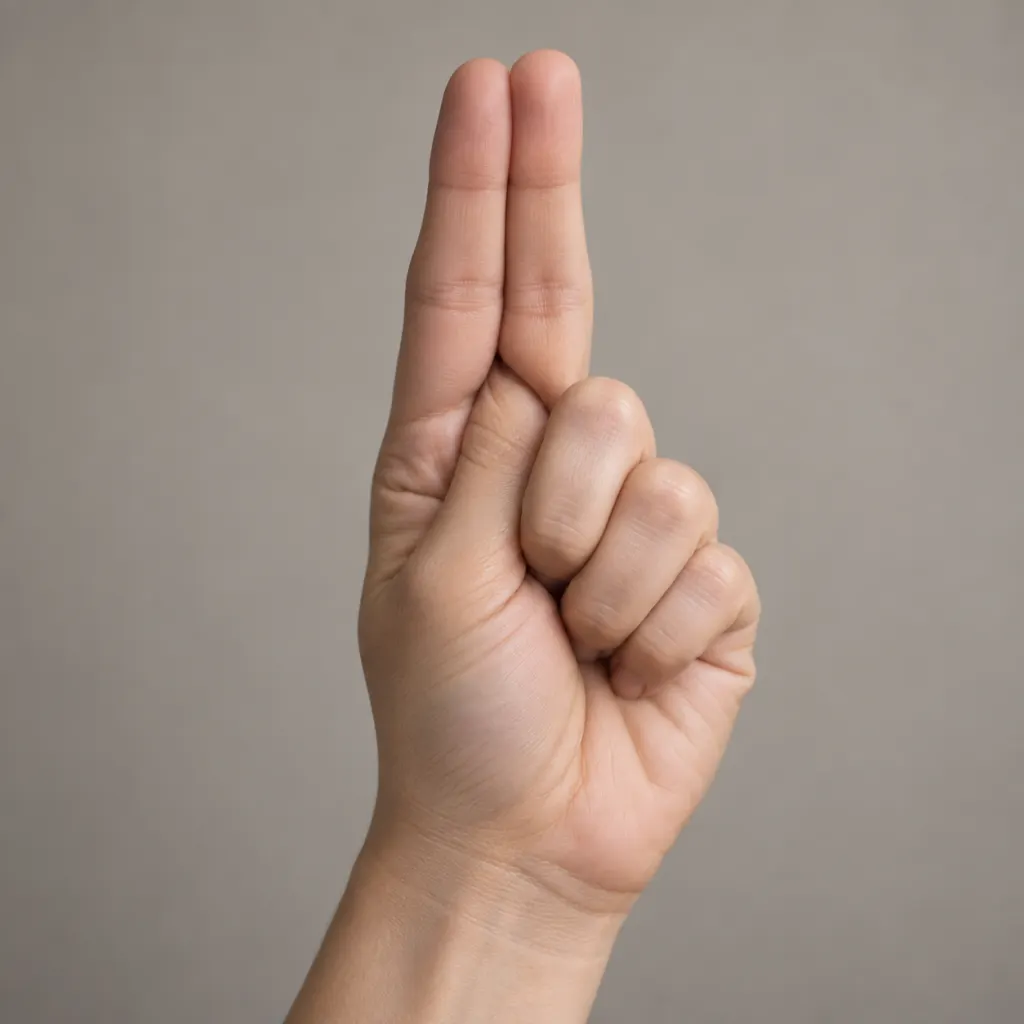
The trapped-thumb gesture usually refers to the “fig sign”: a closed fist with the thumb protruding between the index and middle fingers. Its meaning is not universal. In some settings it has been treated as an insulting or sexual emblem; in others it has appeared as a protective folk symbol, a refusal sign, a charm motif, or a harmless children’s game. The safest interpretation is contextual: who made it, where, toward whom, and in what social situation. Indiana University Press’s open edition of The Semiotics of French Gestures identifies the fig sign as a fist with the thumb protruding between the forefinger and middle finger and uses it as an example of a gesture whose meaning is conventional rather than self-explanatory.
What the Gesture Looks Like
The form is simple: curl the fingers into a fist, then place the thumb so it shows between the index finger and middle finger. That small thumb placement is what distinguishes the fig sign from an ordinary fist. In casual English descriptions, people often call it the trapped-thumb gesture because the thumb looks wedged or caught. Older European names include “fig sign,” “fig hand,” and Italian forms such as mano fico or mano fica. Those names matter because they point to a long symbolic history rather than a modern internet invention.
Still, shape alone is not enough to explain meaning. A fist can signal anger, emphasis, solidarity, play, or nothing at all. A thumb can indicate approval, point toward someone, or simply rest in a comfortable position. The fig sign becomes meaningful because communities have attached meaning to that exact arrangement over time. For a reader trying to identify it in a photo or conversation, the practical checklist is:
- Is the thumb visibly between the first two fingers rather than folded across the palm?
- Is the hand aimed at someone, held privately, worn as jewelry, or used in play?
- Is the setting casual, ritual, theatrical, artistic, political, or confrontational?
- Is the person using a known cultural sign, a sign-language handshape, or an unconscious hand posture?

Why One Gesture Can Carry Several Meanings
The fig sign is a good example of how nonverbal communication works. It feels as if a gesture should have one natural meaning, but gestures often behave more like words: they are learned inside communities, passed through families and social groups, and reshaped by contact with other traditions. The Indiana University Press text treats the fig sign as a conventional gesture, meaning its interpretation depends on shared cultural rules rather than on the hand shape alone. That helps explain why one viewer may see an insult while another sees a playful old-fashioned sign.
In some Mediterranean and European traditions, the gesture has been read as sexually suggestive and therefore insulting when aimed at another person. In other contexts, that same suggestive quality appears to have made the sign useful as a protective or deflecting symbol: a rude-looking emblem was imagined as something that could turn away misfortune, envy, or a hostile look. That double role may seem contradictory, but it is common in symbolic culture. A sign can be powerful because it is sharp, transgressive, comic, or socially risky.
The Protective Side: Amulets, Folklore, and the Evil Eye
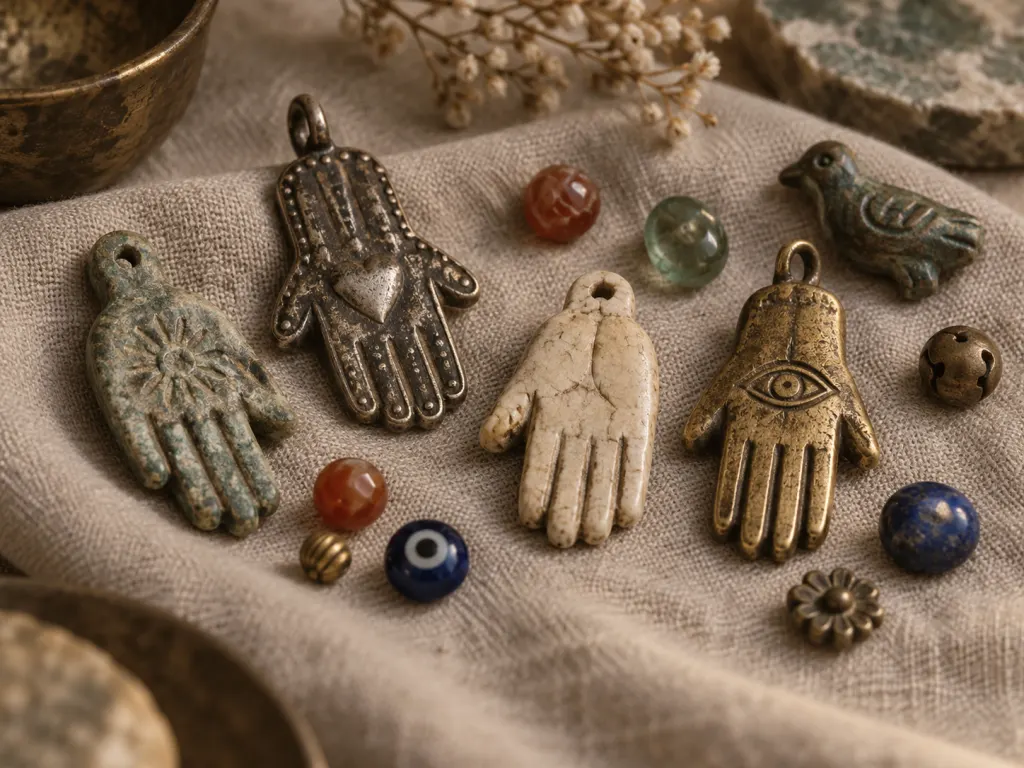
One reason the trapped-thumb gesture keeps appearing in discussions of symbolism is its link with protective objects. Across the ancient Mediterranean and nearby cultures, small worn objects could carry protective, devotional, familial, or identity-related meaning. The J. Paul Getty Museum’s publication on ancient carved ambers describes an Etruscan pendant as a potent amulet and discusses how ancient gestures can be difficult to interpret without inscriptions, burial context, or other evidence in the object record. That caution is useful here: the fig sign belongs to a world where body signs, jewelry, and belief often overlapped, but a modern viewer should avoid pretending every old hand image has one certain explanation.
In folk explanations, the fig sign is often connected with the “evil eye,” the belief that a hostile or envious gaze can bring misfortune. The article should not ask readers to accept that belief as a fact about the world; the important point is cultural. Many communities developed gestures, charms, beads, pendants, and spoken formulas to express protection, luck, refusal, or defiance. The trapped-thumb shape is one of the hand forms that has circulated in that symbolic neighborhood. As jewelry, it may be chosen for heritage, style, luck, family memory, or a general feeling of warding something off.
The protective reading also explains why the sign can appear on pendants rather than only in live gestures. A hand gesture lasts a second; an amulet freezes the gesture into an object. Art historians sometimes call such represented hand signs “chirograms,” meaning visible hand forms that carry meaning in art. The University of Vienna’s research record for Temenuzhka Dimova’s peer-reviewed book on hand language in art lists the fig sign among studied pictorial hand gestures, specifically describing the thumb inserted between the bent forefinger and middle finger as one of the indexed signs in European visual culture.

The Insulting or Dismissive Side
When the fig sign is directed at a person, especially in cultures where it remains recognizable as a rude emblem, it can be taken as a sharp insult. In milder accounts, it may mean a dismissive “you get nothing,” “no,” or “not for you.” In stronger accounts, it becomes a vulgar gesture. The difference matters. A private charm on a necklace and a hand thrust toward another person are not socially equivalent, even if the hand shape is similar.
This is where many short social-media explanations become too neat. They often compress the gesture into a single meaning: protection, insult, refusal, or joke. A better answer is that the trapped-thumb sign is polysemous, which means it can carry more than one meaning. Polysemy is normal in symbols. A rose can signify romance, political identity, grief, or a family name. A raised hand can greet, interrupt, vote, swear an oath, or warn someone to stop. The fig sign has survived precisely because it can move between refusal, mockery, bodily symbolism, protection, and play.
Why It Is Sometimes Connected With “Got Your Nose”
In the United States and several other English-speaking settings, the same hand shape is familiar from the children’s game “got your nose.” An adult pretends to steal a child’s nose, then shows the thumb between two fingers as the stolen nose. In that setting, the gesture is comic and affectionate, not a serious insult. This harmless use can make the older symbolism surprising to people who first learned the shape as a nursery joke.
The children’s-game meaning also shows how gestures can be reinterpreted. A hand shape may keep its visual form while losing its old social charge for a particular audience. A child does not need to know anything about European amulets or insult gestures to understand the pretend nose. The meaning is created by the game, the adult’s words, and the shared make-believe. Outside that game, however, especially in cross-cultural settings, the same hand shape may not feel innocent to everyone who sees it.
Do Not Confuse It With Sign Language
A trapped-thumb shape can resemble handshapes used in signed languages or manual alphabets, but resemblance is not the same as meaning. Gallaudet University Press describes The American Sign Language Handshape Dictionary as organizing ASL signs by handshape along with palm orientation, location, movement, and nonmanual signals. That is an important distinction: a signed language is a language system, not a loose collection of gestures, and handshape is only one part of how meaning is formed.
For that reason, it is usually unhelpful to say that the trapped-thumb gesture “means” one thing in all cases. In a sign-language context, the relevant question is what language is being used, what the palm orientation is, where the sign is placed, how it moves, and what appears before and after it. In a cultural-symbolic context, the question is different: whether the person is making a fig sign, wearing a fig-hand charm, joking with a child, refusing a request, or using a local insult. The same visual clue can belong to very different systems.
How to Read the Gesture in Real Life
If you see the gesture and want to know what it means, start with context rather than certainty. A pendant in an antique shop probably points toward charm symbolism or style. A hand shape in a painting may need art-historical context. A quick gesture during teasing may be playful. A fist aimed at someone during an argument may be meant as contempt. A still photo online may be impossible to read confidently because you cannot see the full moment.
A useful way to interpret it is to ask what job the gesture is doing. Is it replacing words? Is it intensifying words already spoken? Is it hidden, displayed, or directed? Is the person using it knowingly, ironically, or accidentally? The Indiana University Press source emphasizes that gestures can replace or complete speech in discourse, which fits the fig sign well: it can be a compact way to say something the speaker does not want to put into words.
Travel adds another layer. A gesture that feels harmless at home may be rude elsewhere, and a gesture that feels dramatic in one culture may be barely recognized in another. The polite move is simple: avoid aiming unfamiliar hand signs at people, especially in tense or formal situations. If someone else uses the sign and the meaning matters, ask calmly rather than accusing. “I may be reading that wrong; what did you mean by it?” is often better than assuming offense.
What It Means in Art and Old Images
In paintings, sculpture, and small objects, the trapped-thumb gesture should be read more cautiously than a live gesture. Art freezes a hand at one moment. The viewer may not know whether the image reflects a social insult, a theatrical convention, a charm, a joke, a moral symbol, or an artist’s quotation of another image. The Getty discussion of ancient gesture interpretation is a helpful reminder that scholars often weigh pose, object type, archaeological setting, and comparison with similar works before assigning meaning.
That does not make the gesture meaningless. It means the interpretation should match the evidence. If an old object is clearly an amulet, a protective reading may be plausible. If a figure is shown making the sign toward another person in a satirical or confrontational scene, an insulting reading may be more likely. If the hand is part of a larger religious, theatrical, or allegorical composition, it may need specialist interpretation. The more isolated the image, the more modest the claim should be.
A Practical Summary of the Main Meanings
The trapped-thumb gesture is best understood as a family of related meanings rather than a single definition. The main possibilities are:
- Fig sign or mano fico: the historical and cultural name for the fist-with-thumb-between-fingers form.
- Insult or mockery: a possible meaning when the hand is aimed at someone in cultures where the sign is recognized as rude.
- Refusal: a dismissive meaning in some traditions, roughly expressing denial, rejection, or “nothing for you.”
- Protection or luck: a folk-symbolic meaning, especially when the sign appears as an amulet or charm.
- Children’s play: the harmless “got your nose” use familiar in many families.
- Signed-language resemblance: a look-alike handshape that should be interpreted only within the relevant signed language.
So what does it mean when you see it? It means “look closer.” The physical gesture is easy to identify, but the social meaning comes from use. A charm, a joke, an insult, a refusal, and a sign-language handshape can share a silhouette while belonging to different worlds. That is the real lesson of the trapped-thumb gesture: hands do not speak in isolation. They speak through culture, timing, relationship, and memory.
Wrap-Up
The trapped-thumb gesture is most commonly known as the fig sign or mano fico. It has been used as a rude emblem, a dismissive refusal, a protective charm motif, and a playful children’s-game hand shape. Because the same form can mean different things in different settings, the most accurate reading depends on context: place, audience, direction, purpose, and whether the hand shape appears in speech, art, jewelry, play, or signed language.
Frequently Asked Questions
- → What is the trapped-thumb gesture called?
It is most often called the fig sign in English. In Italian-influenced discussions, it may be called mano fico or mano fica. The physical form is a fist with the thumb showing between the index and middle fingers.
- → Is the trapped-thumb gesture always rude?
No. It can be rude in some cultures and situations, especially when directed at another person. But it can also appear as a protective charm, a joking refusal, an art motif, or the harmless “got your nose” gesture in children’s play.
- → Why is it called the fig sign?
The name comes from older European symbolic language around the fig and the hand shape. The sign has been interpreted in different ways across time, including bodily symbolism, mockery, refusal, and protection.
- → Can I wear a fig-hand charm without meaning to insult anyone?
Many people wear fig-hand charms as heritage jewelry, folk symbolism, or a luck-related object. The meaning changes when the sign is aimed at a person, so wearing a pendant is usually read differently from making the gesture toward someone.
- → Is the trapped-thumb gesture part of sign language?
A similar handshape can appear in signed-language systems, but that does not make every trapped-thumb gesture a sign-language word. In signed languages, meaning depends on handshape, movement, palm orientation, location, facial grammar, and context.