 Save
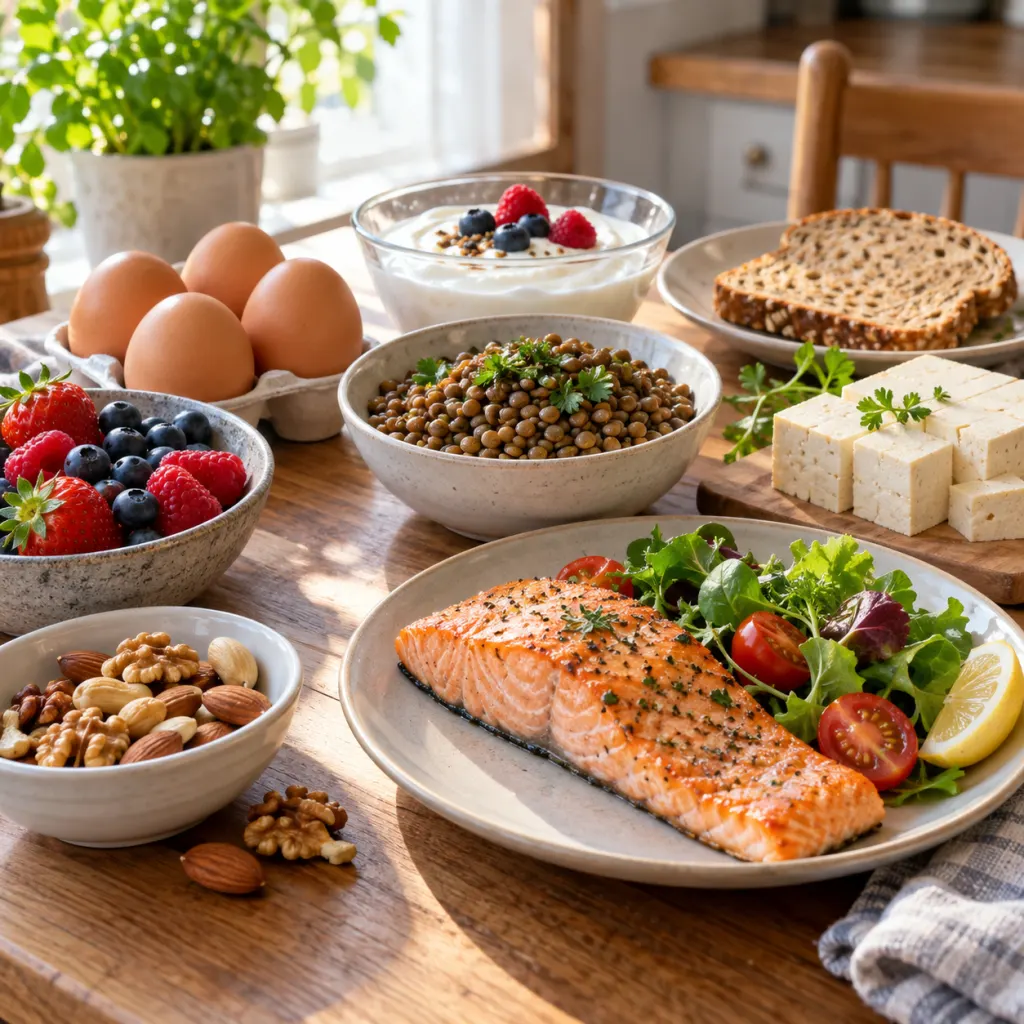
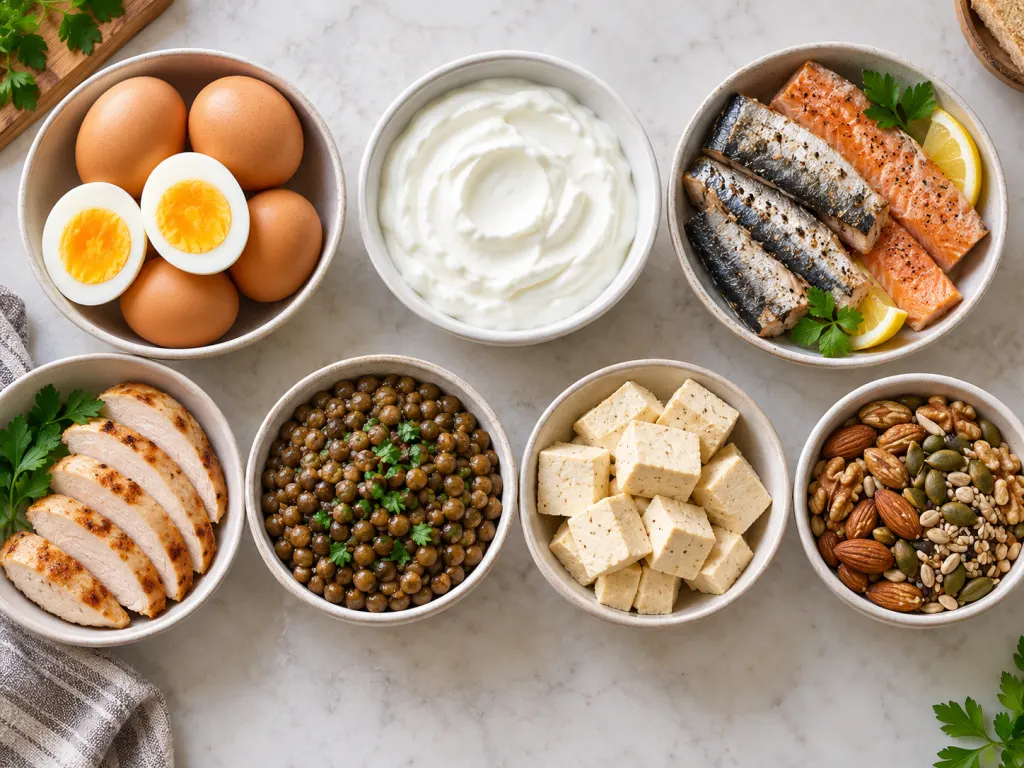
The direct answer: gaining or maintaining muscle after 60 usually comes from the combination of progressive strength exercise, enough calories, and regular protein-rich meals, not from any single food. Seven foods worth building around are eggs, Greek yogurt or cottage cheese, salmon or sardines, chicken or turkey, beans or lentils, tofu or tempeh, and nuts or seeds. These choices cover animal and plant proteins, useful minerals, and meal formats that are easy to repeat. Public-health guidance also matters here: older adults are advised to include muscle-strengthening activity at least two days each week, along with aerobic and balance activity CDC.
Food Helps Most When Training Gives It a Job
After 60, the goal is not to chase a dramatic transformation. A better goal is to make everyday strength easier to keep: standing up from a chair, carrying groceries, climbing stairs, gardening, traveling, and staying steady on your feet. Food supports that work by supplying amino acids from protein, calories for training and recovery, and nutrients such as calcium, vitamin D, magnesium, zinc, and B vitamins. MedlinePlus explains that protein foods are broken down into amino acids, and that animal foods such as meat, milk, fish, and eggs, as well as plant foods such as soy, beans, legumes, nut butters, and some grains, can all contribute to protein intake MedlinePlus.
The practical version of the popular “I gained muscle after 60” idea is this: make strength work consistent, then make meals consistent enough to support it. The Academy of Nutrition and Dietetics notes that adults need protein for strong bodies and that some older adults do not get enough protein to maintain muscle mass EatRight. That does not mean every meal must be huge. It means each meal should have a clear protein anchor, plus enough vegetables, fruit, grains, or starchy foods to make the plate satisfying.

What Changes After 60
Muscle becomes harder to build and keep with age, especially when daily movement drops. EatRight describes age-related muscle loss as a common challenge and notes that regular resistance training is central for building and keeping muscle EatRight. Appetite can also shift. Some people feel full sooner, cook less often, chew meat less comfortably, or skip meals without noticing. That is why easy foods matter. The best choices are not the fanciest; they are the foods you can actually prepare, chew, afford, and repeat.
A Simple Plate Pattern
For most healthy older adults, the useful pattern is a protein anchor at each meal, a source of carbohydrates for training energy, colorful plants for variety, and a fat source that helps the meal feel satisfying. This pattern can flex around culture, budget, chewing comfort, and appetite. If you already like eggs, beans, yogurt, tofu, fish, poultry, or nuts, you do not need to start over. You can simply place them more deliberately across the day.
- Breakfast: eggs with toast and fruit, or Greek yogurt with oats and berries.
- Lunch: lentil soup, chicken salad, tofu stir-fry, or beans over rice.
- Snack: cottage cheese, nut butter on whole-grain toast, or yogurt with seeds.
- Dinner: salmon, sardines, turkey, tempeh, or beans with vegetables and a grain or potato.
The 7 Foods Worth Repeating
1. Eggs. Eggs are convenient, familiar, and easy to combine with vegetables, toast, potatoes, beans, or leftovers. MedlinePlus lists one large egg as an ounce-equivalent example of a protein-rich food MedlinePlus. For someone who struggles to eat much in the morning, eggs can make breakfast feel more complete without much prep.
2. Greek yogurt or cottage cheese. Dairy foods can supply protein along with calcium. NIH’s calcium fact sheet lists milk, yogurt, and cheese as rich natural sources of calcium, and notes that some fortified foods can contribute as well NIH ODS. Plain Greek yogurt can be savory with herbs and cucumber or sweet with fruit; cottage cheese works with tomatoes, peaches, toast, or baked potatoes.
3. Salmon or sardines. Fish offers protein, and some fish also bring vitamin D or calcium depending on the choice. NIH explains that vitamin D is found naturally in a few foods, is added to others, and plays roles in calcium absorption, bone mineralization, and neuromuscular function NIH ODS. Canned sardines or salmon with bones can be especially practical because they are shelf-stable and listed by NIH as calcium-containing foods NIH ODS.
4. Chicken or turkey. Lean poultry is a straightforward protein anchor for people who eat meat. It can be cooked soft in soup, shredded into grain bowls, folded into omelets, or added to sandwiches. The advantage is flexibility: one batch can support several meals. For readers who prefer a step-by-step strength plan alongside food changes, the related guide How to Do Strength Exercises as an Older Adult is a useful companion.
5. Beans or lentils. Beans and lentils bring plant protein plus carbohydrates and fiber. MedlinePlus lists cooked beans and lentils among protein-rich food examples MedlinePlus. They are also budget-friendly and easy to soften into soups, stews, dips, and rice dishes. If large servings feel too filling, start with smaller portions added to meals you already eat.
6. Tofu, tempeh, or edamame. Soy foods are useful because they fit many dietary patterns and can be cooked soft or firm. MedlinePlus includes tofu, tempeh, and other soy protein products as good protein sources MedlinePlus. Tofu can blend into smoothies or sauces, crisp in a skillet, or simmer in soups. Tempeh has a firmer texture and works well in stir-fries or sandwiches.
7. Nuts and seeds. Nuts, nut butters, sunflower seeds, chia, hemp, flax, and walnuts can add protein, calories, and texture when appetite is modest. They are not usually the whole protein plan by themselves, but they make meals easier to enrich. A spoonful of peanut butter in oatmeal, tahini stirred into yogurt sauce, or ground flax in a smoothie can make a small meal more substantial. For more fruit-focused ideas, see Fruits That Support Strength in Older Adults.
Timing Matters, But Consistency Matters More
Many people get most of their protein at dinner and very little earlier in the day. After 60, that pattern can make breakfast and lunch too light to support active days. A practical adjustment is to spread protein foods across meals: eggs or yogurt in the morning, beans or poultry at lunch, fish, tofu, tempeh, or lentils at dinner, and a smaller protein-rich snack when needed. EatRight’s strength-building guidance places protein within the broader picture of calories, carbohydrates, fat, and training, rather than treating protein as the only factor EatRight.
How to Personalize the Seven Foods
The best list is the one that fits your life. If chewing is difficult, choose softer forms: scrambled eggs, yogurt, cottage cheese, lentil soup, tofu, flaked fish, or shredded poultry. If cooking energy is low, use canned beans, canned fish, rotisserie-style poultry with the skin removed, frozen edamame, or single-serve yogurt. If your budget is tight, beans, lentils, eggs, peanut butter, tofu, and canned fish often stretch well. If you eat mostly plant-based meals, rotate beans, lentils, soy foods, nuts, seeds, and whole grains rather than relying on one item. For a broader food list, the related article 6 Foods That Support Muscle Gain offers another way to build meals around familiar ingredients.
Vitamin and mineral context matters, too. Older adults often need nutrient-dense foods because calorie needs may decrease while some nutrient needs remain important. EatRight emphasizes nutrient density for older adults, especially calcium and vitamin D EatRight. NIH’s vitamin D fact sheet explains that vitamin D helps maintain calcium and phosphate concentrations and is involved in neuromuscular function NIH ODS. Food choices cannot personalize lab values or supplement decisions, but they can make the daily pattern stronger.

Common Mistakes That Make Muscle Goals Harder
The first mistake is eating less than you realize. When appetite drops, protein usually drops with it. The second is relying on one “healthy” food while the rest of the day stays thin. A yogurt at breakfast helps, but it cannot carry the whole day if lunch is tea and crackers and dinner is a few bites. The third is separating food from movement. CDC guidance for older adults includes muscle-strengthening activity at least two days each week, because muscles need a regular challenge CDC. The fourth is ignoring preference. A plan built on foods you dislike will not last. Use the seven foods as a menu, not a rulebook.
When to Ask for Individual Guidance
Some situations deserve personal guidance: unplanned weight change, poor appetite, swallowing trouble, dental problems, new fatigue, kidney concerns, recovery after a hospital stay, or uncertainty about supplements. EatRight notes that sarcopenia is complex and can be influenced by nutrition, physical activity, dental or oral problems, and other factors, and that registered dietitian nutritionists can help people meet calorie, protein, and nutrient needs EatRight. A clinician or registered dietitian can also help adapt protein choices to medical history, chewing comfort, appetite, and budget.
Bottom Line
Food can support muscle after 60 when it is paired with regular strength work and enough total nourishment. Start with one upgrade, not a complete overhaul: add eggs to breakfast, keep Greek yogurt in the refrigerator, use canned salmon or sardines for a quick meal, batch-cook beans, try tofu in soup, or add nuts and seeds to a snack. Then connect the food plan to training. The related guide 3 Vitamins That Support Muscle Health After 60 can help you think through nutrient context without turning meals into a supplement checklist. The real win is repeatability: ordinary foods, eaten often enough, in meals that help you keep moving.
Wrap-Up
After 60, muscle support is a pattern, not a shortcut. The seven foods in this guide can help you build meals around protein and nutrient density, but they work best alongside muscle-strengthening activity, enough calories, and individual guidance when health history or appetite makes eating more complicated.
Frequently Asked Questions
- → Can food alone help me build muscle after 60?
Food is important, but it works best with muscle-strengthening activity. Protein-rich meals supply building blocks, while strength exercise gives muscles the regular challenge they need. CDC guidance for adults 65 and older includes muscle-strengthening activity at least two days each week.
- → Do I have to eat meat to support muscle?
No. Meat, poultry, fish, eggs, and dairy can all contribute protein, but plant foods such as beans, lentils, tofu, tempeh, soy foods, nuts, seeds, and some grains can also help. A varied pattern matters more than relying on one food.
- → What if I do not feel hungry in the morning?
Start small. A boiled egg, a few spoonfuls of Greek yogurt, cottage cheese with fruit, or a smoothie with tofu or yogurt may be easier than a large breakfast. The aim is to stop the first meal from being almost protein-free.
- → Are protein powders necessary after 60?
They are not automatically necessary. Many people can build a useful pattern with ordinary foods. If appetite, chewing comfort, or medical history makes eating difficult, a registered dietitian or qualified clinician can help decide what fits your situation.
- → Which of the seven foods is the best first choice?
Choose the one you will actually repeat. Eggs, yogurt, beans, tofu, poultry, fish, nuts, and seeds can all be useful. The best first step is usually adding one reliable protein food to the meal where your day is currently lightest.
References
This content was developed and refined using reliable sources.
- https://www.cdc.gov/physical-activity-basics/guidelines/older-adults.html
- https://medlineplus.gov/ency/article/002467.htm
- https://ods.od.nih.gov/factsheets/VITAMIND/HealthProfessional
- https://ods.od.nih.gov/factsheets/Calcium-HealthProfessional
- https://www.eatright.org/health/wellness/healthful-habits/healthy-weights-for-healthy-older-adults
- https://www.eatright.org/health/health-conditions/malnutrition-and-deficiencies/sarcopenia
- https://www.eatright.org/fitness/physical-activity/benefits-of-exercise/4-keys-to-strength-building-and-muscle-mass