 Save
Visible signs that can point toward liver disease include yellowing of the skin or whites of the eyes, dark urine, pale or clay-colored stool, swelling in the abdomen or lower legs, itchy skin, and easy bruising. The key point is balance: these changes deserve attention, but they do not confirm the cause by themselves. Many liver conditions produce few outward signs at first, and some symptoms overlap with digestive, blood, heart, or infection-related problems. MedlinePlus notes that liver disease symptoms may include abdominal and leg swelling, easy bruising, stool and urine color changes, and jaundice, while Mayo Clinic similarly lists jaundice, swelling, itching, dark urine, pale stool, tiredness, nausea, appetite loss, and bruising among possible signs of liver problems MedlinePlus Mayo Clinic.
What “visible” really means
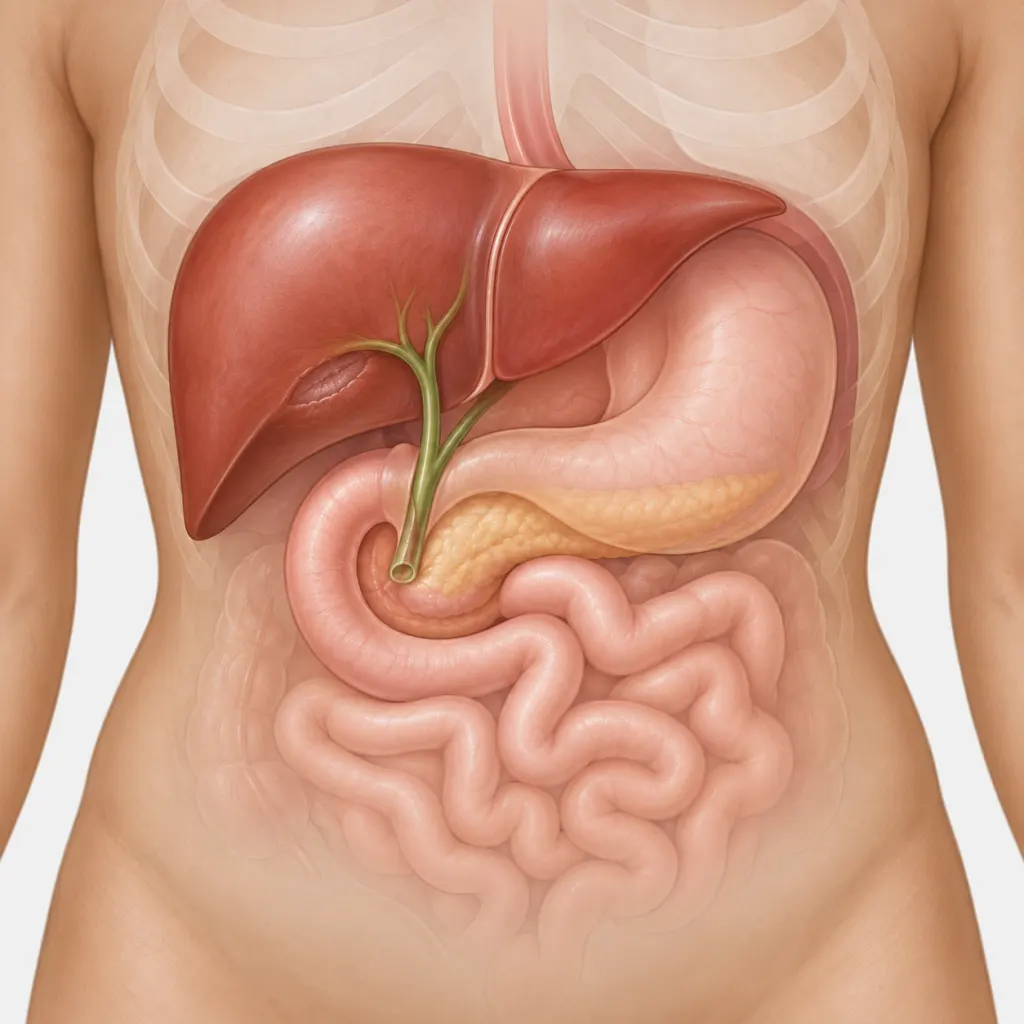
The liver sits in the upper right part of the abdomen and helps with digestion, energy storage, waste handling, and proteins involved in normal blood clotting. Because it is inside the body, liver trouble rarely announces itself as one single external mark. Instead, visible clues often show up indirectly: a color change in the eyes, swelling from fluid retention, bruises that seem easier than usual, or urine and stool colors that look noticeably different from a person’s normal pattern.
That is why a visible-sign checklist is useful only when it is used with context. A bruise after bumping a table is different from frequent unexplained bruising. A darker morning urine sample can reflect dehydration, while persistently tea-colored urine with yellow eyes is more concerning. A swollen ankle after standing all day is common; swelling that is new, persistent, or paired with a tight abdomen deserves a medical conversation.
- Yellow skin or yellowing in the whites of the eyes: often described as jaundice and easier to notice in the sclera, the white area of the eye.
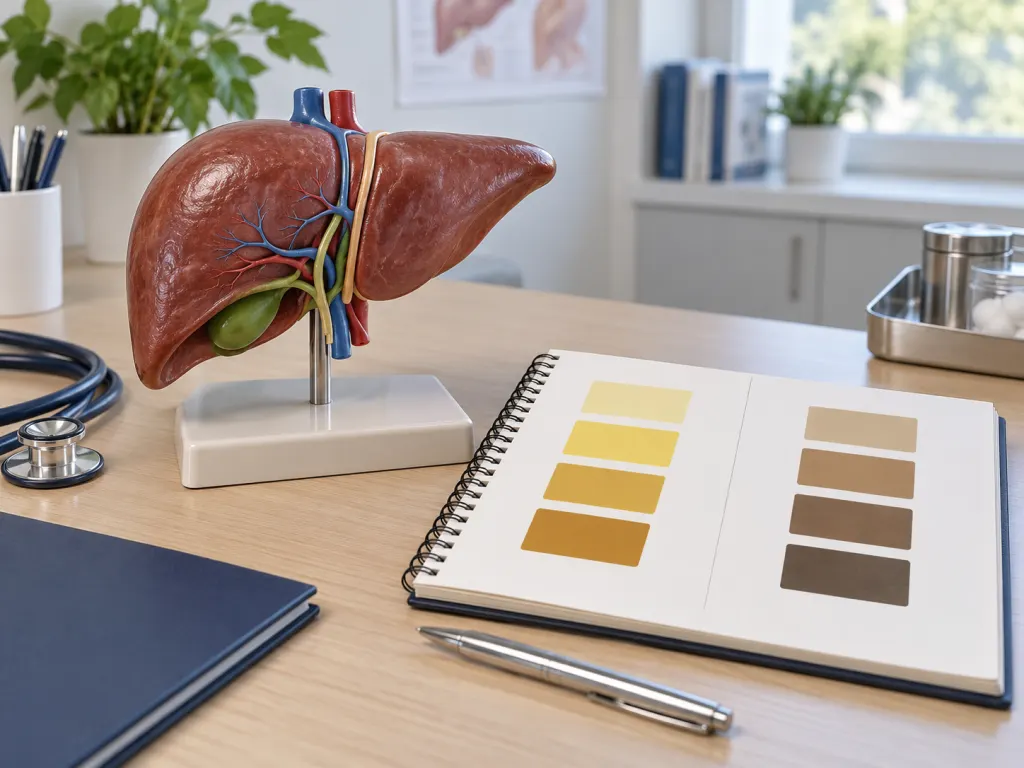
- Dark urine or pale stool: color shifts can happen when bile pigment handling is disrupted, but they need professional interpretation.
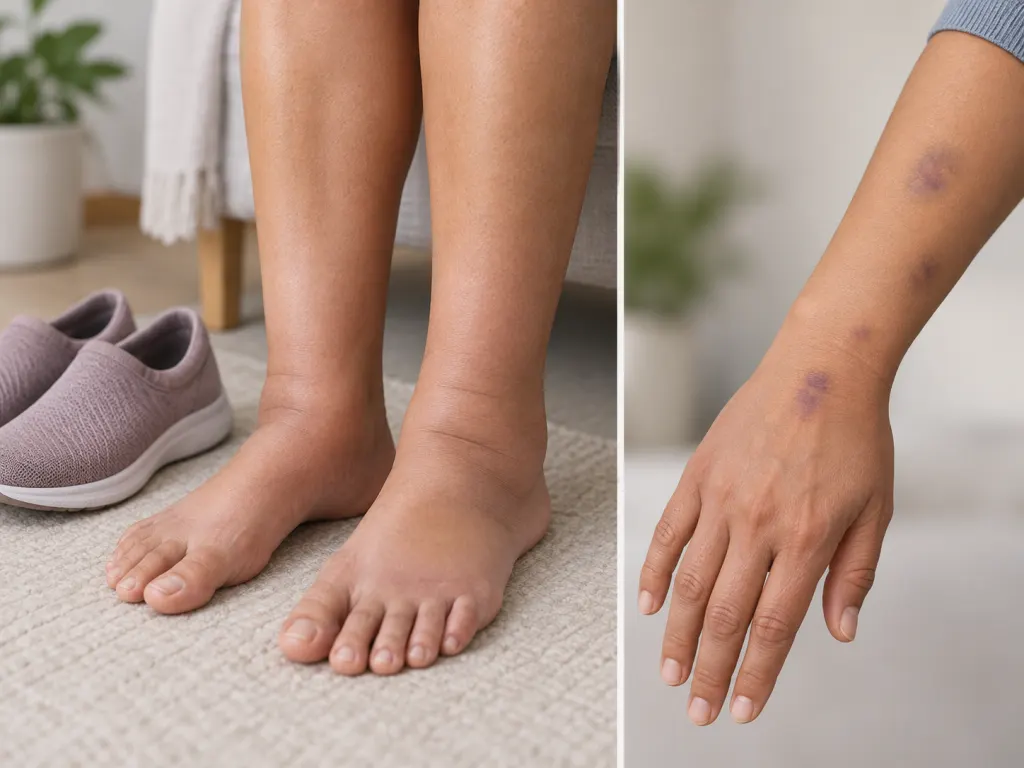
- Abdominal swelling or swelling in the legs and ankles: fluid buildup can occur in more advanced liver scarring and other medical conditions.
- Itching and scratch marks: itching can have many causes, but persistent widespread itching can be part of some liver or bile-flow problems.
- Easy bruising or bleeding: the liver helps make proteins involved in clotting, so changes in bruising patterns should not be ignored.
Jaundice can be subtle, especially across skin tones
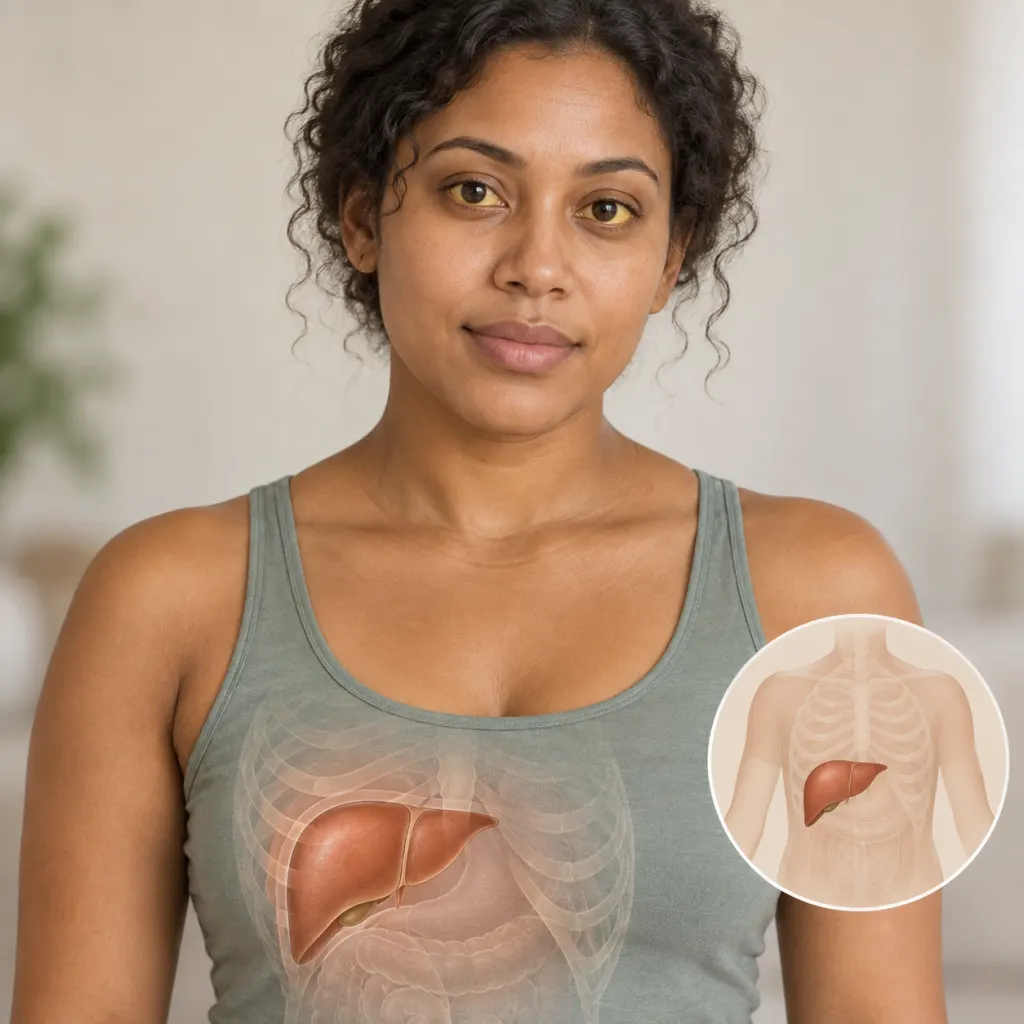
Jaundice is one of the most widely recognized visible signs because it can tint the skin and the whites of the eyes yellow. Mayo Clinic and the NHS both note that yellowing of the skin may be harder to see on Black or brown skin, which makes the whites of the eyes, the inside of the mouth, and comparison with a person’s usual coloring especially important Mayo Clinic NHS.
Jaundice is not limited to one liver condition. It can appear with hepatitis, bile duct problems, cirrhosis, alcohol-related liver disease, gallbladder-related issues, and other conditions that affect bilirubin handling. The practical takeaway is not to guess the cause from color alone. If yellowing is new, persistent, or paired with dark urine, pale stools, fever, abdominal pain, vomiting, or unusual tiredness, it is a reason to arrange medical evaluation promptly.
Swelling, bruising, and itching need context
Some visible signs become more common when liver function has been affected for a longer time. NIDDK explains that cirrhosis may have no symptoms in its earliest stage, and that symptoms may not appear until the liver is badly damaged. As liver function worsens, possible signs can include easy bruising or bleeding, swelling in the lower legs, ankles, or feet, swelling of the abdomen from fluid buildup, severe itchy skin, dark urine, and jaundice NIDDK.
These signs still are not specific to the liver. Leg swelling can also be related to veins, kidneys, heart function, salt intake, immobility, or other causes. Itching can be dermatologic, allergic, medication-related, kidney-related, or linked with bile-flow problems. Bruising can be related to age, minor trauma, blood conditions, nutrition, or products a person takes. The pattern matters: new swelling plus abdominal fullness, yellowing, dark urine, pale stool, confusion, or bleeding is a stronger signal than any one mild symptom alone.
Common symptoms can still be meaningful
Not every liver-related clue is visible across the room. Fatigue, loss of appetite, nausea, weight loss without trying, and discomfort in the upper right abdomen may occur with several liver conditions, but they are also common in many non-liver illnesses. NIDDK lists tiredness, poor appetite, unintentional weight loss, nausea, vomiting, and upper-right abdominal discomfort among possible early symptoms of cirrhosis NIDDK. The NHS lists similar early symptoms for alcohol-related liver disease, while noting that early stages do not always cause symptoms NHS.
The reason these vague symptoms deserve a place in an article about visible signs is that they often give meaning to what a person sees. Yellow eyes plus profound tiredness and loss of appetite is different from a brief color concern in isolation. Swollen ankles plus appetite loss, abdominal fullness, and easier bruising is different from ankle swelling after a long flight. A clinician usually considers the full timeline, not just the most obvious visible change.
Fat-related liver disease may have few outward clues
Fat buildup in the liver linked with metabolic health is often discussed because it can be present without dramatic outward signs. NIDDK describes nonalcoholic fatty liver disease, now also referred to as metabolic dysfunction-associated steatotic liver disease, as usually having few or no symptoms. When symptoms do occur, tiredness or discomfort in the upper right abdomen may appear. NIDDK also lists overweight or obesity, insulin resistance or type 2 diabetes, abnormal blood fat levels, high blood pressure, higher-than-normal blood glucose, and a large waist size among related health conditions or traits NIDDK.
This matters because an article focused only on yellow eyes can miss a large part of real-world liver care. A person can have no obvious skin change and still need a conversation about liver health if routine blood work, metabolic health history, imaging, or family history raises concern. Visible signs are often late clues, while earlier concerns may come from lab patterns, imaging, or a clinician’s physical exam.

Viral hepatitis can look like other illnesses
Viral hepatitis is another reason not to rely only on visible signs. The CDC says a person can have hepatitis without symptoms, and that symptoms of viral hepatitis can include dark urine, clay-colored stools, tiredness, fever, joint pain, loss of appetite, nausea, stomach pain, vomiting, and yellow skin or eyes CDC. Some of those signs overlap with stomach viruses, flu-like illness, gallbladder problems, or other infections.
The CDC also states that testing is the only way to know if someone has hepatitis CDC. That statement is useful because it keeps the reader away from self-labeling. A person can notice a pattern and describe it clearly, but the cause requires medical evaluation, and sometimes blood testing. If there has been a possible exposure to infected blood or body fluids, or if symptoms such as yellowing, dark urine, pale stool, fever, and abdominal pain appear together, it is reasonable to seek timely medical advice.
When symptoms need urgent attention
Some visible or felt symptoms deserve faster action because they can signal bleeding, severe infection, advanced liver stress, or another serious condition. Mayo Clinic advises seeking medical help right away for abdominal pain so severe that a person cannot stay still Mayo Clinic. The NHS lists urgent warning signs in the context of alcohol-related liver disease, including vomiting blood, black sticky stool, abdominal pain, difficulty breathing, sudden confusion, dizziness, or difficulty staying awake NHS.
In practical terms, emergency care is appropriate if a person has severe abdominal pain, vomits blood, has black tar-like stool, becomes suddenly confused, has trouble breathing, cannot stay awake, or looks very unwell with yellowing. These are not situations for watchful waiting. If the person might faint, is confused, or is having trouble breathing, they should not drive themselves; local emergency services or another safe transport option is the safer path.
How a clinician usually sorts out the pattern
A medical visit for possible liver disease usually begins with the timeline: when the color change, swelling, itching, bruising, pain, tiredness, or appetite change began; whether symptoms come and go; and whether anything else changed around the same time. MedlinePlus notes that imaging tests and liver function tests can check for liver damage and help identify liver diseases MedlinePlus. The NHS describes blood tests, scans such as ultrasound or CT, and sometimes liver biopsy as tests doctors may use when alcohol-related liver disease is a concern NHS.
Readers can make that appointment more useful by bringing a simple symptom record rather than a conclusion. Helpful details include photos of eye or skin color changes in natural light, notes about urine or stool color, the location and timing of swelling, any fever or abdominal pain, alcohol use patterns, recent travel or exposures, family history of liver disease, and a complete list of prescriptions, supplements, and over-the-counter products. The goal is to give the clinician enough information to decide what testing, if any, fits the situation.
What not to assume from a single sign
A single visible sign rarely tells the whole story. Yellow eyes can be linked with liver or bile-flow problems, but the cause still needs evaluation. Dark urine can occur with dehydration, some foods, some supplements, urinary issues, or bilirubin changes. Pale stool can be diet-related for a short time, but persistent clay-colored stool is more concerning. Itching can come from dry skin, eczema, allergies, kidney problems, bile-flow problems, or other causes. Bruising can reflect minor trauma or blood-clotting concerns.
The safest way to use visible signs is as a prompt for observation and medical conversation. Notice the pattern, write down the timeline, and consider what else is present: fever, pain, appetite loss, weight change, swelling, confusion, bleeding, or exposure risk. If the symptom is mild but persistent, an appointment is reasonable. If it is severe, sudden, or paired with the urgent signs above, faster care is warranted.
Wrap-Up
Visible signs of liver disease are best understood as clues, not conclusions. Yellowing of the skin or eyes, dark urine, pale stool, abdominal or leg swelling, itching, easy bruising, and bleeding symptoms all deserve attention, especially when more than one appears together. At the same time, many liver conditions can be quiet early, and common symptoms such as tiredness, nausea, appetite loss, and upper-right abdominal discomfort overlap with many other health issues. A clear symptom timeline, attention to urgent warning signs, and timely medical evaluation are more reliable than trying to identify the cause by appearance alone.
Frequently Asked Questions
- → What is usually the most recognizable visible sign of liver disease?
Yellowing of the whites of the eyes or skin, called jaundice, is one of the most recognizable visible signs. It can be harder to notice on darker skin tones, so changes in the whites of the eyes, inside the mouth, urine color, stool color, and overall symptom pattern may be especially useful to describe to a clinician Mayo Clinic.
- → Can someone have liver disease without visible signs?
Yes. Several liver conditions may have few or no outward signs early. NIDDK notes that fat-related liver disease is usually associated with few or no symptoms, and cirrhosis may also have no symptoms in its earliest stage NIDDK NIDDK.
- → Are dark urine and pale stool always liver-related?
No. Color changes can have several causes, and a single episode may not mean the liver is involved. Persistent dark urine, pale or clay-colored stool, yellowing of the eyes, itching, abdominal pain, or swelling is more concerning as a pattern and should be discussed with a qualified health professional.
- → When should visible signs be treated as urgent?
Seek urgent medical help for severe abdominal pain, vomiting blood, black sticky stool, sudden confusion, trouble breathing, difficulty staying awake, or looking very unwell with yellowing. Mayo Clinic and the NHS both identify severe pain or bleeding and confusion-related symptoms as reasons for immediate medical attention Mayo Clinic NHS.
- → What should I write down before a medical appointment?
Track when the visible change started, whether it is constant or comes and goes, any yellowing, urine or stool color changes, swelling, itching, bruising, fever, pain, appetite change, weight change, alcohol use patterns, possible hepatitis exposure, family history, and all prescriptions or supplements. Photos taken in natural light can help document changes without relying on memory.
References
This content was developed and refined using reliable sources.
- https://www.medlineplus.gov/liverdiseases.html
- https://www.mayoclinic.org/diseases-conditions/liver-problems/symptoms-causes/syc-20374502
- https://www.niddk.nih.gov/health-information/liver-disease/cirrhosis/symptoms-causes
- https://www.niddk.nih.gov/health-information/liver-disease/nafld-nash/symptoms-causes
- https://www.cdc.gov/hepatitis/about/index.html
- https://www.nhs.uk/conditions/alcohol-related-liver-disease-arld