 Save
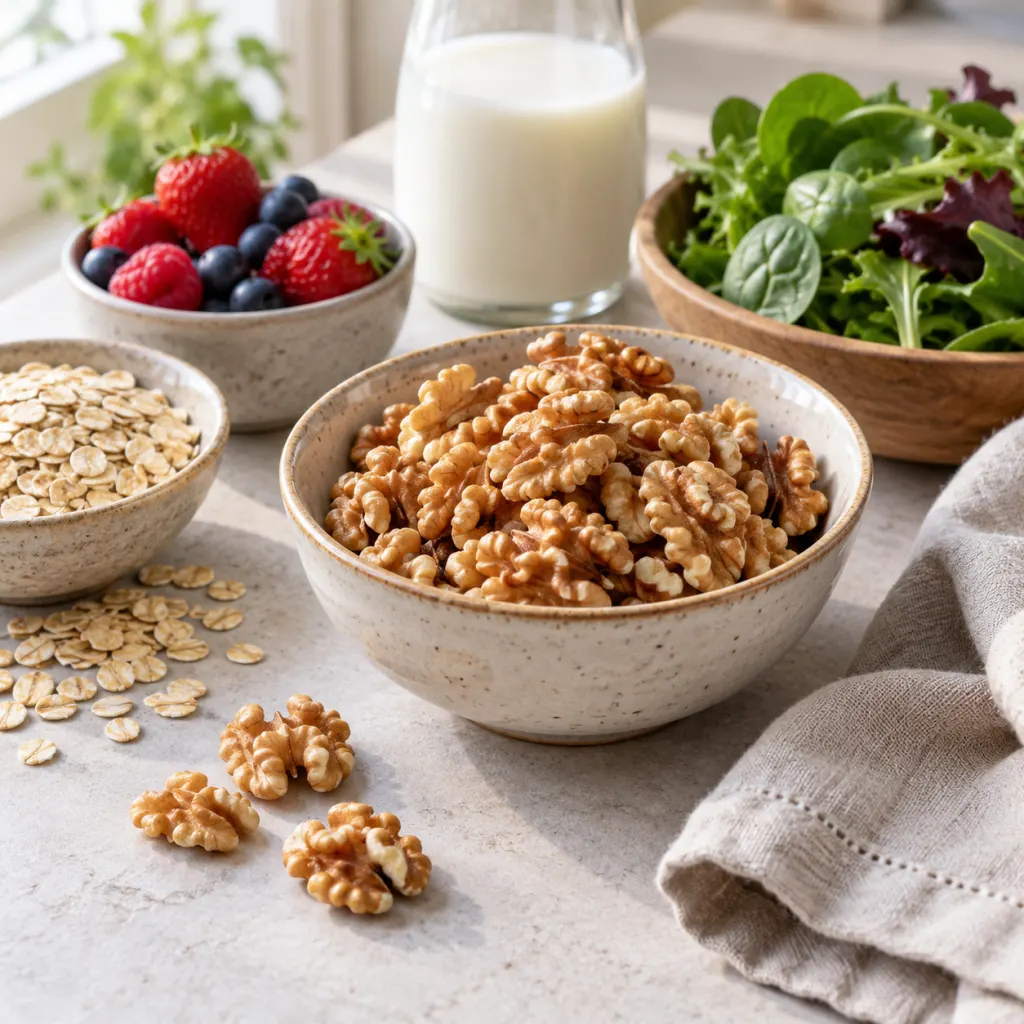
Walnuts can be a useful everyday food because they combine mostly unsaturated fats, plant-based omega-3 ALA, fiber, protein, magnesium, copper, and naturally occurring plant compounds in a small, satisfying portion. The strongest way to think about their benefit is simple: they are not a special fix, but they can make a balanced plate easier to build. A small handful can add richness to oatmeal, salads, yogurt, grain bowls, roasted vegetables, or homemade snacks while keeping the ingredient list short.
What Makes Walnuts Nutritionally Distinctive
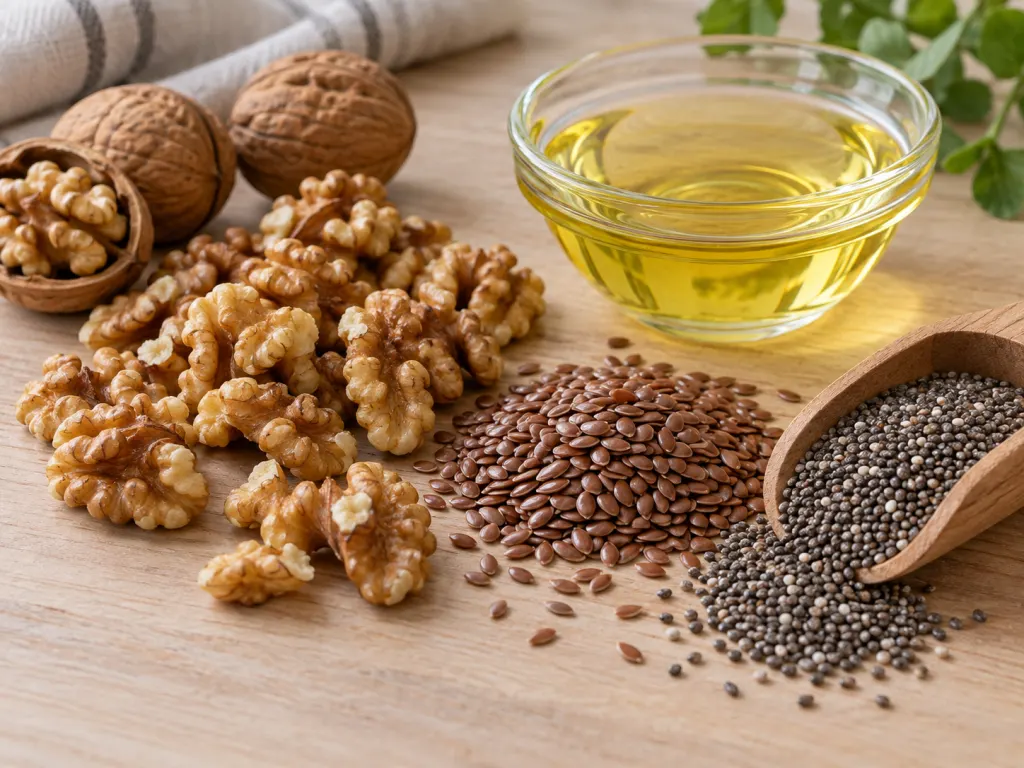
Walnuts stand out among common nuts because of their alpha-linolenic acid, usually shortened to ALA. The National Institutes of Health Office of Dietary Supplements lists English walnuts as a food source of ALA and reports 2.57 grams of ALA in a 1-ounce serving, while also explaining that ALA is an essential omega-3 fatty acid that must come from food https://ods.od.nih.gov/factsheets/Omega3FattyAcids-HealthProfessional/. That does not make walnuts the same as oily fish, which provide EPA and DHA, but it does make them a notable plant option for people who want more variety in their sources of unsaturated fat.
The Main Nutrients in Walnuts
A practical walnut benefit is nutrient density. You get fat, protein, fiber, and minerals in one crunchy ingredient. The fat is what makes walnuts rich and satisfying, but the fiber and protein also matter because they help the nut behave more like a food than a garnish. The NIH magnesium fact sheet notes that nuts, seeds, legumes, green leafy vegetables, and whole grains are good sources of magnesium; magnesium contributes to normal energy production, muscle and nerve function, and bone structure https://ods.od.nih.gov/factsheets/Magnesium-HealthProfessional/. Walnuts also contain copper, and the National Academies reference on copper describes nuts and seeds as major contributors of dietary copper https://www.ncbi.nlm.nih.gov/books/NBK222312/.
Why Plant Omega-3 ALA Matters
ALA helps explain why walnuts are often discussed in relation to heart-smart and brain-supportive eating patterns. NIH describes omega-3 fatty acids as parts of cell membranes and notes that they are used by the body in normal signaling functions https://ods.od.nih.gov/factsheets/Omega3FattyAcids-HealthProfessional/. The same source also makes an important distinction: the body can convert some ALA into EPA and DHA, but that conversion is limited. In plain terms, walnuts are a good plant source of ALA, while seafood remains a different kind of omega-3 source. Both ideas can be true at the same time.
How Walnuts Fit Into a Balanced Eating Pattern
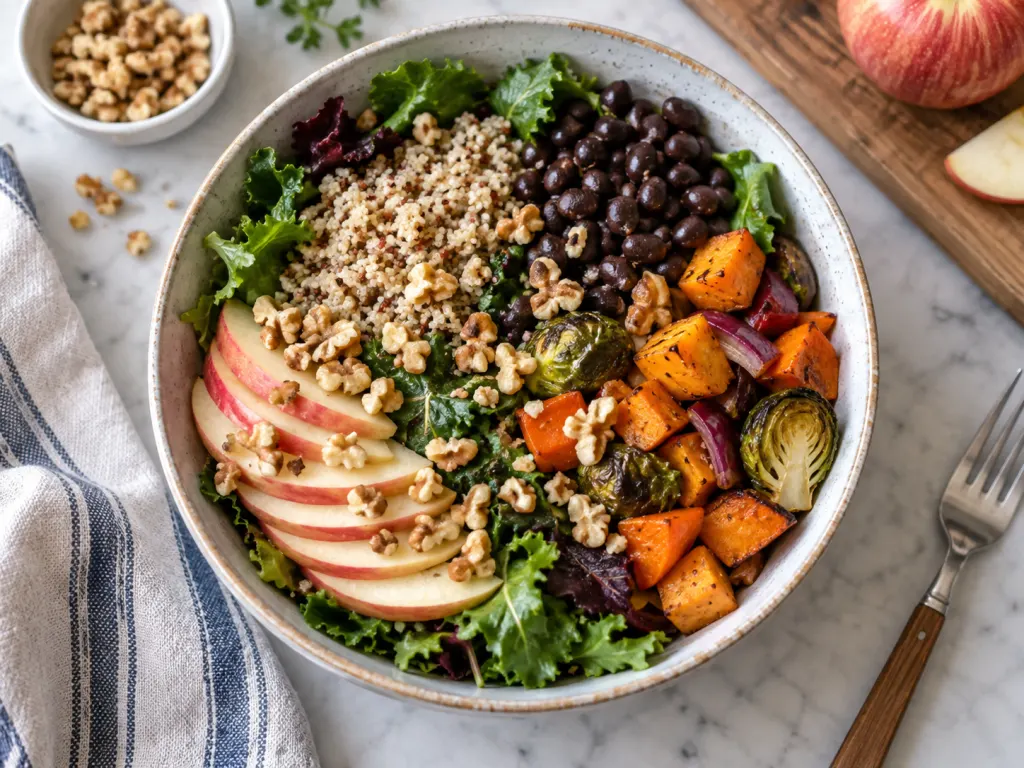
The current U.S. Dietary Guidelines emphasize whole, nutrient-dense foods, including nuts and seeds, as part of an overall eating pattern rather than treating one ingredient as the center of nutrition https://odphp.health.gov/our-work/nutrition-physical-activity/dietary-guidelines/current-dietary-guidelines. That framing is useful for walnuts. Their value increases when they help you build a better meal: walnuts over plain yogurt with fruit, walnuts in a lentil salad, walnuts folded into a grain bowl, or walnuts paired with sliced apple. Their value is less clear when they are buried in a very sweet dessert and treated as the health part of the dish.
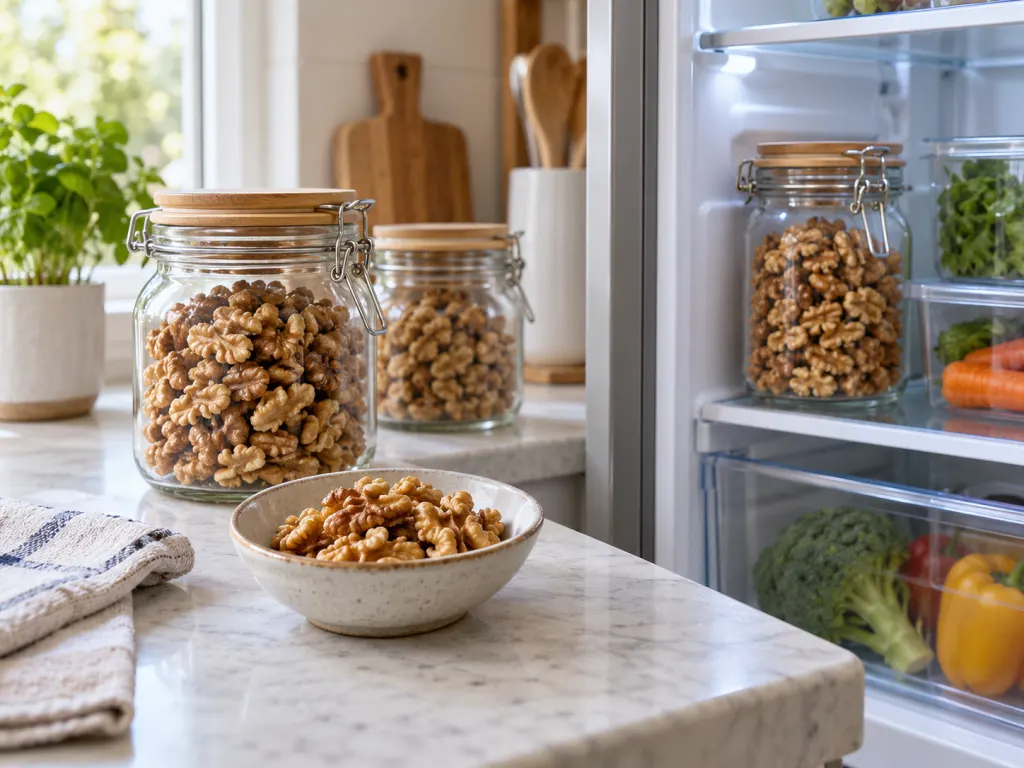
Walnuts are also convenient because they do not require cooking. For many people, the realistic barrier to balanced eating is not knowing what is ideal; it is having something satisfying available when life is busy. Keeping walnuts in a sealed container can make a quick snack feel more complete, especially when paired with fruit, vegetables, whole grains, or a protein-rich food.
Simple Ways to Use Walnuts Well
Think of walnuts as a texture and flavor tool, not only as a snack. They bring bitterness, richness, crunch, and aroma, which can make simple foods more appealing without relying on heavy sauces or a large amount of added sweetener. Useful everyday pairings include:
- Breakfast: chopped walnuts over oatmeal, plain yogurt, cottage cheese, or whole-grain toast.
- Salads: toasted walnuts with leafy greens, pears, apples, roasted squash, beets, or a sharp vinaigrette.
- Vegetable dishes: crushed walnuts over roasted carrots, green beans, cauliflower, or Brussels sprouts.
- Grain bowls: walnuts with farro, quinoa, brown rice, herbs, beans, and lemon.
- Snacks: walnuts with fresh fruit, dried fruit in a modest amount, or a few whole-grain crackers.
- Baking: chopped walnuts in muffins, quick breads, granola, or pancakes, while still paying attention to the full recipe.
A Sensible Portion Looks Smaller Than Many People Expect
Because walnuts are energy-dense, a useful serving is usually a small handful rather than an open-ended bowl. NIH uses a 1-ounce serving in its omega-3 food table for English walnuts https://ods.od.nih.gov/factsheets/Omega3FattyAcids-HealthProfessional/. You do not need to count every half walnut to benefit from them, but it helps to pour some into a small dish instead of eating directly from a large bag. This keeps the choice intentional and makes it easier to combine walnuts with other foods on the plate.
Raw, Toasted, Salted, or Flavored
Raw walnuts are mild and slightly tannic, while toasted walnuts taste deeper and crunchier. Both can fit into a balanced kitchen. Toasting also makes a small amount feel more aromatic, which can be helpful when you want flavor without using a large portion. Dry toasting in a skillet or oven is usually enough. If you buy packaged walnuts, compare ingredient lists. Plain or lightly salted walnuts leave more room for seasoning the rest of the meal, while heavily sweetened or candy-coated versions are better understood as sweets that contain nuts.
Storage Matters Because Walnuts Are Rich in Unsaturated Fat
Walnuts are more delicate than they look. Their unsaturated fats can develop stale or paint-like flavors when exposed to heat, light, and air for too long. UC Davis Postharvest Research and Extension Center advises storing nuts in a sealed container in the refrigerator or freezer when they will not be used within a few weeks https://postharvest.ucdavis.edu/es/node/7786. At home, that means buying only what you can use comfortably, sealing the package well, and smelling walnuts before adding them to food. If they smell sharp, chemical-like, or unpleasantly stale, discard them.
Who Should Be Careful With Walnuts
Walnuts are tree nuts, and tree nuts are among the major food allergens identified by the U.S. Food and Drug Administration. The FDA lists walnuts as an example of tree nuts and describes possible allergy symptoms that can involve the skin, mouth, digestive tract, breathing, dizziness, or loss of consciousness https://www.fda.gov/food/buy-store-serve-safe-food/food-allergies-what-you-need-know. Anyone with a known walnut or tree-nut allergy should avoid walnuts unless they have individualized guidance from a qualified clinician. If serious allergy symptoms occur after eating, emergency care is appropriate.
Whole or chopped nuts also require care around infants and young children. The CDC lists whole or chopped nuts and seeds among potential choking hazards for young children and advises preparing foods in shapes, sizes, and textures appropriate for a child's development https://www.cdc.gov/infant-toddler-nutrition/foods-and-drinks/choking-hazards.html. For families, that means smooth, thinned nut preparations or finely ground forms may be more appropriate than whole walnut pieces, depending on age, chewing skill, and pediatric guidance.
The Bottom Line on Walnut Benefits
The best case for walnuts is steady and ordinary. They provide plant omega-3 ALA, unsaturated fats, fiber, protein, magnesium, copper, and flavor in a form that is easy to use. They also make plant-forward meals more satisfying, which can help a simple plate feel finished. The main limits are portion size, allergy awareness, choking safety for young children, and freshness. Walnuts work best as one helpful ingredient inside a larger pattern that includes vegetables, fruit, beans, whole grains, seafood or other protein foods as appropriate, and other nuts and seeds.
Wrap-Up
Walnuts are a practical, nutrient-dense nut rather than a dramatic health shortcut. Their most useful qualities are their plant omega-3 ALA, mostly unsaturated fat, fiber, protein, magnesium, copper, crunch, and versatility. Use them in small portions, store them cold if you will not finish them soon, choose plain versions most often, and avoid them when tree-nut allergy is a concern.
Frequently Asked Questions
- → Are walnuts healthier raw or toasted?
Both raw and toasted walnuts can fit into balanced eating. Raw walnuts are mild and tender, while toasted walnuts have a deeper aroma and crunch. Choose dry-toasted or lightly toasted walnuts most often, and check labels on packaged flavored versions.
- → How many walnuts make a practical serving?
A common practical serving is about 1 ounce, which is roughly a small handful. Measuring occasionally can help you learn what that looks like, especially because walnuts are rich and energy-dense.
- → Do walnuts provide the same omega-3 fats as fish?
No. Walnuts provide ALA, a plant omega-3. Fish such as salmon, sardines, and trout provide EPA and DHA. The body can convert some ALA, but conversion is limited, so walnuts and seafood are best understood as different omega-3 sources.
- → Can children eat walnuts?
Walnuts can be part of family meals when prepared safely for age and chewing ability. Whole or chopped nuts can be choking hazards for young children, so parents and caregivers should use developmentally appropriate textures and ask a pediatric professional for individualized guidance.
- → How should walnuts be stored?
Keep walnuts sealed and away from heat, light, and air. If you will not use them within a few weeks, store them in the refrigerator or freezer. Discard walnuts that smell stale, sharp, or paint-like.
References
This content was developed and refined using reliable sources.
- https://ods.od.nih.gov/factsheets/Omega3FattyAcids-HealthProfessional
- https://ods.od.nih.gov/factsheets/Magnesium-HealthProfessional
- https://www.ncbi.nlm.nih.gov/books/NBK222312
- https://odphp.health.gov/our-work/nutrition-physical-activity/dietary-guidelines/current-dietary-guidelines
- https://postharvest.ucdavis.edu/es/node/7786
- https://www.fda.gov/food/buy-store-serve-safe-food/food-allergies-what-you-need-know
- https://www.cdc.gov/infant-toddler-nutrition/foods-and-drinks/choking-hazards.html