 Save
Fiction note: This is an original fictional story. The characters and events are invented. When the plot mentions guardianship and adoption, it uses general narrative language; real requirements vary by place. Public court resources describe adoption as creating a permanent parent-child relationship and guardianship as a separate caregiving path with court involvement: California Courts adoption guide and Delaware Courts permanent guardianship overview.
Chapter One: The Note Under the Sugar Bowl
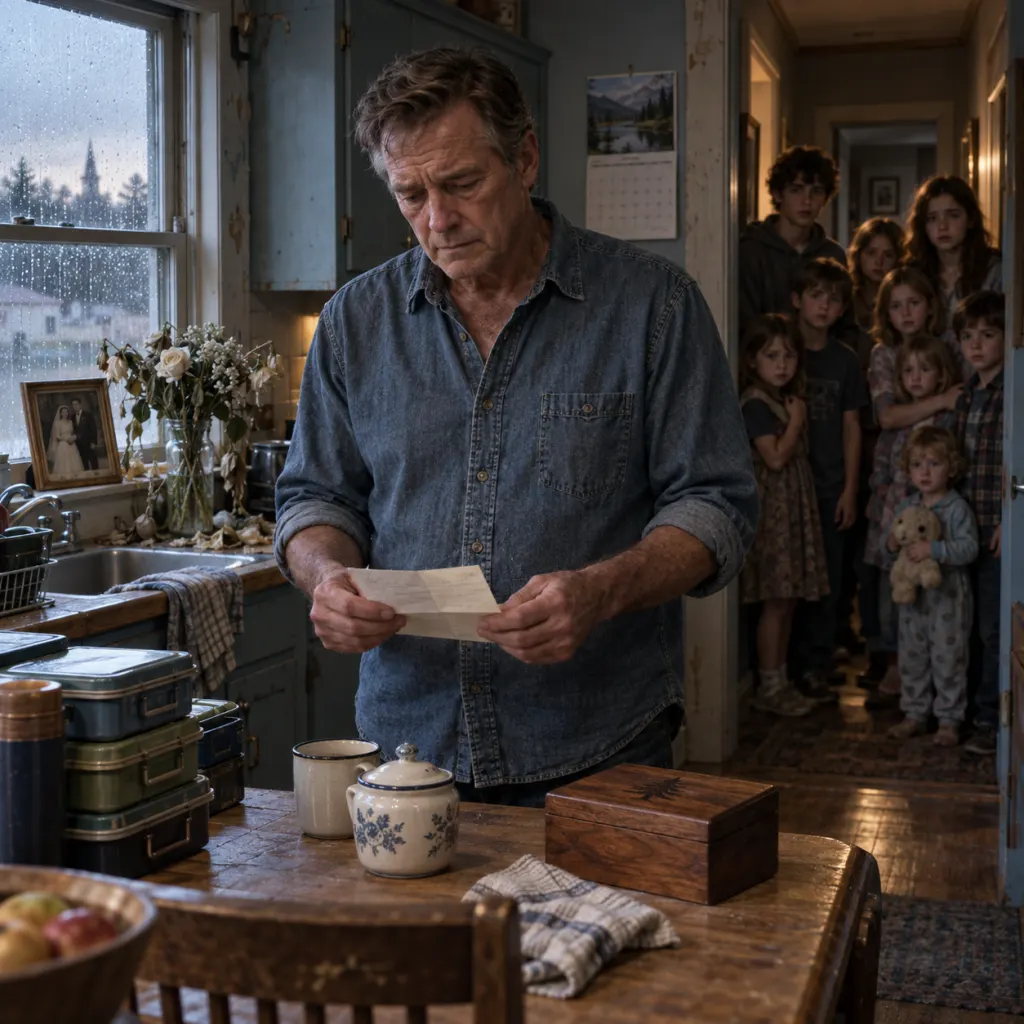
The note was under the sugar bowl because Mara knew I would reach for coffee before I reached for panic.
It was 5:12 on a Tuesday morning, six days after our wedding. Rain tapped the kitchen window in the uneven rhythm of someone changing their mind. My tie from the reception still hung over the back of a chair. The bouquet, once white and yellow and brave, leaned from a jar beside the sink with brown edges curling in on themselves.
I had one hand on the coffee tin and one eye on the hallway where nine children slept in rooms that had been rearranged to make space for me. Nine. Mara's children before the wedding, my stepchildren by a vow still warm enough to feel unreal. Lila, sixteen, who watched everything. Theo, fourteen, who pretended not to need anyone. Clara, twelve, with a notebook full of lists. Miles, eleven, all elbows and questions. Nora, nine, who sang when she was afraid. Ben, seven, who could not keep his shoelaces tied. Iris, six, who slept with a flashlight. Junie, four, who called me Mister Owen even after the wedding. Sam, two, soft-footed and solemn.
I saw the paper before I understood it. Mara's handwriting was careful, each letter sitting upright as if behaving well could soften what it carried.
I am sorry. I cannot be the wife you deserve or the mother they need. Do not look for me. Tell them I loved them before I failed them.
I read it three times. The first time, I waited for the sentence that would turn it into a mistake. The second time, I listened for her in the house: a drawer closing, a floorboard answering her heel, the old kettle being set on the stove. The third time, Lila appeared in the doorway wearing a gray sweatshirt too thin for the weather.
Where is she?
she asked.
Behind her, one by one, the house woke. Theo's face hardened before he knew what had happened. Clara gripped the doorframe. Miles kept saying, What?
as if the word were a tool he had misplaced. Nora began to hum under her breath, a little tune with nowhere to land.
I folded the note once, then unfolded it because hiding it felt like beginning the wrong life.
She left a note,
I said. My voice sounded borrowed. I don't know where she went.
Sam came in last, dragging a blanket. He held it up to me with both fists, not asking for his mother yet because he was young enough to believe adults appeared when needed.
That was the first terrible gift Mara gave me: before I could decide what kind of man I was, nine faces asked me to become one.
Chapter Two: Inventory of a Broken Morning
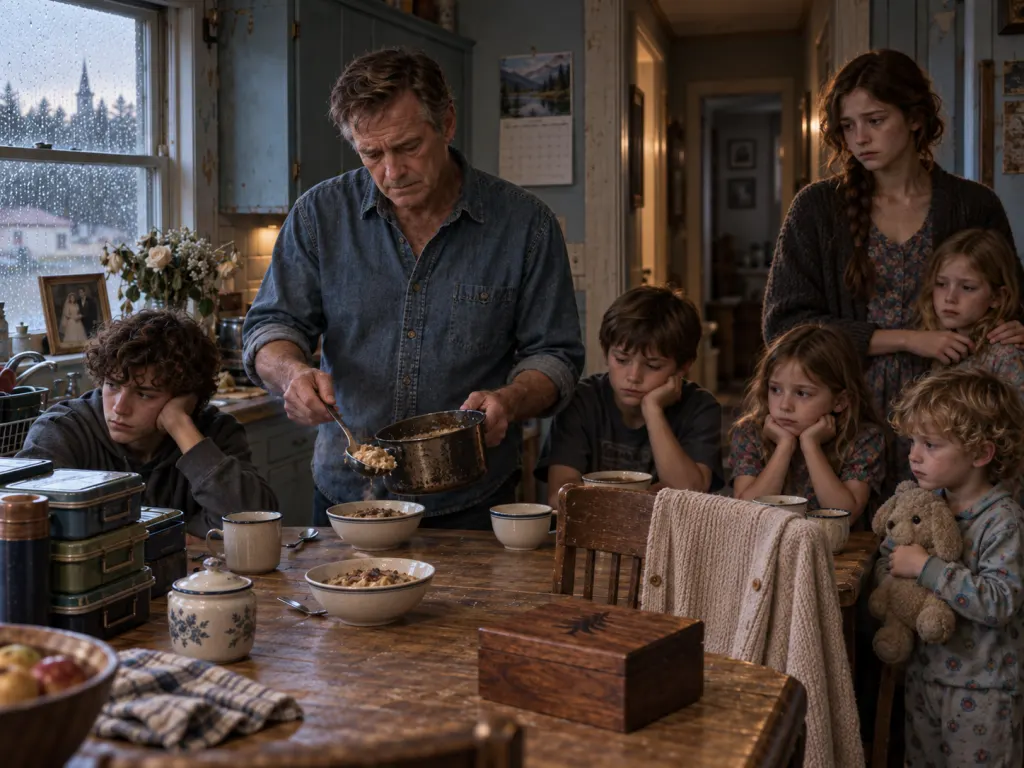
I made oatmeal because it was the only breakfast that could stretch without complaint. I burned the bottom layer. No one said so. The older children ate as if chewing were a duty. The younger ones stared at the empty chair at the end of the table.
The chair was absurdly ordinary. Mara's blue cardigan hung over it. One sleeve trailed nearly to the floor. I kept looking at that sleeve, furious at cloth for being more loyal than its owner.
Maybe she went to the store,
Iris whispered.
With her suitcase?
Theo said.
Lila stood so fast her spoon clattered. Don't.
One word, and the room changed. I saw then what I had missed during my brief courtship with Mara. These children had weather systems inside them. Lila was the barometer. Theo was thunder held behind teeth. Clara recorded the damage. Miles tried to repair it before anyone asked. The smaller ones searched the adults' faces for instructions on how frightened to be.
I called Mara's sister, then her old neighbor, then the bakery where she sometimes worked extra shifts. No one had seen her. Her sister, Celia, cried with a sound that did not convince me; not fake exactly, but prepared. I hated myself for noticing.
By noon, a woman from a county office sat at our table with a folder and a face trained into kindness. She asked careful questions. Was I legally responsible for the children? Had Mara named anyone? Did the children have relatives who could take them?
Nine pairs of ears listened from three rooms.
I wanted to say, They're mine,
and have the world accept the sentence because I meant it. But meaning was not paperwork. Love, I learned that day, may begin in the chest, but children need it to reach the school office, the dentist's desk, the emergency form, the grocery line, the rent envelope.
That night I sat on the stairs while the house breathed around me. I had known Mara for four months. I had been married to her for six days. I was thirty-nine years old, a cabinetmaker with a truck that coughed on cold mornings and an apartment lease I had broken because she said the children needed room for another adult who would stay.
I could call someone. I could say it was impossible. I could become a footnote in their lives, the almost-stepfather who left because the mother did first.
Junie came out in her nightgown and sat beside me without asking permission.
Mister Owen?
Yeah, June bug?
If Mommy is lost, who makes pancakes on Saturdays?
I looked at her small hands, at the chipped pink polish Mara had painted there two nights before the wedding. My answer should have been practical. I should have said we would see. Instead I said, I do.
She nodded once, satisfied by the transfer of government, and went back to bed.
Chapter Three: The First Winter
The first winter was measured in forms, fevers, and socks that vanished as if the dryer had teeth. I slept badly. I learned that two gallons of milk could disappear between Thursday evening and Saturday morning. I learned that a toddler could put a wooden puzzle piece inside a heating vent. I learned that teenagers do not slam doors only when they are angry; sometimes they slam them because silence is too heavy to carry gently.
People had opinions. The church ladies brought casseroles and worried looks. Men from work clapped my shoulder and called me noble, which irritated me more than criticism. Noble sounded polished. Nothing about us was polished. We were a kitchen with cereal under the table, a bathroom schedule written in marker, a baby crying through my one clean shirt while Lila tried to finish algebra at midnight.
The children tested me with the precision of scientists. Theo skipped school and waited to see whether I would notice. I noticed. Clara hid a late notice from the electric company because she thought grown-up trouble might kill the last adult in the house. Miles stole screws from my workshop to build a lock for his bedroom. Nora refused to sing. Ben tied knots in everything: shoelaces, curtain pulls, hoodie strings, the fringe of the rug. Iris asked every woman with dark hair at the supermarket to turn around. Junie stopped calling me Mister Owen one Saturday after pancakes and simply said, Pass the syrup, Dad,
then went pale as if she had broken a dish.
I passed the syrup. I did not make a ceremony of it. Some doors close if you stare too hard.
Lila was the hardest to reach because she had already appointed herself captain of the wreck. She packed lunches, braided Iris's hair, checked Sam's coat zipper, and glared whenever I tried to take a task from her.
You don't have to run this house,
I told her one evening.
Someone does,
she said.
I am here.
She looked at me for a long time. For now.
There it was. Not cruelty. Evidence. Adults had become weather to her, and weather changed without asking the people underneath.
I wanted to defend myself. Instead, I opened the drawer where we kept the calendar and wrote my work hours for the next two weeks in thick black pen. Then I wrote pancake breakfast, school meeting, Theo science fair, Nora choir night, Sam shoes, Clara library card. I left the marker uncapped on purpose.
Add what I missed,
I said.
The next morning, in Lila's narrow handwriting, three words appeared at the bottom: Do not vanish.
I circled them. I wrote, Agreed.
Chapter Four: The House Learns My Weight
By the third year, the house had accepted me. The stairs complained under my feet in a familiar way. The kitchen drawer stuck for everyone else but opened for me if I lifted it slightly on the left. I knew which window whistled before rain and which child lied by becoming too polite.
We never found Mara. Or rather, I never found her. I sent letters to old addresses. I called hospitals, shelters, former employers, distant cousins whose names I learned from Christmas cards in a shoebox. Some calls ended in sympathy. Some ended in annoyance. One ended with a woman telling me that people had the right to disappear.
Not from children,
I said.
But the line was already dead.
The legal path moved slowly and without poetry. I sat in rooms where the air smelled like copier toner while people decided what words could protect the life we were already living. The children answered questions. I answered more. Home visits came and went. References wrote letters. Teachers testified with folders full of attendance sheets and art projects. Celia, Mara's sister, appeared twice, pale and tense, and said she could not take nine children. I believed that part.
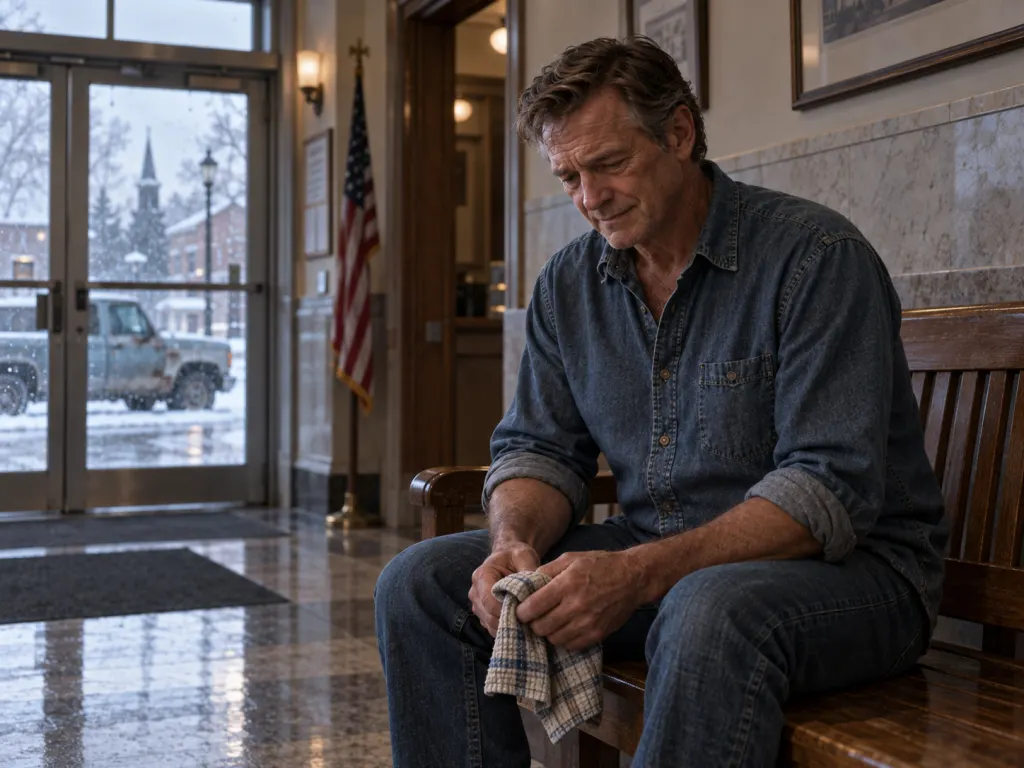
When the judge finally allowed me to become their permanent guardian, Theo cried in the parking lot and punched my truck door hard enough to dent it.
That was stupid,
he said, staring at his bleeding knuckle.
The punch or the crying?
Both.
I wrapped his hand in a clean work rag. I disagree.
Years later, adoption came in stages because life rarely moves the whole family through one doorway at once. Lila was nearly grown and said she did not need a paper to tell her who had shown up. Theo signed first, angrily, as if daring the page to matter. Clara corrected a spelling error on one document. Miles asked whether this meant he could inherit my tools. Nora sang in the courthouse bathroom because the acoustics were good. Ben wore two different socks. Iris held my sleeve. Junie drew a lopsided heart on the back of my hand. Sam, who remembered Mara mostly as a scent and a song, asked if forever meant next Tuesday too.
Especially next Tuesday,
I told him.
That was how our family was built: not by one grand rescue, but by a thousand next Tuesdays.
Chapter Five: The Children Become Their Own Weather
They grew, which is another kind of leaving.
Lila left first for nursing school and packed her grief so neatly I almost missed it. Theo became a mechanic and named his first daughter Mara, a choice he warned me not to discuss unless I wanted to be ignored for a month. Clara became a librarian and married a man who labeled leftovers. Miles built furniture better than mine and pretended this did not please him. Nora sang at weddings and never at funerals. Ben taught elementary school, perhaps because he understood tangled shoelaces as a spiritual emergency. Iris restored old houses. Junie worked with children who had learned too early how to watch doors. Sam grew tall and gentle and called me every Sunday at eight, whether he had news or not.
People would ask how I had managed nine children alone. I hated the question. I was not alone. The children raised parts of one another no adult could reach. Neighbors drove carpools. Teachers noticed hunger before pride could hide it. Celia sent money in envelopes with no return address, never enough to explain herself, always enough to prove she was still orbiting us.
Still, there were nights I sat at the maple table after everyone slept and missed the man I might have been. I imagined a quieter life, a different marriage, weekends with clean floors and plans that survived contact with breakfast. Then I would hear Sam coughing in the next room or Theo coming in late or Lila crying softly into a towel, and the imagined life would fold itself away. Not because I was better than wanting it. Because wanting is not the same as choosing.
I remained angry with Mara. Anger aged with me. At first it burned. Then it became furniture, something I walked around without noticing until I struck my shin on it in the dark. Every graduation, every empty chair reopened the question. Every child's accomplishment carried the shadow of the woman who should have seen it.
On Lila's wedding day, she pinned a small photo of Mara inside her bouquet. She did not ask me first. I saw the corner of the picture while helping her into the old blue car we had decorated with ribbon.
Are you upset?
she asked.
I looked at her in white lace, my first almost-daughter, my first witness, the child who had once written do not vanish on a kitchen calendar.
No,
I said, and discovered it was mostly true. A person can be missed and still have done harm.
Lila touched the hidden photo. I know.
I should have heard something in her voice then. I have replayed it many times. But the music started, and fathers are fools at weddings. We notice the trembling hand, not the secret inside it.
Chapter Six: Twenty-Eight Years Late
The call came on a Sunday in October, twenty-eight years after Mara left.
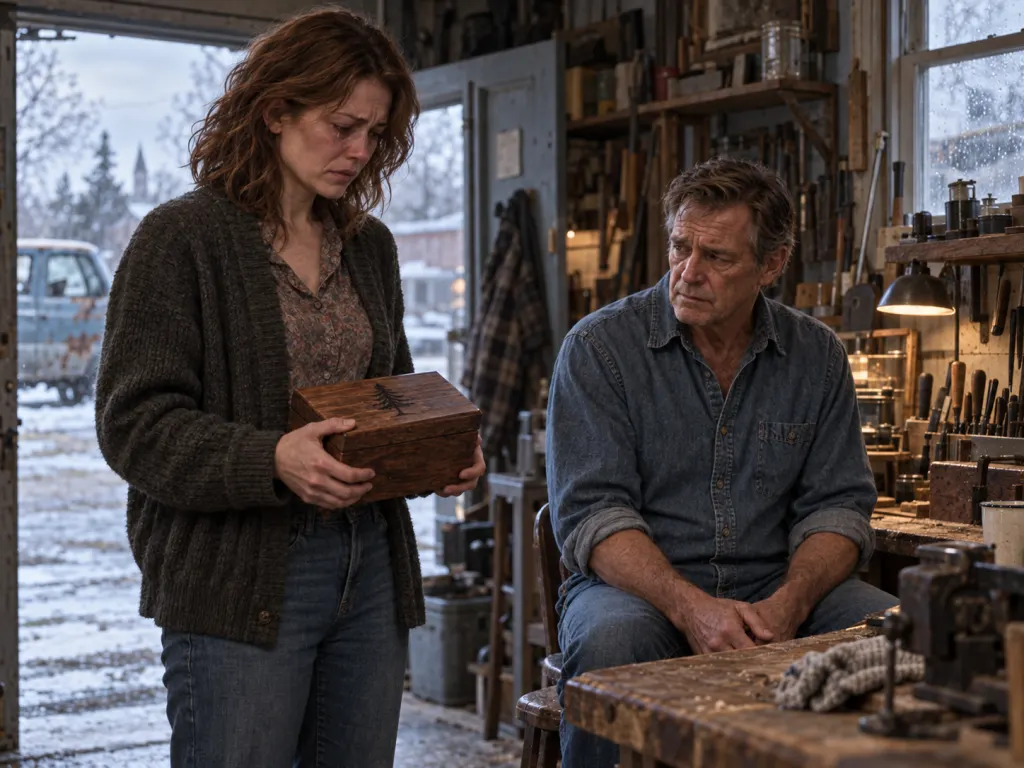
I was oiling a cabinet hinge in my workshop. My hands smelled of cedar and machine grease. The phone buzzed against a stack of sandpaper. Lila's name lit the screen.
Dad,
she said, and I knew from that single word that the day had split.
Mara was gone. Not missing gone. Final gone. There would be a small service in a town four hours north, and before she died she had asked that the children be told.
I sat down on an overturned bucket.
Before she died,
I repeated. So someone knew where she was.
Silence moved between us.
I did,
Lila said.
The workshop blurred at the edges. I could see the little dents in the truck door Theo had punched decades earlier through the open bay. I could see every calendar we had ever filled, every school form signed, every birthday candle blown out beside an absence. And now, under it all, a new fact shifted like a beam pulled from a wall.
How long?
Twelve years.
I did not shout. Shouting would have been easier for both of us. I set the oil can on the bench and listened to my own breath become old.
Come over,
I said.
She arrived with a cedar box in both arms. It was the size of a shoebox, locked with a brass clasp, the wood polished by someone who had touched it often. Lila was forty-four then, with silver just beginning at her temples and the same guarded mouth she had worn at sixteen.
I wanted to tell you,
she said.
That is not the same thing as telling me.
She flinched. I was glad, then ashamed that I was glad.
Inside the box were photographs, letters never mailed, birthday cards sealed and labeled by year, newspaper clippings from graduations and weddings, and a packet of papers from a specialist. I did not read every line. I understood enough. Three days after our wedding, Mara had been told that her body would change in ways she could not bargain with. She had imagined herself becoming the center of a household already stretched thin. She had imagined nine children watching another parent decline. She had imagined me staying from duty, then resenting her, then resenting them.
So she left before anyone could choose.
It was an explanation. It was not permission.
Chapter Seven: The Funeral With Nine Empty Chairs Filled
We went to the service because families are sometimes made of obligations we do not fully understand until we obey them.
The chapel was plain, with a green carpet and windows facing a parking lot slick with rain. Mara's coffin stood closed beneath a spray of white flowers. For a moment I saw the woman from our wedding: dark hair tucked behind one ear, laughing because Sam had dropped cake onto her shoe, squeezing my hand as if the future were a bridge we had already crossed.
All nine children came. Some with spouses. Some with children of their own. Theo stood beside me with his jaw clenched. Clara brought tissues and distributed them without comment. Nora did not sing. Junie held Sam's hand though he towered over her. Lila carried the cedar box.
Celia was there, smaller than I remembered, folded into a black coat. She approached me after the service while rain stitched the chapel windows.
I knew some of it,
she said.
Of course you did.
She closed her eyes. She begged me. She said if you knew, you would throw your life after hers.
That would have been my life to throw.
The sentence left me clean and sharp. Not loud. Not theatrical. Just true.
In a side room afterward, we opened the cards. There was one for each child for each birthday she had missed. Some were only signed. Some contained memories: the way Lila used to line up spoons, Theo's first attempt at fixing a radio, Clara's habit of reading cereal boxes, Miles asleep under the table, Nora making up songs about rain, Ben tying knots, Iris with her flashlight, Junie mispronouncing spaghetti, Sam's warm weight against her shoulder.
The room broke differently for each of them.
She remembered,
Iris whispered.
She left,
Theo said.
Both,
Clara answered.
I watched Lila read a letter addressed to me. She did not hand it over until I nodded.
Mara's words were steady. She wrote that fear had made her arrogant. She wrote that she had mistaken sacrifice for love because sacrifice let her act alone. She wrote that if the children hated her, she accepted it; if I hated her, she deserved it; if any part of us had been happy, she was grateful from a distance she had no right to choose for us.
At the bottom, in smaller handwriting, she had added: Tell Owen he became the home I prayed they would have, and the home I should have trusted.
I folded the letter. My hands shook.
Chapter Eight: What We Keep
Forgiveness did not arrive at the funeral. I distrust stories that make forgiveness punctual. Mine came, if it came at all, in fragments too small to name.
It came when Theo placed his daughter Mara's hand in mine and said, She should know the whole story someday, but not as a weapon.
It came when Iris asked for one of the unopened cards and tucked it into her coat without reading it. It came when Lila stood on my porch after everyone else had gone and waited for the anger she had earned.
I kept her secret,
she said.
Yes.
I thought I was protecting you.
People keep making that mistake around me.
She gave a laugh that became a sob. For a second she was sixteen again, barefoot in my kitchen, asking where her mother had gone while the rain worried the windows.
I took her hand. It was not absolution. It was not a verdict. It was a father choosing not to leave his child alone with the worst thing she had done.
You should have told me,
I said.
I know.
And I should have asked more questions when you carried sadness like contraband.
Dad.
Both can be true,
I said, borrowing Clara's wisdom because parents are mostly collectors of things their children teach them.
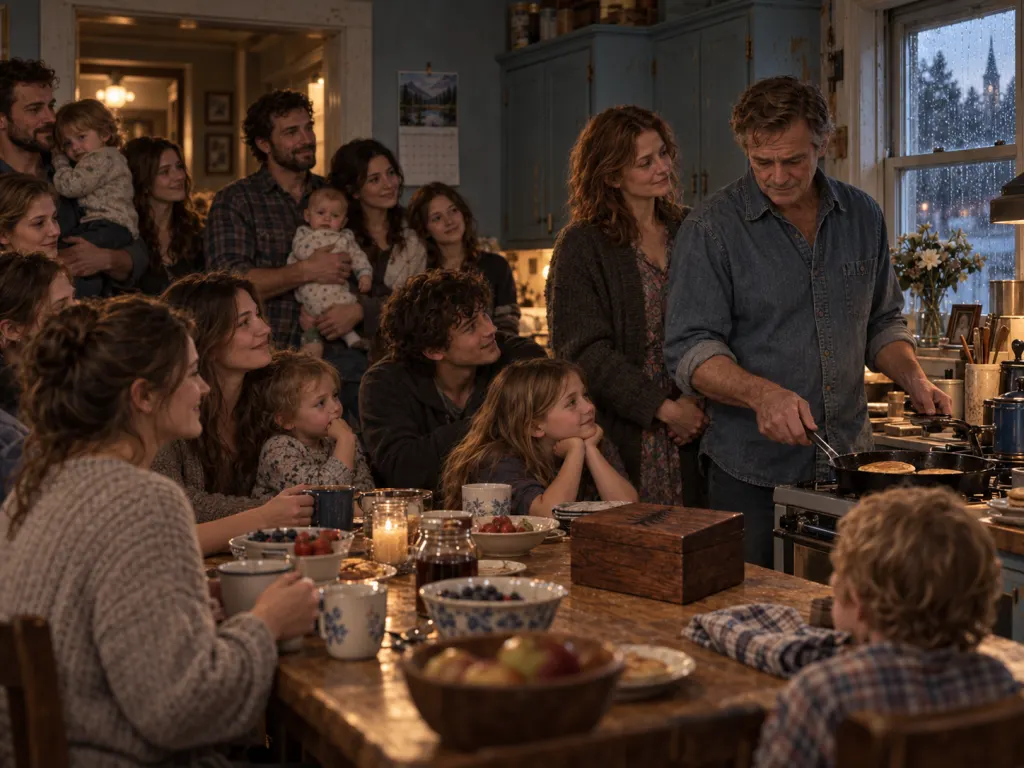
That evening, we gathered at the old maple table. It had been sanded twice, refinished once, burned by hot pans, carved underneath with initials no one confessed to making. Nine children sat around it, grown now, crowding the room with spouses, grandchildren, coats, bags, grief, appetite. I made pancakes because some governments should never fall.
Sam raised his coffee mug. To next Tuesday,
he said.
Everyone understood. We did not toast Mara exactly. We did not toast me. We toasted the unit of time that had saved us: the ordinary day after the dramatic one, the breakfast after the note, the appointment after the promise, the small return after every fear of vanishing.
I still have Mara's letter. I keep it in the cedar box with the first calendar, the one where Lila wrote do not vanish and I wrote agreed. Sometimes I open it. More often I do not. The truth is not a shrine. It is a tool, and tools belong where they can be reached when the house needs repair.
If you ask whether I loved Mara, I will tell you yes, briefly and badly and not enough to know her fear. If you ask whether I forgave her, I will tell you I am old now, and old men learn to stop pretending the heart is a courtroom. If you ask whether those nine children were left with me, I will correct you gently.
They were not left with me.
One by one, Tuesday by Tuesday, I was left with a choice. I made it. So did they. That is the part of the story that still feels like a vow.
Wrap-Up
Owen's story begins with abandonment but ends with a harder, quieter truth: love is not proved by dramatic rescue, but by returning again and again when staying is no longer simple.
Frequently Asked Questions
- → Is this story based on a verified real event?
No. This is an original work of fiction inspired by a family-drama premise. The characters, dialogue, and events are invented.
- → Why is the story categorized under Family Stories?
The central conflict is about home, responsibility, parenthood, trust, and the long emotional consequences of family choices.