 Save
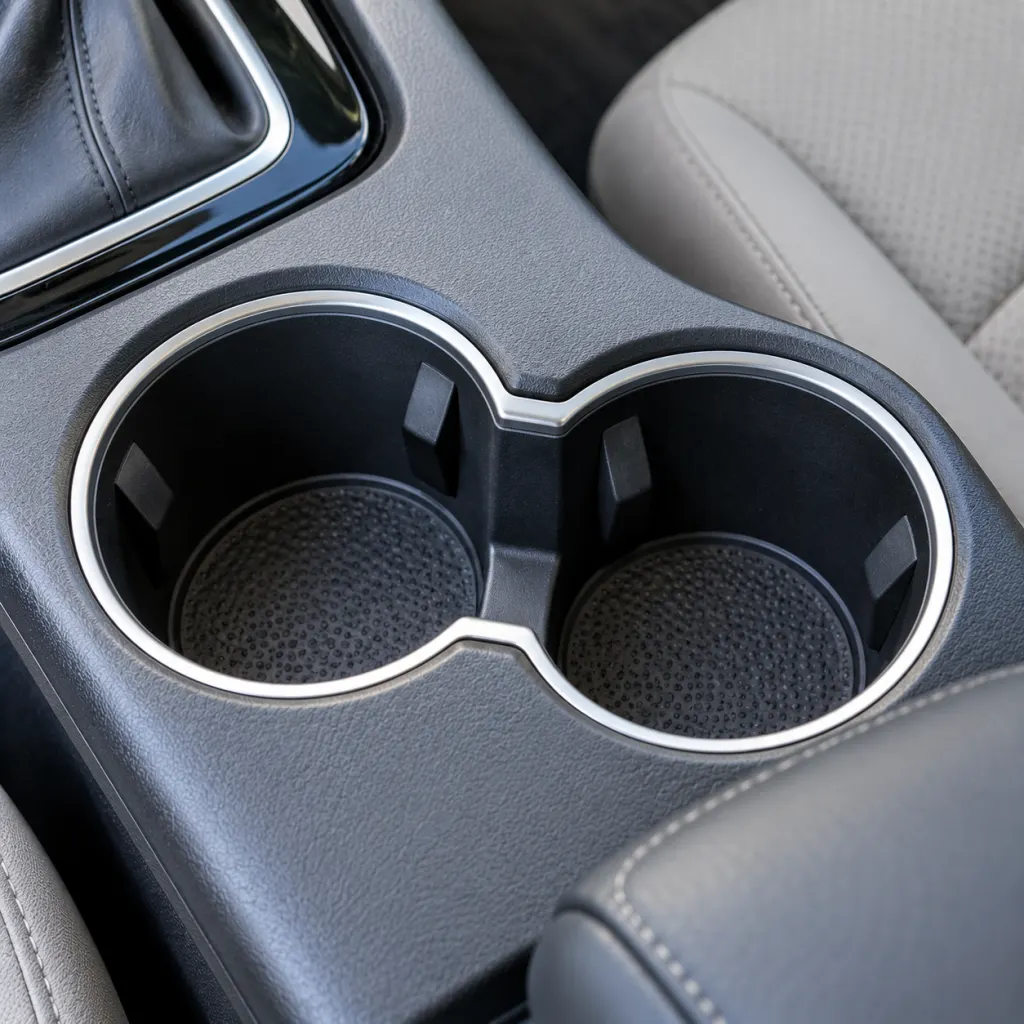
The gap between car cup holders is usually there to make the cup-holder area more flexible: it can separate the two wells, give mug handles or wider containers a place to clear the plastic, and sometimes hold a light strap or shopping-bag handle for a short trip. The important catch is that it is not the same feature in every vehicle. Some gaps are intentional notches; others are simply part of the molded console shape. Treat it as a small convenience, not as a certified hook or cargo tie-down.
Why The Answer Is Not The Same In Every Car
Car interiors look standardized from a distance, but cup holders are shaped around many constraints: the width of the console, the gear selector or rotary controller nearby, the parking brake location, wiring below the trim, how the insert is molded, and what kinds of containers the automaker expects people to use. That is why one vehicle may have two simple round wells, another may have an oval opening between them, and another may have a deep slot that looks as if it was made to catch a handle.
There is also no federal rule that assigns one official purpose to the narrow space between cup holders. Federal safety rules address broader interior features such as instrument panels, compartment doors, sun visors, and armrests, while console assemblies are treated as part of the vehicle interior in specific regulatory contexts. The federal interior-impact standard, for example, discusses console assemblies and interior compartment doors, but it does not define a universal function for every cup-holder notch or divider https://www.law.cornell.edu/cfr/text/49/571.201.
The Most Common Practical Uses
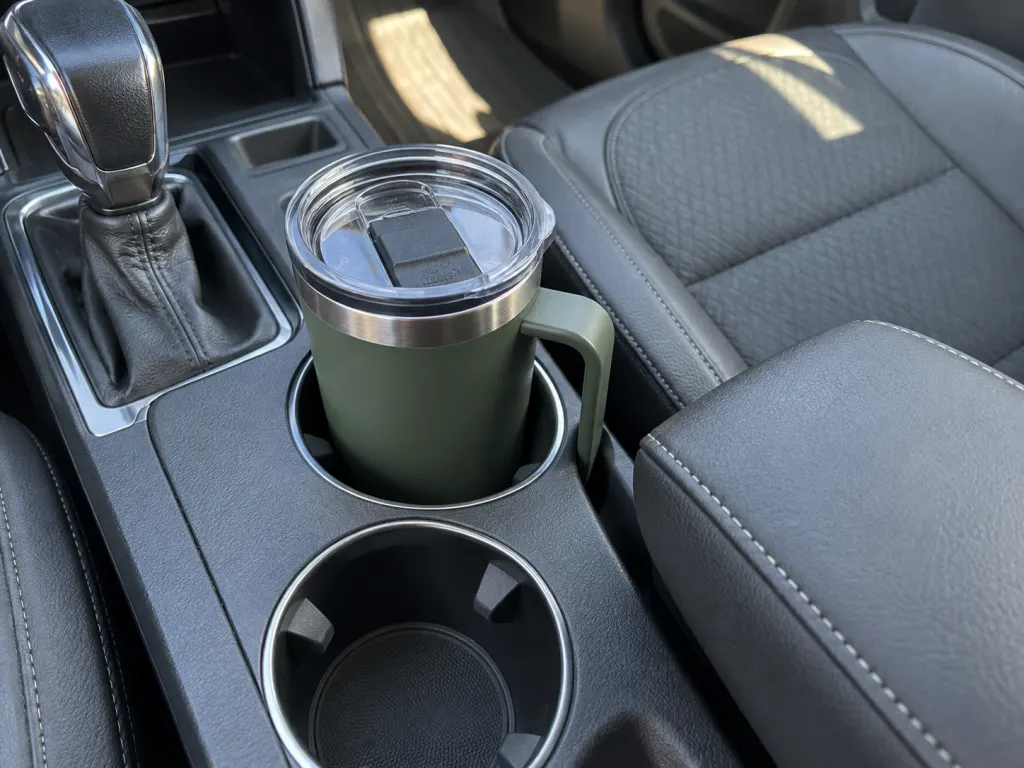
In ordinary use, the gap often solves small fit problems. A handled travel mug may need a little open space so the handle does not hit the neighboring cup well. A wide bottle may sit better when the center divider has a relief cut. A key fob, parking pass, lip balm, pen, or toll card may rest in the slot while the car is parked. Some drivers also slip a light grocery-bag handle into the space so the bag sits more upright on the console side or floor area.
Those uses make sense because the gap is usually close to the driver and passenger, shaped into the strongest part of the cup-holder insert, and easier to clean than fabric upholstery. But the fact that something fits does not prove that the automaker designed the slot as a load-bearing holder. NHTSA has explained in interpretation letters that it does not approve or endorse individual vehicle designs, and manufacturers remain responsible for certifying compliance with applicable safety standards https://www.nhtsa.gov/interpretations/nht90-157.
A Quick Way To Read The Shape
You can often infer the likely use from the geometry. A shallow bridge between cup wells is probably just a divider and grip area. A long vertical notch that continues downward may be useful for a thin handle or strap. A rounded side cutout beside one cup well is often mug-handle clearance. A removable rubber insert may be designed mainly for cleaning and for adapting to different container sizes. A tiny molded channel at the bottom may help liquids or crumbs collect where they can be wiped out, rather than proving that the slot is meant to hold anything heavy.
- Rounded side opening: often helps a mug handle or wider bottle sit without twisting.
- Deep center notch: may hold a light strap or bag handle, but only if it stays clear of controls.
- Flat divider: mainly separates two cups and stiffens the insert.
- Rubber removable liner: usually improves grip and makes cleaning easier.
- Very narrow groove: better treated as trim or drainage space than as storage.
What It Should Not Be Used For
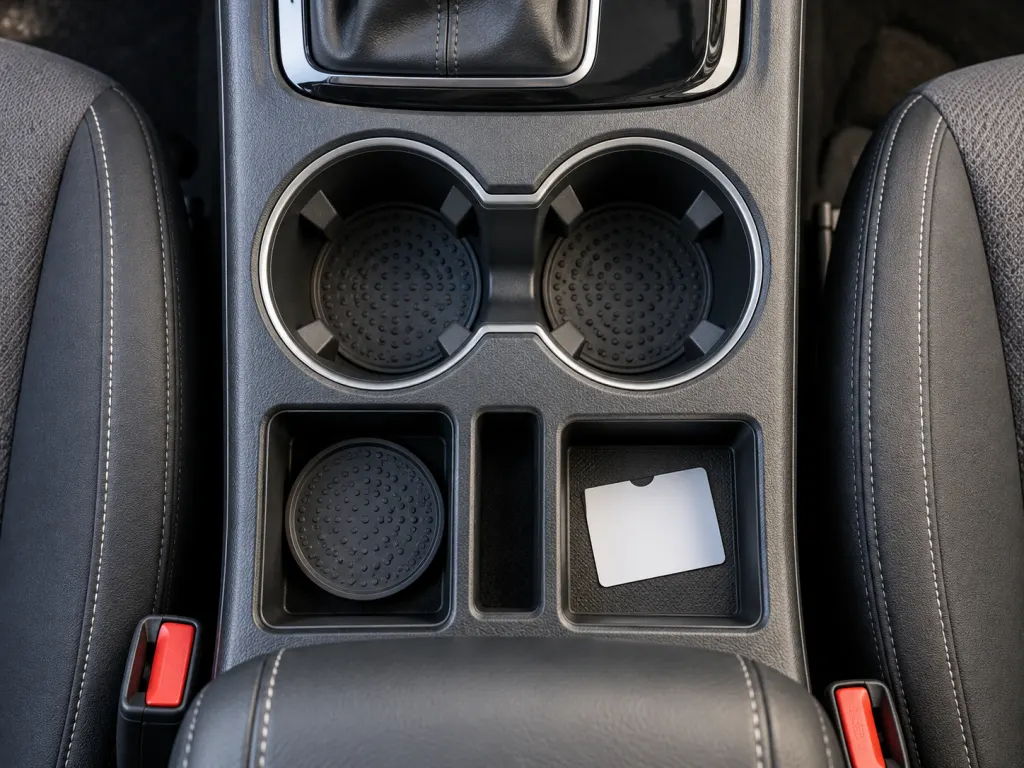
The slot should not become a place for anything that can distract you, jam a control, spill into electronics, or slide into the driver footwell. A heavy purse, full grocery bag, glass bottle, metal tool, or dangling charging cable can create more trouble than the little convenience is worth. NHTSA’s distracted-driving material treats reaching for an object as a meaningful driving distraction, and its summary of naturalistic driving research lists reaching for an object other than a cell phone among tasks associated with higher crash risk https://www.nhtsa.gov/book/countermeasures-that-work/distracted-driving/understanding-problem.
The safest habit is boring but effective: set up the cabin before you move. Put drinks fully into the cup wells, place bags on the floor or in the cargo area, and keep items you may want later somewhere you can reach only when parked. Virginia Tech Transportation Institute’s driver-distraction guidance notes that driving is a visual task and that non-driving activities drawing the eyes away from the roadway should be avoided https://www.vtti.vt.edu/projects/distracted-driving.html. The cup-holder gap is useful only when it reduces fuss, not when it invites more handling while driving.
The Bag-Handle Idea: Clever, But Limited
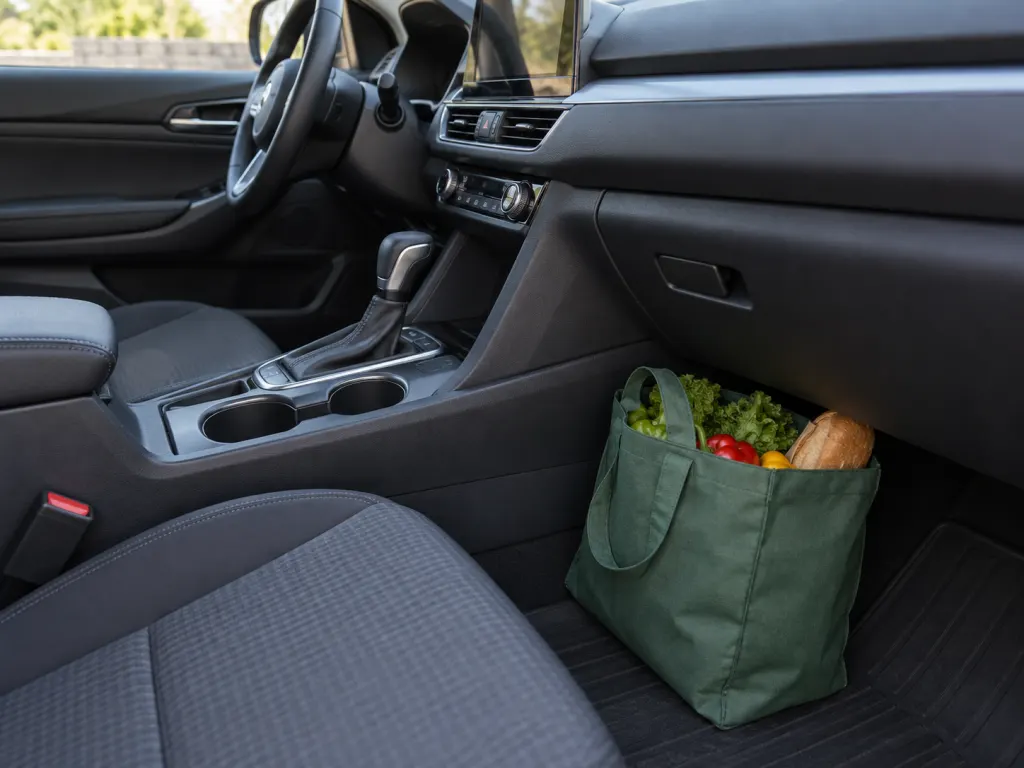
The viral explanation says the gap is for grocery bag handles. That can be true in a practical, driver-discovered sense for some consoles: a light plastic or reusable-bag handle may sit neatly in the notch, helping the bag stay upright over a short distance. It is especially plausible when the gap is deep, smooth, and centered between two cup wells. Still, it is better to describe this as a possible use, not a universal secret feature.
If you try it, keep the test modest. A small bag with bread, napkins, or a light takeout container is very different from a heavy bag of cans or glass jars. The bag should not pull on the shifter, cover a button, hang near pedals, tip a drink, or require you to glance down repeatedly. NHTSA’s cargo guidance is written mainly for loads that could fall from vehicles, but the principle is useful inside the cabin too: items should be secured so they do not shift, leak, or escape during normal driving events such as braking or bumps https://www.nhtsa.gov/drive-safe-secure-your-load.
Why Designers Leave Gaps Instead Of Making One Big Tray
A single open tray looks simpler, but it does not restrain round cups very well. Two wells with a shaped divider help containers stay upright while allowing different sizes to share the same area. The divider also gives the insert structure. Plastic parts need ribs, curves, draft angles, and edges that can be molded, removed from the tool, assembled, and cleaned. What looks like a mysterious gap to a driver may be doing several jobs at once: adding stiffness, preserving clearance, guiding containers, and keeping the console compact.
NHTSA interpretation letters show how detailed interior classifications can become. In one letter about a sliding interior compartment door, the agency discussed whether a console feature was an interior compartment door and noted that the answer depends on its location and whether it fits the regulatory definition of a compartment door for personal effects https://www.nhtsa.gov/interpretations/gf008126. That kind of document is a useful reminder: vehicle interior parts are not always designed around the single folk explanation that spreads online.
How To Check Your Own Vehicle
The best evidence for your own car is the owner’s manual and the shape of the console in front of you. Look for a section on cup holders, storage compartments, center console, or interior features. Some manuals include warnings about hot drinks, containers that do not fit, or items that may interfere with controls. If the manual does not mention the gap, assume it is a flexible trim feature rather than a dedicated holder.
Then do a parked test. Place the item where you think it belongs, move the seats to your normal position, buckle the seat belt, and check every nearby control without looking down for long. Shift through the available positions only if it is safe and appropriate for your vehicle, with the brake applied and the car stationary. Open and close the armrest, check the parking brake or drive-mode controls, and make sure the item cannot migrate toward the driver’s feet. If it fails any of those checks, the gap is not the right place for that item.
What To Put There And What To Put Elsewhere
Good candidates are light, soft, and short: a slim parking card while parked, a small cloth mask, a light tote handle during a very short trip, or the handle clearance for a mug that already sits securely in the well. Poor candidates are heavy, hard, hot, sharp, electronic, or tempting to handle while moving. A phone is usually better in a proper mount, a closed bin, or a pocket. Coins and keys can rattle, scratch trim, and slide under seats. Food wrappers belong in a small trash bag rather than the cup-holder insert, where they can interfere with drink stability.
For groceries, the cargo area remains the better choice for real weight. Put fragile items in a box or reusable crate, keep liquids upright, and avoid stacking loose objects where they can tumble forward. The cup-holder gap can help with one light handle; it cannot replace a cargo net, closed storage bin, trunk organizer, or a flat floor space. The more valuable or messy the item is, the less it belongs in a tiny slot beside your drink.
The Bottom Line
The gap between car cup holders is best understood as a multi-purpose design detail. It may separate two drink wells, make room for handles, support a removable insert, simplify cleaning, or provide a temporary notch for a light strap. In some cars it may be intentionally useful for bag handles; in others it is simply the leftover shape created by the cup-holder layout. The practical answer is to use it only when it makes the cabin calmer and more organized.
When a feature is small, close to controls, and easy to overload, restraint is the smart move. If the item is light, stable, and does not ask for your attention while driving, the gap can be handy. If the item swings, blocks, spills, rattles, or makes you reach for it, move it before you set off. The cleverest use of that little space is not proving that it can hold something; it is keeping the driving area simple enough that you can forget about it.
Wrap-Up
The gap between car cup holders is usually a flexible console detail rather than one universal hidden feature. It can provide clearance for mug handles, separate two cup wells, stiffen the insert, collect small debris for cleaning, or hold a light strap in some vehicles. Because the exact design varies, use it cautiously: keep heavy bags, loose objects, phones, hot containers, and anything that distracts you somewhere more secure.
Frequently Asked Questions
- → Is the gap between cup holders definitely for grocery bags?
Not definitely. In some cars, the shape works well for a light bag handle, but that does not make it a universal purpose across all vehicles. It may also be a divider, mug-handle clearance, a removable-insert shape, or simply part of the molded console design.
- → Can I hang a purse from the cup-holder gap?
Usually, that is not a good idea. A purse can be heavy, swing during turns, press against controls, or spill contents into the footwell. A closed compartment, passenger-side floor area, or cargo area is usually more sensible.
- → Why do some cup holders have a notch on only one side?
A side notch often gives clearance for a mug handle or a wider bottle. It can also make the insert easier to grip and remove for cleaning. The exact reason depends on the console design.
- → Should I put my phone in the gap between cup holders?
Only if the car is parked and the phone sits securely. While driving, a phone in a loose slot can slide, tempt you to look down, or interfere with other items. A proper mount or closed storage spot is a better choice.
- → How do I know what my specific car’s cup-holder gap is meant for?
Check the owner’s manual under cup holders, storage, center console, or interior features. If the manual does not identify the slot, treat it as a light-use convenience area rather than a dedicated holder.
References
This content was developed and refined using reliable sources.
- https://www.law.cornell.edu/cfr/text/49/571.201
- https://www.nhtsa.gov/interpretations/nht90-157
- https://www.nhtsa.gov/interpretations/gf008126
- https://www.nhtsa.gov/book/countermeasures-that-work/distracted-driving/understanding-problem
- https://www.nhtsa.gov/drive-safe-secure-your-load
- https://www.vtti.vt.edu/projects/distracted-driving.html