 Save
Blue dragon sea slugs can prompt temporary beach closures because they are easy to miss, sometimes wash ashore in groups, and can sting if handled. The animal is real, but the useful lesson is not panic. It is a reminder that some beautiful marine life should be observed from a distance. The blue dragon, known scientifically as Glaucus atlanticus, is a small open-ocean sea slug that floats at the surface and feeds on stinging animals. The U.S. Bureau of Ocean Energy Management describes it as a surface-dwelling, carnivorous gastropod found in tropical and temperate waters of the Atlantic, Pacific, and Indian Oceans BOEM.
What the Blue Dragon Actually Is
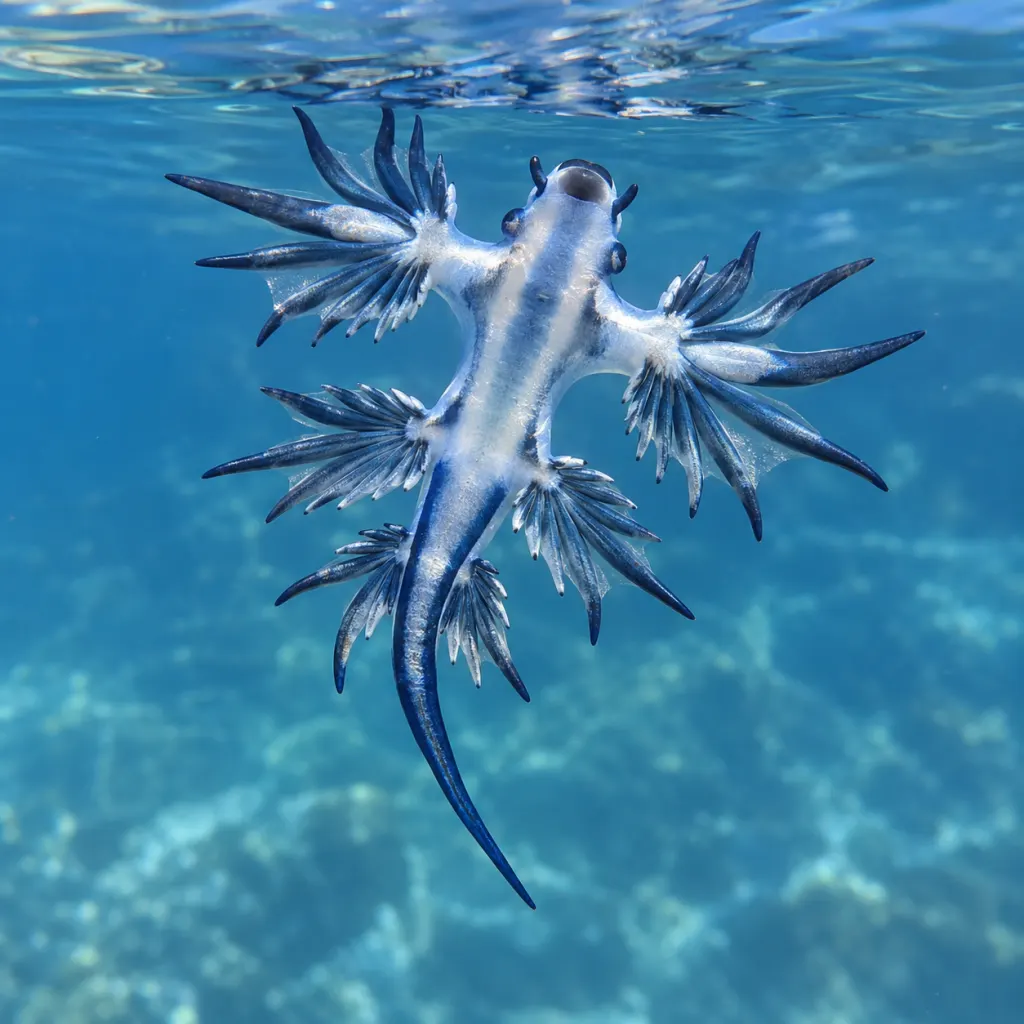
The blue dragon is not a dragon, fish, jellyfish, or baby sea monster. It is a nudibranch, a shell-less marine mollusc, and its dramatic blue-and-silver body is part of why sightings spread quickly online. The Natural History Museum in London notes that Glaucus atlanticus is also called the sea swallow, blue angel, or blue dragon, and that it floats belly-up at the sea surface while wind and currents carry it across the ocean Natural History Museum. That upside-down life matters: its blue side faces the sky, while the silvery side faces downward toward the bright water surface.
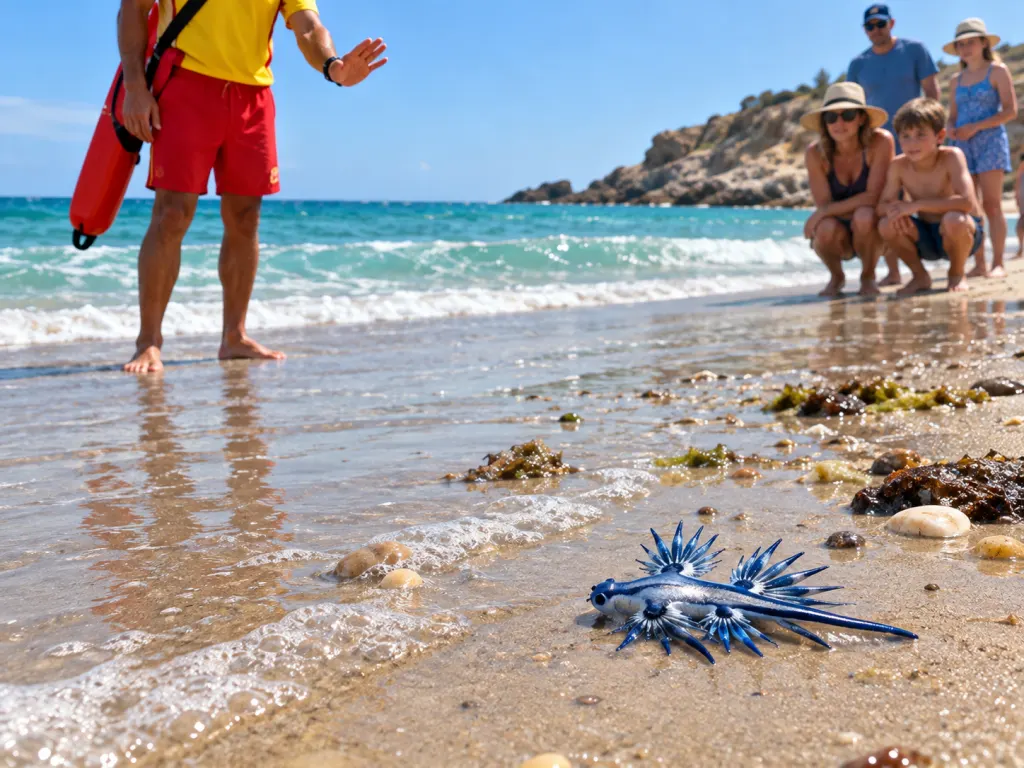
Adult blue dragons are small enough that a swimmer may not notice one until it is close. BOEM describes the animal as having dark and light blue striping, three pairs of tendril-tipped appendages, and a gas bubble in its stomach that helps it stay at the surface BOEM. Its beauty is part of the problem on a crowded beach. A child, beachcomber, or curious swimmer may want to pick it up for a closer look. That is exactly what beach officials want to prevent when they close the water or post warnings.
Why a Tiny Sea Slug Can Create a Big Beach Response
A closure is usually a practical crowd-control decision. Blue dragons are small, drift with surface conditions, and can be hard to spot against moving water. If several are found near a swimming zone, officials may not be able to guarantee that swimmers will avoid them. Closing the water for a period gives lifeguards time to monitor the shoreline, remove people from the highest-risk area, and explain that the animal should not be touched.
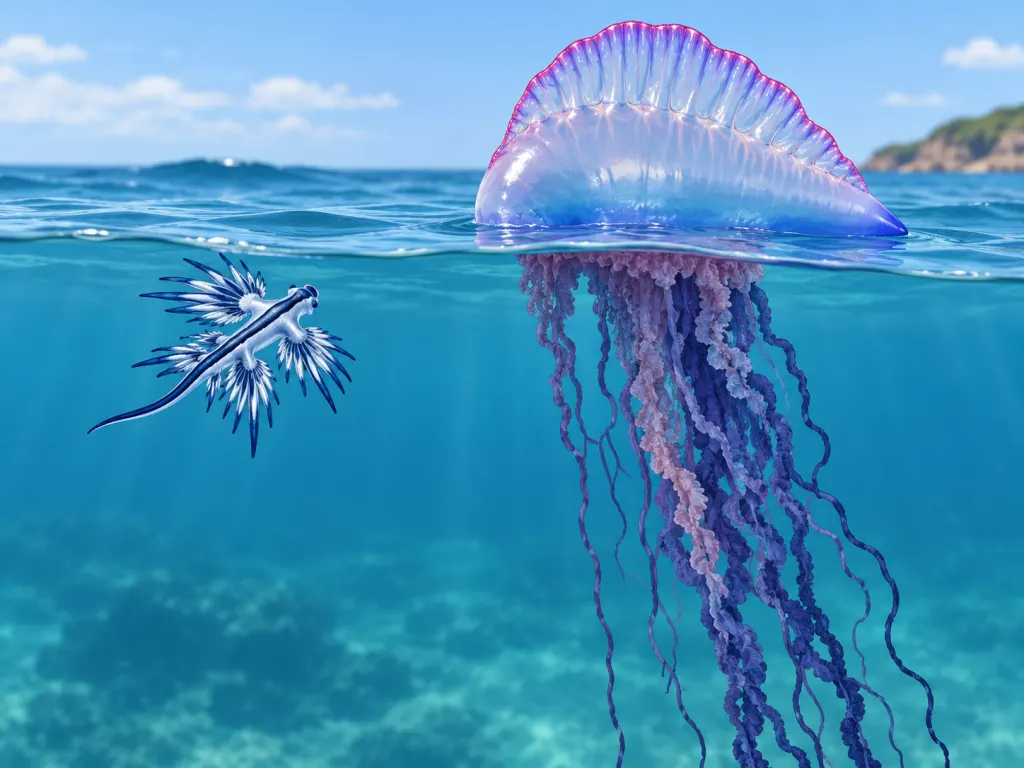
The key issue is contact, not pursuit. Blue dragons do not chase swimmers. Their risk comes from stinging cells stored in their fingerlike appendages. The Natural History Museum explains that some nudibranchs take stinging cell organelles from cnidarian prey and reuse them in their own cerata, the projections on their bodies Natural History Museum. In the blue dragon's case, that prey can include the Portuguese man-of-war, an animal famous for long tentacles and powerful stinging cells.
The Portuguese Man-of-War Connection
The Portuguese man-of-war is often mistaken for a jellyfish, but NOAA explains that it is a siphonophore: a colony of specialized individuals working together as one animal-like unit NOAA Ocean Service. It floats at the surface and moves with winds and currents, which is one reason blue dragons and their prey can appear suddenly near shore after changes in weather, surf, or current patterns.
NOAA describes the man-of-war's tentacles as containing nematocysts, microscopic capsules that can deliver venom to small fish and crustaceans and can cause painful welts on exposed human skin NOAA Ocean Service. The blue dragon feeds on floating cnidarians, including the Portuguese man-of-war, and stores selected stinging cells rather than digesting them all. This borrowed defense is why the sea slug deserves more caution than its size suggests.
- Do not pick up a blue dragon, even if it appears stranded or dead.
- Keep children and pets away from bright blue sea slugs, man-of-war floats, and loose tentacles.
- Follow posted beach signs, flag systems, and lifeguard directions.
- Report sightings to lifeguards or local beach staff instead of trying to move the animal yourself.
- Leave the water calmly if officials restrict swimming or ask people to clear an area.
Why Sightings Can Feel Sudden
Blue dragons are ocean drifters. They are not usually a nearshore animal in the way crabs, clams, or tide-pool snails may be. BOEM describes them as living at the surface of the open ocean, carried by wind and currents BOEM. That means beachgoers may go years without seeing one, then hear about several on the same stretch of coast after the right combination of wind, tide, and floating prey brings them in.
This is also why one sighting should be treated as a local, time-sensitive safety signal rather than a sign that every nearby beach is unsafe. A blue dragon on one shoreline does not prove that all beaches in a region need to close. Conditions can vary from beach to beach and hour to hour. The sensible response is to check local beach notices, ask lifeguards, and avoid making decisions from viral images alone.
What to Do if You See One
If you see a blue dragon in the water, give it space and leave the immediate area without splashing at it. If you see one on wet sand, do not poke it, scoop it into a bucket, or pose with it for a photo. MedlinePlus advises beachgoers not to touch unfamiliar marine life and notes that even dead animals or separated tentacles may still contain venom MedlinePlus. That general rule fits this situation well: looking is safer than handling.
If contact occurs, the safest next step is to get help from a lifeguard, beach patrol, or local emergency service, especially when symptoms spread beyond the contact area. MedlinePlus lists marine sting first-aid steps such as protecting your own hands when removing stingers, brushing off visible material with a card-like object if possible, washing the area with salt water, and seeking medical help for difficulty breathing, chest pain, nausea, vomiting, uncontrolled bleeding, spreading swelling, discoloration, or bodywide symptoms MedlinePlus. Local protocols can differ, so trained personnel should guide the response when they are available.
What a Closure Does and Does Not Mean
A beach closure after a blue dragon sighting does not mean the sea is full of hidden danger, and it does not mean the animal is attacking people. It means officials have decided that the simplest way to reduce contact is to keep swimmers out of the water until conditions are clearer. That may be especially reasonable at beaches with children, surf lessons, tourists unfamiliar with local marine life, or strong onshore winds that continue pushing floating animals toward the swimming zone.
Closures can also make communication easier. A warning sign may be ignored by someone who does not know what a blue dragon is. A no-swim order is clearer: stay out until lifeguards or local authorities reopen the water. The same thinking applies to other marine hazards. MedlinePlus recommends swimming in lifeguard-patrolled areas and observing posted warnings about jellyfish or other hazardous marine life MedlinePlus. In practice, the closure is not a drama; it is a temporary boundary.

How to Read Viral Beach Stories Carefully
Blue dragon stories often travel with dramatic captions because the animal looks unreal. Good beach-safety information should still answer plain questions: What animal was found? Where was it found? Who issued the warning? Is swimming closed, restricted, or simply discouraged? What should visitors do now? If a post has a striking photo but no local authority, date, beach name, or practical instruction, treat it as incomplete.
Reliable information will usually come from beach patrols, local government notices, lifeguard services, park authorities, or recognized science and public-health sources. A photo alone cannot show whether a beach remains closed, whether the animal was alive, or whether the image was even taken that day. For readers planning a beach visit, the best habit is to pair general knowledge about the species with current local guidance.
A Balanced Way to Think About Risk
The blue dragon deserves respect, not folklore. It is small, delicate, and fascinating; it is also capable of causing a painful sting because of stinging cells acquired from prey. Those two facts can sit together. The right response is not to fear the ocean, but to give unknown marine animals distance, follow lifeguard instructions, and teach children that beautiful does not mean safe to touch.
For most beachgoers, the practical lesson is simple. If officials close the water after blue dragons are spotted, wait it out. If the beach remains open but warnings are posted, stay alert at the shoreline and avoid handling any stranded blue or jelly-like marine life. If conditions change, let trained staff make the call. A calm response protects people and leaves the animal where it belongs: part of the ocean's unusual surface life, not a souvenir from the sand.
Wrap-Up
Blue dragon sea slugs can close beaches because they are small surface drifters that may carry stinging cells from prey such as the Portuguese man-of-war. They are not aggressive, but touching one can cause harm. The safest approach is to avoid contact, keep children and pets away, follow local beach instructions, and ask trained personnel for help if contact occurs.
Frequently Asked Questions
- → Is a blue dragon a jellyfish?
No. A blue dragon is a nudibranch, which is a shell-less marine mollusc. It is connected to jellyfish risk because it feeds on floating stinging animals and can store some of their stinging cells.
- → Why would officials close a beach for such a small animal?
Size is not the main issue. Blue dragons can be difficult to see in moving water, may arrive with other floating stinging marine life, and may sting if handled. A temporary closure reduces accidental contact while lifeguards assess the area.
- → Can I touch a stranded blue dragon if it looks dead?
No. Do not handle it. MedlinePlus advises that unfamiliar marine life, including dead animals or separated tentacles, may still contain venom. Report the sighting to beach staff or local authorities instead.
- → Are blue dragons becoming common at every beach?
No single sighting proves that they are common everywhere. They drift with winds and currents, so appearances can be sudden and local. Check current beach notices rather than relying on a viral post from another place or date.
- → What should families do after a posted warning?
Follow the posted instruction, keep children and pets away from the waterline if blue dragons or man-of-war are present, and do not collect unusual marine animals. If someone has contact with one, ask a lifeguard or qualified professional for help.