 Save
The easiest rule is this: take items clearly provided for one guest to use up, and leave items meant to keep serving the room. Mini soaps, sealed tea bags, coffee packets, pens, note pads, and disposable shoe mitts are usually fair game. Towels, pillows, blankets, robes, hangers, hairdryers, glassware, remotes, decor, and refillable dispensers are hotel property unless the hotel plainly says otherwise. When a charge or policy is unclear, ask while you are still at the property and keep the answer simple: who said it, when, and what item was approved.
Start With Ownership, Not Embarrassment
Hotel rooms blur categories because they feel private while you are staying there, but they remain stocked and furnished by a business. The coffee packet beside the machine is different from the coffee machine itself. A small wrapped soap is different from a mounted dispenser. A printed local map is different from a hardbound design book placed on the desk. Thinking in terms of ownership removes most of the awkwardness: some items are consumed and replaced for each guest, while others are durable inventory that helps the next guest use the room.
There is also a practical money reason to be careful. The Federal Trade Commission says businesses offering short-term lodging, including hotels and vacation rentals, must be upfront and truthful about required fees, while still being allowed to charge fees that are properly disclosed https://consumer.ftc.gov/consumer-alerts/2025/05/what-rule-unfair-or-deceptive-fees-means-you. That does not create a universal list of take-home items, but it does support a sensible habit: read posted room notices, booking terms, minibar lists, and checkout screens before assuming something is complimentary.
A quick mental checklist helps before you pack:
- Single-use and sealed: usually meant for the guest, such as small toiletries, tea bags, coffee pods, sugar packets, and disposable vanity kits.
- Reusable and room-based: usually meant to stay, such as towels, pillows, hangers, mugs, robes, blankets, electronics, and decorative objects.
- Branded but durable: ask first, because a logo on an item does not automatically make it a souvenir.
- Priced or tagged: treat it as merchandise or minibar inventory unless a staff member confirms otherwise.
- Mounted, installed, framed, or plugged in: leave it in place.
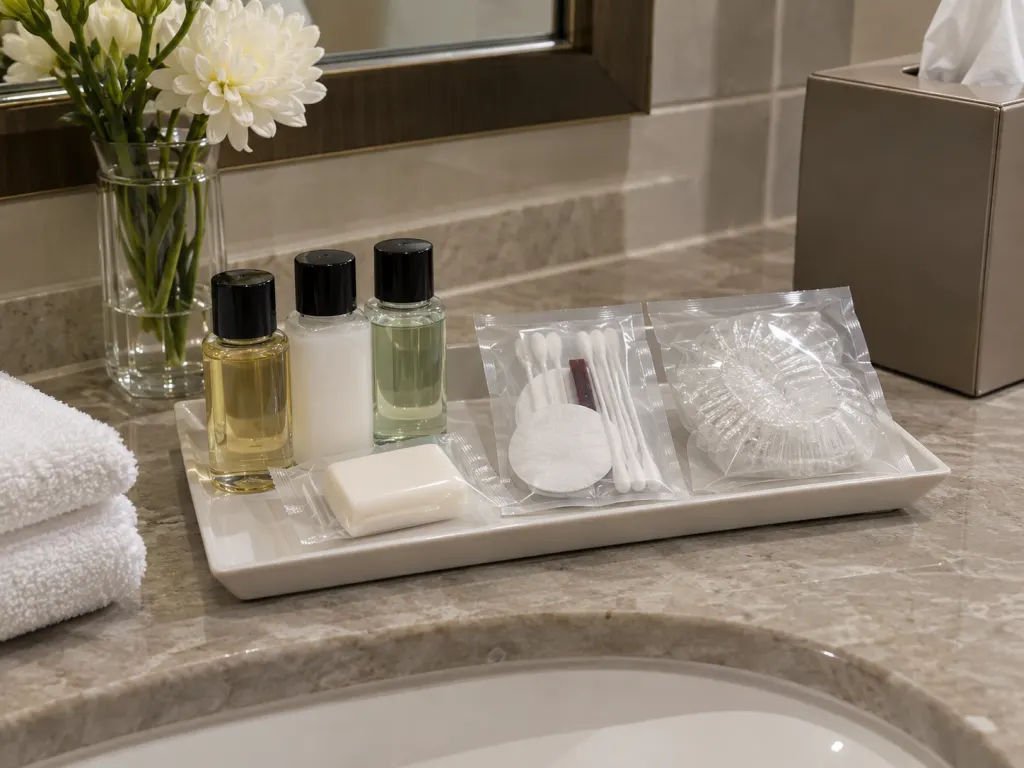
Items You Can Usually Take
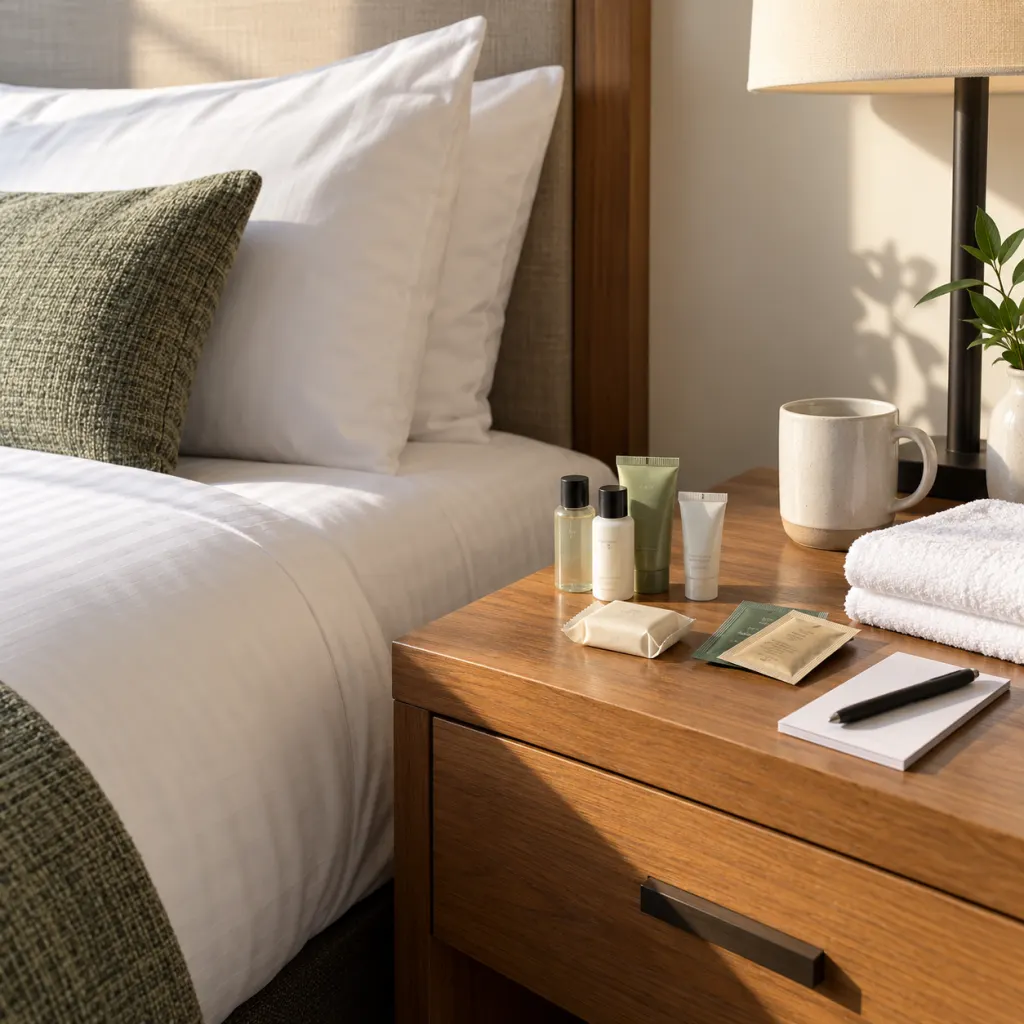
Small toiletries are the classic example, especially when they are sealed, travel-size, and placed for individual guest use. That can include shampoo, conditioner, lotion, wrapped soap, shower caps, cotton swabs, vanity kits, sewing kits, dental kits, shaving kits, and shoe mitts. If the item is designed to be opened, used, and discarded by one guest, the hotel generally expects it to disappear. Many travelers also take unopened packets to use later, which is usually less wasteful than leaving opened single-use items behind.
In-room beverage supplies commonly fall into the same category when they are single serving and unpriced: coffee pods, tea bags, creamer cups, sugar packets, stir sticks, paper cups, and napkins. The machine, kettle, tray, ceramic mugs, glassware, ice bucket, and reusable carafe are different. Those belong to the room setup. The same distinction works for writing materials. A notepad, postcard, envelope, or basic pen placed for guest convenience is normally take-home friendly. A desk lamp, charging dock, tablet, framed menu, or bound guest directory is not.
Items That Usually Stay Behind
Towels, washcloths, bath mats, sheets, pillowcases, blankets, duvets, pillows, mattress protectors, and robes are reusable hotel property. Even when they feel personal during a stay, they are part of the room’s operating inventory. The same is true of hangers, irons, ironing boards, hairdryers, alarm clocks, phones, adapters, remote controls, streaming devices, lamps, artwork, mirrors, trays, ice buckets, glassware, mugs, plates, cutlery, and decorative accessories. If you like an item, ask whether the hotel sells it or can tell you the supplier.

The Gray Areas: Slippers, Robes, Books, and Full-Size Toiletries
Some items cause confusion because policies vary by property. Disposable slippers are sometimes intended for guests to keep, especially if they cannot be sanitized for reuse. Robes are usually not complimentary, but some luxury hotels sell them or include them in certain packages. Decorative books, umbrellas, laundry bags, yoga mats, reusable water bottles, tote bags, and branded blankets may be merchandise, loaner items, or included gifts depending on the hotel. A price card, hang tag, app listing, or minibar-style inventory sheet is a clue that the item may be charged if removed.
Full-size toiletries deserve special caution. A small bottle sitting loose by the sink is very different from a refillable dispenser bolted to the shower wall. A wall-mounted dispenser is part of the room equipment and should stay in place. A large pump bottle on a tray may also be hotel property unless signage says guests may take it. When in doubt, ask a direct question: “Is this complimentary to take, or should it stay in the room?” That wording avoids haggling and gives staff an easy way to answer.
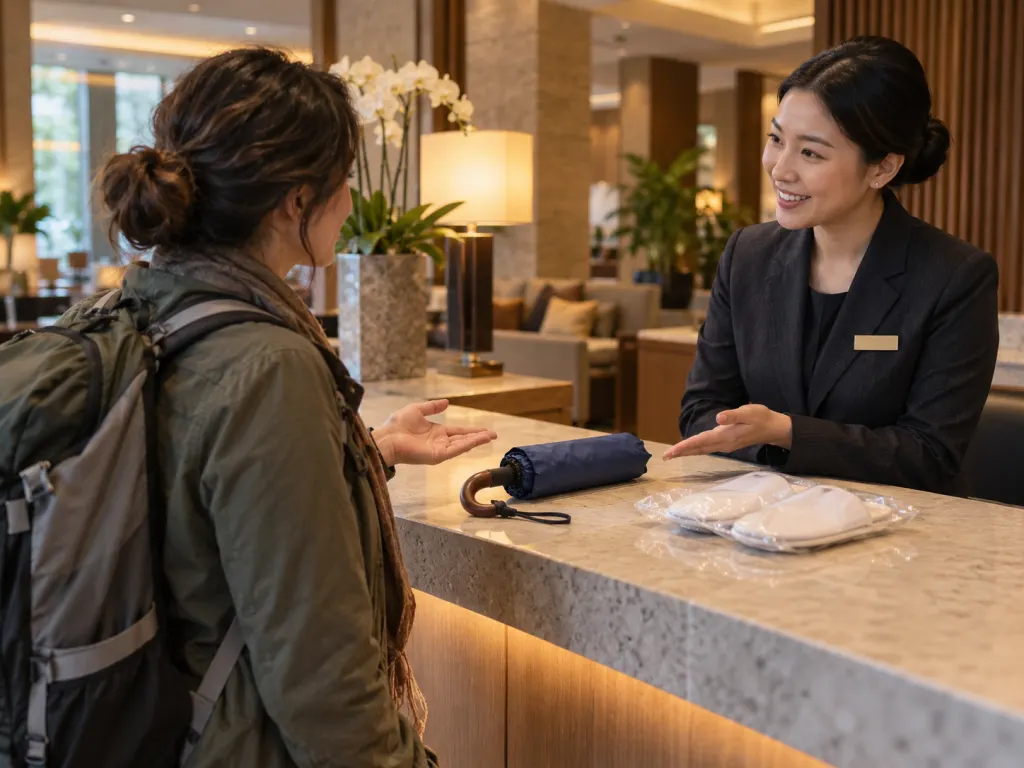
Why Taking the Wrong Item Can Become More Than Awkward
Removing hotel property can lead to a replacement charge, and in more serious situations it can raise legal questions. Cornell Law School’s Legal Information Institute defines larceny in general terms as the illegal taking of another person’s property with intent to deprive the owner of it https://www.law.cornell.edu/wex/larceny. Laws and hotel practices vary by location, so this article is not a legal determination about any specific incident. The everyday takeaway is simpler: if the item is not clearly offered for you to consume or keep, leave it or ask.
Hotels also need rooms ready for the next guest. A missing hairdryer, remote, blanket, or set of towels can delay housekeeping, create a maintenance report, or force the property to replace an item quickly. That cost may be charged to the card on file if the hotel’s terms allow it. Even when no charge appears, taking durable room items shifts inconvenience to staff and future travelers. Courtesy, in this case, is practical: the cleaner boundary is better for everyone.
What to Do If You Notice an Unexpected Charge
If you see a hotel charge you do not understand, begin with the hotel rather than your card issuer. USAGov advises travelers with a hotel or motel complaint to start by sharing the issue with the front desk, manager, or customer service line, and then escalate within the chain if needed https://www.usa.gov/travel-complaints. Ask for an itemized explanation: what item was missing, what amount was charged, when the room was inspected, and what policy authorizes the charge. Keep the tone factual and keep copies of receipts, booking terms, room photos, messages, and names of staff you spoke with.
If you paid by credit card and the hotel does not resolve a billing issue, the Consumer Financial Protection Bureau says you should contact the card company right away and, to protect billing-error rights, send a written notice within 60 calendar days after the charge appears on your statement https://www.consumerfinance.gov/ask-cfpb/how-do-i-dispute-a-charge-on-my-credit-card-bill-en-61/. A card dispute is strongest when you can show why the charge is wrong, not just that it is surprising. Documentation matters.
How to Pack at Checkout Without Second-Guessing
Do a final sweep in two passes. First, collect your own belongings from drawers, outlets, the bathroom counter, the safe, and the bed. Second, separate complimentary consumables from room inventory. Toss open single-use bathroom items you do not want, pack sealed items you will actually use, and leave durable goods where staff can easily see them. If children are traveling with you, check backpacks for remote controls, game pieces, pens, coasters, slippers, or small decor that may have been picked up absentmindedly. Most mix-ups are ordinary, but they are easier to fix before you leave the building.
International travel adds another reason to be conservative: hotel customs and charging practices are not identical everywhere. Some properties provide reusable slippers, some sell robes, some use minibar sensors, and some put QR-coded inventory notices in the room app instead of on paper. Boutique hotels may curate books, ceramics, or local goods that look like gifts but are part of the room design. Resort rooms and vacation rentals can have longer inventories than city hotels. When policies are unfamiliar, the safest traveler is not the person who knows every custom; it is the person who asks early and keeps the answer clear.
A Simple Item-by-Item Guide
Usually okay: sealed travel-size shampoo, conditioner, lotion, wrapped soap, shower cap, vanity kit, sewing kit, shoe mitt, dental kit, shaving kit, tea bags, coffee pods, sugar packets, paper cups, note paper, postcards, envelopes, simple pens, printed local brochures, and disposable laundry bags when they are clearly supplied for packing.
Usually not okay: towels, robes, bath mats, sheets, pillows, blankets, hangers, hairdryers, irons, kettles, coffee makers, alarm clocks, remotes, tablets, speakers, chargers, lamps, artwork, trays, mugs, glasses, plates, cutlery, hardcover books, decorative objects, plants, full-size dispensers, and anything attached to the wall or furniture.
Ask first: slippers, umbrellas, reusable water bottles, tote bags, branded blankets, large toiletries, laundry bags made from durable fabric, books placed for reading, and anything displayed with a price card.
Wrap-Up
Hotel etiquette is mostly a matter of recognizing the difference between amenities and inventory. Single-use, sealed, guest-specific items are usually fine to take, while durable room property should stay. Gray areas are common, especially with slippers, robes, full-size toiletries, umbrellas, and branded merchandise, so the best habit is to ask before checkout. If a charge later appears, contact the hotel first for an itemized explanation, then follow your card issuer’s dispute process if the issue remains unresolved.
Frequently Asked Questions
- → Can I take hotel shampoo and soap?
Usually yes, when the toiletries are small, sealed, and placed for individual guest use. Wall-mounted dispensers and large reusable pump bottles should stay unless the hotel clearly says they are complimentary.
- → Are hotel slippers free to take?
Sometimes. Disposable slippers are often take-home items because they are not reused, but policies vary. If the slippers look durable, packaged as merchandise, or part of a spa package, ask the front desk before packing them.
- → Can a hotel charge me for taking a towel or robe?
A hotel may charge for missing reusable property if its policies and billing terms allow it. Towels and robes usually belong to the hotel, so it is better to leave them in the room or ask whether the hotel sells the item.
- → What should I do if I was charged for an item I did not take?
Start with the hotel and ask for an itemized explanation. Keep receipts, booking terms, messages, and photos if you have them. If the issue is not resolved and you paid by credit card, contact your card issuer promptly and follow its written dispute process.
- → Can I take hotel pens and notepads?
Basic pens, notepads, postcards, and envelopes are usually provided for guest convenience and are commonly fine to take. Bound books, framed menus, tablets, directories, or decorative desk items should stay in the room.