 Save
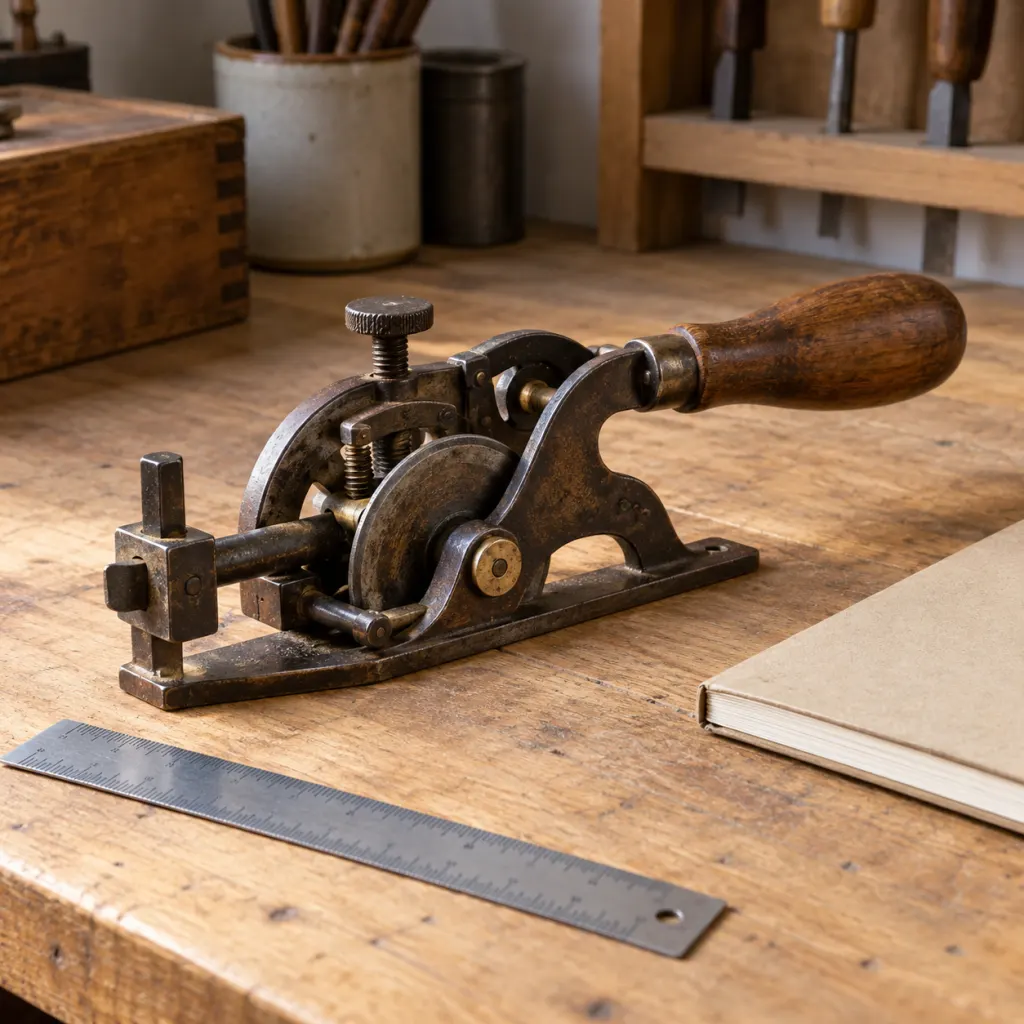
The hidden secret behind this tool is not a mysterious feature. It is the basic engineering idea of a jig or fixture: hold the workpiece in the same position, at the same angle, with enough support that the tool can do its job more predictably. In a small workshop, that can mean cleaner angle-grinder cuts, squarer tack welds, steadier drilling, and fewer moments where one hand is trying to act like a clamp. The useful part is not that the tool does everything; it is that it makes setup visible, repeatable, and easier to check.
What the Tool Really Is
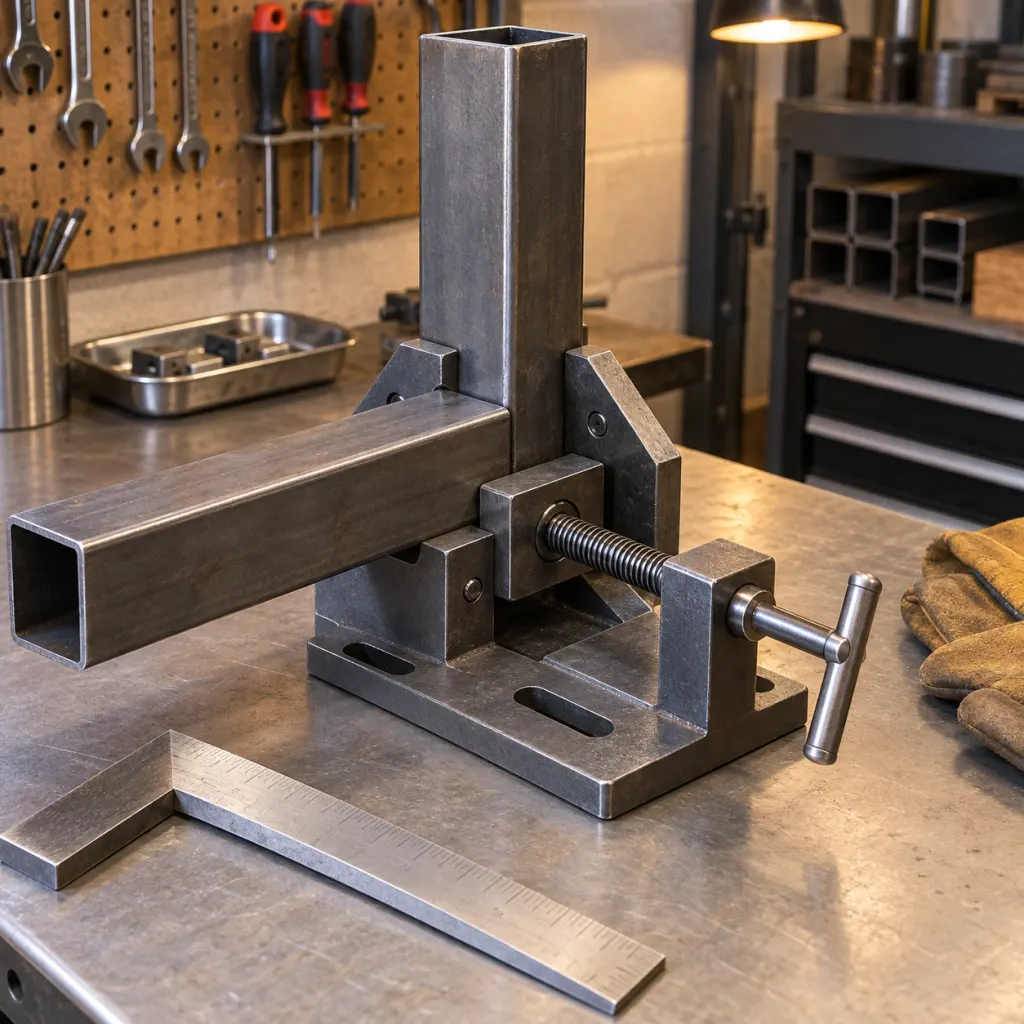
The object often shown in short workshop videos is best understood as a compact workholding jig. Depending on how it is built, it may act as a cutting guide, a 90-degree welding clamp, a small vise, or an assembly stop. Those names sound different, but they share the same purpose: the tool creates a reference surface and a clamping point so the material is not floating freely while the operator cuts, drills, grinds, or welds. Purdue University describes fixtures as devices used to locate and hold workpieces for machining, assembly, inspection, and related operations, with accuracy, repeatability, and lack of interference with tools among the essential criteria https://docs.lib.purdue.edu/dissertations/AAI8900649/.
That definition is useful because it keeps the tool from being oversold. A homemade jig is not automatically a precision instrument. Its accuracy depends on flat surfaces, square edges, sound welds or fasteners, consistent measuring, and clamps that apply pressure without twisting the work. If the hinge is sloppy, the base flexes, or the stop is welded slightly out of square, the jig will repeat the same error over and over. Repeatability is powerful only when the reference is worth repeating.
Why Workholding Feels Like a Shortcut
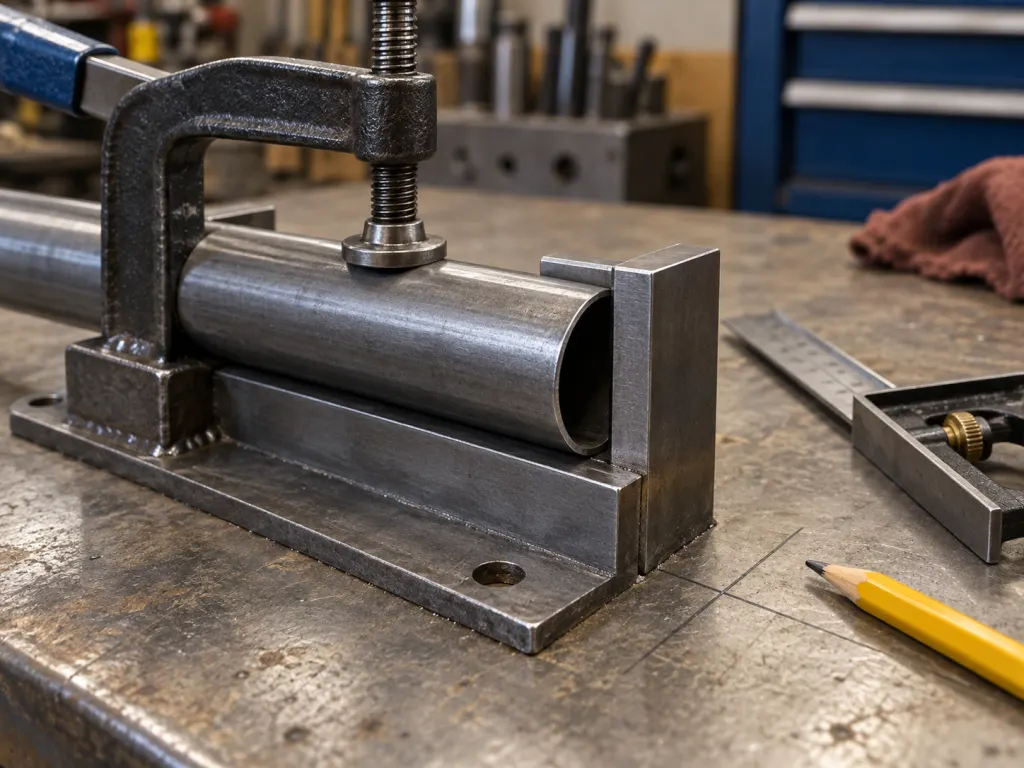
Many workshop mistakes happen before the cutting disc, drill bit, or welding torch touches the metal. A line is marked from the wrong side of the tape. A tube rotates while the first tack is made. A clamp blocks the grinder path, so the operator loosens it and finishes the cut by feel. A jig helps by separating setup from action. First the material is placed against a reference. Then the clamp is tightened. Then the angle and clearance are checked. Only after that does the powered tool enter the work area.
This is the practical reason a simple jig can feel like a hidden trick. It turns a moving problem into a fixed problem. Instead of holding two pieces at a right angle while also managing heat, sparks, cable position, and body balance, the operator can focus on whether the parts are seated properly against the stops. The improvement comes from reducing variables, not from bypassing measurement. In fact, the better habit is to measure more deliberately: check the first piece, check the first hole, check the first tack, and confirm that the jig has not shifted.
The Four Jobs a Small Jig Can Do Well
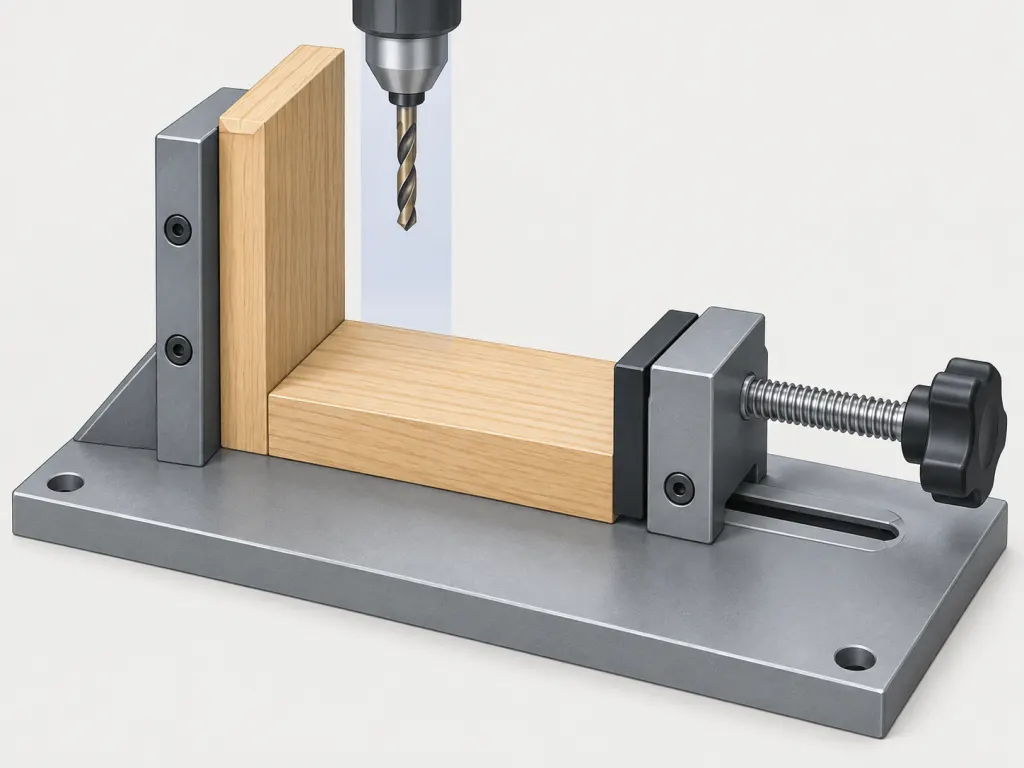
A compact shop jig is most useful when it performs a few jobs clearly rather than pretending to replace a full bench vise, chop saw, drill press table, welding table, and layout bench. The strongest designs usually combine a rigid base, one or two perpendicular reference faces, a movable clamping jaw, and open space for the tool path. For a home fabricator, the valuable uses often look like this:
- Locating: the material sits against a known edge, corner, pin, or stop.
- Supporting: the workpiece is backed up so it does not sag, rock, or chatter during the operation.
- Clamping: a screw, cam, toggle clamp, or bolt holds the work without crushing it or forcing it out of alignment.
- Repeating: once the stop is set, similar pieces can be cut, drilled, or assembled with less layout time.
Those jobs match the broader idea behind industrial fixture design. In Purdue's fixture-design research, locating stability, deterministic location, clamping stability, and total restraint are treated as core functional requirements https://docs.lib.purdue.edu/dissertations/AAI8900649/. A small homemade tool will not apply that theory formally, but the lesson carries over: the workpiece needs a predictable place to sit and a reliable reason to stay there.
Accuracy Comes From Setup, Not Hype
The smartest way to evaluate this kind of tool is to ask what error it controls. A square welding jig can control the angle between two tubes, but it may not control tube length. A cutting stop can control repeated length, but it may not control burrs, disc wander, or heat distortion. A drilling guide can help position holes, but it may not keep a thin part from flexing unless the underside is supported. Naming the controlled variable keeps expectations realistic.
Measurement also has limits. NIST's engineering statistics handbook explains that gauge studies can help estimate uncertainty, but the results need to represent the measurement process in its working environment, and the process can change over time https://www.itl.nist.gov/div898/handbook/mpc/section4/mpc46.htm. In shop terms, a jig checked once with a square is not checked forever. Weld spatter, paint buildup, worn holes, loose bolts, heat, and dropped parts can all change how the material seats.
Where the Design Can Go Wrong
A jig that looks clever in a video can still be awkward or unsafe in a real shop. The most common design problem is tool interference: the clamp, hinge, bolt head, or base plate sits exactly where the grinder guard, drill chuck, welding nozzle, or hand position needs to be. Another problem is false squareness. Two plates can look perpendicular from above while the workpiece rocks on a weld bead underneath. A third problem is over-clamping. Too much pressure on thin tubing can dent the material or pull it away from the reference surface.
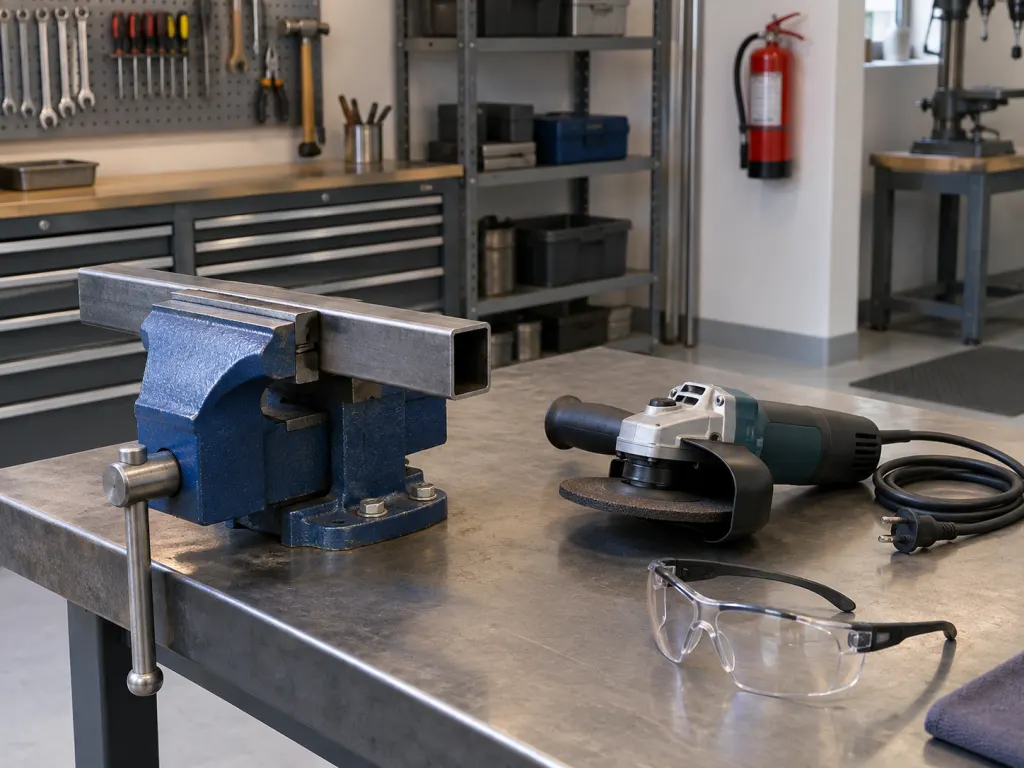
Good workholding should make the operation calmer, not more complicated. The best test is simple: after the workpiece is clamped, can the operator keep both hands in sensible positions, keep the tool guard in place, see the line or joint, and stop the tool without reaching through the path of motion? OSHA's hand and power tool rules in 29 CFR 1926.300 emphasize safe tool condition, guards where tools are designed for them, guarding around points of operation and moving parts, and suitable protective equipment for hazards such as flying chips and sparks https://www.ecfr.gov/current/title-29/subtitle-B/chapter-XVII/part-1926/subpart-I/section-1926.300.
Cutting, Grinding, and Drilling Need Clearance
If the jig will be used with an angle grinder or cutting disc, the layout must leave enough space for the disc, the guard, and the operator's grip. A common mistake is designing around the disc alone. The guard is part of the tool, and removing it to fit a homemade fixture defeats one of the fixture's main benefits: making the job more controlled. The workpiece should be clamped so the offcut can fall or be supported without pinching the disc. Pinching can pull the tool, damage the disc, or ruin the cut.
For drilling, the priority changes. The jig should support the underside of the material, give chips somewhere to go, and keep the drill path clear of hardened bolts or clamp jaws. If the jig includes guide holes, those holes need to be deburred and checked for wear. A sloppy guide hole teaches the drill bit to wander. A tight guide hole in soft mild steel may work for a few jobs, but it can enlarge with repeated use. That is why many durable drilling fixtures use replaceable bushings rather than relying on the main body forever.
Welding Adds Heat, Movement, and Fire Planning
Welding changes the problem because metal moves as it heats and cools. A right-angle jig can hold two pieces for tack welding, but it cannot make every joint immune to distortion. The practical approach is to tack in a balanced sequence, let the assembly settle, check squareness again, and avoid pouring all the heat into one side at once. If the jig is also made from steel, it can draw heat from the work and may collect spatter, so reference faces should be cleaned before each setup.
Hot work also needs a clean area around it. Federal welding and cutting fire-prevention rules require moving the object to a safe location when practical, moving or protecting nearby fire hazards when the object cannot be moved, avoiding hot work where flammable compounds or heavy dust concentrations create a hazard, and keeping suitable fire extinguishing equipment ready https://www.law.cornell.edu/cfr/text/29/1926.352. For a home shop, the habit is the same even outside a regulated workplace: clear the area first, think about where sparks will land, and treat the setup as part of the job.
Ventilation and Eye Protection Are Part of the Tool System
The jig may hold the work, but it does not control every hazard created by cutting, grinding, or welding. NIOSH notes that welding fumes are composed of metals, that exposure varies by wire, rods, flux, base metal, and work conditions, and that confined-space welding can increase exposure https://www.cdc.gov/niosh/welding/about/index.html. NIOSH also describes welding, brazing, and thermal cutting as activities with occupational risks that should be eliminated or minimized through appropriate criteria and controls https://cdc.gov/niosh/publications/numbered/88-110.html.
Eye protection deserves the same plain treatment. CDC/NIOSH explains that workplace eye protection should be selected for the hazard and fitted or adjusted for coverage, comfort, and peripheral vision https://www.cdc.gov/niosh/ppe/eye-safety/index.html. That matters with a jig because a more stable workpiece can tempt people to lean closer to the operation. Better control should not mean less protection. The right setup keeps guards, screens, protective eyewear, lighting, and body position working together.
How to Judge a Homemade Version
If you are evaluating a homemade version of this tool, look less at how compact it is and more at whether it has a controlled reference. The base should sit flat. The stop faces should be clean and square to the task. Bolts should tighten smoothly without pulling the moving jaw sideways. Hinges should not introduce wobble unless the design has a positive lock that removes the play during use. Welds should be sound enough for the expected load, and any sharp edges should be dressed so the tool can be handled without surprises.
Also ask whether the tool fails gracefully. If a clamp loosens, will the workpiece simply move, or will it drop into the disc? If a tack weld sticks the project to the jig, can it be freed without hammering on the reference face? If the operator needs to switch from cutting to welding, does the same setup still make sense, or should the work be reclamped? Good jigs encourage slow answers to these questions before the noisy part of the job begins.
When Buying Is Smarter Than Building
Building a jig can be satisfying, but buying a purpose-made clamp or fixture is often the better choice when the work is structural, repetitive, or difficult to inspect. Commercial welding squares, drill-press vises, miter saw clamps, toggle clamps, and machinist vises exist because many common holding problems already have mature solutions. A homemade jig makes sense when it solves a specific layout problem, fits unusual material, or helps with repeatable light-duty work. It makes less sense when it replaces a critical safety feature or asks a small hinge or bolt to carry a load it was never meant to handle.
The most useful workshop mindset is not homemade versus store-bought. It is fit for purpose. A small jig for holding thin tube at a right angle is a different thing from a fixture for heavy plate, and both are different from a vise used near a drill press. The hidden value appears when the tool is matched to the operation, inspected before use, and treated as one part of a larger setup rather than a universal answer.
Wrap-Up
The real secret behind the tool is disciplined workholding. A jig or fixture can make cuts, holes, and welds more consistent by giving the workpiece a repeatable place to sit and a reliable way to stay there. Its value depends on square references, rigid support, sensible clamp pressure, clear tool paths, guards, ventilation, protective equipment, and fire planning. Used thoughtfully, it can make a small workshop feel more controlled. Used carelessly, it simply repeats mistakes with confidence.
Frequently Asked Questions
- → What is the hidden secret behind this workshop tool?
The useful secret is workholding. The tool acts like a small jig or fixture, giving material a repeatable reference point and a clamp so cutting, drilling, grinding, or welding can happen with less movement and more consistent setup.
- → Can a homemade jig replace a vise or welding table?
Sometimes it can handle light-duty holding, but it should not be treated as a full replacement for a proper vise, welding table, drill-press fixture, or purpose-made clamp. The right choice depends on material size, force, heat, tool clearance, and how accurately the work must be held.
- → How do I know if a jig is accurate enough?
Test it on scrap first. Make one sample cut, hole, or tack weld, then check the result with a square, ruler, caliper, or other appropriate measuring tool. If the result is off, adjust the jig before using finished material.
- → What is the biggest mistake people make with compact workshop jigs?
The biggest mistake is designing around the workpiece but forgetting the tool path. The clamp, hinge, bolt, or base must not interfere with the grinder guard, drill chuck, welding nozzle, cable, or safe hand position.
- → Is this kind of tool mainly for metalworking?
It is often shown in metalworking because cutting, drilling, and tack welding benefit from firm alignment. The same principle also appears in woodworking, assembly, and repair work: locate the material, support it, clamp it, then do the operation.
References
This content was developed and refined using reliable sources.
- https://docs.lib.purdue.edu/dissertations/AAI8900649
- https://www.itl.nist.gov/div898/handbook/mpc/section4/mpc46.htm
- https://www.ecfr.gov/current/title-29/subtitle-B/chapter-XVII/part-1926/subpart-I/section-1926.300
- https://www.law.cornell.edu/cfr/text/29/1926.352
- https://www.cdc.gov/niosh/welding/about/index.html
- https://cdc.gov/niosh/publications/numbered/88-110.html
- https://www.cdc.gov/niosh/ppe/eye-safety/index.html