 Save
Drivers display upside-down state flags or state-shaped decals for several reasons, but the most common reading is informal: a personal tie to a place, a playful twist on regional pride, or a way to start conversations with people who recognize the outline. It is important to separate that from official flag display. A true upside-down U.S. flag has a specific etiquette meaning tied to distress, while a state outline sticker turned upside down is usually a private symbol whose meaning comes from the driver, the community around it, and the setting in which it appears.
The Short Answer: Usually Identity, Not an Official Code
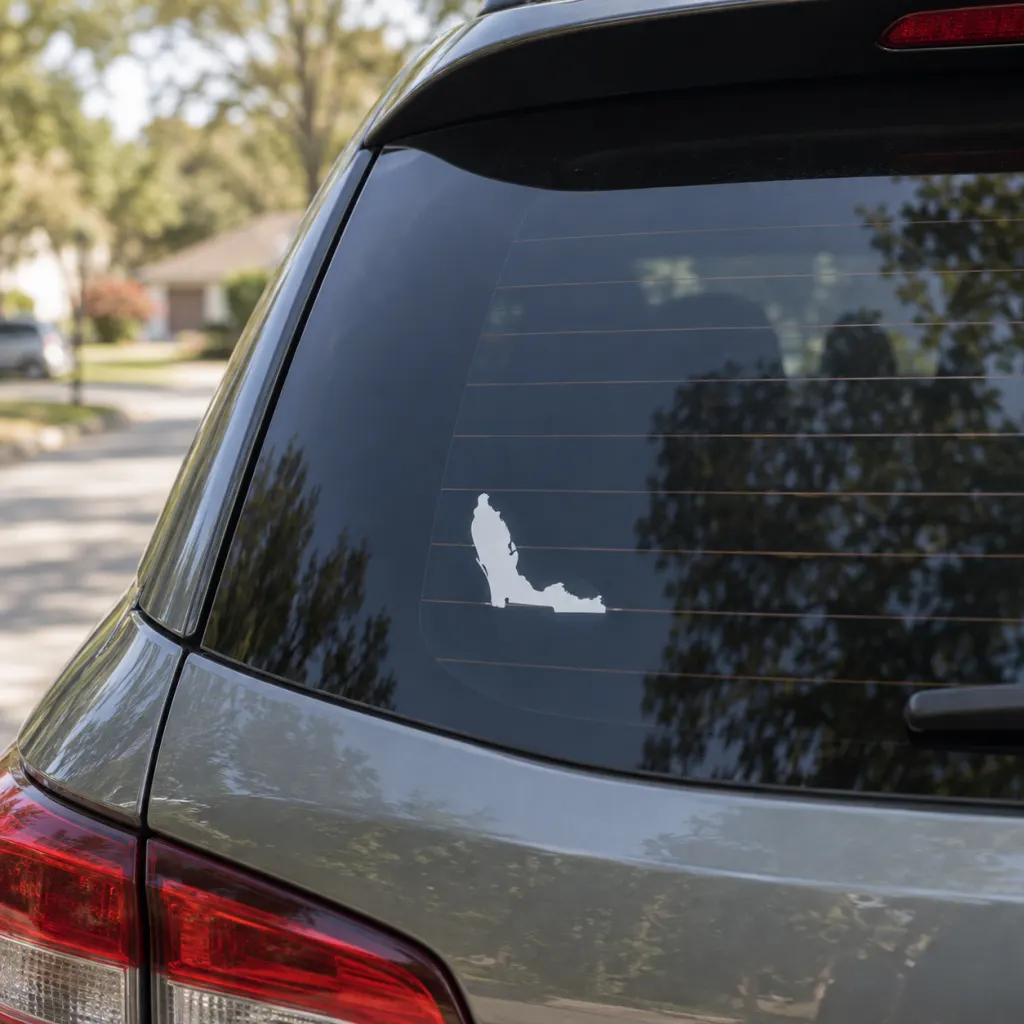
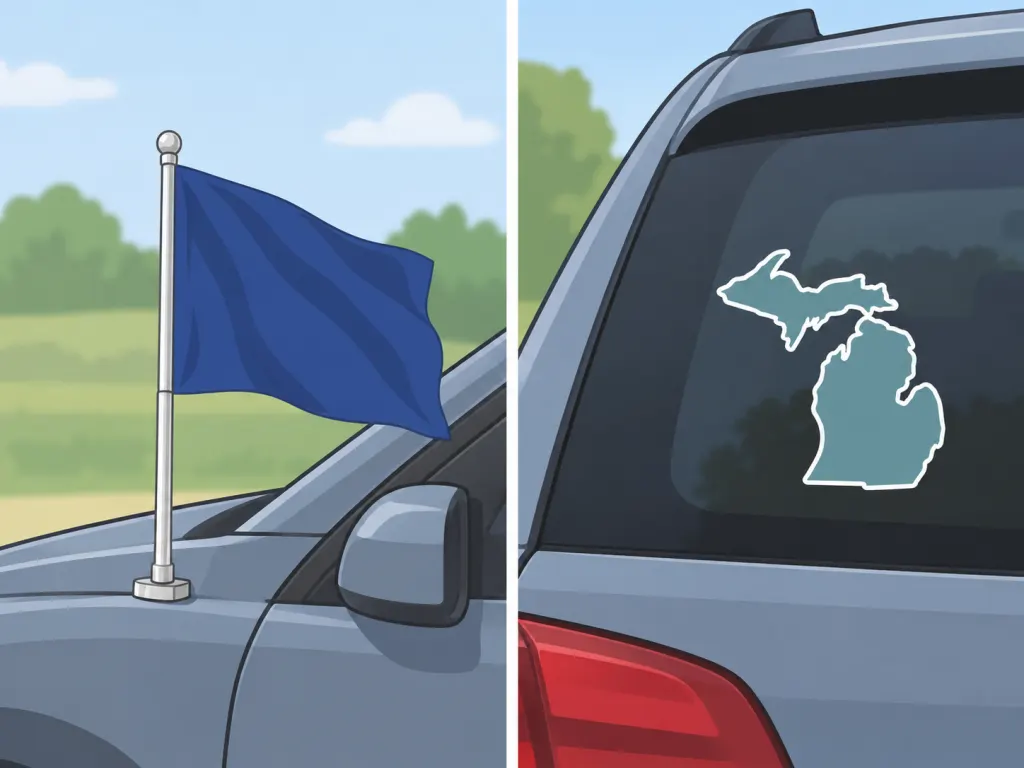
When people talk about upside-down state flags on vehicles, they often mean decals, magnets, window stickers, or stylized state outlines rather than a cloth flag flown from a pole. That distinction changes the interpretation. A decal of Washington, Oregon, Texas, California, or another state can be rotated as a graphic choice without becoming an official distress signal. For many drivers, the inverted shape says something like, “I am from there,” “I miss that place,” “I moved away,” or “you will know what this means if you know the place.”
The Washington example is especially useful because the official state flag is not a simple outline. Washington law defines the state flag as dark green silk or bunting with the state seal at the center, not as a border map or a silhouette https://app.leg.wa.gov/RCW/default.aspx?cite=1.20.010. The Secretary of State also explains that the modern Washington flag was adopted in 1923 and uses the state seal, including George Washington’s portrait, as its emblem https://www.sos.wa.gov/washington-state-flag. So an upside-down outline sticker is better understood as a place symbol inspired by the state, not as the official Washington state flag being flown incorrectly.
That does not mean the symbol is meaningless. Informal symbols often work precisely because they are flexible. They let the driver signal belonging without spelling out a full explanation. A state outline on a rear window can carry memories of where someone grew up, where they studied, where they worked, where they spent summers, or where they still feel partly at home. Turning it upside down adds a small puzzle: enough to make another person notice, but not so much that it becomes a formal statement.

Why the Upside-Down Shape Catches the Eye
A state outline is usually recognizable because people learn it as a map shape. Rotate that outline and the brain still notices the familiar border, but it takes a beat to place it. That half-second of recognition is part of the appeal. The sticker becomes less like a label and more like an inside reference. Someone who knows the state may catch it immediately; someone else may only see an abstract shape.
This is one reason the symbol works so well on vehicles. Cars, trucks, vans, campers, and roof-boxed road-trip vehicles are moving objects with small surfaces for self-expression. Drivers use bumper stickers, license-plate frames, ski-town decals, national park badges, school emblems, and state outlines because those marks can be read quickly in traffic or in a parking lot. A rotated state shape is subtle enough not to dominate the vehicle, but distinctive enough to invite recognition.
What an Actual Upside-Down Flag Means
Actual flags are different from graphic decals. In U.S. flag etiquette, displaying the national flag with the union down is treated as a signal of serious distress involving extreme danger to life or property. The Washington Secretary of State’s flag information page reproduces federal flag-display guidance, including the rule that the union should be uppermost in ordinary display and that vehicle display has its own protocols https://www.sos.wa.gov/washington-state-flag. Florida’s Department of State gives similar public-facing flag protocol guidance and states that flags should not be displayed upside down except as a distress signal https://dos.fl.gov/about-the-department/flag-and-seal-protocol/flag-protocols-and-display.
That formal meaning does not automatically transfer to every state sticker, state map, or novelty decal. If a driver has a cloth flag mounted from a vehicle, etiquette and local rules matter more. If the driver has a small vinyl silhouette of a state placed upside down on a back window, viewers should be careful about assuming an emergency message. The safest reading is contextual: look at the object, the placement, and any surrounding signs before deciding what the driver is trying to say.
Why Washington Decals Became an Easy Example
Washington lends itself to this kind of symbol because its outline is visually distinctive. The Puget Sound coastline, Olympic Peninsula, Columbia River edge, and Idaho border make a recognizable map shape for people who know the region. When inverted, the silhouette still feels familiar, but it becomes slightly off-kilter. For former residents, students, military families, seasonal workers, outdoor travelers, or people who simply formed strong memories there, that small visual twist can carry a lot of private meaning.
Research on place attachment helps explain why a small object can feel emotionally loaded. A study of students moving away from home to university describes place attachment and place identity as part of how people make sense of belonging, continuity, and self-understanding during relocation https://uhra.herts.ac.uk/id/eprint/757/. A car decal is obviously not the same as a home, but it can function as a portable cue. It lets a person carry a reference to a meaningful place into a new city, a new state, or a life stage that no longer happens there every day.
That is why these decals often feel less like official statements and more like personal shorthand. One driver may mean “I moved away from Washington, but I still belong to it.” Another may mean “life turned me upside down, but this is still home.” Another may simply like the design. Without a public registry, club, or government meaning behind a specific sticker, the best explanation is not one single definition. It is a cluster of meanings around memory, belonging, humor, travel, and recognition.
How to Read One Without Overreading It
If you see an upside-down state symbol on a vehicle, read it the way you would read any other small personal emblem: with curiosity and restraint. The surrounding context usually tells you more than the rotation alone.
- Look at the object. A cloth flag, a printed flag image, and a state-outline decal are not the same thing.
- Notice the nearby symbols. Political signs, military decals, school stickers, park badges, or hometown labels can shift the likely meaning.
- Consider the state. A recognizable outline may be used as a local-insider cue, while an official flag may carry more formal protocol expectations.
- Do not assume distress from a decal alone. Actual emergency situations usually include other signs that something is wrong.
- Ask if the moment is friendly. Many drivers use these symbols because they enjoy the conversation they create.
This context-first approach avoids two common mistakes. The first is treating every upside-down state image as a protest or distress signal. The second is treating every rotated symbol as a mistake. On a sticker, inversion is often the entire point. It turns a simple state outline into a small social test: if you know, you know; if you do not, you may ask.

The Line Between Personal Expression and Official Use
State symbols can be protected, regulated, or protocol-bound in ways that ordinary decals are not. Washington’s rules for the official state flag include detailed requirements for the seal, proportions, and colors when the flag is manufactured or displayed as the flag https://app.leg.wa.gov/WAC/default.aspx?cite=434-04-017. Washington law also restricts placing words, designs, drawings, or advertising on actual U.S. or state flags for exhibition or display https://app.leg.wa.gov/rcw/default.aspx?cite=9.86.020. Those rules are one reason it is useful to distinguish an official flag from an inspired graphic, outline, or souvenir-style sticker.
Private expression can still raise different questions depending on where it appears. A personal car parked at home is one setting; a government vehicle, workplace lot, official event, school procession, or regulated organization may be another. The U.S. Courts’ educational summary of Texas v. Johnson explains that flag burning was treated as symbolic speech protected by the First Amendment, even though many people found the act offensive https://www.uscourts.gov/about-federal-courts/educational-resources/educational-activities/texas-v-johnson/facts-and-case-summary-texas-v-johnson. At the same time, agencies and employers may have rules for official spaces and official roles; the Justice Department’s political-activity guidance, for example, distinguishes some personal-vehicle bumper-sticker activity from political activity using official vehicles or official authority https://www.justice.gov/jmd/political-activities.
Why People Like Symbols That Are Not Fully Explained
The upside-down state symbol works because it leaves room for interpretation. A fully spelled-out sticker gives the answer away. A rotated outline asks the viewer to participate. It can signal hometown pride without sounding boastful, nostalgia without becoming sentimental, and humor without needing a joke printed beside it. The lack of a single official meaning is not a weakness; it is what lets different drivers make the same shape their own.
There is also a road-culture element. Vehicles are public but personal. They move through many communities while carrying bits of the driver’s story: where they ski, where they served, where they studied, where they camp, where their family lives, what teams they follow, and what places still tug at them. An upside-down state decal fits into that tradition. It is a small object doing a large job: compressing geography, memory, and identity into a shape that can be read at a stoplight.
The Bottom Line
Most upside-down state designs on vehicles are best read as informal, personal symbols rather than official codes. They may point to relocation, homesickness, regional humor, outdoor identity, or a quiet bond with a place. Actual flags deserve a more careful reading because formal etiquette treats upside-down display very differently, especially for the U.S. flag. The practical answer is simple: identify whether you are seeing a flag or a graphic, read the surrounding context, and leave room for the driver’s own story.
Wrap-Up
Upside-down state flags and state-outline decals are not all saying the same thing. A true upside-down flag can carry formal distress or protest associations, while a rotated state outline on a vehicle is usually a personal marker of place identity, memory, or regional pride. Washington decals illustrate the difference especially well because the official Washington flag is a seal-bearing green flag, while the familiar car decal is often just a stylized map outline. Context is the key to reading it fairly.
Frequently Asked Questions
- → Does an upside-down state outline on a car always mean distress?
No. A state outline decal is usually an informal personal symbol, not an official distress signal. Distress meanings are more closely tied to actual flag display, especially the U.S. flag shown union-down. A vinyl state silhouette on a vehicle is more often about identity, relocation, travel, or a playful visual twist.
- → Why is Washington often mentioned with upside-down state decals?
Washington has a distinctive map outline that remains recognizable even when rotated. Drivers who once lived there, traveled there often, or still feel connected to the Pacific Northwest may use the inverted outline as a subtle sign of belonging. It is not the official Washington state flag, which is legally defined as a green flag bearing the state seal.
- → Is an upside-down state flag decal political?
It can be, but it does not have to be. Nearby signs, slogans, or other symbols may make a political meaning clear. Without that context, many upside-down state decals are better read as place-based identity markers or conversation starters rather than formal protest statements.
- → Is it a mistake when a driver puts a state sticker upside down?
Sometimes a sticker may be placed incorrectly, but many inverted state decals are intentional. The rotation makes the outline more noticeable and gives the symbol an inside-reference feeling. If the driver chose that placement on purpose, the meaning may be personal rather than standardized.
- → Are vehicle decals treated the same as official flags?
No. A cloth flag, an official state flag, a printed flag image, and a simple state-outline decal are different objects. Official flags may be covered by display etiquette or specific state rules, while ordinary decals are usually personal expression. Context and local rules matter, especially on government vehicles, official property, or in regulated workplaces.
References
This content was developed and refined using reliable sources.
- https://www.sos.wa.gov/washington-state-flag
- https://app.leg.wa.gov/RCW/default.aspx?cite=1.20.010
- https://app.leg.wa.gov/WAC/default.aspx?cite=434-04-017
- https://app.leg.wa.gov/rcw/default.aspx?cite=9.86.020
- https://dos.fl.gov/about-the-department/flag-and-seal-protocol/flag-protocols-and-display
- https://www.uscourts.gov/about-federal-courts/educational-resources/educational-activities/first-amendment-activities/texas-v-johnson/facts-and-case-summary-texas-v-johnson
- https://uhra.herts.ac.uk/id/eprint/757
- https://www.justice.gov/jmd/political-activities