 Save
The short answer is simple: Aldi's cart quarter is a refundable deposit, not a real shopping-cart fee. You put in a quarter to unlock a cart, shop, and get the quarter back when you return the cart to the corral. That tiny deposit gives shoppers a reason to bring carts back themselves, which means fewer carts scattered across the lot and less staff time spent collecting them. It also fits Aldi's broader approach: small, repeatable efficiencies that help the store run with fewer extras and lower overhead.
The Quarter Is Meant To Change Behavior
A cart left loose in a parking lot looks like a small inconvenience, but for a grocery store it creates a chain of work. Someone has to find it, retrieve it, line it up, and sometimes deal with damage or replacement. Aldi's quarter system nudges that work back to the moment when it is easiest to solve: right after the shopper unloads groceries. The customer already has the cart, the cart return is nearby, and the quarter gives the return trip a clear payoff.
That is why it is more accurate to call the quarter a deposit than a charge. A charge is money the store keeps in exchange for a product or service. A deposit is money you temporarily leave behind to encourage a specific action. With Aldi carts, the desired action is returning the cart to the locking row. If you do that, the quarter comes back. If you choose not to, the next person who returns the cart may keep the coin.

How The Cart System Works In Practice
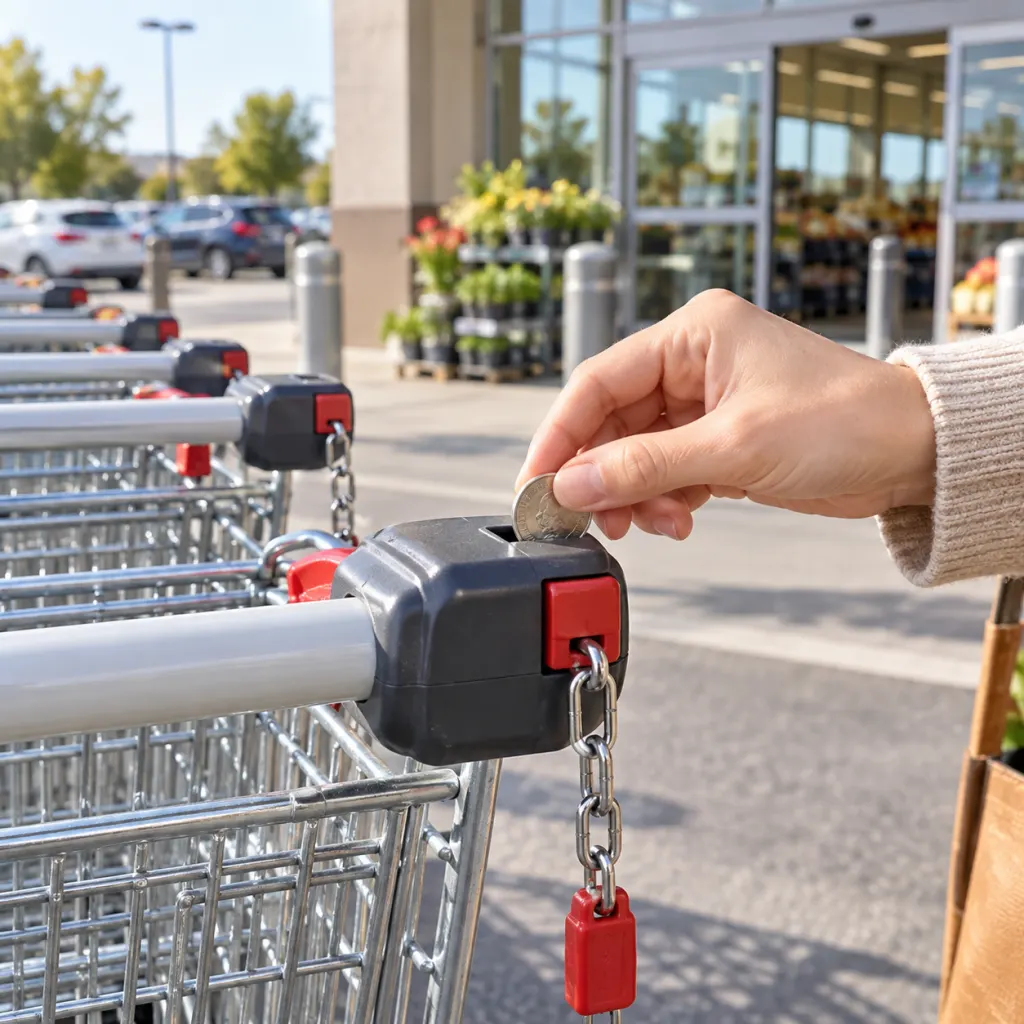
The routine is intentionally low-tech. A row of carts is linked by small locking chains. You insert a quarter into the cart handle, the lock releases, and you use the cart as usual. After checkout, you unload groceries into your car, push the cart back to the return area, reconnect the chain, and the lock releases your quarter. The system works because it does not require an app, a loyalty account, a receipt scan, or a staff member standing nearby.
- You are not paying to shop. The quarter returns when the cart is returned.
- The store reduces loose carts. Most shoppers have a small reason to bring the cart back.
- Staff can stay focused inside. Fewer cart runs mean more time for stocking, checkout, cleaning, and customer questions.
- The parking lot stays more orderly. Returned carts are easier to find and less likely to block spaces.
Why This Fits Aldi's Larger Store Model
Aldi is built around fewer frills than many full-service supermarkets. The store experience usually includes a smaller selection, more private-label products, self-bagging, simple displays, and fast checkout. Which? described Aldi as a discounter where operational simplicity matters; in a 2023 report on click-and-collect changes, a retail consultant told Which? that discounters are centered on simplicity and efficiencies, so added costs are closely scrutinized https://www.which.co.uk/news/article/aldi-cuts-back-click-and-collect-service-ak6Ez6n5qnDN.
The cart deposit is one piece of that pattern. It does not lower prices by itself in some dramatic, visible way. A quarter cart lock is not the whole business model. But grocery pricing is shaped by many small costs: labor, equipment, store layout, wasted time, damaged property, and how quickly shoppers move through the building. A system that reduces one repeated parking-lot task can support the same lean habits as self-bagging or a limited assortment.
Abandoned Carts Are A Real Operating Problem
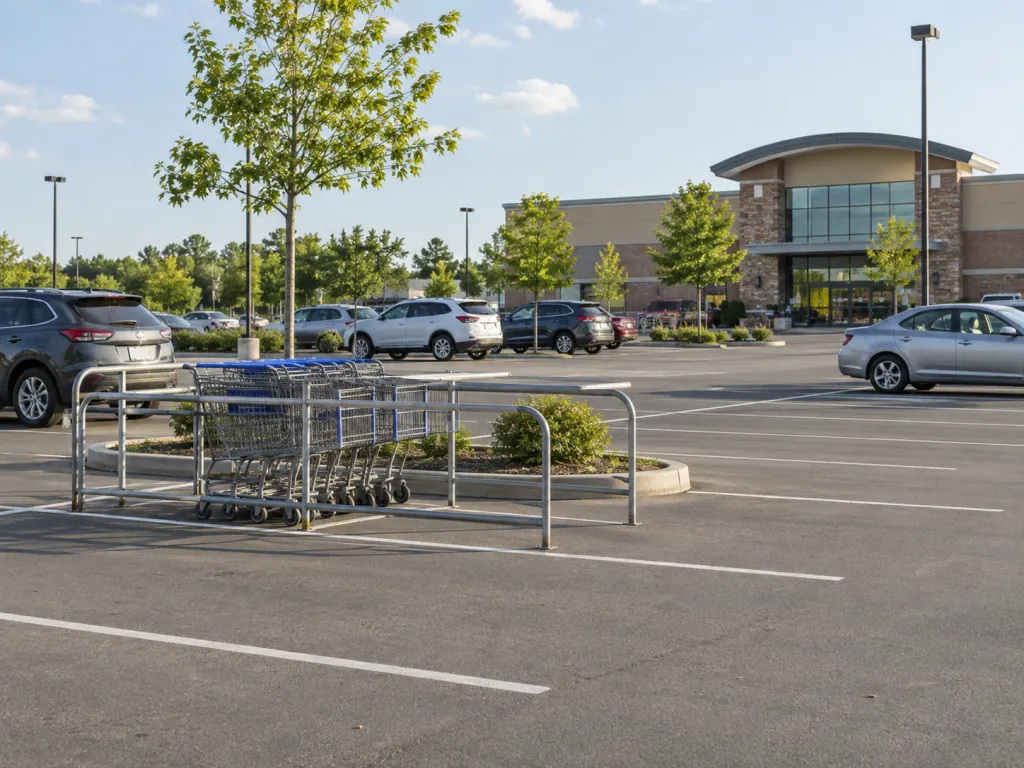
Loose shopping carts are not only an Aldi issue. Cities and counties have had to write rules around abandoned carts because they can end up away from store property, in public areas, or near other businesses. Sacramento County's zoning standards for recycling facilities, for example, say that if shopping carts are abandoned on certain properties, the operator must pay for daily cart retrieval service and remove them promptly https://landuse.saccounty.gov/szc/ch3/. That kind of rule shows how quickly stray carts can become someone else's work.
Arizona legislative materials from 2026 also treated shopping carts and hand-held baskets as business-owned movable property used temporarily by customers, and discussed disputes over who pays when such property is abandoned or retrieved by a municipality https://www.azleg.gov/legtext/57leg/2R/summary/S.2460GOV.DOCX.htm. The details vary by place, but the broader point is consistent: carts are store assets, not disposable conveniences. When they leave the intended area, somebody has to spend time and money getting them back.
Why A Small Deposit Can Work Better Than A Sign
Many stores post signs asking customers to return carts. Signs help, but they rely on attention, goodwill, and memory. A deposit adds a tiny, immediate incentive. It does not need to be large; in fact, making it small is part of the design. A quarter is enough to feel worth retrieving, but not so high that it turns the cart into a stressful expense. It is a practical nudge, not a punishment.
The system also creates a quiet social shortcut. If you do not have a quarter, another shopper may pass you a cart and take your quarter later, or swap an empty cart for the coin already inside. At busy stores, cart returns often become part of the Aldi rhythm: one shopper unloads, another approaches, and the cart changes hands before it ever reaches the corral. The store still gets the benefit because the cart remains in circulation instead of being left loose.

Does The Quarter Really Keep Prices Lower?
It is best to be precise here. Aldi's cart system can reduce operating costs, but no outside reader can calculate exactly how much a single shopper saves on a carton of eggs or a box of cereal because of cart deposits alone. Grocery prices depend on supply contracts, store rent, wages, energy costs, product mix, competition, and many other factors. The quarter system is one visible example of Aldi's wider low-overhead approach, not a magic formula.
Independent price comparisons do show why shoppers connect Aldi with value. In a November 2023 Which? analysis of a 47-item grocery basket in the UK, Aldi was named the cheapest supermarket in that comparison, with Lidl close behind and Waitrose higher for the same basket https://www.which.co.uk/policy-and-insight/article/aldi-was-the-cheapest-supermarket-in-november-which-reveals-aChxw1F4xQb9. That does not prove the cart system caused the price gap, but it supports the broader picture of Aldi as a retailer that competes heavily on price.
The Cart Deposit Also Shapes The Shopping Experience
Aldi's quarter system is part of the store's personality. Before you even enter, it tells you that the trip will be a little more self-serve than at a conventional supermarket. You bring a coin or a cart token. You bring bags or buy them. You bag groceries away from the register. You choose from a tighter selection. For shoppers who like a full-service store, that can feel abrupt at first. For shoppers who prefer speed and lower prices, it can feel refreshingly direct.
Store design influences behavior in many subtle ways. Which? has reported on supermarket tactics such as entrance layouts, product placement, and simplified routes that affect how people move through a store https://www.which.co.uk/news/article/five-ways-supermarkets-get-inside-your-head-a5Myw7H3qJv9. Aldi's cart system is not about making you buy an extra snack; it is about setting expectations. The store is saying, in effect, that it will trade some convenience rituals for lower-friction operations.
Is It Fair To Shoppers?
For most shoppers, the system is fair because the money comes back. The main inconvenience is remembering the quarter. That inconvenience is real, especially for people who rarely carry coins, but it is also predictable. Once shoppers know the routine, it becomes no more complicated than remembering bags. The store is not asking people to pay extra for the cart; it is asking them to participate in returning it.
The bigger fairness question is whether shoppers should have to do work that other stores assign to employees. Aldi's answer is built into its model: the store removes some services and aims to reflect that leaner operation in its prices. Not every shopper will prefer that trade. Someone buying a large order with children in tow may value full-service conveniences more than a small potential saving. Someone shopping on a tight grocery budget may happily return a cart if it helps keep the overall store model lean.
What First-Time Shoppers Should Know
If you are going to Aldi for the first time, the cart routine is easier than it looks. Bring a quarter, take a cart, shop, unload, and return the cart. If you forget the coin, check whether a companion has one, ask the cashier whether the store can help, or see whether another shopper is handing off a cart. Do not assume the quarter is gone. The system is designed to give it back.
It also helps to understand the rest of the checkout flow. Aldi cashiers typically scan quickly, and groceries go back into the cart rather than into bags at the register. After paying, shoppers move to a bagging area and pack their own groceries. That setup keeps the line moving and keeps the checkout lane clear for the next customer. The cart deposit, self-bagging area, and quick checkout all work together as one store system.
The Bigger Lesson Behind The Quarter
The reason Aldi charges for shopping carts is not really about the quarter. It is about designing a store where small responsibilities are shared between the retailer and the shopper. Aldi provides the cart, the customer returns it, and the store avoids building a larger routine around collecting carts from every corner of the lot. The quarter makes that exchange simple enough to repeat thousands of times a day.
That is why the practice has lasted. It solves a practical problem with a clear incentive, almost no explanation, and very little technology. The first time you encounter it, it may look like an odd fee. Once you return the cart and hear the quarter click back into place, the logic becomes obvious: Aldi is not selling cart access. It is using a small refundable deposit to keep the store moving the way Aldi wants it to move.
Wrap-Up
Aldi charges a quarter for shopping carts because the coin helps make sure carts come back. The deposit reduces loose carts, limits cart-collection work, protects store property, and supports Aldi's stripped-down operating style. It is a small inconvenience by design: easy enough for shoppers to manage, but effective enough to change what happens in the parking lot.
Frequently Asked Questions
- → Is Aldi actually charging me to use a cart?
Not in the usual sense. The quarter works as a refundable deposit. If you return the cart and reconnect it to the cart row, the coin is released back to you.
- → Why does Aldi use a quarter instead of just asking people to return carts?
A sign depends on people noticing and remembering. A refundable coin gives shoppers a small, immediate reason to bring the cart back, which keeps the lot more orderly with less staff time spent gathering carts.
- → What happens if I forget my quarter?
You can still shop, but getting a cart may take an extra step. Some shoppers ask a cashier, borrow a coin from someone they are shopping with, or take a cart from another customer who is finished and give that person a quarter later.
- → Does Aldi make money from unreturned carts?
The system is not mainly a money-maker. A single quarter is tiny compared with the cost of staff time, cart retrieval, cart repair, or cart replacement. The value is in encouraging returns, not collecting coins.
- → Why do some other grocery stores not use this system?
Different stores choose different service models. Some build cart collection into staffing. Others use cart corrals, wheel locks, or lot attendants. Aldi's model relies more heavily on simple self-service habits, so the cart deposit fits its overall approach.
References
This content was developed and refined using reliable sources.
- https://www.which.co.uk/news/article/aldi-cuts-back-click-and-collect-service-ak6Ez6n5qnDN
- https://landuse.saccounty.gov/szc/ch3
- https://www.azleg.gov/legtext/57leg/2R/summary/S.2460GOV.DOCX.htm
- https://www.which.co.uk/policy-and-insight/article/aldi-was-the-cheapest-supermarket-in-november-which-reveals-aChxw1F4xQb9
- https://www.which.co.uk/news/article/five-ways-supermarkets-get-inside-your-head-a5Myw7H3qJv9