 Save
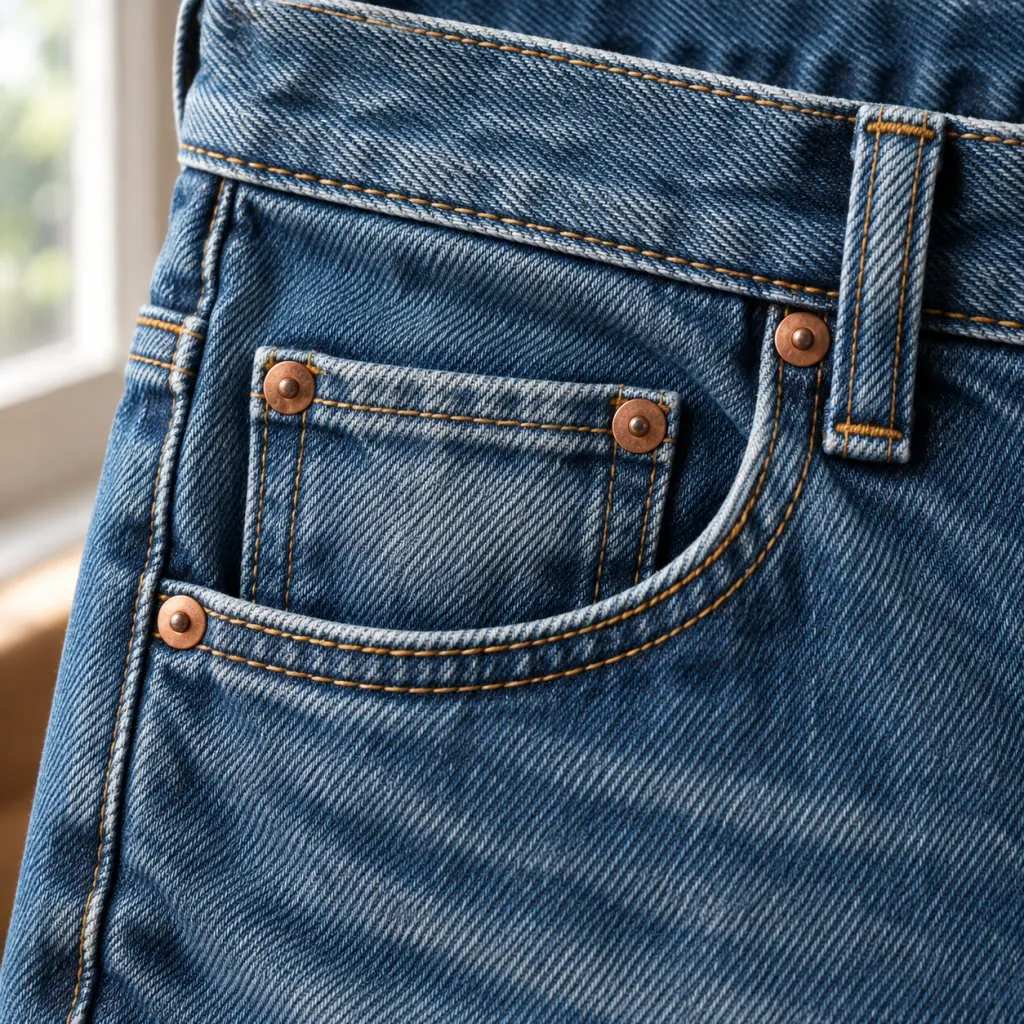
That tiny pocket on your jeans is there because it was originally a watch pocket. It gave people a snug, easy-to-reach place for a pocket watch at a time when watches were commonly carried in pockets rather than worn on the wrist. The detail survived because jeans are unusually loyal to their old workwear design: rivets, heavy stitching, patch pockets, and that small right-front pocket all help modern jeans look connected to their 19th-century ancestors.
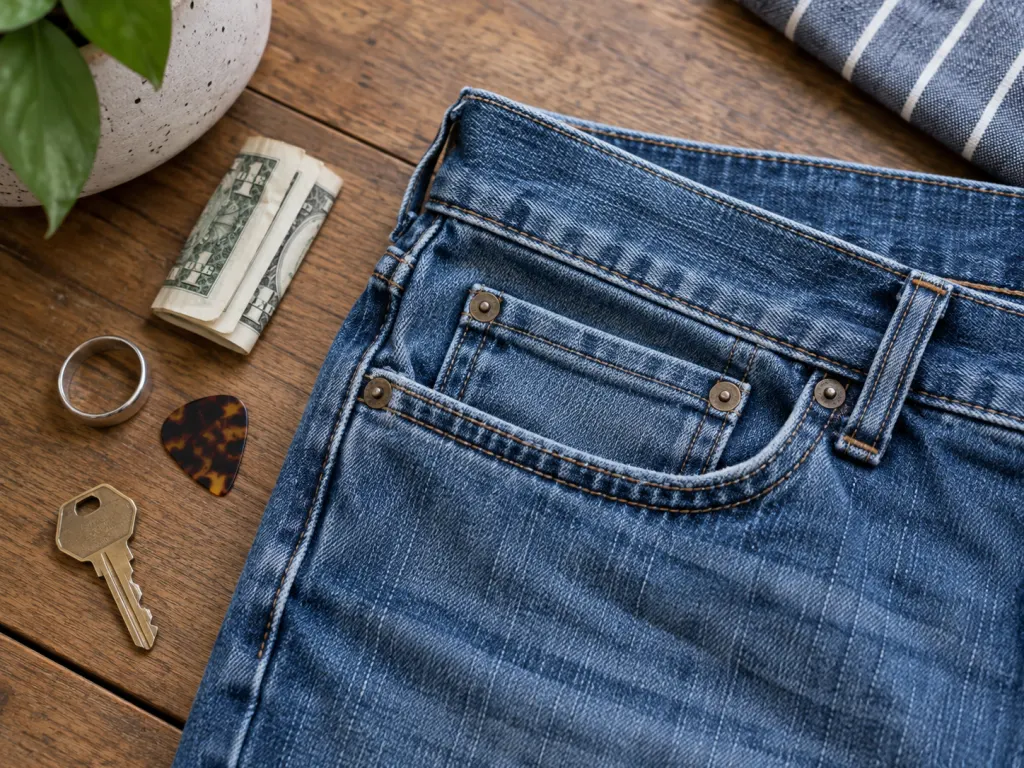
It may now hold a coin, ring, key, guitar pick, transit ticket, or nothing at all, but its name and placement still point backward. Museum cataloging still identifies this feature as a small watch pocket on denim jeans, and Smithsonian exhibits on timekeeping show why watches once needed pocket-based storage in ordinary dress.
The Short Answer
The small pocket is best understood as a watch pocket: a compact pouch set into the right front pocket of jeans. Its purpose was to help hold a pocket watch securely and separately from the larger pocket, where harder or bulkier objects could scratch, tangle, or make the watch harder to retrieve. A Smithsonian clothing record for a modern denim set describes the same feature as a small watch pocket inside the right front pocket, showing that the term is still used in museum cataloging for jeans construction today https://nmaahc.si.edu/object/nmaahc_2007.3.603.1-.3.
Why A Watch Needed Its Own Place
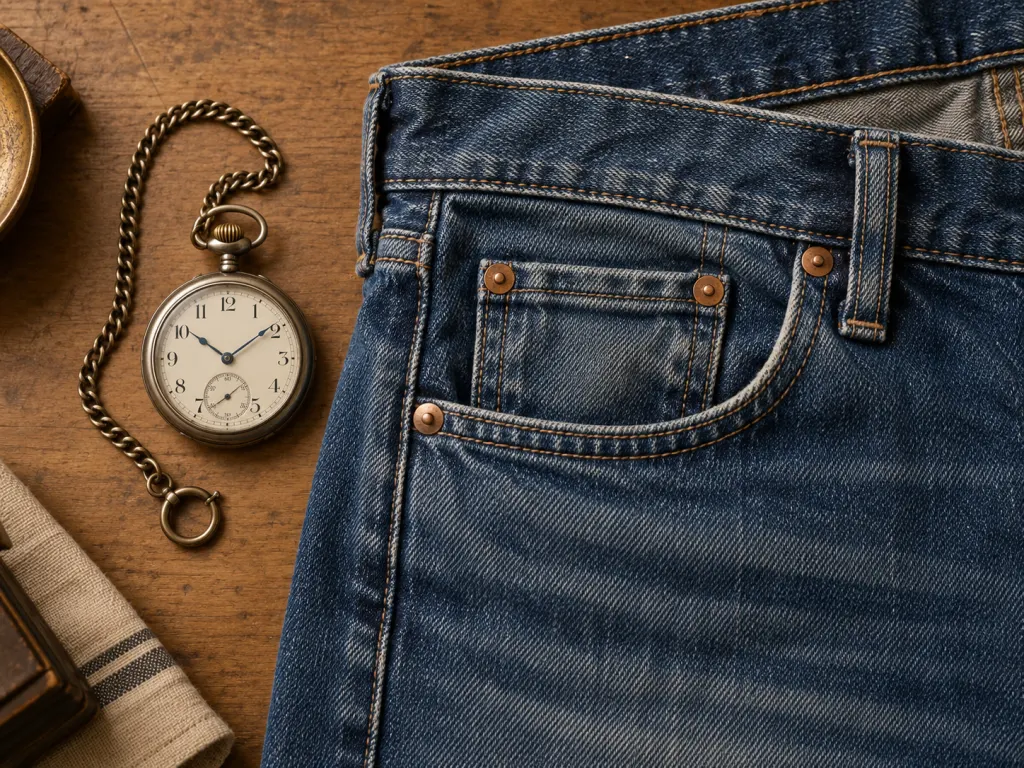
Before wristwatches became everyday wear, pocket watches were not rare curiosities. They were practical objects, status objects, and, by the 19th century, increasingly common accessories. The Smithsonian's timekeeping exhibit notes that men often carried watches with a chain, ribbon, cord, or fob charm tucked into vest pockets, while women used several arrangements, including neck chains, waistbands, and waist pockets https://americanhistory.si.edu/ontime/mechanizing/machine.html. Another Smithsonian page explains that earlier watches could be worn in a fob pocket of breeches, with a chain or tassel hanging outside the pocket https://americanhistory.si.edu/ontime/marking/status.html.
Jeans Came From Practical Workwear
The watch pocket makes more sense when jeans are seen as work clothing first and fashion second. In 1873, Jacob W. Davis received U.S. patent number 139,121 for an improvement in fastening pocket openings. The National Archives describes the patent as using metal rivets or eyelets at pocket-opening edges to keep those points from ripping. Davis later explained in a deposition that he had first used rivets on work pants after being asked to make a strong pair of pants for a customer's husband https://prologue.blogs.archives.gov/2010/05/20/forever-in-blue-jeansand-in-court/.
That context matters because the small pocket was not added as a joke or a decorative flourish. It belonged to a garment shaped by useful problems: pockets ripped, workers carried small tools and personal items, and people needed clothing that could handle repeated bending, sitting, lifting, and walking. A small watch pocket fit naturally into that world. It separated a valuable timepiece from the rougher contents of the larger pocket and kept it close to the hand.
Why The Pocket Is Usually On The Right
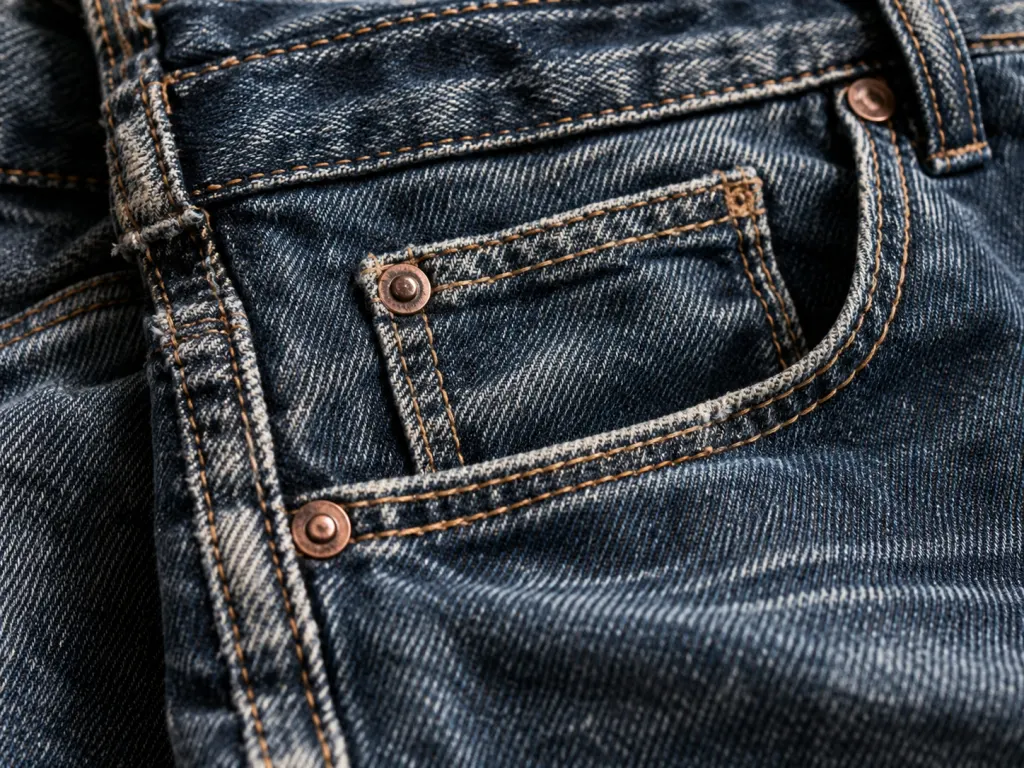
On classic jeans, the small pocket sits inside or just above the larger right front pocket. That right-side placement reflects the way five-pocket jeans became standardized over time. It also makes the pocket easy to reach with the dominant hand for many wearers, though the exact shape and position vary by brand, size, and cut. The important point is not that every pair is identical, but that the feature became recognizable enough to survive even when its original use faded.
Why It Stayed After Pocket Watches Faded
The pocket remained because jeans are design-conservative in a way many garments are not. A pair of jeans is expected to look like jeans: front pockets, back patch pockets, rivets or rivet-like reinforcement, belt loops, sturdy seams, and the little front pocket. When a detail becomes part of a garment's visual identity, removing it can make the garment feel slightly off, even if most wearers no longer use it for its first purpose.
What People Use It For Now
Today, the small pocket is more adaptable than essential. It is rarely roomy enough for a phone and can be annoying for loose change, but it can still be useful for flat or compact items. Reasonable modern uses include:
- A ring or small piece of jewelry you need to keep separate for a short time.
- A folded bill, tiny note, guitar pick, or transit ticket.
- A small key, provided it is not sharp enough to stress the fabric.
- A single coin or token when easy retrieval is not urgent.
- Nothing at all, because the pocket can simply be part of the jeans' familiar look.
It Is Not Really A Coin Pocket
Many people call it a coin pocket, and that name is understandable because coins are small. Still, coins are not the best explanation for the feature. A very small, deep, tight pocket is not especially convenient when you want to fish out change quickly. The older name, watch pocket, better explains both its shape and its position: it was meant for one valuable object that benefited from a snug compartment.
Why The Pocket Is Sometimes Called The Fifth Pocket
The phrase five-pocket jeans can be confusing because people often assume the tiny pocket is the fifth one. In common clothing language, five-pocket jeans usually means two front pockets, two back pockets, and the small watch pocket. On many jeans, the small pocket is counted as part of that layout even though it is nested into a front pocket. The exact history of counting can vary by maker and period, but in everyday shopping language the phrase now describes a familiar jeans arrangement rather than a mathematical puzzle.
The Rivets Explain The Whole Garment
One reason the watch pocket feels so permanent is that it sits inside a broader system of reinforced details. Rivets were created to address pocket strain, according to the National Archives account of Davis's patent and later court materials. That means pockets were central to the invention story of riveted work trousers, not incidental trim. When you look at the small pocket next to the rivets and heavy stitching, you are looking at a miniature version of the jeans design logic: make useful storage stronger, then keep the strongest-looking details because people recognize them.
A Small Detail With A Long Memory
The watch pocket is one of those clothing details that outlived the daily habit that created it. Most people now check time on a phone or wristwatch, but the pocket remains because it says something immediately: these are jeans, not dress trousers, not athletic pants, not a plain cotton chino. It gives the garment a historical accent, even when the wearer never thinks about it.
That is why the small pocket can feel oddly charming. It is a practical remnant that became a style cue. It shows how clothing often changes less by clean replacement than by accumulation. A feature solves a problem, the problem fades, the feature becomes familiar, and familiarity becomes part of the design.
How To Read The Pocket On Your Own Jeans
If you want to understand a pair of jeans better, look at the small pocket closely. Is it sewn as a separate patch? Are its lower corners riveted, bar-tacked, or simply stitched? Is it partly hidden inside the larger pocket, or placed higher and more visibly on the front? These details can tell you whether the maker is leaning into traditional workwear styling, simplifying the construction, or using the pocket mainly as a visual nod.
On heavier denim, the small pocket may feel substantial, with thick thread and reinforced corners. On stretch denim or lightweight fashion jeans, it may be flatter and less functional. On some women's cuts or very slim fits, it may be so shallow that it is almost entirely symbolic. None of that changes the historical idea. It only shows how a practical feature can be reshaped for modern fabric, fit, and cost.
The Best Way To Explain It Simply
If someone asks why jeans have a small pocket, the clean answer is this: it is a watch pocket from the pocket-watch era, preserved because jeans kept much of their old workwear layout. That answer is more accurate than saying it was made for coins, matches, or decoration alone. Those later uses and nicknames exist, but they do not explain why the pocket is so small, why it sits where it does, or why it appears so consistently on jeans.
The pocket is not useless just because its first job is mostly obsolete. It is a trace of how people once carried time, how work pants were reinforced, and how a practical garment became a global style. In a pair of jeans, even the smallest pocket has a job: if not holding a watch, then holding a memory of why the garment looks the way it does.
Wrap-Up
The small pocket on jeans is a watch pocket, a holdover from the time when pocket watches were common and work trousers needed secure, reinforced storage. Riveted pants developed by Jacob Davis and Levi Strauss were built around durability, especially at pocket openings. The watch pocket stayed because it became part of the classic jeans silhouette. Today it may hold a tiny item or nothing at all, but it still connects modern denim to its workwear past.
Frequently Asked Questions
- → What is the small pocket on jeans called?
It is commonly called the watch pocket. Some people also call it a coin pocket, ticket pocket, or match pocket, but the watch-pocket name best reflects its historical purpose.
- → Was the small pocket really for a pocket watch?
Yes. The strongest historical explanation is that it was meant to hold a pocket watch securely. Smithsonian timekeeping materials show how watches were once carried in pockets, and museum clothing records still use the term watch pocket for this jeans feature.
- → Why do jeans still have the pocket if most people do not use pocket watches?
Because it became part of the classic jeans layout. Like rivets, heavy stitching, and back patch pockets, the small pocket helps jeans keep their familiar workwear character.
- → Is the tiny pocket the fifth pocket?
In everyday clothing language, five-pocket jeans usually means two front pockets, two back pockets, and the small watch pocket. The phrase is now a style description more than a strict construction lesson.
- → Can I actually use the small pocket today?
Yes, but it works best for very small items: a ring, folded bill, guitar pick, small key, or ticket. It is usually less convenient for loose coins because they can be hard to retrieve from such a tight space.