 Save
The direct answer is simple: do not get rid of a gift just because a viral post says it carries bad luck or hidden harm. Do remove or return a gift when there is a real, checkable problem, such as a recall, tampering, unsafe damage, or a scam attached to it. Fear-based warnings about gifts spread easily because they mix curiosity, tradition, and urgency. A calmer approach is to separate symbolic discomfort from evidence, then make a practical decision you can explain.
Start With the Claim, Not the Fear
Online gift warnings often use the same formula: a dramatic headline, a mysterious object, and a demand to act fast. That structure is designed to make a reader react before checking details. The World Health Organization advises people to look beyond headlines, examine the source, check dates, review supporting evidence, and ask why a piece of information was shared before passing it along https://www.who.int/news-room/spotlight/let-s-flatten-the-infodemic-curve. Although that guidance was written for misinformation more broadly, the same habits fit viral gift warnings: slow down, identify the original claim, and ask what proof would actually show that the item is unsafe.
That first pause matters because many posts blur three different concerns. One is cultural meaning: a symbol, charm, figurine, plant, or piece of jewelry may carry a spiritual or family association for someone. Another is emotional meaning: a gift from a person you do not trust can feel uncomfortable even if the object itself is ordinary. The third is practical risk: the item may be recalled, damaged, contaminated, digitally suspicious, or tied to a money request. Only the third category usually calls for immediate disposal or reporting. The first two may call for conversation, storage, return, donation, or a private boundary instead.

Why These Warnings Spread So Quickly
A warning about an object is easy to remember because it turns an ordinary thing into a story. A bracelet is no longer just a bracelet; it becomes a test of loyalty, a sign of envy, or a possible threat. That makes the post emotionally sticky. WHO describes misinformation as false information that people may share while believing they are helping others, and disinformation as false information created to profit from or cause harm https://www.who.int/news-room/spotlight/let-s-flatten-the-infodemic-curve. A gift rumor can be either one. A relative may forward it sincerely. A page may publish it because frightening claims attract attention.
The most useful question is not whether the post sounds confident. It is whether it provides a verifiable path. Does it name a product model, a recall notice, a safety standard, a public agency, or a documented scam pattern? Or does it lean on anonymous phrases such as “people are saying,” “experts warn,” or “you will regret keeping this”? A post that gives no way to check the claim is not automatically false, but it has not earned your trust. Treat it as a prompt to investigate, not as an instruction.
Real Reasons to Remove or Reject a Gift
Some gifts should be removed from use, but the reason should be concrete. The U.S. Consumer Product Safety Commission maintains a recall database and notes that recall remedies can include refund, repair, replacement, new instructions, or disposal depending on the hazard and product https://www.cpsc.gov/Recalls. That is very different from throwing away an item because a social post says a symbol is unlucky. If a product has a model number, brand, date code, or packaging, search the official recall page before deciding what to do.
Use this practical checklist before keeping a questionable gift:
- Check for recalls. Search the brand, product name, model number, and date code on the official recall database.
- Inspect the item. Look for broken parts, loose magnets, leaking batteries, exposed wiring, strange residue, damaged packaging, or missing safety labels.
- Verify gift cards. Keep the receipt, inspect the protective sticker, and never send the card number or PIN to anyone.
- Be cautious with connected devices. Do not plug in unknown USB drives, cameras, trackers, smart speakers, or storage devices from a person you do not trust.
- Trust boundaries. If the gift is unwanted because the giver ignores your limits, you can return, donate, or discard it without inventing a supernatural explanation.
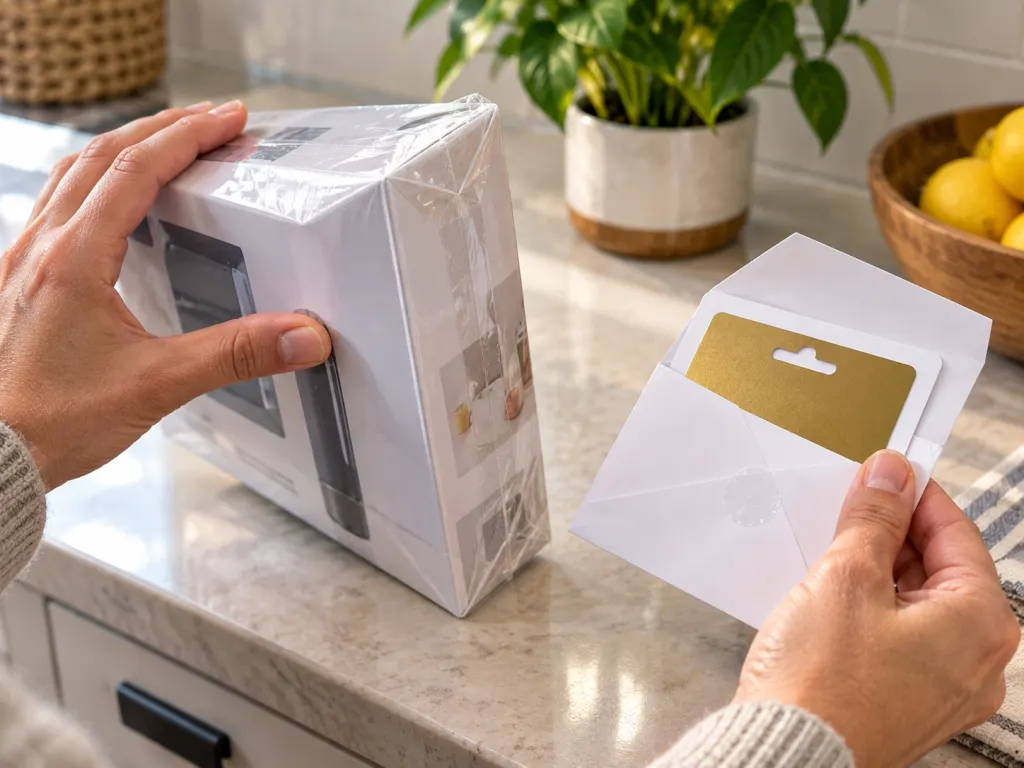
Gift Cards Deserve Their Own Check
A gift card can be a perfectly normal present, but it is also common in scams. The Federal Trade Commission says scammers may contact people by call, text, email, or social media and pressure them to buy gift cards, then share the numbers and PINs from the back https://consumer.ftc.gov/avoiding-reporting-gift-card-scams. The key distinction is possession versus pressure. Receiving a card from someone you know is one thing. Being told to buy a card, photograph it, or read the code to someone is a red flag.
When a gift card arrives, keep the packaging and receipt if available, check that the protective sticker has not been disturbed, and use the card through the issuer’s official site or in a trusted store. If a stranger says you won a prize but must pay fees with a card, or if someone pretending to be a boss, relative, agency, or utility demands card numbers, stop communicating through that channel. The FTC’s plain rule is useful: gift cards are for gifts, not payments https://consumer.ftc.gov/avoiding-reporting-gift-card-scams.
Objects Can Feel Loaded Without Being Dangerous
A gift can feel uncomfortable for reasons that have nothing to do with physical safety. Maybe the giver has a history of manipulation. Maybe the item resembles a symbol you associate with a difficult memory. Maybe a family tradition says certain objects should not be accepted. Those feelings do not need to be mocked or overruled. They also do not prove that the object can cause harm by itself. You can respect a belief, decline an object, or remove it from your home while still being honest about the reason: “I do not want to keep this,” rather than “this object has been proven dangerous.”
This distinction protects relationships as well as accuracy. Accusing someone of giving a harmful object can turn a manageable discomfort into a serious conflict. If the giver meant well, a simple return or private disposal may be kinder. If the giver did not mean well, a short boundary may be safer than a debate about symbols. Either way, you do not need a viral post to justify control over your own space.

If the Warning Upsets You, Lower the Temperature
Fear-based posts can leave a real emotional aftertaste. The National Institute of Mental Health explains that stress is a response to an external cause, while anxiety can happen even when there is no current threat https://www.nimh.nih.gov/health/publications/so-stressed-out-fact-sheet. If a gift warning makes you restless, distracted, or unable to stop checking the object, treat that reaction as a signal to pause rather than as proof that the object is harmful. Put the item out of sight, verify the practical facts, and talk with someone steady before making a dramatic decision.
If worry about an object starts interfering with everyday tasks, sleep, or relationships, it may be time to seek support. NIMH says that if self-care steps do not help or symptoms worsen, people should talk to a health care provider, and it gives urgent boundaries for people in immediate crisis https://www.nimh.nih.gov/health/publications/my-mental-health-do-i-need-help. The point is not to label a normal moment of unease. It is to avoid letting a viral claim take over more space than it deserves.
How to Respond When Someone Sends You the Warning
You do not have to argue with every forwarded post. A useful reply can be brief: “I’m checking official sources before I share this.” If the post names a product, look it up on a recall database. If it claims a scam, compare it with FTC guidance. If it only says an object brings bad luck, ask for the original source and evidence. That moves the conversation from panic to proof without insulting the person who sent it.
When you know the claim is unsupported, avoid reposting it to make fun of it. WHO notes that sharing false information, even critically, can help it spread further https://www.who.int/news-room/spotlight/let-s-flatten-the-infodemic-curve. A better response is to share the practical correction privately or post a calm reminder about checking recalls, scam guidance, and original sources. The less dramatic the correction, the easier it is for people to accept without feeling embarrassed.
A Practical Decision Tree
If you are holding the gift right now, use a simple decision tree. If it is recalled, damaged, leaking, overheating, missing critical safety information, or unsafe for the person who would use it, stop using it and follow official guidance. If it is a gift card with signs of tampering or a demand to share codes, contact the issuer and do not provide the numbers. If it is a digital device from someone you do not trust, do not connect it to your phone, computer, home network, or accounts. If the only concern is a viral claim about luck, energy, or hidden intention, you can decide based on comfort and beliefs, but do not present the claim as verified fact.
The calm middle ground is this: you are allowed to remove a gift from your life, but the reason matters. Evidence-based safety issues deserve quick action. Scam patterns deserve reporting. Personal boundaries deserve respect. Superstition-based warnings deserve context. Keeping those categories separate helps you protect your home without giving every frightening post authority over it.
Wrap-Up
A viral warning is not enough reason to panic over a gift. First identify what kind of concern you are dealing with: practical safety, scam risk, digital risk, personal boundary, or symbolic discomfort. Check official recall and consumer guidance when the item can be verified. If there is no concrete evidence of danger, make a personal choice without spreading the warning as fact.
Frequently Asked Questions
- → Should I throw away a gift because a post says it has bad energy?
Not automatically. If the only evidence is a viral claim about bad luck or hidden energy, treat it as an unverified belief. You can still choose not to keep the gift for personal or cultural reasons, but do not treat the post as proof of a real safety problem.
- → What gifts should be removed right away?
Stop using a gift when there is a concrete concern: an official recall, broken parts, overheating, leaking batteries, loose magnets around children, exposed wiring, tampered packaging, or a demand to send gift card numbers or PINs. Follow official recall or issuer guidance when available.
- → How can I check whether a product gift has been recalled?
Look for the brand, product name, model number, date code, and packaging details, then search the official CPSC recalls page. If the item appears in a recall notice, follow the listed remedy, which may be refund, repair, replacement, new instructions, or disposal.
- → Are gift cards risky to receive?
A normal gift card from someone you know is not automatically risky. Be cautious if the card looks tampered with, has an exposed PIN, came with suspicious instructions, or if anyone asks you to send the card number or PIN. The FTC warns that gift cards should not be used as payments to someone pressuring you.
- → What should I say to someone who keeps sending scary gift warnings?
Try a calm reply such as, “I’m checking official sources before I share this.” Ask for the original source, a recall notice, or a consumer warning. If none exists, you can say you are not going to pass it along because sharing unverified warnings can spread confusion.
References
This content was developed and refined using reliable sources.
- https://www.who.int/news-room/spotlight/let-s-flatten-the-infodemic-curve
- https://www.cpsc.gov/Recalls
- https://consumer.ftc.gov/avoiding-reporting-gift-card-scams
- https://www.nimh.nih.gov/health/publications/so-stressed-out-fact-sheet
- https://www.nimh.nih.gov/health/publications/my-mental-health-do-i-need-help