 Save
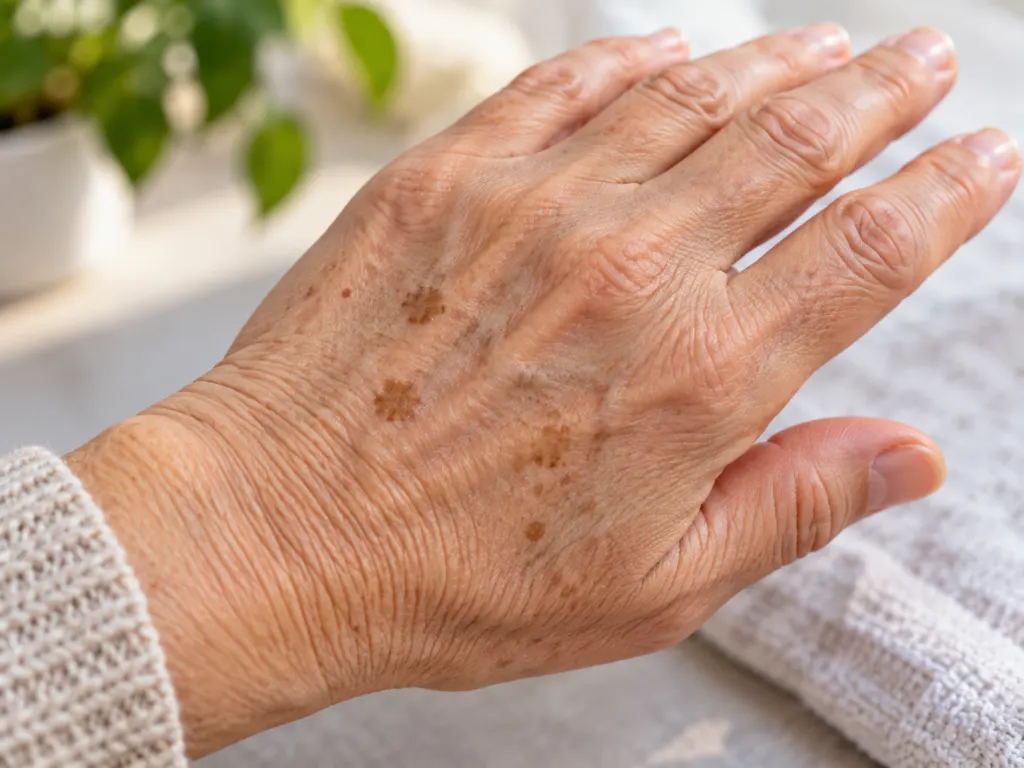
The practical answer is this: at-home care for dark age spots on hands should focus less on quick tricks and more on steady protection, gentle skin support, and smart boundaries. Age spots, also called liver spots or solar lentigines, are usually flat tan, brown, or dark areas that show up on skin with repeated sun exposure, including the backs of the hands. They are common, especially with age, but a new, changing, bleeding, rough, or unusual spot deserves professional attention before you try to lighten it. Once a spot has been identified as an ordinary age spot, daily sunscreen, protective clothing, moisturizers, and cautious use of well-labeled cosmetic products are the safest at-home foundation.
What Dark Age Spots on Hands Usually Are
Age spots are areas where pigment appears more concentrated in the skin. The Cleveland Clinic describes them as flat patches that can appear on the face, hands, neck, or arms and may be tan or brown. The name "liver spot" is old-fashioned and misleading; these marks are not a sign that the liver is dirty or failing. The reason they often show up on hands is more ordinary: hands are exposed during driving, walking, gardening, errands, and outdoor work, often while sunscreen is forgotten.
Why Hands Need Their Own Routine
Hand skin has a rough job. It is washed often, rubbed by towels, exposed to detergents, dried by indoor heat, and left uncovered in sunlight. MedlinePlus explains that skin changes with age can include dryness, thinner skin, and age spots, and that sunlight is a major contributor to visible skin aging. That combination matters because a brightening product alone will not do much if the same hands keep receiving unprotected ultraviolet exposure every day. The routine has to protect the skin you have now while making it less likely that existing spots look darker beside newer uneven color.
Start With A Careful Spot Check
Before building a cosmetic routine, look closely at the spots you want to care for. Ordinary age spots tend to be flat and fairly even in color, but not every brown mark on a hand is an age spot. The American Academy of Dermatology warns that other skin changes can look similar, and that a dermatologist can help tell whether a spot needs closer evaluation. Make an appointment promptly for a spot that is new and unusual, changing in shape or color, growing, bleeding, crusting, rough, tender, or very different from the others on your hands.
A Simple At-Home Hand Routine
A good routine should be boring in the best possible way. It should be easy enough to repeat and gentle enough that your hands still feel comfortable after a few weeks. Use this as a practical starting point:
- Morning: Apply a broad-spectrum sunscreen to the backs of your hands before going outside or driving.
- After washing: Use a fragrance-free hand cream or ointment if your skin feels dry or tight.
- For chores: Wear gloves for wet cleaning, gardening, or repeated contact with detergents.
- For outdoor time: Add shade, UPF clothing, or light sun-protective gloves when practical.
- Evening: Apply moisturizer again, and use any cosmetic brightening product only as the label directs.
What To Skip At Home
Be cautious with abrasive kitchen mixtures, strong acids, rough scrubs, and repeated rubbing. They may make a routine feel active, but irritated skin can look more uneven and feel drier. Baking soda pastes, lemon juice, and vigorous exfoliation are especially poor matches for hands that are already dry or fragile. A mild cleanser, a moisturizer you will actually use, and sun protection are less dramatic, but they are much better aligned with what the evidence says drives most visible change on the backs of the hands.

How Sunscreen Fits Into Age-Spot Care
Sun protection is the anchor because ultraviolet exposure is tied to both new spots and darkening of existing uneven pigment. The U.S. Food and Drug Administration explains that "broad spectrum" sunscreen protects against both UVA and UVB exposure, and that water-resistance claims are limited to either 40 or 80 minutes while swimming or sweating. For hands, the practical issue is reapplication. Sunscreen can come off when you wash dishes, wash your hands, handle tools, or towel-dry. Keep a hand-friendly sunscreen near the door, in a work bag, or beside the sink so reapplying is not a special project.
Choosing Products Without Chasing Hype
Over-the-counter cosmetic products that target uneven tone vary widely. Some use exfoliating acids, some use retinoids, some use niacinamide, and some combine several ingredients. The safest way to approach them is to add one product at a time, use it on a small area first, and stop if your skin becomes very red, cracked, or uncomfortable. Avoid stacking several active products just because they are sold for dark spots. More products do not automatically mean better results, and hands that are dry or irritated often look older and more uneven, even if the original spots are unchanged.
Moisture Matters More Than It Sounds
Moisturizer will not erase a true age spot, but it can make the surrounding skin look calmer and more even. Aging skin may become drier and more fragile, and MedlinePlus notes that keeping skin moist can make it more comfortable. For hands, a useful moisturizer is often thicker than a face lotion. Look for ingredients such as petrolatum, glycerin, dimethicone, ceramides, or shea butter if they agree with your skin. Apply after washing while the skin is slightly damp, then again before bed. If you dislike greasy palms, put the cream mostly on the backs of your hands and over the knuckles.
When Home Care Is Not Enough
At-home care can support the skin and may gradually improve the look of uneven tone, but some spots will remain visible. That does not mean the routine failed. Pigment that sits deeper in the skin is not always responsive to a mild cosmetic product, and professional procedures can be more targeted than home care. The AAD describes several dermatologist-performed options for age spots, including lasers, chemical peels, cryosurgery, and microdermabrasion, while also noting that procedures can cost more and may carry side effects. A dermatologist can discuss which options fit your skin tone, history, and goals.

A Realistic Timeline For Visible Change
The most realistic timeline is measured in weeks and months, not minutes. Sunscreen is immediate protection, but visible cosmetic change from a hand routine is gradual. Take a photo of your hands in the same lighting once a month if you want to track progress without obsessing daily. If a product is making the skin sting, peel heavily, or crack, that is not a sign that it is working better. It is a sign to pause and simplify. For many people, the best outcome is not perfectly blank skin; it is hands that feel comfortable, look cared for, and are protected from avoidable sun exposure.
The Bottom Line For Home Care
Dark age spots on hands are common, but they deserve a thoughtful routine. First, make sure the spots are not changing in a way that needs professional attention. Then build around sun protection, gloves when useful, consistent moisturizer, and cautious product choices. Skip harsh scrubbing and dramatic claims. The quieter routine is the one that usually makes the most sense: protect in the morning, moisturize after washing, avoid irritation, and reassess over time.
Wrap-Up
For dark age spots on hands, the best at-home care is steady and gentle: daily broad-spectrum sunscreen, protective habits during sun exposure, regular moisturizer, and cautious use of cosmetic brightening products. Have new, changing, bleeding, rough, or unusual spots checked before trying to fade them. Expect gradual cosmetic change, not instant results.
Frequently Asked Questions
- → Can I use lemon juice or baking soda on age spots on my hands?
It is better to skip harsh kitchen mixtures. The backs of the hands are often dry and sun-exposed, and abrasive or acidic mixtures can leave skin uncomfortable. A gentler routine with sunscreen, moisturizer, and carefully chosen cosmetic products is a safer place to start.
- → How long should I wait before judging an at-home routine?
Give a gentle routine several weeks to a few months, unless your skin becomes irritated. Sun protection helps right away by reducing fresh ultraviolet exposure, but visible cosmetic changes in existing spots are usually gradual.
- → Do age spots mean something is wrong with my liver?
No. The term "liver spot" is an old name and does not mean the spot comes from liver trouble. Age spots are more closely connected with pigment changes on sun-exposed skin.
- → Should every dark spot on my hand be checked?
Not every familiar, stable spot needs urgent attention, but a new, changing, bleeding, crusting, rough, painful, or unusual spot should be checked by a qualified professional. It is especially important to check a spot that looks different from the others.
- → Can sunscreen help if I already have age spots?
Yes. Sunscreen will not instantly remove existing pigment, but it helps protect the hands from ongoing ultraviolet exposure that can make uneven tone more noticeable. Reapply after handwashing, sweating, swimming, or heavy outdoor activity.
References
This content was developed and refined using reliable sources.
- https://www.aad.org/public/cosmetic/age-spots-marks/get-rid-spots
- https://www.mayoclinic.org/diseases-conditions/age-spots/symptoms-causes/syc-20355859
- https://my.clevelandclinic.org/health/diseases/21723-liver-spots
- https://www.fda.gov/consumers/consumer-updates/tips-stay-safe-sun-sunscreen-sunglasses
- https://medlineplus.gov/skinaging.html
- https://medlineplus.gov/ency/article/004014.htm