 Save
Your feet cannot tell the whole story of your health, but they can give early clues worth noticing. Burning, tingling, numbness, swelling, color changes, slow-healing sores, and pain that starts while walking may point to issues involving nerves, blood flow, skin protection, or fluid buildup. Many foot changes have simple explanations, such as tight shoes or a long day standing. The concern rises when a symptom is new, persistent, one-sided, worsening, linked with a wound, or paired with shortness of breath, chest pressure, fever, or a foot that becomes cold, pale, blue, black, red, hot, or very swollen.
Why Feet Often Show Clues First
Feet sit at the far end of the body’s circulation and carry pressure every time you stand. They also contain many small nerves, blood vessels, joints, tendons, and skin surfaces that can be irritated by footwear, activity, temperature, and health conditions. The National Library of Medicine’s MedlinePlus notes that regular foot checks matter because foot health can reflect broader health, including numbness, swelling, stiffness, and other changes that may deserve a conversation with a health professional: MedlinePlus foot health overview.
The practical goal is not to panic over every ache. A blister from a new shoe or mild swelling after standing may improve when the trigger is removed. What matters is the pattern: whether the symptom keeps returning, affects one foot more than the other, changes skin color, limits walking, reduces feeling, or appears with a sore. A simple written note can help: when it started, where it appears, what makes it better or worse, and whether there are changes in walking, balance, skin temperature, toenails, hair growth, or wounds.
Burning, Tingling, or Numbness
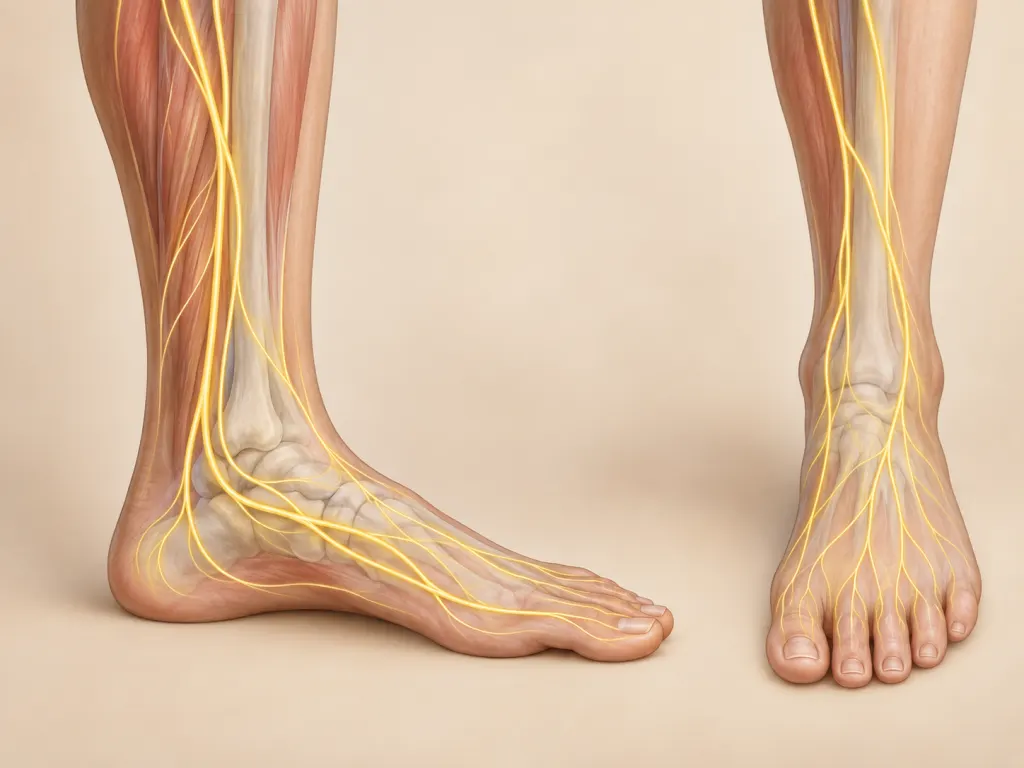
Burning, tingling, pins-and-needles sensations, numbness, weakness, or reduced ability to feel temperature can involve peripheral nerves. The National Institute of Diabetes and Digestive and Kidney Diseases explains that peripheral neuropathy often affects the feet and legs and may cause burning, tingling, numbness, pain, weakness, balance changes, and problems sensing temperature: NIDDK peripheral neuropathy.
Occasional tingling after sitting awkwardly is common and often fades when pressure is relieved. More concerning patterns include symptoms in both feet that persist, numbness that makes it hard to notice a blister, burning sensations that keep returning, or loss of balance. If feeling is reduced, the skin can be injured without an obvious warning sensation. People living with diabetes are often told to pay special attention to this, because the American Diabetes Association describes how nerve changes and reduced blood flow can make ordinary foot problems more serious: American Diabetes Association foot complications.
Swelling: Look at Pattern and Urgency
Swelling in the feet, ankles, or lower legs can happen after long standing, travel, injury, warm weather, or fluid buildup. MedlinePlus describes edema as abnormal fluid buildup and notes that gravity often makes it most visible in the lower body: MedlinePlus foot, leg, and ankle swelling. Mild, even swelling in both feet after a long day may be less concerning than sudden swelling, swelling that affects only one side, or swelling with redness, warmth, fever, chest pressure, or shortness of breath.
Useful details include whether both feet are swollen or only one, whether the swelling leaves a dent when pressed, whether shoes suddenly feel tight, and whether the skin is red, warm, shiny, or painful. Swelling that improves overnight can have a different meaning from swelling that keeps worsening. New one-sided swelling should not be ignored, especially if the calf or foot is warm, tender, or red. Shortness of breath or chest pressure with swelling is an emergency boundary, not a wait-and-see situation.
Color and Temperature Changes
A foot that is colder than the other, unusually pale, bluish, purple, or slow to warm may point to reduced blood flow or a blood-vessel response to cold. The National Heart, Lung, and Blood Institute lists several possible symptoms of peripheral artery disease, including one foot feeling colder than the other, pale or blue discoloration, pins-and-needles feelings, slow-healing wounds, and pain with walking: NHLBI peripheral artery disease symptoms.
Color changes can also occur with Raynaud phenomenon, where blood vessels narrow during cold exposure or stress. MedlinePlus says Raynaud attacks often affect fingers and toes, causing coldness, numbness, and color changes that may appear white or blue before color returns: MedlinePlus Raynaud phenomenon. A repeated cold-triggered pattern is worth documenting, but sudden blue or black color, severe pain, or a cold numb foot is more urgent.
Slow-Healing Sores, Cracks, and Blisters
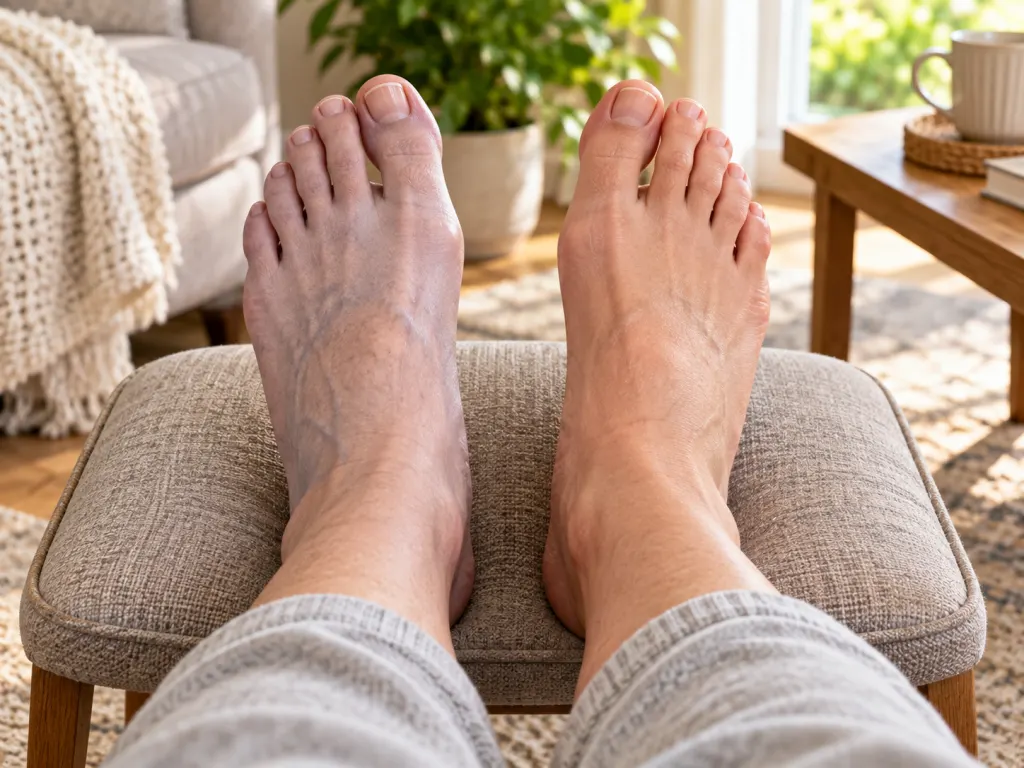
A sore on the foot deserves extra attention when it does not improve, drains fluid, becomes red or warm, appears with fever, or occurs in someone who has reduced feeling. MedlinePlus explains that diabetes can damage nerves and blood vessels in the feet, making injuries easier to miss and slower to heal; it also advises contacting a provider about changes such as redness, warmth, swelling, sores, cracks, tingling, burning, or pain: MedlinePlus diabetes foot care.
Foot wounds are easy to underestimate because they may be on the sole, heel, side of the toe, or between toes where they are hard to see. A mirror, a phone photo, or help from another person can make inspection easier. A wound that forms near a pressure point may be worsened by a shoe seam, callus, or altered walking pattern. Do not use appearance alone as reassurance: a sore may look small from the outside while deeper tissue is irritated.
Pain When Walking or Pain at Rest
Foot or leg discomfort that reliably starts with walking or climbing stairs and eases after rest can be a circulation clue. The American Heart Association describes peripheral artery disease pain as aching, burning, cramping, discomfort, or fatigue during activity, often in the buttock, thigh, calf, or ankle, and notes that some people also notice slow-healing wounds, cooler skin on one foot or leg, slower toenail growth, less leg hair, and skin color changes: American Heart Association PAD symptoms.
Pain has many possible causes, including footwear, tendon strain, joint irritation, nerve pressure, and circulation problems. The timing can help a clinician sort possibilities. Pain in a joint after a twist is different from muscle cramping that appears at a predictable walking distance. Pain that occurs at rest, wakes you at night, appears with a cold or discolored foot, or comes with a sore should be taken more seriously than a short-lived ache after unusual activity.
A Practical Checklist for Foot Changes
When a foot symptom shows up, gather clear observations before deciding what to do next. This checklist is not a diagnosis; it is a way to make the pattern easier to explain during a medical visit.
- Location: one toe, the sole, heel, arch, ankle, whole foot, or both feet.
- Timing: sudden, gradual, after walking, after standing, at night, or after cold exposure.
- Feeling: burning, tingling, numbness, cramping, heaviness, tenderness, weakness, or reduced temperature sense.
- Skin signs: redness, warmth, swelling, cracks, blisters, sores, color change, drainage, or areas that look shiny or tight.
- Function: new limping, balance trouble, reduced walking distance, or trouble fitting into usual shoes.
- Urgent pairings: chest pressure, shortness of breath, fever, sudden one-sided swelling, a cold pale foot, or blue or black skin.
When to Seek Prompt Care
Some foot symptoms can wait for a scheduled appointment, especially if they are mild, clearly linked to footwear, and improving. Others should be assessed promptly. Contact a qualified health professional if you have persistent numbness, burning, tingling, recurring walking pain, a sore that is not improving, new color changes, or swelling that keeps getting worse. Seek urgent help for chest pressure or shortness of breath with swelling; sudden one-sided swelling; a foot that becomes cold, pale, blue, black, or numb; spreading redness or warmth with fever; or any foot wound in a person with known reduced feeling or circulation problems.
If you already have diabetes, reduced foot sensation, circulation problems, kidney or heart concerns, or a history of foot wounds, the threshold for asking for help should be lower. Bring your symptom notes, photos if available, and the shoes you wear most often. A clinician may look at skin, pulses, sensation, walking pattern, toenails, and footwear pressure points. The value of the visit is not only naming the cause; it is also deciding whether the foot needs protection, monitoring, testing, or a referral.

Daily Habits That Make Changes Easier to Catch
A short foot check can be built into ordinary routines: after showering, while changing socks, or before bed. Look at the tops, soles, heels, sides, toenails, and between toes. Notice whether both feet look similar in color and temperature. Wash and dry feet gently, especially between toes. Choose shoes with enough room at the front and avoid walking in shoes that rub, pinch, or create pressure points. If bending is difficult, a mirror or a caregiver’s help can make the check practical.
The point of daily attention is not worry; it is early awareness. Feet are easy to ignore until they hurt, yet numbness can mean a problem appears without much discomfort. A small blister, a nail edge pressing into skin, or a shoe seam rubbing the same spot can become more important when circulation or sensation is reduced. Catching changes early gives a health professional better information and may keep a small problem from becoming harder to manage.
How to Talk About Foot Symptoms Clearly
Instead of saying only “my feet feel strange,” describe the symptom in concrete terms. For example: “My right foot becomes colder than my left after a short walk,” “both soles burn at night,” “my toes turn pale in the cold and then tingle,” or “this spot has been open for a week.” Include how long it has been happening, whether it is getting better or worse, and what you have already tried. Mention known conditions, recent travel, injuries, shoe changes, and whether the symptom affects walking, sleep, balance, or daily activities.
Photos can help when a color change or swelling comes and goes. Take them in good light and, when possible, compare both feet in the same image. Do not delay urgent care to collect photos, but for recurring symptoms, a small record can make the office visit more useful. Bring a list of questions: What symptoms should make me call sooner? Should I check my feet daily? Do my shoes fit safely? Should I see a foot specialist? Clear questions lead to clearer next steps.
Wrap-Up
Foot symptoms are common, but patterns matter. Persistent burning, tingling, numbness, slow-healing sores, color changes, coldness in one foot, swelling, or pain with walking can point to nerve, circulation, skin, or fluid-balance concerns. Seek prompt professional care for sudden one-sided swelling, chest pressure, shortness of breath, fever with a red hot foot, blue or black color, a cold numb foot, or a wound that is not improving.
Frequently Asked Questions
- → Can foot tingling be harmless?
Yes. Brief tingling can happen after pressure on a nerve, such as sitting in one position too long. Tingling that persists, returns often, affects both feet, or comes with numbness, weakness, balance changes, or sores should be discussed with a qualified health professional.
- → Is swelling in both feet always serious?
No. Both feet may swell after long standing, travel, heat, or inactivity. The concern rises when swelling is sudden, worsening, painful, red, warm, one-sided, linked with fever, or paired with chest pressure or shortness of breath.
- → Why does one foot feeling colder than the other matter?
A noticeable temperature difference can sometimes reflect reduced blood flow, especially if the colder foot is also pale, blue, painful, numb, or has a sore. A sudden cold, numb, discolored foot should be treated as urgent.
- → What foot changes are important for people with diabetes to notice?
People with diabetes should pay attention to sores, cracks, blisters, redness, warmth, swelling, numbness, burning, tingling, and shoe pressure points. Reduced feeling can make injuries harder to notice, so regular foot checks are especially important.
- → Should I photograph a foot symptom before an appointment?
Photos can help when swelling, color change, or skin changes come and go. Use good lighting and compare both feet if possible. Do not delay urgent care for severe symptoms, shortness of breath, chest pressure, sudden one-sided swelling, or a cold blue foot.
References
This content was developed and refined using reliable sources.
- https://www.medlineplus.gov/foothealth.html
- https://www.niddk.nih.gov/health-information/diabetes/overview/preventing-problems/nerve-damage-diabetic-neuropathies/peripheral-neuropathy
- https://diabetes.org/about-diabetes/complications/foot-complications
- https://www.medlineplus.gov/ency/article/003104.htm
- https://www.nhlbi.nih.gov/health/peripheral-artery-disease/symptoms
- https://medlineplus.gov/raynaudphenomenon.html
- https://www.medlineplus.gov/ency/patientinstructions/000081.htm
- https://www.heart.org/en/health-topics/peripheral-artery-disease/symptoms-of-pad