 Save
Sleeping with socks on usually does one simple thing: it keeps your feet warmer, which may help some people fall asleep more comfortably. The effect is not magic, and it is not the same for everyone. Sleep is shaped by light, routine, timing, stress, bedding, room temperature, and the body's internal clock. Still, foot warmth can matter because skin temperature in the hands and feet often rises around sleep onset while core body temperature trends downward. That pattern is described in sleep and thermoregulation research, including a review indexed by PubMed on body temperature and sleep https://pubmed.ncbi.nlm.nih.gov/30454599/.
The Short Answer: Socks Can Help If Cold Feet Keep You Awake
If your feet are chilly at bedtime, socks can reduce the cold sensation enough to make settling down easier. That is the most practical takeaway. Socks do not force sleep, fix a poor sleep schedule, or outweigh bright screens and late caffeine. They are best understood as a comfort tool that supports the body's normal evening cooling pattern. The National Heart, Lung, and Blood Institute explains that circadian clocks, light, darkness, and homeostasis help regulate sleep and wake timing https://www.nhlbi.nih.gov/health/sleep/sleep-wake-cycle. Socks sit at the small, physical-comfort end of that larger system.
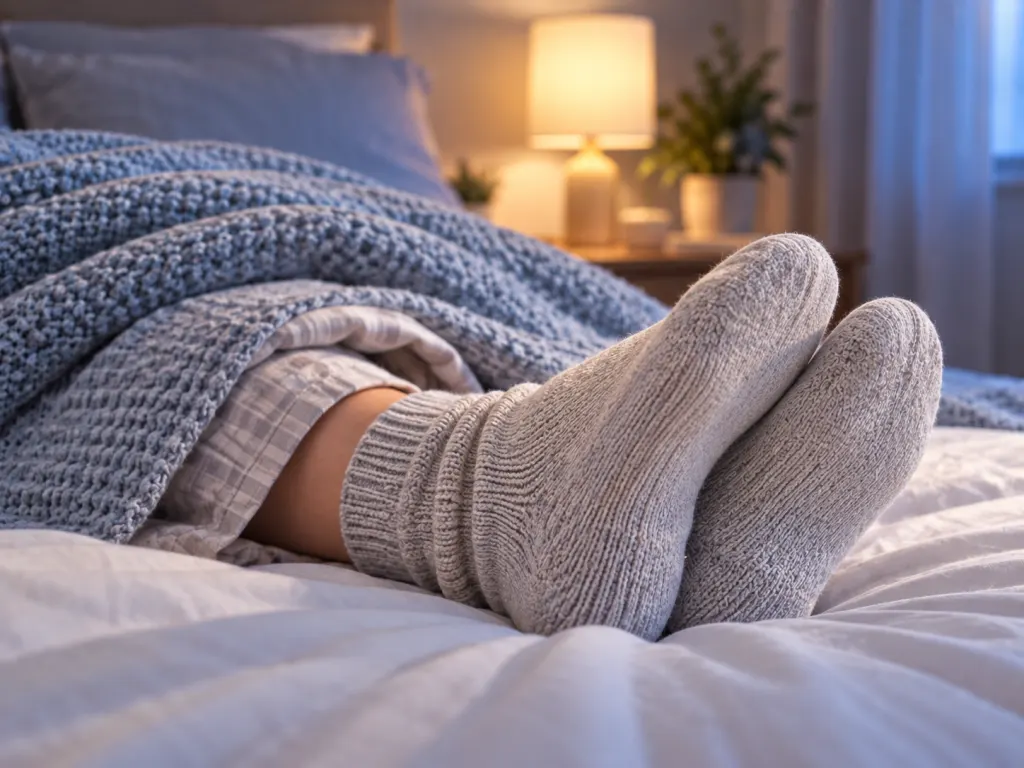
The idea makes sense because feet are part of the body's heat exchange system. When blood vessels near the skin widen, more heat can move toward the skin surface. Researchers often discuss this in terms of distal skin temperature, meaning temperature at the hands and feet compared with areas closer to the body's center. A review on skin temperature and sleep onset found that warming the skin to levels that normally occur before and during sleep may increase sleep readiness in some adults, while responses can differ with age and sleep difficulty https://pubmed.ncbi.nlm.nih.gov/17070562/.
Why Warm Feet Can Feel Sleepy
Sleep does not begin only in the brain as a switch flipping off. It is a coordinated shift in timing, temperature, alertness, hormones, and behavior. The Eunice Kennedy Shriver National Institute of Child Health and Human Development notes that the circadian clock, sleep drive, light exposure, melatonin, and hypothalamus all play roles in when we feel drowsy https://www.nichd.nih.gov/health/topics/sleep/conditioninfo/causes. During sleep, the hypothalamus also helps regulate changes in body temperature and blood pressure. That matters here because the feet are not just passive passengers under the blanket; they are part of how the body manages heat.
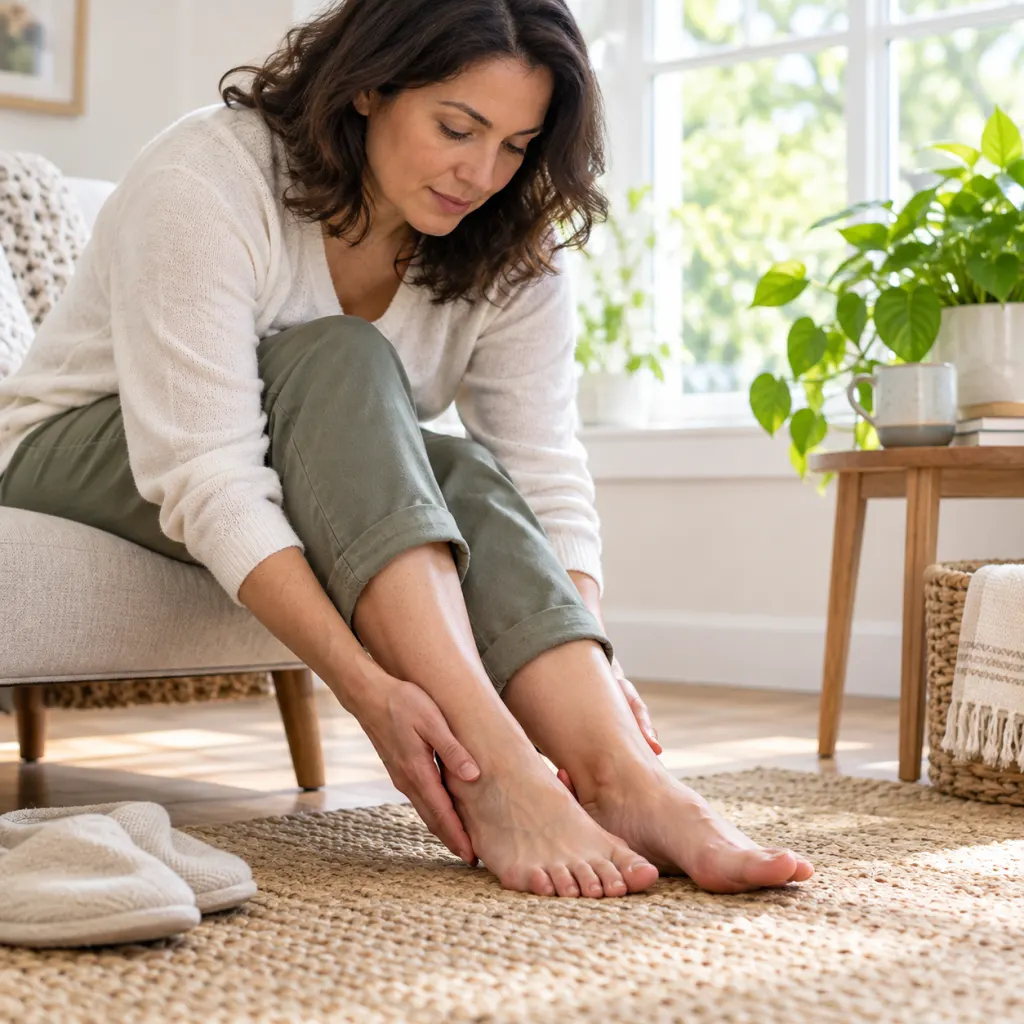
When feet are cold, the sensation can keep your attention on discomfort. You may curl your toes, tense your legs, add and remove blankets, or keep adjusting your position. Those small reactions can make bedtime feel restless. Warm socks may remove that distraction. At the same time, gentle warming of the feet may encourage a pattern associated with sleep onset: warmer hands and feet along with heat loss through the skin. The evidence does not mean everyone should wear socks. It means that if cold feet are one of your regular bedtime annoyances, socks are a reasonable experiment.
What Studies Suggest, And What They Do Not Prove
The direct research on socks at bedtime is small. One 2018 study indexed by PubMed looked at feet warming with bed socks in a cool sleep setting and reported shorter sleep-onset time, longer total sleep time, fewer awakenings, and higher sleep efficiency in the sock condition among a very small group of young men https://pubmed.ncbi.nlm.nih.gov/29699592/. That is interesting, but it is not the same as a broad rule for every age, climate, bedding style, or health situation. A small lab study can point toward a useful idea while still needing larger, more diverse research.
Another important detail is that the effect depends on context. Socks may help in a cool room but feel annoying in a warm one. They may help someone with cold feet but bother someone who already runs warm. They may feel soothing in winter and unnecessary in summer. The review on body temperature and sleep notes that sleep is accompanied by a decrease in core body temperature and a rise in distal skin temperature near sleep onset https://pubmed.ncbi.nlm.nih.gov/30454599/. Socks may support that comfort pattern for some people, but they are only one part of the sleep environment.
How To Choose Socks For Bed
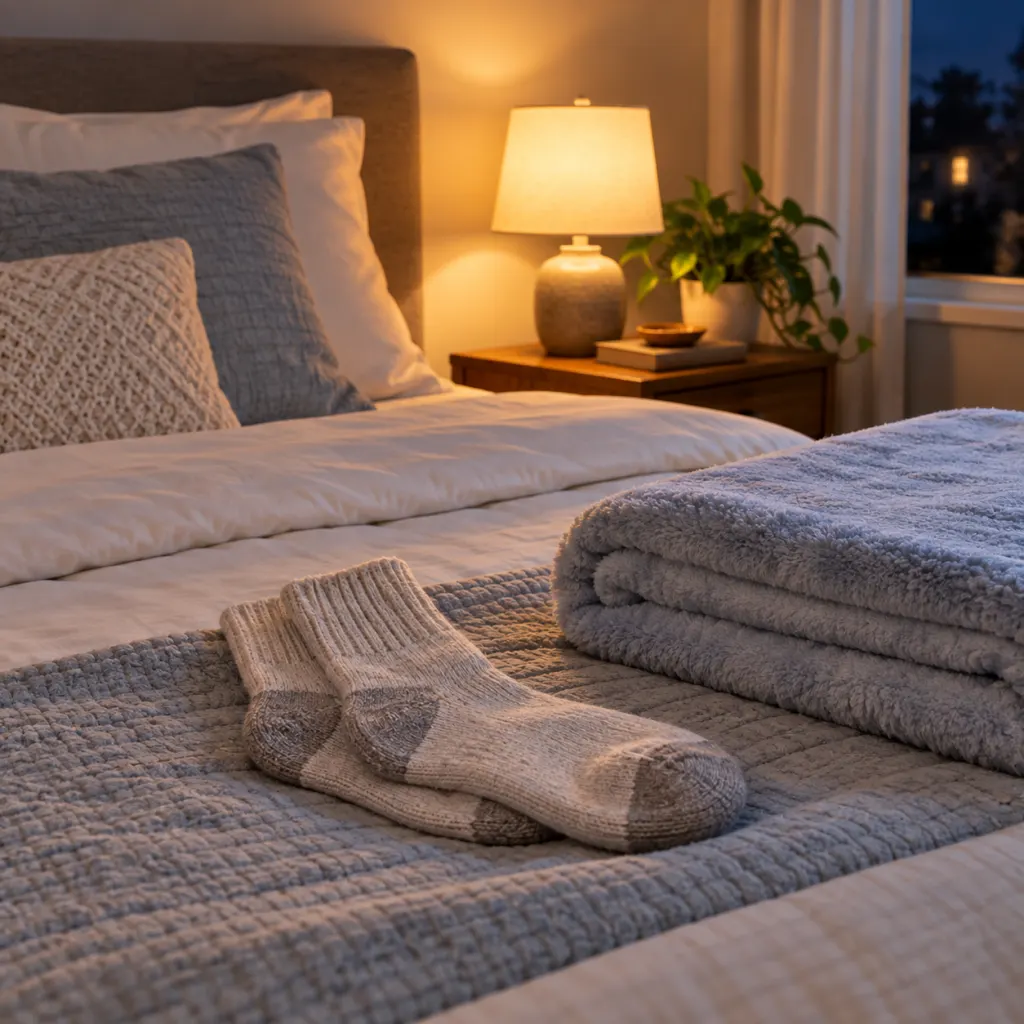
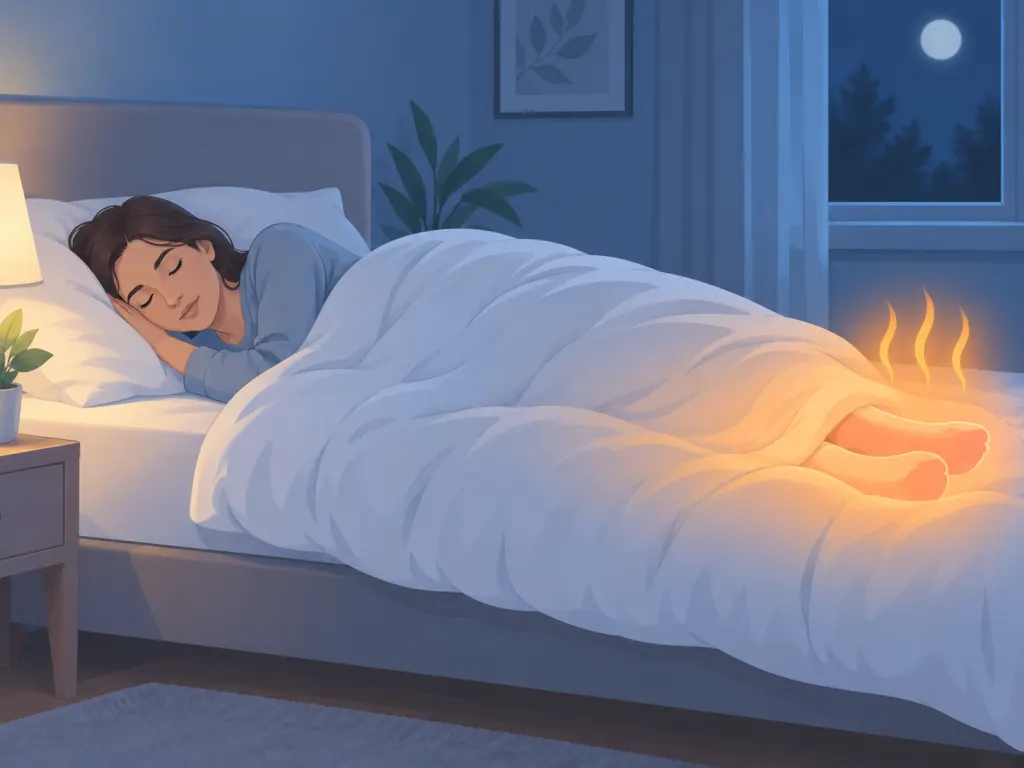
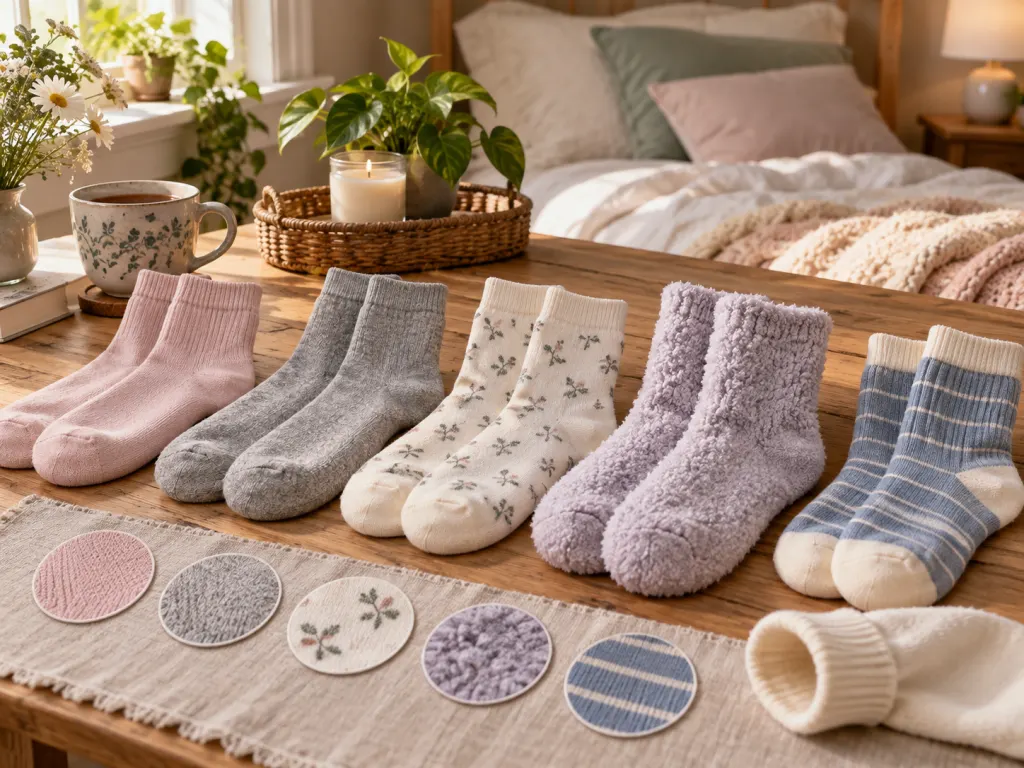
The best sleep socks are boring in a good way: loose enough not to leave deep marks, warm enough for comfort, and breathable enough that your feet do not feel damp by morning. Avoid compression-style socks for sleep unless a clinician specifically told you to use them that way. A regular soft sock is usually the better choice for a bedtime comfort trial. If socks make your feet sweaty, itchy, or overheated, they are working against the point. The goal is gentle warmth, not trapped heat.
Use this simple checklist when choosing socks for sleep:
- Fit: choose socks that stay on without squeezing the ankle, arch, or toes.
- Fabric: cotton, wool blends, bamboo blends, or other breathable materials are usually more comfortable than slick synthetic socks that trap moisture.
- Cleanliness: start with a clean pair, especially if you wore shoes all day.
- Temperature: use lighter socks in a mildly cool room and warmer socks only when the room or your feet are truly cold.
- Skin comfort: skip seams, tight cuffs, or scratchy fabric if they distract you at bedtime.
When Socks Can Backfire
Socks are not automatically better. If they are tight, they can leave pressure marks and make your feet feel uncomfortable. If they are too warm, they can make you sweat, which may wake you up or leave your feet clammy. If they are dirty or damp, they can irritate the skin. If you sleep with heavy blankets, flannel pajamas, and a warm room, socks may tip the bed from cozy to stuffy. The useful question is not, 'Are socks good or bad?' It is, 'Do these socks help me stay comfortably warm without overheating?'
It also helps to separate socks from stronger warming methods. A pair of soft socks is low-tech and easy to remove. Hot water bottles, electric heating pads, and heated devices are different tools with different safety concerns. If you want warmer feet, start with the simplest approach: adjust the room, bedding, or sock thickness. Do not use aggressive heat while asleep. Comfort should feel gradual and gentle, not intense.
Cold Feet Are Common, But Persistent Changes Deserve Attention
Many people get cold feet in a cool bedroom. That alone is not unusual. But feet that are often numb, painful, unusually pale or blue, swollen, or slow to warm back up should not be dismissed as just a sock problem. MedlinePlus explains that Raynaud phenomenon can cause fingers and toes to become cold, numb, and change color in response to cold or stress https://medlineplus.gov/raynaudphenomenon.html. Socks may make you more comfortable, but they should not be used to ignore repeated or worsening symptoms.
A practical boundary is this: if cold feet are occasional and improve with ordinary warmth, socks are a comfort choice. If cold feet are frequent, one-sided, linked with color changes, linked with sores, or paired with significant pain, ask a qualified health professional what might be going on. Seek prompt medical help if toes become black, an open sore appears, or severe pain does not ease. Those situations need individual assessment, not a home routine.
Does Wearing Socks Change Circulation?
In everyday language, people often say socks 'improve circulation.' A more careful way to put it is that warm feet may encourage local skin blood vessels to widen as part of normal heat regulation. That can make feet feel warmer and may support heat release through the skin. But ordinary sleep socks are not a circulation therapy, and tight socks can be counterproductive. The difference matters: soft socks help with warmth and comfort; medical decisions about circulation belong with a clinician who can examine the person and their history.
For most healthy adults, the circulation question is really a fit question. Can you slide a finger under the cuff? Do the socks leave only a faint temporary line rather than a deep groove? Do your toes have room to move? Do your feet feel normal when you remove them? If the answer is yes, the socks are more likely to be a comfort layer than a problem. If the answer is no, choose a looser pair or skip them.
How Socks Fit Into Better Sleep Habits
Socks can help only at the margins if the rest of the night is working against sleep. The NHLBI notes that light and darkness help set the body's sleep-wake rhythm, while artificial light and caffeine can disrupt that timing https://www.nhlbi.nih.gov/health/sleep/sleep-wake-cycle. So if you are testing socks, test them alongside the basics: dim lights near bedtime, keep a consistent schedule when possible, avoid making the bed too hot, and give yourself a wind-down period. Socks are a small adjustment, not a full sleep plan.
A useful home experiment is to try socks for a week, then skip them for a week, while keeping the rest of your routine similar. Notice whether you fall asleep more comfortably, wake less from cold feet, or feel too warm during the night. You do not need a gadget to learn from the pattern. A simple note on bedtime, room comfort, socks or no socks, and how rested you feel in the morning can tell you whether the habit is worth keeping.
Bottom Line
Sleeping with socks on is best viewed as a low-effort comfort choice. It may help if cold feet keep you alert, especially in a cool bedroom. It may do nothing if your feet already feel warm, and it may disturb sleep if the socks are tight, damp, scratchy, or too hot. Choose clean, loose, breathable socks and pay attention to how your body responds. Warm feet can support a calmer bedtime, but persistent coldness, numbness, color change, swelling, sores, or significant pain deserves professional guidance.
Wrap-Up
Wearing socks to bed can warm the feet and may help some people fall asleep more comfortably, especially when a cool room or cold feet make bedtime distracting. The strongest explanation is thermoregulation: hands and feet often warm as the body shifts toward sleep, while core temperature trends downward. The research is promising but limited, so personal comfort matters. Use loose, breathable socks, avoid overheating, and do not ignore persistent or unusual foot symptoms.
Frequently Asked Questions
- → Is it okay to sleep with socks on every night?
For many people, yes, as long as the socks are clean, loose, breathable, and comfortable. If socks make your feet sweaty, itchy, numb, or too warm, skip them or choose a lighter pair.
- → Do socks actually help you fall asleep faster?
They may help some people, especially when cold feet are a bedtime distraction. Research on skin temperature and sleep suggests that warmer hands and feet can be part of the body's normal shift toward sleep, but the direct sock research is small and individual results vary.
- → What kind of socks are best for sleeping?
Choose soft socks with a loose cuff and breathable fabric. Avoid tight socks that leave deep marks, scratchy seams, or thick socks that make your feet sweat. The right pair should feel gently warm and easy to forget.
- → Should I wear compression socks to bed?
Do not use compression socks overnight unless a qualified health professional has advised that for your own situation. For ordinary bedtime warmth, a regular loose sock is usually the safer comfort choice.
- → When should cold feet at night be checked?
Ask a qualified health professional if cold feet are frequent, painful, one-sided, linked with numbness, color changes, swelling, sores, or slow warming. Socks can improve comfort, but repeated or worsening symptoms need individual assessment.